
- Hair Loss Prevention
- Androgen Receptor Blockade
- Topical DHT Antagonism
Here’s something nobody tells you about the multi-billion dollar hair loss industry: most “solutions” either don’t work, come with serious side effects, or both. I’ve watched countless guys dump money into miracle serums and celebrity-endorsed shampoos, only to end up exactly where they started — or worse, dealing with sexual dysfunction from finasteride.
That desperation creates a perfect breeding ground for grey-market research chemicals like RU58841. It’s a compound that showed legitimate promise in early clinical trials, then mysteriously disappeared from mainstream development, leaving a community of self-experimenters to pick up where pharmaceutical companies left off.
If you’ve stumbled across RU58841 while researching alternatives to finasteride or minoxidil, you need to understand exactly what you’re dealing with — both the intriguing mechanism and the significant unknowns.
The Short Version: RU58841 is an investigational anti-androgen that works by competitively blocking DHT at androgen receptors in scalp tissue. Early research showed promise for androgenic alopecia, but the compound never completed clinical trials or received regulatory approval. It exists in a legal grey area as a research chemical, with limited human safety data and significant quality control concerns.
Research Chemical Notice: RU58841 is an investigational compound that has not been approved by the FDA for human use. The information below is compiled from published research for educational purposes only. This is not medical advice and should not be interpreted as a recommendation for human consumption. Always consult a qualified healthcare provider.
What Is RU58841?
RU58841 is a synthetic anti-androgen compound originally developed by French pharmaceutical company Roussel Uclaf (now part of Sanofi) in the late 1980s. The research program aimed to create a topical androgen receptor antagonist that could block DHT locally in scalp tissue without the systemic hormonal effects that make drugs like finasteride problematic for many users.
The compound showed genuine promise in preclinical and early human trials. It demonstrated the ability to competitively bind to androgen receptors with high affinity while producing minimal systemic absorption when applied topically. Clinical studies in the 1990s and early 2000s reported positive results for treating androgenic alopecia and acne.
Then it vanished from mainstream pharmaceutical development. The official reason remains unclear — speculation ranges from patent complications to market viability concerns to unreported safety signals. What remains is a compound with intriguing published research and no regulatory pathway, now manufactured by grey-market chemical suppliers and used by a dedicated community of self-experimenters who’ve decided the potential benefits outweigh the considerable unknowns.
How Does RU58841 Work?
Think of DHT as a key that unlocks androgen receptors in your scalp. When DHT binds to these receptors in genetically susceptible hair follicles, it triggers a cascade that miniaturizes the follicle over time — the biological mechanism behind male pattern baldness. Most pharmaceutical approaches either reduce DHT production systemically (finasteride, dutasteride) or try to counteract the miniaturization process through other pathways (minoxidil).
RU58841 takes a different approach. It’s a competitive antagonist that physically occupies androgen receptors, preventing DHT from binding. Because it’s applied topically and designed to stay localized in scalp tissue, the theoretical advantage is androgen receptor blockade exactly where you need it — without the systemic hormonal suppression that causes sexual side effects in a significant percentage of finasteride users.
The compound demonstrated high binding affinity for androgen receptors in published studies — comparable to or exceeding DHT itself. A 2002 study in hairless stump-tailed macaques (a standard model for androgenic alopecia research) found that topical RU58841 application prevented testosterone-induced hair loss as effectively as systemic finasteride, but with negligible systemic absorption.
Here’s the critical nuance: “negligible systemic absorption” in a controlled study using pharmaceutical-grade material is very different from real-world use of grey-market powder dissolved in questionable carrier solutions. And even with perfect absorption characteristics, blocking androgen receptors in scalp tissue has downstream effects we don’t fully understand because the clinical development program never completed.
Reality Check: Published research on RU58841 is limited, dated, and incomplete. The most comprehensive human data comes from Phase II trials that never published full results. Everything beyond that point is anecdotal reports from online communities, not controlled research.
Reported Effects of RU58841 (What the Research Shows)
The published evidence base for RU58841 consists primarily of animal studies, small-scale human trials, and one Phase II clinical study that reported positive topline results but never published detailed data.
Hair Loss Prevention
The strongest evidence comes from primate studies. In the 2002 macaque study mentioned earlier, researchers observed that topical RU58841 application prevented testosterone-induced hair loss with efficacy comparable to oral finasteride. Hair counts, hair diameter, and overall coverage improved in treated animals compared to controls.
Limited Phase II human data presented at conferences (but never fully published) reported improvements in hair count and density in men with androgenic alopecia after 6-12 months of daily topical application. The effect sizes were described as “clinically significant” but specific numbers weren’t disclosed in available abstracts.
Evidence quality: Moderate for efficacy in animal models, preliminary and incomplete for human outcomes. The lack of published Phase III data means we’re making inferences from preclinical work and incomplete clinical reporting.
Androgen Receptor Blockade
In vitro studies confirmed that RU58841 binds androgen receptors with high affinity and acts as a competitive antagonist. A 1994 study in Endocrinology demonstrated binding constants in the nanomolar range, indicating strong receptor affinity comparable to endogenous androgens.
This mechanism is well-established in laboratory conditions. The uncertainty is how it translates to sustained real-world use in humans — particularly regarding potential adaptation, receptor upregulation, or other compensatory mechanisms that might reduce effectiveness over time.
Topical Localization
Early pharmacokinetic studies reported minimal systemic absorption when RU58841 was applied topically in alcohol-based solutions. Serum levels remained below detection thresholds in most subjects, suggesting the compound remained primarily localized to scalp tissue.
Critical caveat: These studies used pharmaceutical-grade formulations with validated purity and consistency. Grey-market RU58841 varies wildly in quality, purity, and carrier formulations, potentially affecting both efficacy and systemic exposure.
| Reported Effect | Evidence Level | Key Research |
|---|---|---|
| Hair loss prevention | Moderate (animal RCTs) | Battmann et al. 2002 |
| Androgen receptor antagonism | Strong (in vitro) | Teutsch et al. 1994 |
| Topical localization | Preliminary (Phase II) | Unpublished clinical data |
| Long-term safety | Insufficient | No data beyond 12 months |
Research Administration Protocols (Doses Used in Studies)
Published protocols varied across studies, but converged on a general range that’s been adopted by research communities.
Investigated Dosing Regimens
Standard research protocol: Studies administered 50-100mg of RU58841 dissolved in an alcohol-based carrier solution, applied topically to the scalp once or twice daily. The most commonly cited regimen from clinical development was 50mg applied once daily to affected areas.
Application method: Research protocols used alcohol/propylene glycol vehicle solutions with concentrations typically ranging from 2.5% to 5% RU58841 by weight. Application was directed to areas of active hair loss, with the solution massaged into the scalp and allowed to dry.
Duration: Clinical studies investigated treatment periods of 6-12 months. Animal studies used protocols ranging from 3-18 months. No published research examined outcomes beyond this timeframe.
| Protocol Type | Dose Range | Frequency | Duration | Vehicle |
|---|---|---|---|---|
| Phase II clinical | 50mg | Once daily | 6-12 months | Alcohol/PG solution |
| Research community standard | 50-100mg | Once-twice daily | Ongoing | Various formulations |
| High-dose experimental | 100-150mg | Once-twice daily | Variable | Not standardized |
Vehicle Formulation Considerations
The carrier solution matters significantly for both penetration and stability. Published research used validated pharmaceutical formulations, typically alcohol-based with propylene glycol to enhance scalp penetration and keep RU58841 in solution.
Grey-market formulations vary enormously. Some users purchase raw powder and create their own solutions using ethanol, propylene glycol, or other carriers like K&B solution (a mixture of ethanol, propylene glycol, and isopropyl myristate). Stability, degradation rates, and actual dose delivered can vary significantly based on formulation quality and storage conditions.
Pro Tip: Research protocols consistently emphasized application to dry scalp on non-wash days, allowing 4-6 hours before washing to maximize local absorption. Timing relative to minoxidil application (when used in combination) also appeared relevant in clinical protocols, with recommendations to separate applications by several hours.
Cycling and Long-Term Use
Published research did not investigate cycling protocols. Clinical studies used continuous daily application throughout the study period. The concept of cycling RU58841 appears to have originated in user communities rather than scientific literature, possibly based on theoretical concerns about receptor adaptation or attempting to minimize unknown long-term risks.
No research has validated whether cycling provides benefits or whether continuous use leads to tolerance. This remains entirely speculative.
Adverse Events & Safety Profile
This is where the picture gets significantly murkier. The safety data on RU58841 is extremely limited and concerning gaps exist.
Observed Adverse Events in Research
Published studies reported relatively mild and infrequent adverse events, primarily:
Local reactions: Scalp irritation, itching, and dryness were the most commonly reported issues in clinical trials, occurring in roughly 5-10% of participants. These were generally mild and often resolved with continued use or vehicle formulation adjustments.
Systemic effects: Early clinical reports claimed minimal systemic effects based on undetectable serum levels. However, detailed safety monitoring data from Phase II trials was never published, leaving significant unknowns.
Cardiovascular Concerns
Here’s where things get serious. Scattered reports from user communities have described cardiovascular symptoms including chest tightness, heart palpitations, and blood pressure changes. These reports are entirely anecdotal and impossible to verify — they could represent real adverse events, nocebo effects, contamination issues with grey-market products, or unrelated medical conditions.
What we do know: androgen receptor antagonism can theoretically affect cardiovascular function. Androgens influence vascular tone, cardiac remodeling, and other cardiovascular parameters. Local scalp application shouldn’t produce systemic effects — but “shouldn’t” and “doesn’t” are different things, especially with unvalidated formulations and variable purity.
The absence of published long-term safety data is not evidence of safety. It’s evidence that the research program ended before safety could be properly characterized.
Hormonal Disruption Potential
Even topically applied androgen receptor antagonists could theoretically affect local hormone feedback loops or, with sufficient systemic absorption, broader endocrine function. Published research with validated formulations suggested minimal systemic exposure, but this hasn’t been verified for grey-market preparations.
User communities report varied experiences — some claim zero hormonal side effects unlike finasteride, others report symptoms consistent with androgen disruption. Without controlled research and validated product quality, it’s impossible to draw conclusions.
Quality Control and Contamination Risks
This cannot be overstated: RU58841 is manufactured by chemical suppliers operating in regulatory grey zones, not pharmaceutical companies following cGMP standards. Purity testing by independent labs has revealed concerning variability — some batches testing at 80-85% purity rather than the 98%+ claimed, with unknown contaminants making up the difference.
Those contaminants could be synthesis byproducts, degradation products, or other compounds entirely. You’re introducing them to your scalp repeatedly. Nobody knows what long-term exposure means because nobody has studied it.
| Adverse Event Type | Frequency | Severity | Evidence Source |
|---|---|---|---|
| Scalp irritation | Common (5-10%) | Mild | Published trials |
| Cardiovascular symptoms | Unknown | Potentially serious | Anecdotal reports |
| Hormonal effects | Unknown | Variable | User reports |
| Contamination exposure | Unknown | Unknown | Product testing analyses |
Drug Interactions
| Medication/Substance | Interaction Type | Risk Level | Notes |
|---|---|---|---|
| Finasteride/Dutasteride | Additive anti-androgen effects | Moderate | Combined androgen suppression — systemic + local |
| Minoxidil (topical) | Vehicle interference | Low-Moderate | May affect absorption kinetics of both compounds |
| Blood pressure medications | Potential cardiovascular | Unknown | Theoretical based on user reports of BP changes |
| Testosterone replacement | Antagonistic effects | Moderate | RU58841 blocks AR activation from TRT |
| Alcohol (excessive) | Formulation stability | Low | May affect carrier solution concentration |
Important: The lack of published drug interaction studies means ALL interactions are theoretical or based on mechanism of action. No controlled research has investigated RU58841 combinations with other medications.
Investigated Combinations in Research
Published research did not extensively investigate RU58841 in combination with other compounds. What we know about combinations comes primarily from user experimentation in online communities, not controlled studies.
For Hair Loss Prevention (Research Community Protocols)
The “Standard Stack”: User protocols commonly combined 50-100mg RU58841 (topical) with 5% minoxidil (topical, twice daily) and sometimes oral finasteride 1mg daily. The theoretical rationale: multi-mechanism approach attacking hair loss through DHT blockade (local + systemic), growth stimulation, and improved scalp blood flow.
Timing protocol: Applications were typically separated by several hours (RU58841 morning, minoxidil evening, or vice versa) based on assumptions about vehicle interference and absorption windows. No research validated optimal timing.
Microneedling addition: Some protocols incorporated weekly dermarolling or microneedling sessions, theoretically to enhance absorption and stimulate follicular regeneration. Again, no controlled research on this specific combination exists.
For Androgen Receptor Modulation (Research + TRT Communities)
Testosterone replacement context: A subset of users on testosterone replacement therapy investigated RU58841 to prevent androgenic alopecia while maintaining therapeutic testosterone levels. The logic: systemic androgens for physiological benefits, local AR antagonism in scalp to prevent hair loss.
This approach is entirely experimental. No research has examined outcomes, optimal dosing, or whether chronic AR blockade in one tissue while maintaining androgen activity elsewhere produces unintended effects.
What to Avoid
Combining with other experimental anti-androgens: Stacking RU58841 with other grey-market AR antagonists or novel compounds multiplies unknowns exponentially. Each unvalidated compound carries risk — combining them eliminates any ability to attribute effects or problems to specific agents.
Excessive dosing based on “stacks”: Some users increased RU58841 doses based on the assumption that combinations require higher amounts. No evidence supports this, and it likely increases systemic exposure and risk.
| Goal | Investigated Combination | Dosing Example | Evidence Level |
|---|---|---|---|
| Hair preservation | RU58841 + Minoxidil | 50mg RU + 5% minoxidil 2x daily | Anecdotal only |
| Aggressive regrowth | RU58841 + Minoxidil + Finasteride | 75mg RU + 5% minox + 1mg fin | Anecdotal only |
| TRT hair protection | RU58841 + Testosterone | 50-100mg RU daily with TRT protocol | No published data |
Reality Check: All combination protocols described above come from user experimentation, not research. Treating them as “investigated combinations” is generous — they’re self-experimentation approaches that have been replicated enough to develop informal community consensus, but they lack controlled validation.
Current Research Assessment
I’m going to be direct: the research landscape for RU58841 is deeply frustrating because it’s a compound that clearly showed enough promise to warrant clinical development, but that development stopped before we got the answers that matter.
The mechanism is elegant. Androgen receptor antagonism localized to scalp tissue, avoiding the systemic hormonal suppression that makes finasteride intolerable for many users, is a legitimate therapeutic strategy. The preclinical work and early human data suggested it could work.
But “suggested it could work in controlled settings with pharmaceutical-grade material” is miles away from “validated as safe and effective for long-term self-administration of grey-market powder dissolved in home-brewed solutions.”
Evidence Quality Assessment
What we know with reasonable confidence:
- RU58841 binds androgen receptors with high affinity
- It prevented DHT-induced hair loss in animal models
- Phase II human trials reported positive results (though details remain unpublished)
- Pharmaceutical-grade formulations showed minimal systemic absorption in short-term studies
What remains uncertain or unknown:
- Long-term safety beyond 12 months in humans (no data)
- Optimal dosing for sustained efficacy (limited data)
- Whether tolerance develops with chronic use (no data)
- Cardiovascular safety profile (insufficient data, concerning anecdotal reports)
- Quality, purity, and consistency of grey-market sources (highly variable)
- Interaction effects with other commonly used compounds (no controlled data)
Most Commonly Investigated For
Research protocols and user experimentation have focused almost exclusively on androgenic alopecia prevention in men. That’s the context where the published data exists and where mechanism of action is most clearly understood.
Extensions beyond that — attempts to use it for other androgen-mediated conditions, use in women, use in younger men for prevention rather than treatment — are progressively more speculative with even less evidence.
Who Should Consider Other Options
Based on available research and risk assessment, several groups should seriously consider validated alternatives:
Anyone who values regulatory oversight and quality assurance: If you’re not comfortable using compounds manufactured without pharmaceutical standards and sold as “research chemicals not for human consumption,” stick with FDA-approved options like finasteride, dutasteride, or minoxidil despite their limitations.
Anyone with cardiovascular risk factors: The anecdotal reports of cardiac symptoms, even if unverified, combined with the complete absence of long-term cardiovascular safety data, make this a poor risk-benefit calculation for anyone with existing heart conditions, hypertension, or cardiovascular risk factors.
Anyone seeking a “set it and forget it” solution: The need to source powder, create or purchase formulations, deal with supply chain unreliability, and accept quality variability makes RU58841 a high-maintenance option. If you want predictability and convenience, FDA-approved treatments provide that.
Alternatives worth investigating instead:
- Finasteride (1mg daily): FDA-approved, extensively studied, predictable dosing. Yes, sexual side effects occur in 2-4% of users, but we have 30+ years of safety data and know exactly what we’re dealing with.
- Minoxidil (5% topical): Different mechanism (growth stimulation vs. AR antagonism), FDA-approved, available over-the-counter. Works for many users as monotherapy.
- Low-dose dutasteride (0.5mg twice weekly): More potent DHT suppression than finasteride, growing evidence base, prescription option with pharmaceutical quality control.
The Bottom Line From a Research Standpoint
RU58841 represents an incomplete chapter in pharmaceutical development — promising enough to generate clinical interest, but abandoned before the research program answered the questions that would make informed use possible.
What exists now is a grey-market compound used by a community that’s decided incomplete evidence and quality control risks are acceptable given the limitations of approved alternatives. That’s a rational decision for some people given their priorities and risk tolerance. It’s not one the research supports recommending broadly.
If you’re considering this path, go in with clear eyes about what’s known, what’s unknown, and what you’re accepting. You’re not using a “cutting-edge nootropic.” You’re using an experimental pharmaceutical candidate that failed to complete development, manufactured without regulatory oversight, with a safety profile that remains largely uncharacterized.
That might still be the right choice for your situation. But it should be a choice made with full understanding of what the research actually says — and all the things it doesn’t.
Recommended RU58841 Products
I know how frustrating it is to sort through dozens of brands making the same claims. These are the ones I've personally vetted — because quality is the difference between results and wasted money.
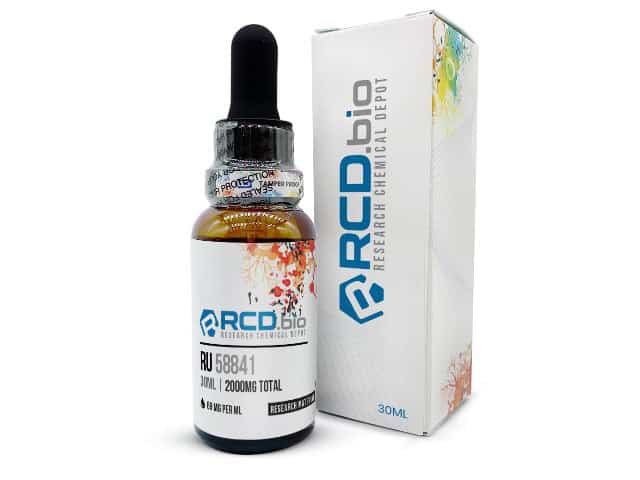
Disclosure: These are affiliate links. I earn a small commission if you purchase — at no extra cost to you. I only recommend products I personally use or have thoroughly researched.