
If I could only recommend one nootropic stack to someone who’s never tried any, this would be it. Not because it’s the most powerful or exotic — it’s neither. But because it works, it’s cheap, it’s safe, the evidence is unusually strong, and you’ll feel the difference within an hour of your first dose.
I’ve been using L-theanine and caffeine together for years. Before I discovered this combination, my relationship with caffeine was a constant negotiation — the focus and alertness I wanted always came bundled with a jittery edge, a tendency toward anxiety, and an inevitable crash. Adding L-theanine didn’t just smooth out the rough edges. It changed the character of the stimulation entirely. The focus became cleaner, calmer, more sustained. The anxiety disappeared. And the crash? Barely noticeable.
That experience is what the clinical research confirms: these two compounds produce genuine synergistic effects that exceed what either delivers alone. This isn’t marketing language — it’s what multiple randomized controlled trials have demonstrated under blinded conditions.
The Short Version: L-theanine (an amino acid from green tea) and caffeine produce synergistic cognitive benefits when combined, improving attention, working memory, reaction time, and mood more than either compound alone. L-theanine counteracts caffeine’s jitteriness and anxiety by enhancing alpha brain wave activity and GABAergic tone. The optimal ratio is roughly 2:1 (200mg L-theanine : 100mg caffeine). Effects peak at 60-90 minutes and last 3-4 hours. This is the most extensively studied nootropic combination in existence, with excellent safety data.
Why the Combination Works
Most people think of L-theanine as simply “the thing that takes the edge off caffeine.” That’s true, but it undersells what’s actually happening neurochemically. These compounds aren’t just coexisting — they’re genuinely synergistic, meaning the combined effect is greater than the sum of the parts.
Caffeine works primarily by blocking adenosine receptors (A1 and A2a subtypes). Adenosine is the neurotransmitter that builds up throughout the day and makes you feel sleepy. By blocking it, caffeine increases neuronal firing and triggers the release of dopamine and norepinephrine — hence the alertness, motivation, and faster reaction time. The problem is that this excitatory cascade also activates your sympathetic nervous system, producing the jitteriness, elevated heart rate, and anxiety that many people experience. For a deeper dive into caffeine’s pharmacology, see our caffeine substance page.
L-theanine works through a completely different set of mechanisms. It crosses the blood-brain barrier within about 30 minutes and acts as a glutamate analog, modulating both excitatory (glutamate) and inhibitory (GABA) neurotransmission. Specifically, it enhances GABAergic activity while acting as a low-affinity antagonist at glutamate receptors. The net effect is a reduction in neuronal excitability — relaxation without sedation. For the full mechanistic breakdown, see our L-theanine substance page.
The critical neurophysiological signature of L-theanine is its effect on alpha brain waves (8-14 Hz) — the frequency band associated with relaxed, focused attention. Evans et al. (2021, Neurology and Therapeutics, PMID 34562208) showed that a single 200mg dose of L-theanine significantly increased frontal and whole-scalp alpha power three hours post-dose, while simultaneously reducing salivary cortisol. You’re literally measurably more relaxed and less stressed, with the brain wave pattern of someone in calm focus.
When you combine these mechanisms, something elegant happens: caffeine drives arousal and alertness through adenosine blockade, while L-theanine prevents that arousal from tipping into overstimulation by enhancing inhibitory tone and promoting alpha wave activity. The result is what researchers call optimal arousal — maximized cognitive performance without anxiety or physiological dysregulation.
An fMRI study by Kahathuduwa et al. (2018, Nutritional Research, PMID 29420994) demonstrated this beautifully at the neural level. Using 200mg L-theanine combined with 160mg caffeine, they found that the combination decreased neural responses to distractor stimuli in attention-regulating brain regions while suppressing activity in the default mode network — the brain’s “mind-wandering” circuit. In other words, the combo makes your brain better at ignoring distractions and worse at zoning out. That’s exactly what you want during deep work.
Dodd et al. (2015, Psychopharmacology, PMID 25761837) added another layer using near-infrared spectroscopy to measure cerebral blood flow. Caffeine alone produced vasoconstriction (reduced oxygenated hemoglobin). When L-theanine was added, it attenuated the vasoconstrictive effect, creating a more balanced cerebrovascular response alongside the cognitive benefits.
What the Clinical Trials Show
This combination has been tested in more RCTs than almost any other nootropic pairing. Here are the key studies:
Owen et al. (2008), Nutritional Neuroscience (PMID 18681988): 27 healthy adults received 50mg caffeine + 100mg L-theanine, each alone, or placebo in a crossover design. The combination improved both speed and accuracy on an attention-switching task at 60 minutes, and reduced susceptibility to distraction on memory tasks at 60 and 90 minutes. Caffeine alone improved alertness; L-theanine alone did not reach significance on any cognitive measure. The synergy was only present in the combination.
Haskell et al. (2008), Biological Psychology (PMID 18006208): 250mg L-theanine + 150mg caffeine in 27 adults. The combination improved attention, task-switching accuracy, and reduced self-reported tiredness and mental fatigue versus placebo and versus either compound alone.
Kahathuduwa et al. (2020), Scientific Reports (PMID 32753637): Tested the combination in children with ADHD using fMRI. The L-theanine + caffeine combination improved overall cognitive performance and target detection (d-prime scores) on a Go/NoGo task, with the benefits associated with decreased default mode network reactivity. This is significant because it suggests the combination may be useful for attention disorders specifically by reducing mind-wandering.
Yilmaz et al. (2023), Journal of the International Society of Sports Nutrition (PMID 37815006): 22 elite curling athletes received 6mg/kg each of caffeine and L-theanine. The combination significantly improved shooting accuracy across all shot types and showed superior Stroop test reaction times compared to either compound alone or placebo. Effect sizes were large (η² = 0.485 to 0.842).
Payne et al. (2025), Nutritional Reviews (PMID 40314930): The most recent systematic review and meta-analysis, synthesizing data from multiple RCTs. Confirmed moderate effect sizes for the combination on attentional switching accuracy and reduced distraction susceptibility, with peak effects at 60-90 minutes post-dose.
A 2021 systematic review by Sohail et al. in Cureus (PMID 35111479) pooled the broader evidence and concluded that the L-theanine + caffeine combination consistently outperforms either compound alone on measures of attention, working memory, and mood, with the combination allowing effective cognitive enhancement at lower caffeine doses than would otherwise be needed.
How to Use It
Dosage
The most commonly studied and recommended ratio is 2:1 L-theanine to caffeine:
- Standard dose: 200mg L-theanine + 100mg caffeine
- Higher dose: 250mg L-theanine + 150mg caffeine (used in several positive trials)
- Lower dose: 100mg L-theanine + 50mg caffeine (effective for caffeine-sensitive individuals)
If you already drink coffee, you can simply take L-theanine alongside your cup. A standard 8oz cup of coffee contains roughly 80-100mg caffeine, so 200mg of supplemental L-theanine pairs well.
Green tea naturally contains both compounds in roughly the right ratio — about 25-50mg caffeine and 25-60mg L-theanine per cup — which is likely why tea produces a calmer, more focused alertness than coffee despite both containing caffeine.
Timing
Take the combination 30-60 minutes before you need peak cognitive performance. Both compounds reach peak plasma levels within 30-60 minutes. Effects plateau at 60-90 minutes and persist for approximately 3-4 hours.
For sustained performance across a full workday, a second dose 3-4 hours after the first is reasonable, though avoid taking caffeine within 6-8 hours of bedtime.
Forms
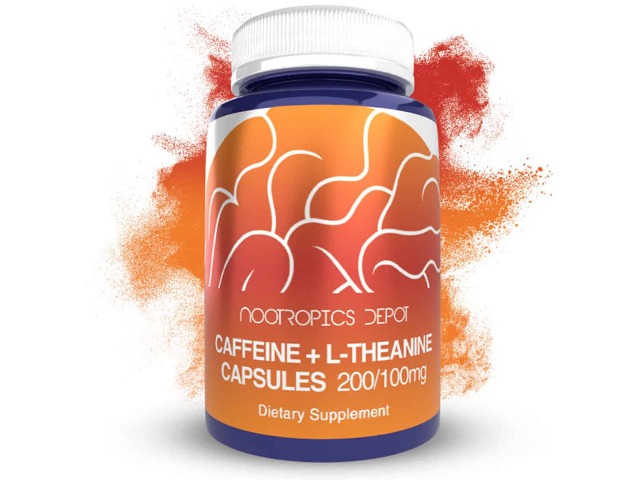
- Capsules: Most convenient. Many brands sell pre-combined L-theanine + caffeine capsules in the 2:1 ratio. This is what I use.
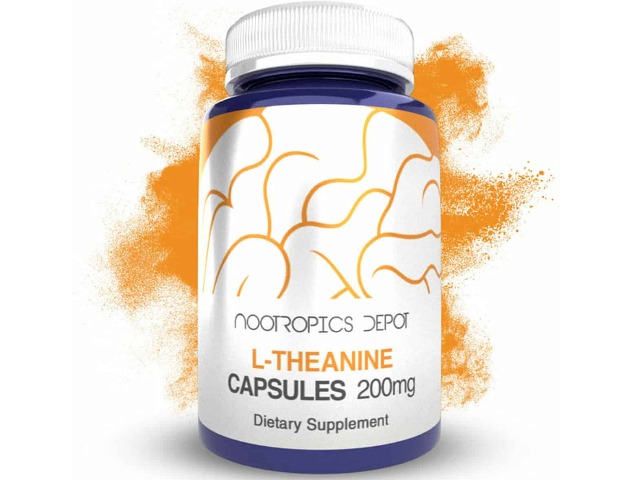
- L-theanine capsule + coffee: Take 200mg L-theanine with your morning coffee. Simple and flexible.
- Powder: Cheapest per serving. L-theanine powder dissolves easily in water or coffee. Slightly sweet taste.
- Green tea: The natural source, but you’d need 4-8 cups to match the doses used in clinical trials.
Who Benefits Most
This stack is particularly effective for:
- Caffeine-sensitive individuals who want cognitive benefits without anxiety or jitters
- Anyone experiencing caffeine tolerance — L-theanine can restore some of the subjective cognitive benefits even when caffeine tolerance has developed
- People who need sustained focus — writing, coding, studying, creative work
- High-stress environments — the cortisol-lowering effect of L-theanine is especially valuable when you need to perform under pressure
L-Theanine’s Independent Benefits
While this article focuses on the combination, L-theanine has notable standalone effects worth mentioning:
Stress and cortisol: Kimura et al. (2007, Biological Psychology, PMID 16930802) demonstrated significant reductions in heart rate and salivary immunoglobulin A during acute stress tasks with L-theanine alone. Evans et al. (2021) showed a significant decrease in salivary cortisol one hour post-dose (p < 0.001).
Sleep quality: Hidese et al. (2019, Nutrients) found that 200mg/day of L-theanine for four weeks significantly improved sleep latency, sleep disturbance, and reduced use of sleep medication compared to placebo — without daytime drowsiness. Unlike caffeine, L-theanine doesn’t impair sleep; it may actually improve it.
Chronic stress: A study in pharmacy students undergoing intensive practice found that 200mg L-theanine twice daily for 10 days significantly reduced both salivary alpha-amylase (a marker of sympathetic nervous system activation) and subjective stress compared to placebo (Unno et al., 2013, PMID 24051231).
For the complete evidence review and dosage guidance on L-theanine alone, see our L-theanine substance page.
Safety
This is one of the safest nootropic combinations available.
L-theanine has been tested at doses up to 900mg/day for 8 weeks without serious adverse events. The most common side effects are mild and rare: occasional headache or drowsiness at high doses. A 2024 systematic review of L-theanine in mental health populations (Moshfeghinia et al., PMID 39633316) confirmed it was “well-tolerated with minimal side effects” across 11 RCTs covering multiple psychiatric conditions.
Caffeine is safe for most healthy adults at up to 400mg/day (FDA guidance). The advantage of the combination approach is that you get effective cognitive enhancement at 50-100mg caffeine — well below the threshold where most people experience significant side effects.
Avoid if: You’re pregnant or nursing (insufficient safety data for L-theanine; caffeine crosses the placenta). Use caution if you’re on blood pressure medications (L-theanine may lower BP slightly) or stimulant medications for ADHD (potential additive effects — discuss with your prescriber).
My Take
I take this stack virtually every working day. My standard protocol is 200mg L-theanine + ~100mg caffeine (one cup of coffee) in the morning, sometimes repeating in the early afternoon for demanding work sessions. It’s unglamorous. It’s not going to be the subject of an excited Reddit post about “limitless pills.” But it’s the most reliable, consistent cognitive support I’ve found.
What I notice: cleaner focus, less mind-wandering, better sustained attention during long writing or research sessions, and a complete absence of the anxious edge that coffee alone gives me. The effect is noticeable within 30-40 minutes and fades gradually over 3-4 hours without a crash.
If you’re new to nootropics, start here. Seriously. Before you spend money on exotic compounds, master this foundation. It’s cheap, it’s backed by more human evidence than most things in this space, and it teaches you what “clean focus” actually feels like — which makes it much easier to evaluate everything else you might try later.
And if you’re already a coffee drinker who’s never tried adding L-theanine? You’re leaving free cognitive performance on the table. A bottle of L-theanine capsules costs about $15 and lasts months. It might be the best ROI in all of supplementation.