
- Sustained growth hormone and IGF-1 elevation
- Potential cognitive enhancement via IGF-1 signaling
- Improved sleep quality
- Enhanced body composition and recovery
- Neuroprotective effects through GABA modulation
I’ll be honest — the first time I heard someone describe a peptide that “tells your pituitary gland to do its job better,” I thought it sounded like one of those too-good-to-be-true biohacking rabbit holes. Another magic injection promising youth, brains, and abs.
Then I actually read the research. And talked to clinicians who’d been prescribing it. And spent way too many hours on peptide forums at 2 AM.
Turns out CJC-1295 is one of the more legitimate compounds in the peptide world — with real clinical trial data, a well-understood mechanism, and a surprisingly complicated regulatory story that every potential user needs to understand before going anywhere near it.
The Short Version: CJC-1295 is a synthetic peptide that stimulates your pituitary gland to release more growth hormone naturally. It comes in two forms — a long-acting version (with DAC) dosed weekly, and a short-acting version (without DAC, aka Mod GRF 1-29) dosed daily. Human trials show it can elevate GH levels 2–10x and IGF-1 levels 1.5–3x. The cognitive benefits are promising but come from studies on a closely related compound, not CJC-1295 directly. Below, I break down exactly how it works, what the evidence actually supports, and how to use it safely if you decide it’s right for you.
What Is CJC-1295?
CJC-1295 is a synthetic 29-amino acid peptide that mimics growth hormone-releasing hormone — the signal your brain naturally sends to your pituitary gland when it’s time to produce growth hormone. Think of it as turning up the volume on a conversation your body is already having.
It was developed by ConjuChem Biotechnologies out of Montreal in the early 2000s. The foundational research, published in 2005 by Jetté et al. in Endocrinology, showed that by making four strategic amino acid substitutions to the natural GHRH molecule, they could create a version that resisted enzymatic breakdown and lasted dramatically longer in the body.
Here’s where it gets interesting — and where a lot of people get confused. There are two distinct forms of CJC-1295, and they behave very differently:
CJC-1295 with DAC (Drug Affinity Complex) is the original version. The DAC component binds to albumin in your blood, extending the half-life to a remarkable 5.8–8.1 days. One injection keeps working for nearly a week. This is the form used in the pivotal clinical trials.
CJC-1295 without DAC — commonly called Modified GRF 1-29 or just Mod GRF — strips away that albumin-binding component. The half-life drops to about 30 minutes. Sounds like a downgrade, right? Not necessarily. Many practitioners actually prefer this version because it produces sharper, more pulsatile GH release that mimics your body’s natural rhythm rather than creating a sustained, flat elevation.
ConjuChem partnered with Biogen Idec in 2005 to develop CJC-1295 for growth hormone deficiency, but the partnership dissolved by 2009. The compound never received FDA approval — a detail that matters enormously for how and where you can legally obtain it today.
How Does CJC-1295 Work?
Let me give you the simple version first. Your pituitary gland sits at the base of your brain and acts like a hormone dispatch center. One of its jobs is releasing growth hormone in pulses throughout the day — especially during deep sleep. CJC-1295 essentially sends a stronger, longer-lasting “release GH now” signal to that dispatch center.
Now here’s what’s actually happening at the molecular level. CJC-1295 binds to GHRH receptors on cells called somatotrophs in the anterior pituitary. This triggers a cascade: G-protein activation → adenylyl cyclase stimulation → increased cyclic AMP → protein kinase A activation → and finally, both the transcription of new GH and the release of stored GH into your bloodstream. The elevated GH then signals your liver to produce more IGF-1 (insulin-like growth factor 1), which is where many of the downstream benefits actually come from.
So what does this mean for your brain? The cognitive connection is indirect but well-supported. IGF-1 crosses the blood-brain barrier and promotes neuronal survival, synaptogenesis (new connections between neurons), and even neurogenesis — the birth of new brain cells. A 2013 study by Friedman et al. published in JAMA Neurology found that GHRH administration increased brain GABA levels across all measured regions and decreased myo-inositol, a metabolite linked to Alzheimer’s disease, in the posterior cingulate cortex. IGF-1 changes were positively correlated with GABA changes (r=0.47, P=.001), providing a concrete neurochemical mechanism for the cognitive benefits people report.
Pro Tip: The four amino acid substitutions in CJC-1295 (D-Ala², Gln⁸, Ala¹⁵, Leu²⁷) aren’t random — they specifically protect the peptide from DPP-4, the enzyme that would normally chew through natural GHRH in minutes. This is what makes CJC-1295 practical to use where native GHRH wouldn’t be.
What CJC-1295 Actually Does to Your Brain and Body
Let me be straight with you about the evidence — because there’s a lot of hype in the peptide space, and you deserve to know what’s actually proven versus what’s plausible but unconfirmed.
Growth Hormone & IGF-1 Elevation — Strong Evidence
This is the slam dunk. Teichman et al. (2006) published two randomized, double-blind, placebo-controlled trials in The Journal of Clinical Endocrinology & Metabolism showing that a single CJC-1295 injection produced dose-dependent GH increases of 2–10 fold lasting over 6 days, and IGF-1 increases of 1.5–3 fold lasting 9–11 days. After multiple doses, mean IGF-1 stayed above baseline for up to 28 days. These aren’t marginal bumps — they’re substantial, sustained elevations from a single injection.
Cognitive Enhancement — Moderate Evidence (With a Caveat)
Here’s where I need to be carefully honest. The best cognitive evidence comes from a 2012 RCT by Baker et al. published in Archives of Neurology — but it used tesamorelin, a closely related GHRH analog, not CJC-1295 specifically. In that trial, 152 participants (66 with mild cognitive impairment) received 1 mg/day of subcutaneous tesamorelin for 20 weeks. The results were encouraging: favorable effects on cognition overall (P=.03), particular benefit for executive function (P=.005), and a trend for verbal memory improvement (P=.08). IGF-1 increased 117%.
Both CJC-1295 and tesamorelin work through the exact same receptor, so the mechanism is analogous. But I won’t pretend the evidence directly applies to CJC-1295 — that would be intellectually lazy. The takeaway: GHRH-mediated GH/IGF-1 elevation likely supports cognitive function, and CJC-1295 achieves that elevation reliably. But the direct cognitive trial data is one step removed.
Reality Check: If you’re looking for a nootropic you can take and feel working within hours, CJC-1295 is not it. The cognitive and body composition benefits take weeks to months to manifest. This is a long game — and it works best when your foundations (sleep, nutrition, stress management, gut health) are already solid. Stacking peptides on top of a broken lifestyle is like putting racing tires on a car with no engine.
Sleep Quality — Promising but Unproven
Improved sleep is hands-down the most consistently reported benefit in user communities. The mechanism is plausible — GH release is tightly linked to deep slow-wave sleep, and enhancing the GHRH signal could deepen those restorative sleep phases. But we don’t have controlled trial data on CJC-1295 and sleep outcomes specifically. File this under “very likely, but not formally proven.”
Body Composition & Recovery — Moderate Evidence
Fat loss and lean mass improvements are commonly reported and mechanistically sound — GH is lipolytic (breaks down fat) and anabolic (builds tissue). The Baker tesamorelin trial showed a 7.4% decrease in body fat alongside the cognitive benefits. User reports consistently describe gradual recomposition over 8–12 weeks, particularly with visceral fat reduction.
How to Take CJC-1295 Without Wasting Your Money
This is where the two forms diverge significantly in protocol.
CJC-1295 with DAC
- Dose: 1–2 mg per injection, subcutaneous
- Frequency: Once or twice weekly — the extended half-life does the work
- Clinical trial dosing: 30–60 μg/kg (roughly 2–4 mg for a 70 kg person)
CJC-1295 without DAC (Mod GRF 1-29)
- Dose: 100–200 mcg per injection, subcutaneous
- Frequency: 1–3 times daily
- Most common protocol: 100 mcg before bed, often combined with Ipamorelin at 100–200 mcg
Timing Matters More Than You Think
Administer on an empty stomach — and I mean genuinely empty. Fats and carbohydrates blunt the GH response significantly. Avoid eating 1–2 hours before and after injection. Before bed is the sweet spot for most people, aligning with your body’s natural nocturnal GH surge.
Cycling Is Non-Negotiable
Run 60–90 days on, then take 30 days off. This isn’t optional. Without cycling, your pituitary receptors can desensitize, and you’ll be injecting an increasingly expensive placebo. Three cycles per year is a solid framework.
Insider Tip: If you’re new to peptides, start with the no-DAC version at the lower end (100 mcg before bed). It’s more forgiving — if you react poorly, it’s out of your system in a couple hours. The DAC version commits you to days of sustained activity from a single injection, which is great once you know you tolerate it well, but less ideal for a first trial.
Bioavailability
Subcutaneous injection only. There is no effective oral, nasal, or sublingual form of CJC-1295 — peptides get destroyed in the GI tract. If someone is selling you oral CJC-1295, they’re selling you expensive nothing.
The Side Effects Nobody Warns You About
Common (10–15%+ of Users)
- Injection site reactions — redness, swelling, mild irritation. This is the most frequent complaint and usually resolves within minutes to hours.
- Flushing and warmth — a “head rush” feeling immediately post-injection. Harmless but can be startling the first time.
- Water retention — especially in the first few weeks. Hands, feet, and face may feel puffy.
- Increased hunger — GH stimulation increases appetite. This can be a plus or a minus depending on your goals.
- Tingling in extremities — carpal tunnel-like sensations from fluid retention at higher doses.
- Vivid dreams or restless sleep initially — usually normalizes within 1–2 weeks.
Serious Concerns Worth Knowing
Insulin resistance. This one deserves your attention. GH elevation can increase fasting insulin and impair glucose tolerance. The Baker trial showed a 35% increase in fasting insulin among MCI patients. If you have any metabolic issues, get your fasting glucose and insulin checked before and during use.
Cardiac effects. The FDA flagged CJC-1295 for reports of increased heart rate and cardiac events. The data is thin, but if you have a heart condition, this is a non-starter without cardiologist clearance.
Potential tumor promotion. GH and IGF-1 don’t cause cancer, but they can theoretically accelerate the growth of existing tumors. This is why active or recent cancer is an absolute contraindication.
Important: Do NOT use CJC-1295 if you have active cancer or a recent cancer history, are pregnant or breastfeeding, have diabetes or significant insulin resistance, have pituitary tumors or disorders, or have active retinopathy. Also be aware of interactions with insulin, corticosteroids, thyroid medications, and other GH secretagogues.
The Regulatory Elephant in the Room
CJC-1295 has never been FDA-approved. It was placed on the FDA’s Category 2 list in September 2023, restricting compounding pharmacies from making it. That restriction was technically lifted in September 2024 when the nominator withdrew, but CJC-1295 wasn’t added to Category 1 (approved for compounding) either — leaving it in regulatory limbo. In July 2025, the FDA issued a Class II recall for a specific CJC-1295 injectable due to sterility concerns. This is not a substance with a clean regulatory path, and you need to factor that into your risk assessment.
Smart Stacking: What to Combine CJC-1295 With
The Gold Standard: CJC-1295 + Ipamorelin
If you spend five minutes in the peptide world, you’ll hear about this stack. There’s a good reason — it’s elegant pharmacology. CJC-1295 (GHRH analog) provides sustained GH release through the GHRH receptor. Ipamorelin (a ghrelin mimetic) triggers sharp GH pulses through the completely separate GHSR receptor. Together, they create a pattern of sustained baseline elevation with pulsatile peaks that closely mimics healthy, youthful GH secretion.
Typical protocol: 100 mcg CJC-1295 (no DAC) + 100–200 mcg Ipamorelin, subcutaneous before bed.
Other Combinations Worth Considering
- CJC-1295 + BPC-157 — For recovery-focused protocols. CJC-1295 handles systemic GH support while BPC-157 targets localized tissue repair. Popular among athletes dealing with injuries.
- CJC-1295 + MK-677 — An oral GH secretagogue stacked with an injectable one. Use caution here — combining multiple secretagogues can push IGF-1 levels too high, and MK-677 significantly increases hunger and can worsen insulin sensitivity.
What NOT to Stack
Avoid combining CJC-1295 with somatostatin analogs (they directly oppose its mechanism), high-dose insulin (compounding metabolic risk), or multiple high-dose GH secretagogues simultaneously. Chronically elevated IGF-1 can produce acromegaly-like symptoms — joint pain, soft tissue swelling, and facial changes. More is not better.
My Take
Here’s where I land on CJC-1295 after spending considerable time with the research and talking to practitioners who use it clinically.
It’s legitimate. The mechanism is well-understood, the human data for GH/IGF-1 elevation is solid, and the cognitive evidence from the closely related tesamorelin is genuinely encouraging. This isn’t snake oil, and it isn’t just bodybuilding hype.
That said, I think most people overestimate what it will do for them and underestimate the importance of doing it right. The people who get the best results are the ones who already have their foundations locked in — solid sleep, good nutrition, regular training, managed stress — and use CJC-1295 as an optimization layer on top of that. If you’re sleeping five hours a night and eating garbage, this peptide isn’t going to rescue you. Fix the foundation first.
If I were advising someone curious about CJC-1295, I’d say this: start with Mod GRF (no DAC) paired with Ipamorelin at conservative doses before bed. Give it 8–12 weeks. Track your sleep quality, recovery, and body composition. Get bloodwork done before you start and at the 6-week mark — specifically fasting glucose, fasting insulin, IGF-1, and a basic metabolic panel. If you have access to a knowledgeable clinician who prescribes peptides, that is unequivocally the safest route. The regulatory landscape is messy, and quality control from unregulated sources is a genuine concern — especially after the 2025 FDA recall.
For those who want a fully legal, clinician-supervised alternative with actual cognitive trial data behind it, ask your doctor about tesamorelin. It’s the only FDA-approved GHRH analog and it’s the compound that was actually used in the cognitive enhancement study. It’s more expensive and requires a prescription, but you know exactly what you’re getting.
CJC-1295 is a powerful tool in the right hands. Just make sure those hands know what they’re doing — and that includes yours.
Recommended CJC-1295 Products
I know how frustrating it is to sort through dozens of brands making the same claims. These are the ones I've personally vetted — because quality is the difference between results and wasted money.
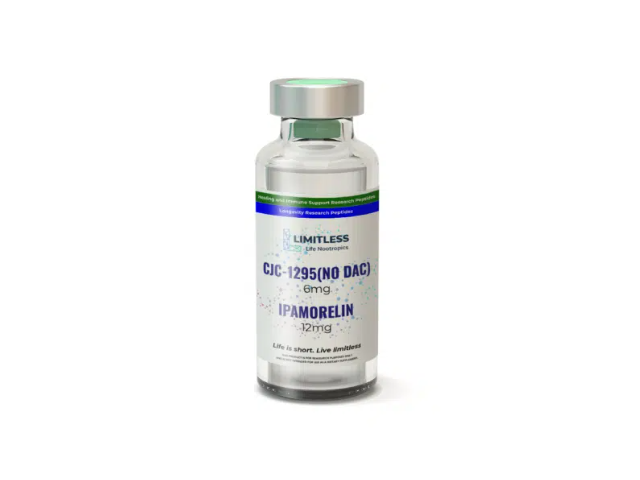
CJC-1295 (No DAC) & Ipamorelin Blend by Limitless Life Nootropics
Shop Now →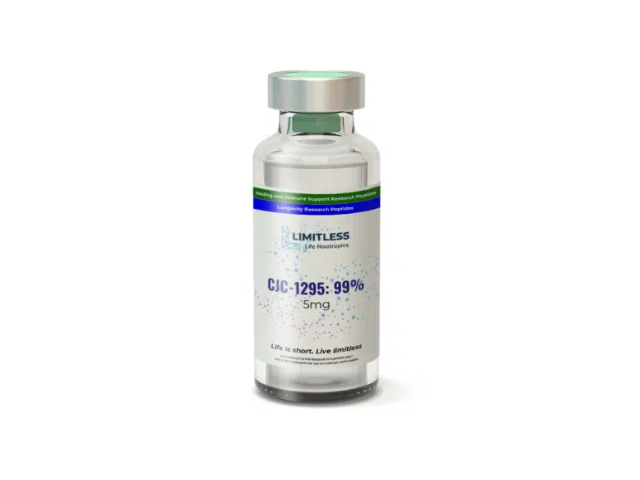
CJC-1295 No DAC 10mg (Mod GRF 1-29) by Limitless Life Nootropics
Shop Now →Disclosure: These are affiliate links. I earn a small commission if you purchase — at no extra cost to you. I only recommend products I personally use or have thoroughly researched.
Research & Studies
This section includes 4 peer-reviewed studies referenced in our analysis.