
- Mood Enhancement
- Anxiety Reduction
- Neuroprotection
- Cognitive Enhancement
I used to think licorice was just that weird, polarizing black candy my grandpa loved. It never occurred to me that hidden inside the root was a compound that could act as one of the smoothest, most effective natural mood-boosters I’ve ever encountered.
That compound is Isoliquiritigenin (ISL), and it has a fascinatingly complex effect on the brain. It can promote a “zen-like” state of calm focus that’s perfect for creative work or chilling out in social settings. But there’s a huge catch, and it’s the reason most people who try it are completely underwhelmed: if you don’t take it in the right form, you’re basically wasting your money.
The Short Version: Isoliquiritigenin (ISL) is a potent flavonoid from licorice root that offers a ‘zen-like’ mood boost and anxiety relief. It works on both the GABA (calming) and MAO (mood) systems, but has very poor natural bioavailability. The form you take it in is critical. Below, I break down the science, the risks, and how to use it effectively.
What Is Isoliquiritigenin?
Isoliquiritigenin—let’s just call it ISL—is a natural flavonoid found in the licorice root. It’s part of a class of compounds called chalcones, which give many plants their vibrant colors and pack a serious antioxidant punch.
For thousands of years, Traditional Chinese Medicine has used licorice root for everything from coughs to detoxification. But modern science has helped us isolate the specific molecules responsible for its effects. While a lot of attention goes to glycyrrhizin (the compound that gives licorice its sweet taste but can also raise blood pressure), ISL is emerging as the far more interesting compound for nootropic purposes.
The biggest hurdle with ISL, and the central theme of this article, is its terrible oral bioavailability. Your body is just not good at absorbing it on its own. This has held it back from mainstream use and is the single most important factor to consider. We’re not just talking about a minor difference; we’re talking about the difference between an effect you can feel and no effect at all.
How Does Isoliquiritigenin Work?
ISL’s “smooth” and “clean” feeling comes from its multi-target mechanism. Unlike a pharmaceutical that hits one target like a sledgehammer, ISL nudges several related systems at once.
1. It Enhances Your Brain’s “Brake Pedal” (GABA)
Imagine your brain has a brake pedal called GABA. It’s your primary calming neurotransmitter, telling your brain to chill out when things get too frantic. ISL doesn’t just slam on the brakes; it makes the brake pedal more sensitive.
In technical terms, ISL is a positive allosteric modulator of GABA-A receptors and an agonist at GABA-B receptors. This means it enhances the effects of your body’s own GABA, promoting relaxation and reducing anxiety.
Translation: This is where the anxiolytic, “zen” feeling comes from. It calms the system down without the heavy sedation you’d get from a prescription drug.
2. It Keeps “Feel-Good” Chemicals Around for Longer (MAO Inhibition)
At the same time it’s calming things down, ISL also helps elevate your mood. It does this by inhibiting an enzyme called Monoamine Oxidase (MAO). MAO’s job is to clean up neurotransmitters like dopamine, serotonin, and norepinephrine.
The science: ISL acts as a competitive inhibitor of both MAO-A and MAO-B, with a slight preference for MAO-B. By slowing down these “cleanup” enzymes, it allows your key mood-regulating neurotransmitters to hang around in the brain for longer.
So what? This action is the source of the clean stimulation and mood lift users report. Because it’s a “reversible” inhibitor, it’s generally considered safer than pharmaceutical MAOIs, but this mechanism is also the source of its most dangerous potential interactions.
3. It Protects Your Brain Cells from Damage
Beyond the effects you can feel, ISL is a potent antioxidant and anti-inflammatory. It essentially helps protect your brain hardware from the wear and tear of oxidative stress.
It works by activating the Nrf2 signaling pathway, which is your body’s master regulator for its own antioxidant defenses. At the same time, it suppresses inflammatory pathways like NF-κB.
In plain English, it helps your brain defend itself against cellular stress and inflammation—two of the primary culprits behind brain fog and long-term cognitive decline.
The Evidence-Based Benefits of Isoliquiritigenin
Now, it’s critical to be honest here: the vast majority of evidence for ISL comes from preclinical research—that means animal models and cell studies. While these findings are incredibly promising, they are not a guarantee of the same effects in humans.
Reality Check: Nootropics aren’t magic pills that turn you into a superhero overnight. They’re tools that work best when combined with good sleep, nutrition, and stress management. ISL is an exciting compound, but the human research is still in its infancy.
Potential for Mood & Anxiety Relief Animal studies consistently show that ISL has both antidepressant-like and anxiety-reducing effects. This makes perfect sense given its dual action on the GABA and MAO systems. Users on forums like Reddit consistently describe a “groovy” or “zen” feeling—a relaxed but clear-headed mood boost that’s excellent for reducing social anxiety.
Neuroprotection This is where the preclinical research is strongest. In lab settings, ISL is a powerhouse at protecting neurons from damage. It shields them from glutamate excitotoxicity (damage from over-stimulation), mitochondrial dysfunction, and various neurotoxins. This is the long-term benefit that you won’t necessarily “feel” day-to-day.
Cognitive Enhancement In rodent studies, ISL helped mitigate memory impairments. This isn’t likely a direct “smart drug” effect, but rather a downstream consequence of its other benefits: reduced anxiety, improved mood, and decreased inflammation all contribute to a brain that can think more clearly and learn more effectively.
How to Take Isoliquiritigenin Without Wasting Your Money
This is the most important section of this guide. Taking ISL correctly is the difference between a novel experience and expensive urine.
The Bioavailability Problem As I’ve mentioned, standard ISL powder has horrible bioavailability (estimated around 12% in rats). If you buy a product that’s just plain “Isoliquiritigenin powder” in a capsule, you are throwing your money away. To be effective, it must be in a form designed to enhance absorption.
Insider Tip: Look for products that specifically mention a delivery system like a cyclodextrin complex or liposomal delivery. These formulations protect the ISL molecule and shuttle it into your bloodstream much more effectively. A 25mg dose of a complexed ISL will be far more potent than 100mg of plain powder.
Dosage & Timing
- Dosage: For a high-bioavailability version, a standard dose is 25 mg per day. Some experienced users may go up to 50 mg, but you should always start low.
- Timing: Due to its MAO-inhibiting effects, ISL can be stimulating for some. Take it in the morning or early afternoon. Avoid taking it within 6-8 hours of bedtime, as it could interfere with sleep.
There’s no need for a loading phase or complex cycling schedule. The effects are noticeable fairly quickly, making it suitable for either daily use or as-needed for specific situations like a creative session or social gathering.
The Side Effects & Safety Warnings Nobody Talks About
Because of its lack of human clinical trials, a full safety profile is unknown. However, based on its mechanisms, we can identify some serious risks.
Drug Interactions are the #1 Concern This is not something to be taken lightly. Because it inhibits MAO, ISL can have dangerous interactions with a wide range of medications.
Important: DO NOT combine Isoliquiritigenin with prescription MAOIs (e.g., phenelzine, selegiline), SSRIs, or other antidepressants. This could lead to a hypertensive crisis or life-threatening serotonin syndrome. Due to its potent effects on GABA, you must also avoid combining it with CNS depressants like alcohol, benzodiazepines, and other sedatives.
Hormonal Effects ISL also acts as an aromatase inhibitor, meaning it blocks the conversion of testosterone to estrogen. While this might sound appealing to some, it can disrupt hormonal balance. Individuals with hormone-sensitive conditions should avoid it entirely.
Pregnancy & Lactation Considered unsafe. The whole licorice root it comes from is linked to an increased risk of preterm birth, and ISL itself showed potential for developmental toxicity in animal studies. Avoid completely if you are pregnant, planning to become pregnant, or breastfeeding.
Stacking Isoliquiritigenin
The most important “stack” for ISL is simply pairing it with a proper delivery system, as mentioned above.
- Synergies: The most obvious pairing is with Piperine (black pepper extract). Piperine inhibits the liver enzymes (CYP450) that break down ISL, potentially extending its duration and increasing its effects.
- Combinations to AVOID: Do not stack ISL with other strong MAOIs (like Rhodiola Rosea or high-dose Curcumin) or strong GABAergic compounds (like Kava or Phenibut). Re-read the safety section above. Always err on the side of caution.
- Functional Alternatives: If you’re looking for a similar dual-action effect, you might explore substances like Passionflower or Saffron. For purely calming GABA effects, L-Theanine is a much milder and safer starting point.
My Take
So, what’s my final verdict on Isoliquiritigenin?
It’s one of the most interesting “under-the-radar” nootropics I’ve come across, but it comes with a giant asterisk. The smooth, clean, and calm focus is unique and genuinely pleasant. It feels like the anxiolysis of L-Theanine combined with a subtle, non-pushy mood lift.
However, this is not a beginner’s nootropic. The risks of drug interactions are real, and the absolute necessity of finding a high-bioavailability form makes it a more expensive and difficult compound to source correctly.
Who is this BEST for? This is for the experienced biohacker who understands the mechanisms and risks. It’s for someone who is not on any conflicting medications and is willing to invest in a properly formulated product from a highly reputable vendor (who provides a Certificate of Analysis). For this person, ISL could be a fantastic tool for creative work, reducing social anxiety, or fostering a calm, patient mindset.
Who should try something else instead? If you’re new to nootropics, are on any prescription medication (especially for mood), or are looking for a simple, cheap supplement, this is not for you. Start with something safer and more forgiving like L-Theanine or Ashwagandha to address your foundations first.
Isoliquiritigenin is a powerful and promising tool, but it demands respect. Use it wisely.
Recommended Isoliquiritigenin Products
I know how frustrating it is to sort through dozens of brands making the same claims. These are the ones I've personally vetted — because quality is the difference between results and wasted money.
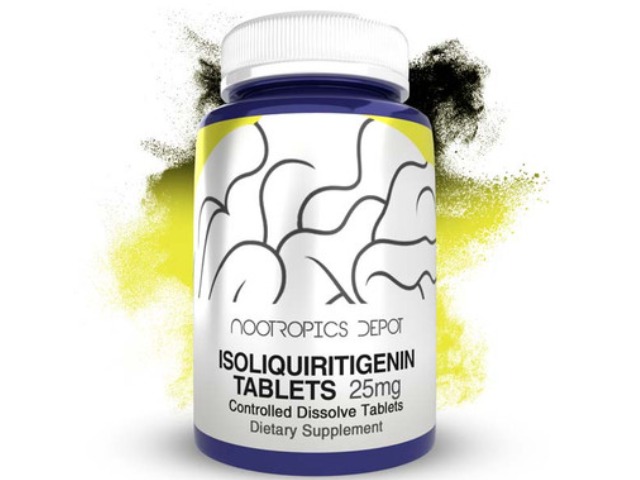
Disclosure: These are affiliate links. I earn a small commission if you purchase — at no extra cost to you. I only recommend products I personally use or have thoroughly researched.
Research & Studies
This section includes 8 peer-reviewed studies referenced in our analysis.