
- Pain Relief
- Insomnia
- Anxiety
- Addiction Treatment
My brain has a knack for hosting a loud, unsolicited brainstorming session right as my head hits the pillow. For years, I fought it with the usual suspects: magnesium, meditation, even counting sheep backward (which, for the record, just made me think about sheep logistics). But some nights, the mental chatter just won’t quit.
That’s when I learned about the nervous system’s “off” switch. A compound that doesn’t just nudge your brain toward sleep but shuts the door on racing thoughts entirely. It’s called L-Tetrahydropalmatine, and it’s one of the most powerful legal sleep aids I’ve ever researched.
The Short Version: L-Tetrahydropalmatine (L-THP) is a potent alkaloid from the Corydalis plant, primarily used for sedation and pain relief. It works by blocking dopamine receptors, effectively quieting ‘mental chatter.’ It is a powerful tool for stubborn insomnia but must be used with caution, as its strength can lead to next-day grogginess.
What is L-Tetrahydropalmatine?
L-Tetrahydropalmatine (also known as L-THP or Rotundine) is a naturally occurring compound extracted from the tubers of plants like Corydalis yanhusuo and Stephania rotunda. If you’ve ever dabbled in Traditional Chinese Medicine (TCM), you might recognize Corydalis as a classic remedy for pain and sleeplessness, where it’s been used for centuries.
While the plant has a long history, the specific compound L-THP was isolated in the mid-20th century. Scientists identified it as the primary source of the plant’s sedative and analgesic effects. It’s been an approved medication in China since the 1960s, prescribed for pain, anxiety, and as a sleep aid.
In the nootropics world, L-THP is considered a specialty tool. It’s not a gentle nudge like L-Theanine; it’s the heavy machinery you bring in when the job is tough and nothing else is working.
How Does L-Tetrahydropalmatine Work?
Think of L-THP as a bouncer for your brain’s dopamine clubs. Dopamine is the neurotransmitter of motivation, reward, and alertness. While it’s great for getting things done during the day, a flood of it at night can leave you feeling wired, restless, and wide awake. L-THP steps in and tells the party to go home.
Here’s the more scientific breakdown, using my “science sandwich” technique:
Layer 1 — What it does (conversational): L-THP works by turning down the volume on the parts of your brain that keep you awake and mentally spinning your wheels. It acts primarily on the dopamine system, which is why it’s so effective at silencing that “mental chatter.”
Layer 2 — The evidence (authoritative): The primary mechanism of L-THP is its function as a dopamine receptor antagonist, meaning it blocks D1, D2, and D3 receptors. This action is the main driver of its sedative and anti-addictive properties. But it doesn’t stop there. L-THP also interacts with other systems: it binds to 5-HT1A serotonin receptors (contributing to anti-anxiety effects), enhances the inhibitory neurotransmitter GABA (promoting relaxation), and blocks L-type calcium channels. Some research even suggests it has weak MAO-I activity.
Layer 3 — So what? (practical): In plain English, L-THP doesn’t just ask your brain to quiet down—it forces the issue by blocking the very pathways that keep you feeling alert and engaged. This multi-target approach is why it’s so profoundly effective for sleep, but it’s also the reason you absolutely cannot take it during the day. It’s designed to shut things down, not sharpen them up.
The Evidence-Backed Benefits of L-Tetrahydropalmatine
The evidence for L-THP comes from a mix of modern clinical use in China, animal studies, and a long history in traditional medicine. The consensus is clear: it’s effective, but it’s strong.
- Analgesia (Pain Relief): L-THP is a well-established pain reliever, particularly for neuropathic and inflammatory pain. Crucially, its mechanism is completely separate from opioid receptors, making it a non-addictive option for pain management.
- Sedation & Insomnia: This is L-THP’s main claim to fame. It’s widely used as a sedative and hypnotic, and both research and countless user reports confirm its ability to reduce sleep latency (the time it takes to fall asleep). It’s particularly effective for insomnia driven by racing thoughts.
- Anxiety & Stress: By calming the dopamine and serotonin systems, L-THP acts as an anxiolytic (anti-anxiety) agent. It seems most useful for the psychological components of anxiety—intrusive thoughts, worry loops, and that feeling of being mentally “stuck.”
- Addiction Treatment: A significant body of preclinical research shows L-THP can reduce the rewarding effects and cravings associated with substances like cocaine, opiates, and alcohol. While human trials are limited, its use in China to help reduce heroin relapse is a powerful signal of its potential.
Reality Check: While research into L-THP for addiction is promising, it is not a substitute for professional medical treatment or a comprehensive recovery program. It’s a tool that may support the process, not a standalone cure.
How to Take L-Tetrahydropalmatine Without Wasting Your Money
Getting the protocol right with L-THP is critical. Taking too much leads to a next-day “hangover,” while taking too little does nothing.
- Dosage: The official therapeutic range is 60-180 mg per day. However, in the nootropics community, the effective dose is often found to be between 30-100 mg.
- Timing: Evening or pre-bedtime ONLY. I cannot stress this enough. Taking this during the day is a recipe for extreme drowsiness and cognitive impairment. Take it about 30-60 minutes before you intend to be asleep. It’s often taken with a small amount of food to prevent potential nausea.
- Forms: It’s most commonly sold as a pure crystalline powder or in pre-measured capsules.
- Cycling: There are no formal guidelines, but with any compound that strongly affects dopamine receptors, periodic breaks are a wise strategy. This helps prevent tolerance and receptor downregulation. I would not use this more than 2-3 times per week.
Insider Tip: Start at the lowest possible dose (30 mg or less) to see how you react. The goal isn’t to take the most you can tolerate; it’s to take the least you need to get the desired effect. More is not better and dramatically increases the risk of side effects.
The Side Effects Nobody Warns You About
L-THP is powerful, and it deserves respect. While generally safe within the recommended dosage, the side effects are real and primarily stem from its potent sedative action.
- Drowsiness/Sedation: This is the intended effect, but it can easily bleed into the next day. A “hangover effect” or feeling of grogginess is the most common complaint.
- Dizziness & Nausea: These can occur, especially at higher doses.
- Restless Legs Syndrome (RLS): A minority of users report that L-THP, despite being a sedative, can trigger RLS. This is likely due to its complex action on the dopamine system.
- Liver Injury: While pure, lab-tested L-THP has been well-tolerated in studies, some unregulated Corydalis herbal preparations have been linked to liver toxicity. This is a powerful argument for sourcing from reputable vendors who provide a Certificate of Analysis.
Important: Do NOT combine L-Tetrahydropalmatine with other CNS depressants like alcohol, benzodiazepines, opiates, or other sleep medications. The combined sedative effect can be dangerous and may lead to excessive respiratory depression.
Stacking L-Tetrahydropalmatine: Less Is More
Honestly, L-THP is not a team player. It’s a solo act designed for a specific purpose. Stacking it with other sedatives is a bad idea.
The focus shouldn’t be on what to add, but on what to avoid. Do not combine it with anything else that causes drowsiness.
The only “stack” worth mentioning is a mitigation strategy. Some users find that taking L-THP with a well-absorbed form of Magnesium, like glycinate or threonate, can help prevent the potential for restless legs. This isn’t for synergy, but for side effect management.
My Take
I’ll be direct: L-Tetrahydropalmatine isn’t in my daily stack. It’s a “break glass in case of emergency” tool for me. After a week of bad sleep or when my mind absolutely refuses to shut down, L-THP is what I reach for when I need a guaranteed reset.
Who this is BEST for:
- Individuals with stubborn, thought-based insomnia.
- People who have already tried the foundational sleep aids (magnesium, glycine, L-theanine) and found them insufficient for their needs.
- Anyone needing to forcibly shut off “mental chatter” to get to sleep.
Who should probably AVOID it:
- Anyone sensitive to dopamine-blocking medication.
- People who are prone to next-day grogginess or have to be sharp first thing in the morning.
- Those looking for a gentle, daily sleep aid. This is a sledgehammer, not a feather.
In my experience, L-THP delivers on its promise. It will put you to sleep. But that effectiveness comes at a price, which is the potential for a “hangover” the next day. For me, that trade-off is only worth it occasionally. It’s an incredibly effective tool, but it’s one to be used judiciously. My recommendation is to always try the gentler, foundational sleep supplements first. If you’re still stuck staring at the ceiling at 3 AM, L-THP is a powerful option, but start low, go slow, and respect its power.
Recommended L-Tetrahydropalmatine Products
I know how frustrating it is to sort through dozens of brands making the same claims. These are the ones I've personally vetted — because quality is the difference between results and wasted money.
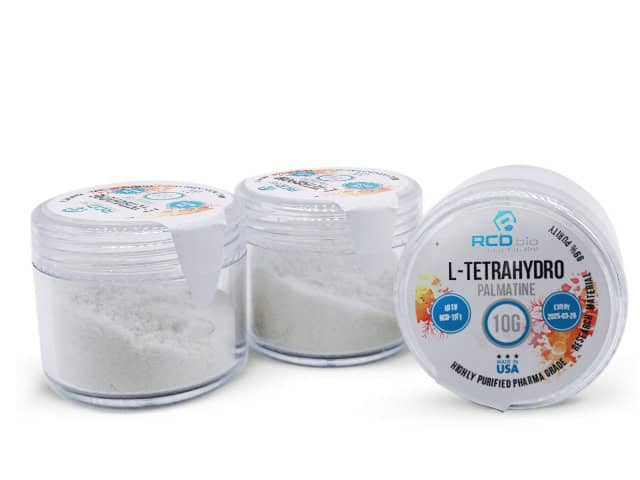
Disclosure: These are affiliate links. I earn a small commission if you purchase — at no extra cost to you. I only recommend products I personally use or have thoroughly researched.