I spent three semesters grinding through college Spanish — flashcards on the bus, conjugation tables taped to my bathroom mirror, embarrassing myself in conversation groups — and the whole time I wondered if I was actually getting dumber. My grades in other classes slipped. My brain felt like wet concrete. Then, around month four, something shifted. Not just in Spanish, but everywhere. I was remembering names I’d normally forget. Following complex arguments more easily. Holding multiple threads of conversation without losing the plot. My brain didn’t just learn Spanish — it rebuilt itself in the process.
That wasn’t a fluke. It was neuroplasticity doing exactly what it’s designed to do.
The Short Version: Learning a second language is one of the most powerful neuroplasticity exercises available to any adult brain. Recent MRI research (2024) shows measurable increases in gray matter density, white matter connectivity, and neural efficiency — some appearing in as few as six weeks. Combined with targeted nootropics like Bacopa Monnieri and Alpha-GPC, you can amplify these structural brain changes even further.
Your Brain on Two Languages (The Neuroscience, Simplified)
Here’s the basic picture. Your brain has two types of tissue that matter for this conversation:
- Gray matter — the dense layer of neuron cell bodies where actual computation happens. More gray matter in a region means more processing power there.
- White matter — the myelinated axon highways connecting gray matter regions. Stronger white matter means faster, more reliable signal transmission between brain areas.
Learning a language hammers both simultaneously. You’re forcing your brain to build new sound categories (phonology), map thousands of new word-meaning pairs (lexicon), internalize alien grammar rules (syntax), and do all of this while suppressing your native language’s interference. That’s a brutal cognitive workout — and your brain responds by physically remodeling itself.
The key regions that change include Broca’s area (speech production, left frontal lobe), Wernicke’s area (language comprehension, left temporal lobe), the hippocampus (memory consolidation), and the dorsolateral prefrontal cortex (executive control). We’ll get into the specific evidence for each below.
Insider Tip: The cognitive demands of language learning — code-switching, inhibition of your native tongue, rapid vocabulary retrieval — overlap heavily with the executive functions that decline first in aging. That’s why bilingualism is such a potent form of cognitive training.
What the Latest MRI Research Actually Shows (2024 Evidence)
Let’s talk about what we know from the most current neuroimaging studies — not the vague “studies show” hand-waving you’ll find on most health blogs.
The Max Planck Institute Study (2024)
The most compelling recent evidence comes from the Max Planck Institute for Human Cognitive and Brain Sciences. Researchers followed a large cohort of Syrian refugees enrolled in an intensive German language program, scanning their brains with MRI at multiple time points throughout the learning process.
The findings were striking:
- Increased connectivity across the left-hemisphere language network during active learning
- Bilateral strengthening of both lexical (word-meaning) and phonological (sound-processing) subnetworks, especially during the consolidation phase
- Reduced corpus callosum connectivity — which sounds bad but is actually a sign of specialization. The two hemispheres were learning to divide labor more efficiently
- Right-hemisphere recruitment for integrating the new language alongside the existing one
- Performance gains on standardized Goethe-Institute language tests directly correlated with the degree of neural reorganization
This is important because it shows a dose-response relationship: the more your brain rewires, the better you actually perform. These aren’t abstract brain changes with no functional meaning.
Malik-Moraleda et al. (2024)
A separate 2024 study comparing bilinguals to monolinguals found that people who speak two languages showed stronger neural responses in core language networks — not just during language tasks, but as a baseline characteristic of their brains. In other words, bilingualism doesn’t just activate your language regions more during use; it physically upgrades the hardware.
The University of Tokyo Study (Pre-2023, Still Relevant)
Researchers at the University of Tokyo tracked first-time Japanese learners (college students with no prior exposure) over 6–14 weeks of training, using MRI to map activation changes.
| Phase | Brain Response | What It Means |
|---|---|---|
| Early learning (weeks 1–6) | Hyper-activation in 4 language regions | Brain working overtime, high energy demand |
| Post-training (weeks 6–14) | Decreased activation in grammar/comprehension/visual areas | Efficiency gains — same task, less effort |
| Exception | Slight increase in temporal lobe activation | Auditory processing continuing to refine |
This trajectory — intense activation followed by efficient consolidation — mirrors what we see in physical training. The initial struggle isn’t a sign of failure. It’s your brain building new infrastructure.
Reality Check: Most of the dramatic “bilingualism delays Alzheimer’s by 5 years” headlines come from pre-2020 observational studies with significant confounds. The 2024 MRI data is more rigorous — it shows real structural changes — but we still lack large randomized controlled trials with hard clinical endpoints. The evidence is strong and directional, not yet definitive.
The Cognitive Benefits Beyond Language (Why Your Whole Brain Wins)
Learning a language doesn’t just make you better at languages. The mental gymnastics of managing two linguistic systems spills over into general cognition in measurable ways.
Executive Function and Mental Flexibility
Every time you switch between languages or suppress your native tongue to speak a second one, you’re training the same prefrontal circuits responsible for:
- Cognitive flexibility — switching between tasks and mental frameworks
- Inhibitory control — suppressing irrelevant information
- Working memory — holding and manipulating multiple pieces of information simultaneously
These are the exact capacities that decline earliest in aging and neurodegenerative disease. Bilinguals consistently outperform monolinguals on executive function tasks in research — not because they’re smarter, but because they’ve trained those circuits more intensively.
Memory and Hippocampal Growth
The hippocampus — your brain’s memory consolidation center — gets a significant workout during language learning. You’re encoding thousands of new word-form associations, linking them to meanings, sounds, and contexts. NIH-funded research has shown that younger adults who learn a second language demonstrate hippocampal volume increases visible on MRI, along with higher overall white and gray matter density compared to monolingual controls.
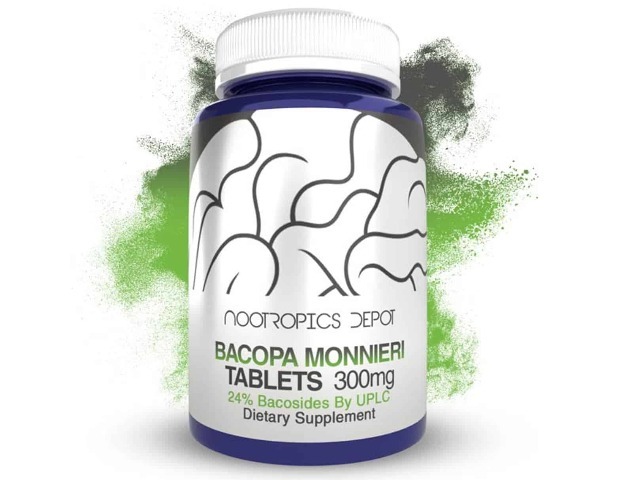
Bacopa Monnieri is particularly relevant here. Meta-analyses show it enhances memory consolidation with a standardized mean difference of 0.77 — a meaningful effect size — and its mechanism of action (upregulating BDNF, supporting synaptic plasticity) directly complements the hippocampal remodeling that language learning drives.
Cognitive Reserve Against Aging
Cognitive reserve is your brain’s ability to maintain function despite accumulating damage — essentially, how much structural and functional “buffer” you’ve built. Language learning builds reserve through multiple pathways:
- Denser gray matter provides more neurons to compensate when some are lost
- Stronger white matter connections create redundant pathways
- Enhanced executive function means more efficient resource allocation
Research consistently shows that lifelong bilinguals demonstrate symptoms of dementia later than monolinguals with equivalent brain pathology. Their brains are damaged, but they’ve built enough reserve to keep functioning.
Pro Tip: You don’t need to become perfectly fluent to get cognitive benefits. Even intermediate proficiency with regular use drives structural changes. The key is sustained engagement — daily practice, even 20–30 minutes, beats sporadic marathon sessions.
Myths That Keep People From Starting (Let’s Kill These)
“Only Children’s Brains Are Plastic Enough to Benefit”
This is the most persistent myth, and the 2024 Max Planck data demolishes it. Adult refugees learning German showed dynamic brain rewiring — connectivity changes, network reorganization, measurable structural gains — within weeks to months. Your brain doesn’t stop being plastic after childhood. The rate and ease of plasticity decrease, but the capacity remains throughout life.
”It Takes Years Before Anything Changes”
The University of Tokyo study documented measurable activation changes in 6–14 weeks. The early 2008 ERP/VBM study found gray matter density increases (cluster size KE=373, p<0.05) after short intensive instruction in a group of approximately 20 novice learners. You don’t need years. You need consistency.
”Learning a Language Will Raise Your IQ”
It won’t boost your raw IQ score. What it does improve — executive function, cognitive flexibility, processing speed, memory — are arguably more useful in daily life than whatever IQ measures. Don’t chase a number. Chase functional performance.
”Bilinguals Are Always Cognitively Superior”
The benefits are dose-dependent on proficiency and active use. A person who studied French for two years in high school and never used it again won’t show the same neural benefits as someone actively maintaining two languages. Use it or lose it applies here just like it does with muscle.
Your Language Learning Protocol (Optimize the Process)
Based on the current neuroscience, here’s how to structure language learning for maximum cognitive benefit:
Phase 1: High-Intensity Acquisition (Weeks 1–8)
This is the “brain-building” phase where neural activation is highest and structural changes begin.
- Daily immersive practice: 60–120 minutes combining structured study (grammar, vocabulary) with input-heavy exposure (podcasts, shows in target language)
- Active production: Speaking and writing, not just passive listening. Production forces deeper encoding
- Spaced repetition: Use tools like Anki for vocabulary. This aligns with how your hippocampus consolidates memories
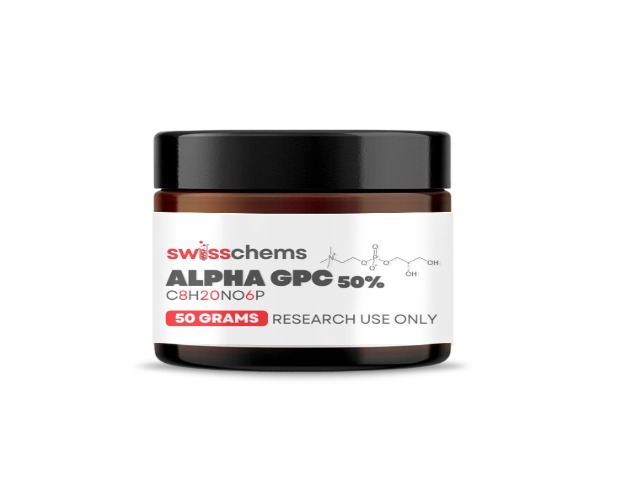
- Support with Alpha-GPC: 300–600mg daily to support acetylcholine-dependent learning circuits. Acetylcholine is the primary neurotransmitter for attention and memory encoding
Phase 2: Consolidation and Efficiency (Weeks 8–16+)
Your brain shifts from brute-force processing to efficient, specialized networks.
- Increase conversational practice: Real-time dialogue forces rapid code-switching and inhibitory control
- Read extensively: Long-form reading in the target language builds vocabulary in context and strengthens semantic networks
- Add Bacopa Monnieri: 300–450mg daily standardized to 55% bacosides. Bacopa takes 4–6 weeks to reach full effect, so starting in Phase 1 means it’s hitting stride right when consolidation matters most
- Reduce structured study: Let natural exposure and use drive further gains
Phase 3: Maintenance and Deepening (Ongoing)
- Daily use: Even 20–30 minutes of conversation, reading, or media in the second language
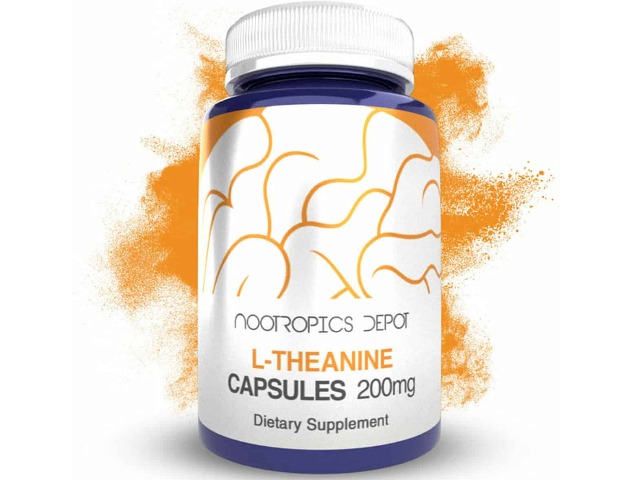
- L-Theanine (200mg) + caffeine (100mg): For focused study sessions. This combination improves sustained attention with an effect size of d=0.5–0.8 in focus trials — meaningful and well-replicated
- Physical exercise: 30+ minutes of moderate cardio increases BDNF (brain-derived neurotrophic factor), which supports the same synaptic plasticity mechanisms language learning relies on
| Supplement | Dosage | When to Start | Primary Benefit | Key Consideration |
|---|---|---|---|---|
| Alpha-GPC | 300–600mg/day | Phase 1 | Acetylcholine support for encoding | Can cause headaches at high doses |
| Bacopa Monnieri | 300–450mg/day | Phase 1 (4–6 week onset) | Memory consolidation | GI upset possible; take with food |
| L-Theanine | 200mg/day | Any phase | Focused attention, stress reduction | Very safe; pair with caffeine |
| Lion’s Mane | 500–1000mg/day | Phase 2+ | NGF support for neurogenesis | Choose hot-water extract |
| Citicoline | 250–500mg/day | Any phase | White matter integrity | Well-tolerated; stacks cleanly |
Important: If you’re on SSRIs or other serotonergic medications, check with your doctor before adding Bacopa Monnieri — there’s a theoretical serotonin interaction risk. Pregnant or nursing individuals should avoid all of the above without medical guidance. And always: foundations first. No supplement compensates for poor sleep, chronic stress, or a garbage diet.
Stacking Nootropics With Language Learning (The Evidence-Informed Approach)
I want to be transparent here: there are zero published clinical trials specifically studying nootropic supplementation combined with second language acquisition. What we have is strong evidence for each piece independently — language learning changes brain structure, and certain nootropics support the same neuroplasticity mechanisms — and a reasonable pharmacological rationale for combining them.
The stack I’d suggest for someone serious about optimizing language learning:
Foundation stack:
- Bacopa Monnieri (300mg, 55%+ bacosides) — memory consolidation
- Alpha-GPC (300mg) — cholinergic support for learning
- L-Theanine (200mg) + caffeine (100mg) — focused attention
Advanced additions (if tolerated):
- Lion’s Mane (500–1000mg) — nerve growth factor support
- Citicoline (250mg) — white matter integrity and CDP-choline pathway
Start with the foundation, run it for 6–8 weeks while tracking your language progress (test scores, conversation fluency, vocabulary recall), and assess whether you’re seeing compounded benefits before adding more complexity.
Reality Check: The supplement industry loves to claim that stacking five things together creates “synergy.” Sometimes it does. Often you’re just spending more money. Start simple, measure outcomes, and add only what demonstrably helps you.
My Take
Language learning is one of those rare interventions that’s simultaneously free, evidence-based, cognitively demanding, and genuinely enjoyable once you push past the initial misery phase. The 2024 MRI data from the Max Planck Institute is the most convincing evidence yet that adult brains respond to language learning with real, measurable structural changes — not just activation differences on a scanner, but actual network reorganization that correlates with performance.
What I find most compelling is the breadth of the effect. This isn’t a narrow cognitive boost. You’re training executive function, memory, attention, inhibitory control, and processing speed — essentially every dimension of cognition that matters for daily life and long-term brain health. And unlike most “brain training” apps (which have weak transfer effects), language learning demands exactly the kind of complex, integrative processing that produces genuine cognitive gains.
Adding nootropics to the mix is a reasonable optimization, not a requirement. Bacopa for memory consolidation, Alpha-GPC for cholinergic support, and L-Theanine for focused study sessions all have independent evidence supporting the same mechanisms language learning engages. But they’re the cherry on top. The language learning itself is the sundae.
If you’ve been telling yourself you’re “too old” or “not a language person” — that’s exactly the kind of fixed-mindset thinking the neuroplasticity research contradicts. Pick a language. Start ugly. Your brain will thank you.