

- Memory and learning enhancement
- Anxiety and stress reduction
- Neuroprotection and antioxidant support
- Improved verbal recall and information processing
- Enhanced focus and mental clarity
I used to think my terrible memory was just who I was. Forget names five seconds after hearing them? That’s just me. Read an entire chapter and retain absolutely nothing? Normal. Walk into a room and have zero clue why I was there? Join the club.
Then I tried Bacopa monnieri — and about eight weeks in, something quietly shifted. I wasn’t suddenly a genius. But I started catching myself remembering details from conversations I’d normally have forgotten. Study material actually stuck. It was less like flipping a switch and more like someone had slowly turned up the resolution on my thinking.
The catch? Those first seven weeks, I felt basically nothing. And that’s the thing about Bacopa that trips most people up.
The Short Version: Bacopa monnieri is a powerhouse Ayurvedic herb with strong clinical evidence for improving memory, learning speed, and stress resilience. It works by boosting acetylcholine, increasing BDNF, and literally growing new neural connections — but it takes 6-12 weeks of daily use to kick in. The standard dose is 300mg/day of an extract standardized to 50-55% bacosides, taken with fat. It’s one of the most evidence-backed natural nootropics available, but patience is non-negotiable.
What Is Bacopa Monnieri?
Bacopa monnieri is a small, creeping herb that grows in wetlands across South and Southeast Asia, India, Australia, and parts of the Americas. You’ve probably never noticed it — it looks like an unassuming ground cover with tiny white flowers. But this little plant has been one of the most revered cognitive enhancers in Ayurvedic medicine for over 3,000 years.
Known as “Brahmi” — named after Brahma, the Hindu god of creation — Bacopa was classified as a Medhya Rasayana, which roughly translates to “that which rejuvenates the intellect.” Ancient Vedic scholars reportedly used it to help memorize lengthy sacred hymns and texts. When your study material is thousands of verses long and there’s no Google, you find what works.
Modern science caught up in the 1960s when India’s Central Drug Research Institute began isolating Bacopa’s active compounds — dammarane-type triterpenoid saponins called bacosides, primarily Bacoside A and Bacoside B. They developed a standardized extract called CDRI-08 (later commercialized as Synapsa), which became the foundation for decades of clinical research. Since then, additional proprietary extracts like Bacognize and BacoMind have expanded the research base.
What makes Bacopa unusual in the nootropic world is that it’s not trying to do one thing really fast. It’s doing many things, slowly, and the effects compound over time. That’s a hard sell in a culture that wants instant results — but it’s also why the people who stick with it tend to become its biggest advocates.
How Does Bacopa Monnieri Work?
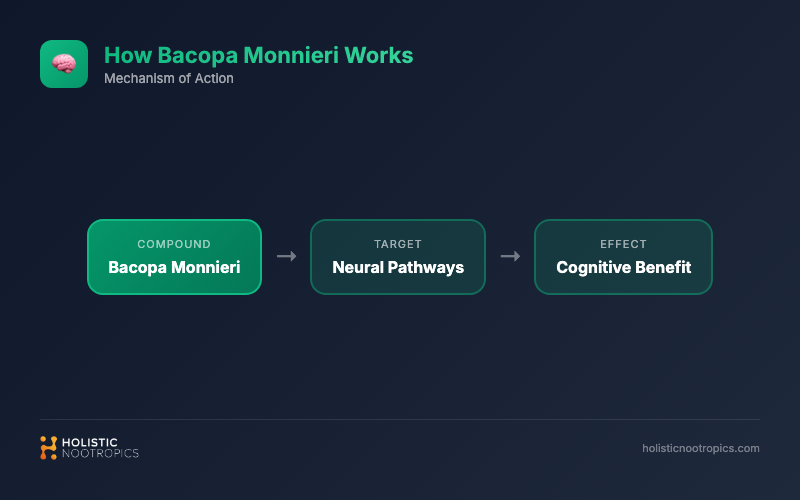
Here’s the simplest way I can explain it: most nootropics tweak your brain’s chemistry. Bacopa does that and remodels the hardware.
Think of it like home renovation. Caffeine is like turning on all the lights — everything looks sharper immediately, but the house is the same. Bacopa is like rewiring the electrical system, adding new rooms, and upgrading the insulation. You won’t notice day-to-day, but after a couple months, the whole house performs differently.
That analogy isn’t just hand-waving. Bacopa literally promotes dendrite branching — the growth of new physical connections between neurons. It increases BDNF (brain-derived neurotrophic factor), which is essentially fertilizer for brain cells. It upregulates proteins critical for synaptic plasticity like CaMKII and PSD-95. You’re not just tweaking signals. You’re building new neural architecture.
On the neurotransmitter side, Bacopa hits multiple systems simultaneously:
Acetylcholine — Bacopa inhibits acetylcholinesterase, the enzyme that breaks down acetylcholine (your primary learning and memory neurotransmitter). This is the same general mechanism as Alzheimer’s drugs like donepezil, though much gentler.
Serotonin — It modulates serotonin signaling, particularly 5-HT6 and 5-HT2A receptors, both tied to memory and mood. This likely explains why many users report feeling calmer and less anxious on Bacopa.
GABA — Bacopa enhances GABA-A receptor expression and increases GABA production in the hippocampus, contributing to that sense of calm focus without sedation.
Dopamine — It inhibits COMT, the enzyme that degrades dopamine in the prefrontal cortex. This may support sustained attention and motivation, though the effect is modest.
On top of all that, Bacopa is a potent antioxidant — reducing oxidative stress markers and boosting your brain’s own antioxidant defenses (SOD, catalase, glutathione peroxidase). It also inhibits NF-κB, a key inflammatory pathway in the brain.
The practical takeaway? This multi-pathway approach is exactly why Bacopa needs weeks to work. You’re not just flipping a chemical switch. You’re growing new connections and rebuilding systems. That takes time.
The Benefits of Bacopa Monnieri (What the Research Actually Shows)
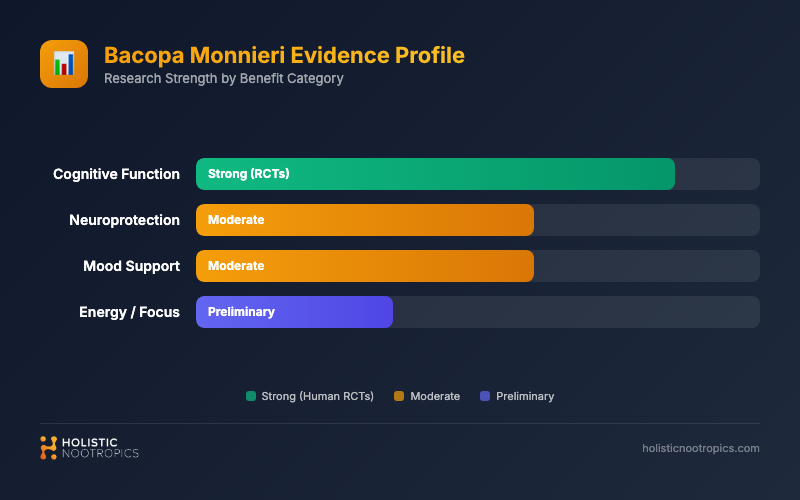
Let me be straight with you about what the evidence supports and where it gets thin.
Memory and Learning — Strong Evidence
This is Bacopa’s wheelhouse, and the data here is genuinely impressive. A 2014 meta-analysis of randomized controlled trials (Kongkeaw et al.) confirmed that Bacopa improves attention, cognitive processing, and working memory. A systematic review by Pase et al. (2012) of six RCTs found consistent improvements in delayed word recall and memory acquisition in healthy adults.
One of the landmark studies — Roodenrys et al. (2002) — showed significant improvements in verbal learning, memory consolidation, and speed of early information processing after just 12 weeks at 300mg/day. This isn’t fringe research. These are well-designed, placebo-controlled trials showing real, measurable effects.
In plain English: Bacopa helps you learn faster, remember more of what you learn, and recall it more easily later. For students, professionals, or anyone who relies on their memory, this is meaningful.
Anxiety and Stress Reduction — Solid Evidence
A 2025 RCT by Lopresti and Smith (n=101) found significant reductions in self-reported stress reactivity and cognitive fatigue after 12 weeks of 300mg/day. An earlier acute-dose study (Benson et al., 2014) showed that a single dose of CDRI-08 significantly reduced cortisol levels and improved mood during multitasking stress.
This tracks with what most users report — a subtle but real calming effect that often shows up before the cognitive benefits do.
Cognitive Support in Older Adults — Moderate Evidence
A 2008 RCT by Calabrese et al. found improvements in working memory, attention, and even depression scores in elderly participants after 12 weeks. A 2024 triple-blind RCT in mild cognitive impairment patients showed improvements in attention and verbal fluency within one to two months.
Promising, but the sample sizes are small and we need more research before making strong claims here.
ADHD in Children — Preliminary Evidence
A 2022 RCT found that Bacopa reduced error-making and improved cognitive flexibility in boys aged 6-14, though behavioral ADHD symptoms didn’t significantly change. Interesting, but not enough to recommend it as an ADHD intervention on its own.
Reality Check: Bacopa is not a treatment for Alzheimer’s disease or clinical dementia. A 2022 systematic review of five studies found no convincing difference between Bacopa and placebo for Alzheimer’s — all evidence was rated “very low certainty.” If you’re dealing with serious cognitive decline, work with a neurologist. Bacopa is a tool for optimization, not a substitute for medical care.
How to Take Bacopa Monnieri Without Wasting Your Money
Dosage
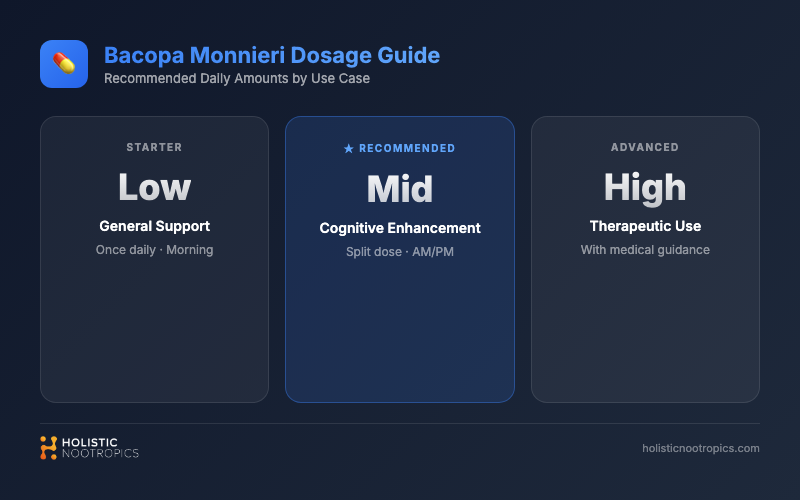
The clinically studied sweet spot is 300mg per day of an extract standardized to 50-55% bacosides. That works out to roughly 150mg of actual bacosides daily. Some studies have gone up to 450-600mg/day with good tolerability, but the results aren’t clearly superior.
If you’re using a generic extract standardized to 20% bacosides, you’ll need to adjust your dose upward to hit that ~150mg bacoside target. If you’re using whole herb powder (unstandardized), you’d need 5-10 grams per day — which is a lot of powder and not what I’d recommend.
Timing and Absorption
Take it with a fat-containing meal. This is not optional. Bacosides are fat-soluble and need a lipid transporter for absorption. Taking Bacopa on an empty stomach means you’re absorbing less and increasing your odds of nausea. A meal with eggs, avocado, nuts, or olive oil works perfectly.
Most people do well taking it in the morning or early afternoon. Some find it mildly energizing; others find it calming enough for evening use. Experiment and see what works for your body.
The Patience Protocol
Here’s where I lose most people, and it’s the single most important thing I can tell you about Bacopa:
Commit to 8-12 weeks before judging it. Full stop.
Insider Tip: If you’re the kind of person who tries a supplement for two weeks, feels nothing, and moves on — Bacopa will disappoint you every time. The people who love Bacopa are the ones who trusted the process. Set a calendar reminder for week 8 and don’t evaluate until then. The dendrite branching and BDNF effects that drive Bacopa’s benefits are biological construction projects, not chemical switches.
Start at 150mg/day for the first week if you have a sensitive stomach, then move up to the full 300mg. No loading dose is needed. Some users cycle 8-12 weeks on and 2-4 weeks off, though studies up to six months show continued benefit without tolerance.
Which Extract to Choose
| Extract | Standardization | Dose | Best For |
|---|---|---|---|
| Synapsa (CDRI-08) | 55% bacosides | 300-320mg/day | Most research-backed option |
| Bacognize | Serotonin Active Bacopa Glycosides | 300mg/day | Mood-focused benefits |
| BacoMind | HPLC-profiled bioactives | 300-450mg/day | Precise standardization |
| Generic 50%+ extract | Varies | ~300mg/day | Budget-friendly if quality-verified |
Side Effects and Safety — What You Actually Need to Know
The Common Stuff
The most frequent complaint is GI discomfort — nausea, stomach cramps, bloating, or increased stool frequency. This hits roughly 10-25% of users and is the main reason people quit early. The good news: it almost always resolves within 1-2 weeks, and taking Bacopa with food dramatically reduces the odds.
Other common but mild effects include dry mouth, headache (especially early on), and drowsiness at higher doses.
The Less Common Stuff You Should Know About
Important: Bacopa may increase thyroid hormone (T3 and T4) production. If you have any thyroid condition — hypo or hyper — talk to your doctor before using it. It can disrupt carefully managed medication levels. This also means if you’re stacking Bacopa with Ashwagandha, which also affects thyroid function, you should monitor your thyroid levels.
Bacopa’s acetylcholine-enhancing properties mean people with asthma, COPD, peptic ulcers, bradycardia, or urogenital tract obstruction should avoid it or use it only under medical supervision.
Drug Interactions — The Part Most Articles Skip
Here’s something that doesn’t get enough attention: Bacopa inhibits several CYP450 liver enzymes that metabolize common medications. Based on in vitro data, the most clinically relevant interactions involve CYP2C19 and CYP2C9, which process drugs like warfarin, omeprazole, phenytoin, clopidogrel, and some SSRIs.
If you’re taking blood thinners, antidepressants, thyroid medication, or sedatives, have a conversation with your prescribing doctor before adding Bacopa. The in vitro data doesn’t always translate to clinical significance, but it warrants caution.
Pregnant or breastfeeding? No clinical safety data exists. Skip it.
Stacking Bacopa Monnieri — What Pairs Well (and What Doesn’t)
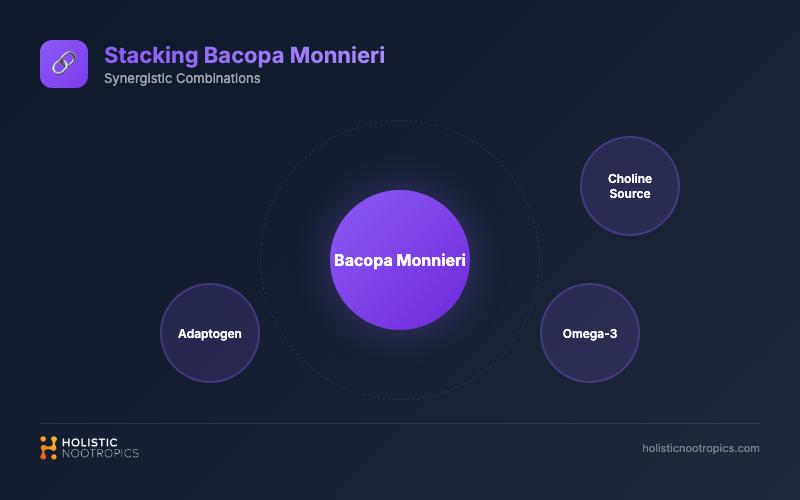
The Best Pairings
Bacopa + Lion’s Mane — This is one of my favorite natural nootropic stacks. Bacopa enhances memory and synaptic signaling while Lion’s Mane stimulates NGF and promotes neurogenesis. Both work on long-term brain architecture through different pathways. Neither is a quick hit — they’re playing the long game together.
Bacopa + Alpha-GPC or Citicoline — Since Bacopa prevents acetylcholine breakdown, providing extra choline gives it more raw material to work with. This may amplify the cognitive effects and also help prevent the headaches some users experience, which are often a sign of choline depletion.
Bacopa + Ashwagandha — Bacopa for cognition, Ashwagandha for stress and cortisol management. Both are traditional Ayurvedic Medhya Rasayanas that have been used together for centuries. Ashwagandha can also offset any Bacopa-induced fatigue. Just watch the thyroid angle if you’re combining both.
Bacopa + Rhodiola Rosea — Rhodiola gives you acute mental energy and fatigue resistance while Bacopa builds the foundation underneath. A great “fast + slow” stack where Rhodiola covers the weeks before Bacopa’s benefits emerge.
Pro Tip: Pair Bacopa with Phosphatidylserine for a dual approach to synaptic health. PS supports membrane integrity through a different mechanism, and as a phospholipid, it may even help with Bacopa’s fat-soluble absorption.
What to Avoid
Don’t combine Bacopa with high-dose serotonergic supplements like 5-HTP or St. John’s Wort. Given Bacopa’s own serotonergic activity, there’s a theoretical risk of serotonin syndrome. Strong sedatives are another caution — the additive sedation can be more than you bargained for.
My Take
Bacopa monnieri is one of those rare nootropics where the traditional wisdom and the modern science actually agree. After years of experimenting with dozens of cognitive enhancers, Bacopa has earned a permanent spot in my rotation — and that’s saying something from someone who’s been burned by plenty of overhyped compounds.
Here’s who I think should seriously consider Bacopa: students, lifelong learners, professionals who need to retain and recall large amounts of information, and anyone dealing with stress-related brain fog. If your main complaint is “I can’t remember things like I used to” or “new information just doesn’t stick,” this is one of the first places I’d look.
Who should probably try something else? If you need immediate cognitive lift, Bacopa alone isn’t your answer — look at Rhodiola or caffeine paired with L-Theanine for acute performance. If you’re dealing with clinical dementia or severe ADHD, the evidence doesn’t support Bacopa as a primary intervention.
My honest assessment: Bacopa is a slow-burn investment in your brain’s long-term performance. It won’t make you feel like Bradley Cooper in Limitless. But after 8-12 weeks, you may quietly realize that your memory is sharper, your studying is more efficient, and your stress response is a little more manageable. That “background upgrade” effect is, in my experience, the most sustainable kind of cognitive enhancement there is.
Stick with a quality standardized extract — Synapsa, Bacognize, or BacoMind — take it with fat, and give it a real 8-12 week trial. The people who do this almost always thank themselves later.
Recommended Bacopa Monnieri Products
I know how frustrating it is to sort through dozens of brands making the same claims. These are the ones I've personally vetted — because quality is the difference between results and wasted money.
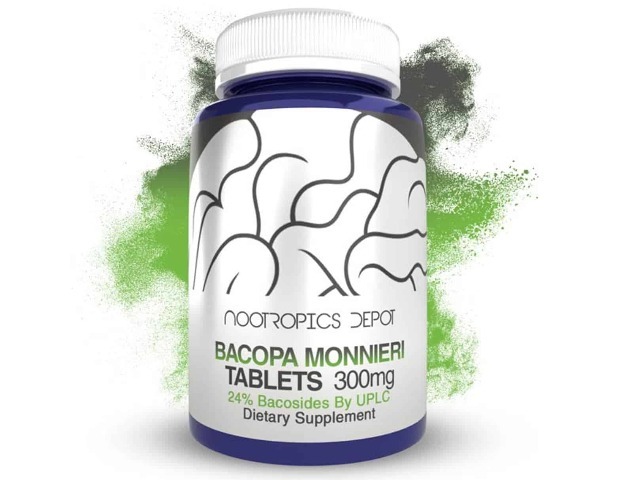
Bacopa Monnieri by Nootropics Depot
Shop Now →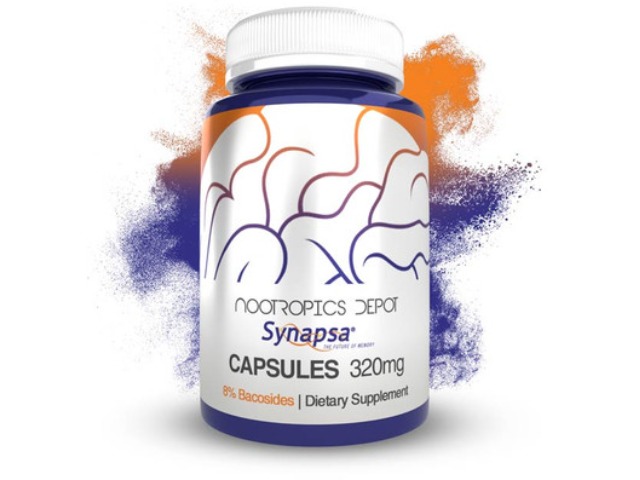
Buy Synapsa Bacopa Monnieri Extract Capsules 320mg by Nootropics Depot
Shop Now →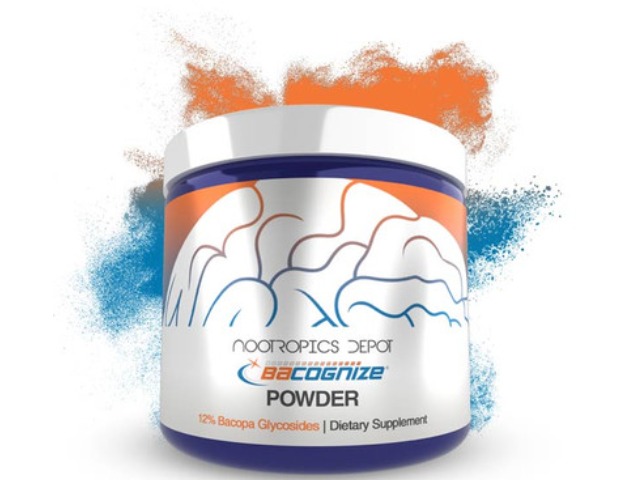
Nootropics Depot Bacognize® Bacopa Monnieri Extract Powder
Shop Now →Disclosure: These are affiliate links. I earn a small commission if you purchase — at no extra cost to you. I only recommend products I personally use or have thoroughly researched.
Research & Studies
This section includes 12 peer-reviewed studies referenced in our analysis.
Chronic effects of Brahmi (Bacopa monnieri) on human memory
Effects of a standardized Bacopa monnieri extract on cognitive performance, anxiety, and depression in the elderly: a randomized, double-blind, placebo-controlled trial.
Bacopa monnieri increases cerebral blood flow in rat independent of blood pressure.
The cognitive-enhancing effects of Bacopa monnieri: a systematic review of randomized, controlled human clinical trials.
An acute, double-blind, placebo-controlled cross-over study of 320 mg and 640 mg doses of Bacopa monnieri (CDRI 08) on multitasking stress reactivity and mood.
Meta-analysis of randomized controlled trials on cognitive effects of Bacopa monnieri extract.
Inhibition of human cytochrome P450 enzymes by Bacopa monnieri standardized extract and constituents.
Bacopa monnieri as an Antioxidant Therapy to Reduce Oxidative Stress in the Aging Brain.
The Ayurvedic plant Bacopa monnieri inhibits inflammatory pathways in the brain.
Botanicals as Modulators of Neuroplasticity: Focus on BDNF.
Showing 10 of 12 studies. View all →