
If you’ve ever experienced the “hangry” phenomenon — that irritable, brain-foggy state that hits when your blood sugar crashes — you already understand how deeply metabolism affects cognitive function. Your brain consumes roughly 20% of your total energy output, and when your metabolic machinery isn’t working efficiently, your mental performance is the first thing to suffer.
I’ve spent years optimizing my own metabolism through diet, supplementation, and lifestyle changes. But one thing that always frustrated me was the lack of real-time feedback. You can eat what you think is the right meal, but how do you actually know whether your body is efficiently burning fat for fuel or stuck in a carb-burning, blood-sugar-crashing cycle? That guessing game is exactly what the Lumen metabolism tracker is designed to solve.
After several weeks of daily use, I’m convinced that Lumen fills a genuine gap in the self-optimization toolkit. It’s not perfect, and it’s not cheap, but the actionable data it provides has meaningfully changed how I approach nutrition — and by extension, how consistently my brain performs throughout the day.
Key Takeaways: The Lumen metabolism tracker is a handheld device that measures CO2 concentration in your breath to determine your respiratory exchange ratio (RER), indicating whether you’re primarily burning fat or carbohydrates. The companion app translates this data into personalized nutrition recommendations and tracks your metabolic flexibility over time. It’s most valuable for people pursuing metabolic optimization, intermittent fasting, or trying to identify how specific foods affect their energy and cognition. Use discount code “HN25” for $25 off at checkout.
What Is the Lumen?

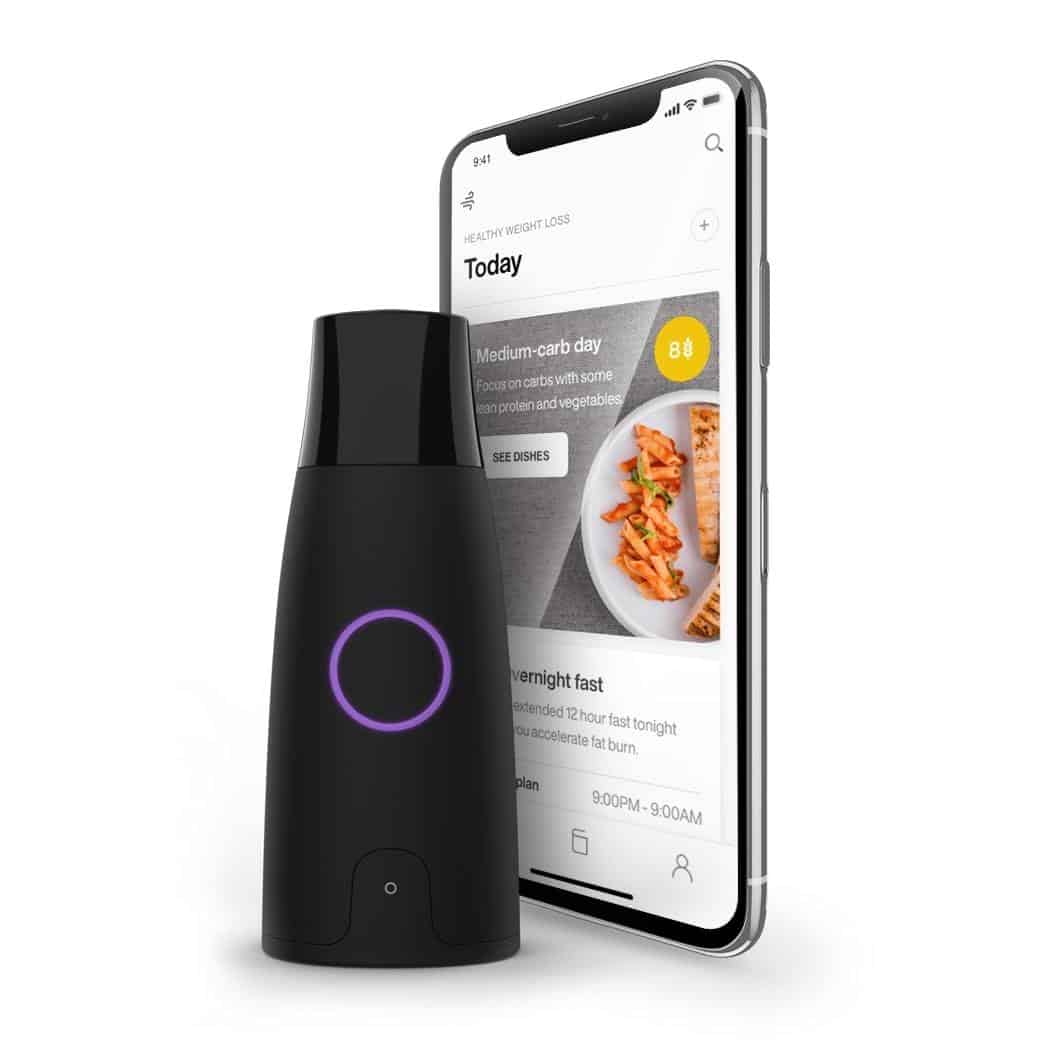
Lumen is a portable metabolism tracker developed by Metaflow LTD that works by analyzing the CO2 concentration in your breath. The science behind it is based on the respiratory exchange ratio (RER) — a well-established clinical measurement that indicates what fuel source your body is primarily using at any given moment.
Here’s the basic principle: when your body burns carbohydrates, it produces more CO2 relative to the oxygen consumed than when it burns fat. By precisely measuring the CO2 in your exhaled breath, Lumen can determine where you fall on the fat-burning to carb-burning spectrum.
This is the same measurement that a metabolic cart in a clinical setting provides — the gold standard for metabolic assessment. The difference is that a clinical RER test costs hundreds of dollars per session, requires a lab visit, and involves breathing through a mask for an extended period. Lumen puts a reasonably accurate version of that test in your pocket, available any time you want to check.
How It Works in Practice
The physical device looks like a large inhaler. You blow into it for about 10 seconds following the in-app instructions, and within moments your metabolic reading appears on the companion smartphone app.
The app scores your reading on a scale from 1 (full fat-burning mode) to 5 (full carb-burning mode), with intermediate levels indicating a mix. Based on your reading, the app provides:
Personalized daily nutrition plans. Each morning, based on your overnight metabolic state, Lumen recommends macronutrient targets for the day — how many grams of carbs, protein, and fat to aim for.
Pre- and post-meal insights. You can measure before and after eating to see how specific foods affect your metabolism. This is where I’ve found the most value — it takes the guesswork out of “is this meal working for me?”
Metabolic flexibility tracking. Over weeks and months, Lumen tracks your overall metabolic flexibility — your body’s ability to efficiently switch between burning fat and carbs depending on availability. Greater metabolic flexibility is associated with better energy stability, improved body composition, and more consistent cognitive performance.
Workout optimization. Pre-workout readings help you understand whether you have adequate fuel for the training session ahead, and post-workout readings show how your metabolism responded.
The Science Behind It
The respiratory exchange ratio (and the closely related respiratory quotient, or RQ) is well-established physiology. The key values:
- RQ of 0.7 = primarily burning fat
- RQ of 0.9 = primarily burning protein
- RQ of 1.0 = primarily burning carbohydrates
Lumen uses these established benchmarks to calibrate its readings. The device has undergone independent validation studies comparing its measurements to gold-standard metabolic cart testing, and the results show reasonable accuracy for a consumer device.
The critical insight here is that a lower RER/RQ — indicating greater fat oxidation — correlates with better insulin sensitivity, more stable blood sugar, more consistent energy throughout the day, and lower lactate accumulation during exercise. All of which translate directly to better cognitive performance and mood stability.
The clinical validation continues to strengthen. A 2025 study published in the European Journal of Clinical Nutrition used Lumen’s portable breath analysis technology to compare metabolic fuel utilization between Kenyan and U.S. cohorts, demonstrating that habitual diet composition significantly influences metabolic flexibility — and that this portable technology enables metabolic research in previously understudied populations. A pilot clinical trial published in Obesity Facts examined Lumen’s effects in adults with prediabetes, finding that following Lumen’s personalized, measurement-guided lifestyle intervention produced meaningful improvements in anthropometric and metabolic variables. These studies reinforce that real-time metabolic feedback can drive clinically relevant dietary behavior changes.
Why Metabolism Matters for Brain Health
This is where Lumen connects to the broader mission of this site. Metabolic health and cognitive function are deeply intertwined:
Blood sugar stability directly determines your brain’s energy supply. When you’re metabolically inflexible — stuck burning carbs and dependent on frequent glucose input — your brain experiences the rollercoaster of sugar highs and crashes. This manifests as brain fog, difficulty concentrating, mood swings, and that desperate 3 PM craving for something sweet.
Metabolic flexibility means your body can seamlessly switch to burning fat when carb intake is low. Fat is a steadier, longer-lasting fuel source. People with high metabolic flexibility report more consistent energy, better focus, and fewer mood disruptions throughout the day.
Insulin sensitivity affects both metabolic and cognitive health. Insulin resistance — which metabolic inflexibility promotes — is increasingly recognized as a risk factor for cognitive decline and neurodegenerative conditions. Some researchers now refer to Alzheimer’s disease as “Type 3 diabetes” because of the strong metabolic connection. A 2025 systematic review in Diabetology & Metabolic Syndrome analyzing 213 peer-reviewed articles confirmed that brain insulin resistance impairs glucose uptake, amyloid-beta clearance, and tau phosphorylation — and that individuals with diabetes face a 65% increased risk of Alzheimer’s disease dementia compared to those without.
Metabolic disorders like diabetes have well-documented impacts on mental health, including increased rates of depression, anxiety, and cognitive impairment when poorly managed.
Understanding and optimizing your metabolism isn’t just about body composition — it’s foundational to the brain performance that everything else on this site builds upon.
My Personal Experience
I was excited about the concept from the first time I heard about Lumen, and the reality has mostly lived up to the promise.
The first week is intensive. You need to consistently measure 60-90 minutes after eating and at several other points throughout the day. This felt like a chore initially, but I recognized that Lumen needs this data to build your personal “breath signature” and establish accurate baselines. Think of it as a calibration period.
The app is well-designed. Some reviewers have reported glitchiness, but my experience has been smooth. The interface is intuitive, the data visualizations are clear, and the daily nutrition recommendations are practical and easy to follow.
The actionable insights are the real value. Within the first week, I identified specific foods that were pushing my body into heavy carb-burning mode when I expected them to be metabolically neutral. Making adjustments based on this data allowed me to achieve a consistent fat-burning morning reading (a Lumen score of 1) — the most fat-burning state possible.
The impact on my eating decisions is lasting. Even beyond the active measurement phase, Lumen fundamentally changed how I think about meals. I now instinctively consider the metabolic impact of what I’m eating, not just the macronutrient content on paper. That shift in awareness alone is worth the investment.
How Accurate Is Lumen?
Lumen uses the same fundamental measurement approach as laboratory metabolic carts — breath CO2 analysis — just in a miniaturized, consumer-friendly form. A peer-reviewed validation study conducted at San Francisco State University compared Lumen’s measurements with gold-standard metabolic cart readings, finding that Lumen’s RER and CO2 assessments are in agreement with the clinical standard. The device has since been used in published research across multiple settings, including a 2025 cross-cultural metabolic study, further supporting its reliability as a consumer-grade tool.
That said, there are limitations. Lumen measures your metabolic state in real time, which means your reading reflects not just your most recent meal but the cumulative effects of recent eating, exercise, sleep, and stress. If you ate a high-carb meal 12 hours ago, residual glycogen in your liver and muscles can still influence your reading. For the most reliable baseline readings, measure first thing in the morning before eating or drinking anything.
Lumen is not a glucose monitor and cannot replace one for people managing diabetes or insulin resistance. It tells you what fuel your body is burning, not your blood glucose level directly.
How Lumen Differs from Ketone Testing
Ketone measuring devices (urine strips, breath analyzers) tell you whether your body has entered ketosis — a state of almost exclusive fat burning that occurs after prolonged carbohydrate restriction. Ketone testing is binary: you’re either in ketosis or you’re not.
Lumen measures the full spectrum of metabolic states, from heavy carb burning to heavy fat burning, including all the intermediate states. This makes it far more useful for most people, because the goal isn’t necessarily full ketosis — it’s metabolic flexibility. You want your body to efficiently use whatever fuel is available, shifting smoothly between carbs and fat as needed.
Lumen also measures carbohydrate utilization, which ketone devices cannot do. This gives you a complete picture of your metabolic state rather than just one end of the spectrum.
Potential Drawbacks
The price. At $349 for the device (use discount code “HN25” at checkout for $25 off), Lumen is a significant investment. Whether it’s worth it depends on how seriously you take metabolic optimization. Compared to clinical metabolic testing or working with a nutritionist, it’s cost-effective over time. But it’s not an impulse purchase.
Requires consistency. You need to use Lumen regularly, especially in the first few weeks, to get meaningful data. If you’re not willing to commit to daily measurements, you won’t get the full value.
It’s not a comprehensive nutritional tool. Lumen tells you about fuel utilization, not micronutrient status, food quality, or other dimensions of nutrition. It’s one powerful data point, not a complete nutritional assessment.
Recent meals affect readings. Because Lumen measures real-time metabolic state, readings can be influenced by glycogen from previous meals. This is accurate physiology, but it means you need to understand what you’re measuring to interpret results correctly.
Who Should Consider Lumen
Lumen is most valuable for:
- People pursuing metabolic flexibility who want real-time feedback on their dietary choices
- Intermittent fasters who want to confirm they’re actually achieving fat-burning states during fasting windows
- Anyone experiencing energy crashes, brain fog, or blood sugar instability who wants to identify which foods are causing problems
- Athletes and fitness enthusiasts who want to optimize fueling strategies for training and recovery
- Biohackers who want another data stream to integrate into their optimization protocols
If you’re supplementing with creatine for energy, CoQ10 for mitochondrial function, or magnesium for metabolic support, understanding your baseline metabolic efficiency through Lumen provides context for evaluating whether those supplements are contributing to measurable metabolic improvements.
Frequently Asked Questions
How often should I use Lumen?
Ideally, measure at least once daily (first thing in the morning for baseline) and additionally before/after meals when you want to test specific foods. During the initial calibration period, more frequent measurements produce better personalized recommendations.
Do I need to prepare before each measurement?
Take your morning reading before eating or drinking anything. For meal-related readings, wait 60-90 minutes after eating. Follow the breathing instructions in the app precisely for consistent results.
Can Lumen help with weight loss?
Indirectly, yes. By showing you which foods push your body into carb-burning mode and helping you achieve greater metabolic flexibility, Lumen can guide dietary choices that favor fat oxidation. However, it’s a data tool, not a diet plan — you still need to implement the changes.
How accurate is Lumen compared to clinical testing?
Lumen uses the same underlying measurement (breath CO2) as clinical metabolic carts. Validation studies show reasonable accuracy for a consumer device. It’s not lab-grade precision, but it’s accurate enough to inform meaningful dietary decisions.
Pricing
The Lumen device retails for $349 at shop.lumen.me. Use discount code “HN25” at checkout for $25 off.
Considering that a single clinical RER test can cost $200-$400 and provides only a snapshot, while Lumen provides unlimited daily measurements over its lifetime, the per-test value is substantial for anyone who uses it consistently.
The Bottom Line
The Lumen metabolism tracker solves a genuine problem: it gives you real-time, actionable data about how your body is processing fuel. For anyone serious about metabolic optimization — whether for weight management, energy stability, cognitive performance, or longevity — this kind of feedback loop is invaluable.
It’s not perfect, and it requires commitment to use properly. But in my experience, the insights Lumen provides have meaningfully improved my dietary decisions and, by extension, the consistency of my energy and mental performance throughout the day. In the world of biohacking tools, that’s a strong endorsement.