
- Supports joint health and mobility
- Improves skin hydration and elasticity
- Modulates neuroinflammation
- Maintains brain extracellular matrix integrity
- Regulates synaptic plasticity via perineuronal nets
I’ll be honest — when I first looked into hyaluronic acid, I almost skipped it entirely. It seemed like a skincare ingredient that somehow wandered into the supplement aisle. Joint cream for grandma. Definitely not a nootropic.
Then I started reading the neuroscience. Turns out, hyaluronic acid is one of the most abundant molecules in your brain. It forms the literal scaffolding that holds your neurons in place, regulates how synapses form, and controls some of the most fundamental processes behind learning and memory. And almost nobody in the nootropics world is talking about it.
That disconnect between what HA actually does in the brain and how it’s marketed — as a skin plumper and joint lubricant — is one of the most interesting gaps I’ve encountered in years of researching this stuff.
The Short Version: Hyaluronic acid is a naturally occurring sugar molecule that forms the structural backbone of your brain’s extracellular matrix and the perineuronal nets surrounding your neurons. It has strong clinical evidence for joint pain relief and skin hydration (80–200mg daily), and emerging neuroscience suggests it plays a critical role in synaptic plasticity and neuroinflammation. The nootropic angle is real science but still early — no human cognitive trials exist yet.
What Is Hyaluronic Acid?
Hyaluronic acid is a glycosaminoglycan — a massive sugar molecule that your body produces naturally. First isolated in 1934 by Karl Meyer and John Palmer from a cow’s eye (appetizing, I know), it gets its name from “hyaloid,” meaning vitreous body.
Here’s what makes HA unusual. Unlike most complex biological molecules, HA isn’t built inside cells. It’s assembled right at the cell surface and extruded outward like biological caulking, filling the spaces between your cells with a water-retaining gel that can hold up to 1,000 times its weight in water. It’s in your joints, your skin, your eyes — and critically, your brain.
Your body’s HA production peaks in your 20s and declines steadily from there. By age 50, you’ve lost roughly half your HA stores. That timeline maps uncomfortably well onto the trajectory of joint stiffness, skin aging, and cognitive decline. Correlation isn’t causation, but it got my attention.
Most people supplement HA for joints or skin. Those are legitimate, well-studied uses. But the brain story is where things get genuinely fascinating — and where the “holistic” in Holistic Nootropics starts to earn its name.
How Does Hyaluronic Acid Work?
The Brain Architecture You Didn’t Know About
Think of your brain as a city. Neurons are the buildings. Neurotransmitters are the traffic. But what about the roads, the infrastructure, the zoning regulations that determine where new construction can happen? That’s your brain’s extracellular matrix — and hyaluronic acid is its primary building material.
HA forms the structural backbone of perineuronal nets (PNNs), mesh-like structures that wrap around certain neurons like a cage. PNNs do something remarkable: they regulate when and how synapses can change. They’re essentially the gatekeepers of neuroplasticity. When PNNs are intact, they stabilize existing neural circuits — good for protecting learned memories, but they also make it harder to form new connections. When PNNs are partially degraded, the brain becomes more plastic — more open to learning, but also more vulnerable.
HA anchors these nets to neurons through the CD44 receptor, which is expressed on both neurons and astrocytes. Here’s the practical translation: HA literally controls the physical structures that determine how flexible or rigid your thinking is.
The Molecular Weight Plot Twist
Not all hyaluronic acid is created equal, and this is where most supplement companies either don’t know or don’t care about the science.
High molecular weight HA (over 100 kDa) is anti-inflammatory. It calms immune responses, protects tissue, and signals that everything is fine. This is the “healthy tissue” form.
Low molecular weight HA (under 100 kDa) does the opposite. It’s pro-inflammatory, activates microglia (your brain’s immune cells), and promotes oxidative stress. This is the “damage signal” form — fragments of HA that appear when tissue is being broken down.
Research published in the International Journal of Molecular Sciences (Chistyakov et al., 2019) found that both forms modulate TLR3 and TLR4 signaling pathways in astrocytes, influencing neuroinflammation through different mechanisms. The takeaway: HA’s effects on your brain depend heavily on which form you’re dealing with.
Synapse Regulation
Here’s something that surprised me. HA preferentially surrounds new excitatory synapses and acts as a brake on their formation. Through CD44 receptor signaling (via RhoGTPase pathways), HA suppresses excitatory synaptogenesis. Remove the HA, and excitatory synapses proliferate unchecked.
In plain English: HA helps your brain maintain balanced neural circuits. Too little HA could mean runaway excitation. Too much might restrict new learning. It’s a Goldilocks molecule — your brain needs the right amount in the right places.
Reality Check: The brain mechanisms described above are well-established science — but they come from animal and cell studies. There are zero human clinical trials testing whether swallowing an HA capsule improves cognition. The gap between “HA is critical for brain structure” and “oral HA supplements boost your thinking” is significant, and I’d be lying if I pretended otherwise.
Benefits of Hyaluronic Acid
Joint Health — Strong Evidence
This is where HA has its most robust data. Multiple randomized, double-blind, placebo-controlled trials have demonstrated that oral HA (80–200mg/day) significantly reduces knee pain, stiffness, and improves joint function in osteoarthritis patients.
A 2016 review in Nutrition Journal analyzed 13 clinical trials and found consistent pain relief across studies. The mechanism is straightforward: HA is a primary component of synovial fluid, the lubricant that keeps your joints moving smoothly. Supplement it, and you’re essentially topping off your joint oil.
Skin Hydration — Strong Evidence
A 2025 RCT with 150 participants published in Scientific Reports found that oral sodium hyaluronate measurably improves skin hydration, barrier function, and visible signs of aging. Multiple earlier trials corroborate these findings — increased elasticity, better hydration, reduced wrinkle depth.
Brain & Neuroprotection — Emerging Evidence
This is where intellectual honesty matters most. The preclinical evidence is genuinely compelling:
-
An HA-estradiol conjugate crossed the blood-brain barrier in rats, producing an 11% rise in choline acetyltransferase expression and 14–18% increase in dendritic spine density in hippocampal neurons, recovering spatial learning and memory. Important caveat: HA was the delivery vehicle, not the active ingredient.
-
HA-based hydrogels containing dexamethasone reduced brain lesion volume and inflammation while increasing neuronal survival after traumatic brain injury in rats (Jones et al., 2023, Experimental Neurology).
-
Research by Song and Dityatev (2017, Brain Research Bulletin) demonstrated that HA and its receptors regulate critical period closure, synaptic plasticity, and cognitive flexibility — suggesting that targeting brain ECM molecules could lead to new therapeutic strategies.
But I need to be straight with you: no one has demonstrated that taking oral HA supplements improves human cognition. The brain research is about HA’s fundamental biological roles, not about supplementation outcomes. That’s an important distinction.
Insider Tip: If brain health is your primary goal, HA isn’t your first-line supplement. Focus on proven nootropics like Lion’s Mane or Bacopa Monnieri for cognitive enhancement, and consider HA as part of a broader systemic health strategy that supports your brain indirectly.
How to Take Hyaluronic Acid
Dosage
- General health: 100–200mg daily
- Joint support: 80–200mg daily (the range used in most successful clinical trials)
- Skin hydration: 120–240mg daily
- Upper limit: 240mg/day — research hasn’t shown additional benefit above this
Start at the lower end for 2–3 weeks and increase if needed. This isn’t a compound where more is better.
Timing and Absorption
Take HA with food to enhance absorption. Morning or evening doesn’t matter — consistency is what matters.
Here’s the uncomfortable truth about oral HA: bioavailability is estimated at roughly 0.2%. That’s not a typo. The vast majority of what you swallow doesn’t make it into your bloodstream intact. Your gut bacteria break down large HA molecules into smaller oligosaccharides (under 3 kDa), and those fragments are what actually get absorbed, primarily in the cecum.
Forms Matter — A Lot
Low molecular weight HA (under 100 kDa) is better absorbed. Brands using specialized LMW forms like Hyabest® (around 5 kDa) may offer superior tissue distribution based on animal studies.
High molecular weight HA (over 100 kDa) is taken up by intestinal cells and macrophages, providing anti-inflammatory effects but poorer systemic availability.
Sodium hyaluronate (the sodium salt form) is more stable and more commonly used in supplements than free-acid HA.
Pro Tip: Check the label for molecular weight. If a brand doesn’t specify it, that’s a red flag. The MW dramatically affects what HA does in your body. For systemic absorption, lower MW is generally better. For gut-level anti-inflammatory effects, higher MW has its own advantages.
Timeline
Don’t expect overnight results. HA is a slow builder:
- Skin improvements: 2–4 weeks
- Joint relief: 4–8 weeks
- Full effects: 8–12 weeks of consistent daily use
No cycling is required. HA is safe for continuous daily use based on available evidence.
Side Effects & Safety
The safety profile here is genuinely reassuring. That 2016 review of 13 clinical trials found no notable side effects in any participants taking oral HA. Some users report mild GI discomfort, but it’s uncommon and typically resolves.
Important: If you have a history of cancer or are currently undergoing cancer treatment, talk to your oncologist before supplementing HA. Hyaluronic acid interacts with CD44 and RHAMM receptors that are involved in cell proliferation. HA doesn’t cause cancer, but it could theoretically promote the growth of existing cancer cells. This isn’t a reason to panic — it’s a reason to have a conversation with your doctor.
Other cautions:
- Drug interactions: Moderate interactions are listed with furosemide, NSAIDs, oral anticoagulants, and local anesthetics. If you’re on blood thinners, check with your prescriber.
- Pregnancy/nursing: Insufficient safety data. Avoid as a precaution.
- Radiation therapy: Topical HA during radiation may increase skin complications.
Stacking Hyaluronic Acid
Proven Combinations
HA + Collagen — The classic pairing. HA hydrates the collagen matrix, maintaining flexibility and preventing breakdown. If you’re taking collagen for joints or skin, adding HA makes it work better.
HA + Vitamin C — Vitamin C supports collagen synthesis and may enhance HA’s effects. A foundational combination for connective tissue support.
HA + Glucosamine + Chondroitin — The “full joint stack.” Glucosamine supports cartilage repair, chondroitin provides structural support, HA lubricates. They address the problem from three different angles.
Theoretical Brain-Supportive Stacks
HA + DHA — Given HA’s role in brain ECM and DHA’s neuroplasticity support, there’s theoretical synergy for brain structure maintenance. Both decline with age.
HA + Vitamin D — Both affect inflammation pathways and both decline with aging. Complementary rather than synergistic.
What to Watch
No dangerous supplement combinations are known, but use caution combining HA with blood thinners due to moderate interaction potential. And if cancer is any concern, avoid stacking HA with anything that promotes cell proliferation.
My Take
Here’s my honest assessment: hyaluronic acid is a genuinely useful supplement that’s been marketed for the wrong reasons and ignored for the right ones.
For joint health and skin hydration, the evidence is solid. If you’re over 35 and noticing stiffer joints or drier skin, 100–200mg of a quality HA supplement daily is a reasonable, well-supported intervention. I’d pair it with collagen and vitamin C for the full connective tissue stack.
For brain health, I find the science fascinating but premature. HA is clearly critical for brain architecture — perineuronal nets, synapse regulation, neuroinflammation control. But “critical for brain function” and “useful as an oral supplement for cognition” are two very different claims. I wouldn’t take HA specifically for cognitive enhancement. Not yet.
Where HA fits in my thinking is as a systemic health foundation. Your brain doesn’t exist in isolation. It sits inside a body that needs lubricated joints, hydrated connective tissue, and balanced inflammation. Supporting those systems supports the brain — not through any exotic mechanism, but through the simple reality that everything is connected.
If you’re building a stack for long-term health rather than acute cognitive enhancement, HA earns its place. Just don’t expect it to replace Lion’s Mane or Bacopa for nootropic effects. Use it for what the evidence actually supports, keep an eye on the emerging brain research, and let the science catch up to the hype.
Start with 100mg daily of a low-molecular-weight, fermentation-derived formula. Give it 8 weeks. Your joints will probably thank you first. Your skin will follow. And your brain? That story is still being written.
Recommended Hyaluronic Acid Products
I know how frustrating it is to sort through dozens of brands making the same claims. These are the ones I've personally vetted — because quality is the difference between results and wasted money.
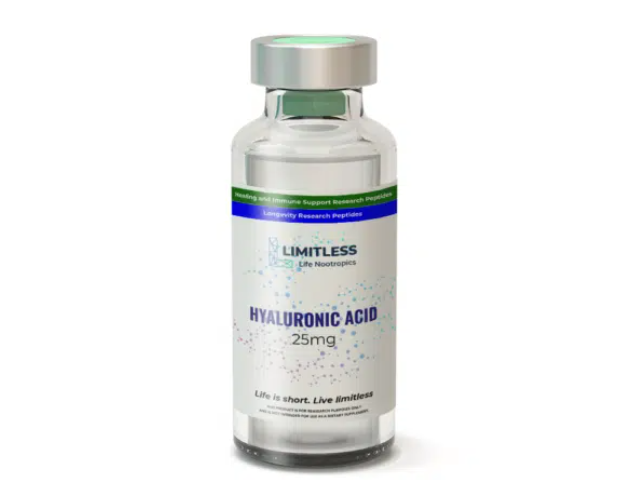
Hyaluronic Acid (25MG) by Limitless Life Nootropics
Shop Now →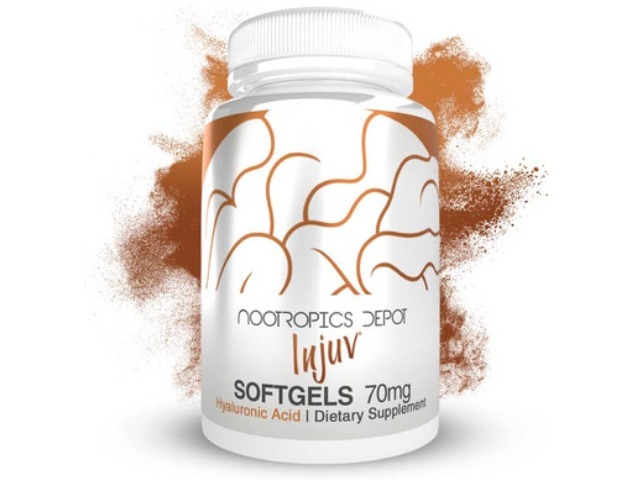
Injuv Softgels | 70mg | Natural Hyaluronic Acid by Nootropics Depot
Shop Now →
Adenosine Triphosphate by Research Chemical Depot
Shop Now →Disclosure: These are affiliate links. I earn a small commission if you purchase — at no extra cost to you. I only recommend products I personally use or have thoroughly researched.
Research & Studies
This section includes 3 peer-reviewed studies referenced in our analysis.