
- Neuroprotection
- Cognitive Enhancement
- Anti-Aging
I’ve chased my fair share of hyped-up nootropics, hoping for that one pill that would finally clear the fog, sharpen my memory, and give me back the mental energy I had in my twenties. It’s an easy trap to fall into, especially when you read about a compound that sounds like it was pulled straight from a sci-fi movie. J147 is one of those compounds. It’s surrounded by a ton of excitement and some pretty wild claims. But after years of this, I’ve learned the hard way that you have to separate the science from the fantasy.
The Short Version: J147 is an experimental, lab-created nootropic that has shown remarkable anti-aging and cognitive-enhancing effects in animal models of Alzheimer’s disease. Its primary mechanism involves improving mitochondrial function and boosting brain-derived neurotrophic factor (BDNF). While it’s one of the most exciting research chemicals out there, it is not approved for human consumption and its benefits are supported almost entirely by pre-clinical data.
What Is J147?
J147 is a synthetic compound developed by researchers at the Salk Institute for Biological Studies. It was born out of a fascinating idea: what if, instead of just targeting the amyloid plaques that build up in Alzheimer’s disease, you could target the aging process itself? The scientists started with curcumin (from turmeric) and modified it to create something far more potent and able to easily cross the blood-brain barrier.
The result was J147. Unlike many drugs that focus on a single target, J147 seems to have a broad, restorative effect on the brain. In aging mice, it didn’t just slow down cognitive decline—it appeared to reverse it. This is why it has such a reputation.
But here’s the “foundations first” perspective: a compound like J147, no matter how promising, can’t fix a lifestyle of poor sleep, chronic stress, and a nutrient-poor diet. Think of your brain as a complex ecosystem. J147 might be a powerful tool for rejuvenation, but it’s not going to work if the underlying environment is toxic. It’s a potential amplifier for a healthy lifestyle, not a replacement for one.
How Does J147 Work?
To put it simply, J147 acts like a master switch for cellular rejuvenation in the brain. It doesn’t just do one thing; it initiates a cascade of effects that protect and repair brain cells, which is why it’s garnered so much attention.
Let’s use the science sandwich to break it down:
Layer 1 — What it does (conversational): Imagine your brain cells’ power plants (the mitochondria) getting old and inefficient. J147 comes in and helps them function better, boosting energy production. At the same time, it tells your brain to produce more of its own natural “fertilizer” to grow new connections and protect existing ones.
Layer 2 — The evidence (authoritative): The primary mechanism of J147 is its ability to bind to ATP synthase, a protein within our mitochondria. By modulating this protein, J147 helps restore normal energy levels and reduce oxidative stress in aging brain cells. Furthermore, studies published since 2011 show J147 significantly increases levels of Brain-Derived Neurotrophic Factor (BDNF) and Nerve Growth Factor (NGF). These neurotrophic factors are critical for neurogenesis (the birth of new neurons), synaptic plasticity, and long-term potentiation (LTP), the cellular basis of learning and memory.
Layer 3 — So what? (practical): In plain English: J147 helps your brain produce more energy and grow stronger, more resilient connections. This is thought to be the key to its neuroprotective and cognitive-enhancing effects. It’s not just patching a problem; it’s addressing the fundamental process of aging at a cellular level, at least in animal models.
Benefits of J147
The reported benefits of J147 are impressive, but they come with a huge asterisk. Almost all of the evidence we have is from pre-clinical animal studies. While a Phase 1 human trial was completed, the results have not been made public.
- Neuroprotection and Cognitive Enhancement: In multiple studies on mice bred to have Alzheimer’s-like disease, J147 treatment reversed memory deficits and improved cognition.
- Anti-Aging Effects: The research from the Salk Institute suggests J147’s effects aren’t limited to the brain. It appears to combat aspects of aging in other organs, too.
- Reduced Inflammation and Amyloid Plaques: J147 has been shown to have potent anti-inflammatory effects in the brain and can help reduce the levels of soluble amyloid-beta proteins, which are a hallmark of Alzheimer’s.
Reality Check: It’s crucial to understand that results in mice do not always translate to humans. The internet is full of people hailing J147 as a miracle anti-aging pill, but we are still in the very early days of understanding what it does in the human body. The excitement is justified, but the certainty is not.
How to Take J147
Disclaimer: J147 is an experimental research chemical and is not approved for human consumption. The following information is for educational purposes only and is based on anecdotal user reports. It is not medical advice.
- Dosage: Most self-experimenters report using doses between 10mg and 30mg per day. It is universally recommended to start at the low end of the dose range (5-10mg) to see how you respond before considering an increase.
- Timing: Because it is fat-soluble, J147 should be taken with a meal containing some healthy fats to maximize absorption.
- Forms: J147 is almost always sold as a bulk powder. This requires a milligram scale for accurate dosing, which is non-negotiable for a compound this potent.
- Cycling: There is no established protocol for cycling J147. Given its mechanism of promoting long-term changes, many users take it consistently for a period of weeks or months.
Insider Tip: Because J147 is unregulated, quality is a huge concern. If you choose to source it, only buy from a highly reputable vendor that provides recent, third-party lab tests (a Certificate of Analysis, or COA) for every batch to verify its purity and identity.
Side Effects & Safety
The lack of human clinical data makes this the most important section to read. While animal studies haven’t shown significant side effects at appropriate dosages, the human experience is still largely unknown.
- Common Side Effects: Some users have anecdotally reported mild side effects, especially when first starting, including sedation, tiredness, and a noticeable increase in hunger.
- Contraindications: As an experimental compound, J147 should be avoided by anyone who is pregnant, nursing, or has a pre-existing medical condition.
- Drug Interactions: There is no formal data on drug interactions. Extreme caution should be used if combining J147 with any other medications, particularly those affecting the central nervous system.
Important: You are taking a risk when using an experimental chemical. The long-term effects of J147 in humans are completely unknown. This is not a casual supplement to try on a whim.
Stacking J147
While stacking an experimental compound is inherently risky, some users report synergies with other substances.
- Other Nootropics: Some users report combining it with foundational cognitive enhancers like Citicoline or Acetyl-L-Carnitine (ALCAR) to provide the raw materials for mitochondrial health and neurotransmitter production.
- Restorative Peptides: In the biohacking community, J147 is sometimes stacked with restorative peptides like BPC-157 or TB-500, with the theory that they may offer complementary regenerative effects. This is highly speculative.
- Research Stacks: Published research has explored synergies with the Alzheimer’s drug donepezil for memory and tissue plasminogen activator (tPA) for ischemic stroke, but these are clinical contexts and not recommendations for personal use.
I would strongly advise against combining J147 with other experimental compounds. If you’re going to explore it, let it be the only new variable so you can accurately assess its effects and side effects.
My Take
So, what’s my final verdict on J147? It’s one of the most theoretically exciting nootropic compounds to emerge in the last decade. The science is elegant, and the potential is enormous. It represents a new frontier in brain health—targeting the root causes of aging rather than just the symptoms.
Who is this best for? Honestly, right now, it’s best for the dedicated biohacker or self-researcher who has a deep understanding of biochemistry, accepts the risks of using an experimental compound, and knows how to vet a source for purity. This is not for beginners.
Who should skip it? If you’re looking for a safe, proven, and reliable way to boost your brainpower, this isn’t it. You would be far better off optimizing your sleep, diet, and stress levels, and then exploring well-researched nootropics like Bacopa Monnieri or Lion’s Mane.
In my experience, the biggest gains always come from mastering the fundamentals. J147 is a fascinating glimpse into the future of neuro-enhancement, and I’m following the research closely. But for now, it remains on my “watch list,” not my “must-take list.” It’s a compound with immense promise, but until we have solid human data, that promise remains a gamble.
Recommended J147 Products
I know how frustrating it is to sort through dozens of brands making the same claims. These are the ones I've personally vetted — because quality is the difference between results and wasted money.
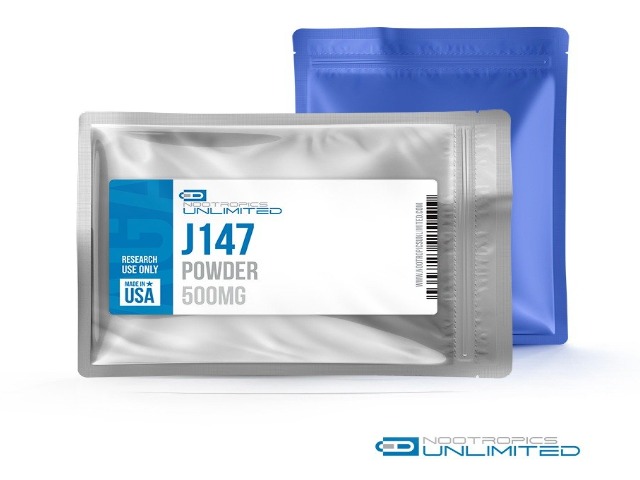
Disclosure: These are affiliate links. I earn a small commission if you purchase — at no extra cost to you. I only recommend products I personally use or have thoroughly researched.
Research & Studies
This section includes 2 peer-reviewed studies referenced in our analysis.