

- Supports mitochondrial energy production in the brain
- May produce rapid antidepressant effects via epigenetic mechanisms
- Enhances acetylcholine synthesis for memory and focus
- Provides neuroprotection through antioxidant and anti-inflammatory pathways
- Supports nerve regeneration in neuropathic conditions
I used to think brain fog was just something you lived with — the tax you paid for being a functioning adult with a caffeine dependency and a to-do list that never ended. I’d stare at my laptop screen, re-read the same sentence four times, and then reward myself with another cup of coffee that somehow made everything worse.
Then I tried Acetyl L-Carnitine. Not because I’d done any deep research — honestly, it came bundled in a stack I bought on impulse — but within a couple of weeks, something shifted. The mental “sludge” started clearing. My afternoons stopped feeling like I was thinking through wet concrete. It wasn’t dramatic or cinematic. It was just… easier to think.
That experience sent me down a research rabbit hole that, years later, I’m still digging through. ALCAR turned out to be one of the most mechanistically fascinating compounds I’ve ever studied — and one of the few nootropics where the science actually lives up to the hype.
The Short Version: Acetyl L-Carnitine (ALCAR) is the brain-penetrating form of L-carnitine that supports mitochondrial energy, acetylcholine production, and neuroprotection. It has strong evidence for depression (especially in older adults), moderate evidence for cognitive decline and neuropathic pain, and a remarkably clean safety profile. Most people benefit from 500–2,000mg daily. It’s one of the most versatile and well-researched nootropics available — and one I keep coming back to.
What Is Acetyl L-Carnitine?
Acetyl L-Carnitine — ALCAR for short — is the acetylated form of L-carnitine, an amino acid derivative your body naturally produces from lysine and methionine. The name “carnitine” comes from the Latin word for flesh (caro), because it was first extracted from meat back in 1905. Your body makes it too, but that process requires iron, vitamin B6, niacin, and vitamin C — so deficiency is more common than you’d think, especially in vegetarians, older adults, and anyone with mitochondrial dysfunction.
Here’s what makes ALCAR special compared to regular L-carnitine: that acetyl group. It’s a small molecular difference with enormous practical consequences. Standard L-carnitine mostly stays in your muscles and peripheral tissues — useful for energy metabolism, but it barely touches your brain. ALCAR, on the other hand, crosses the blood-brain barrier via active transport. That’s the whole ballgame for nootropic purposes.
Think of it this way: L-carnitine is the delivery truck that moves fatty acids into your cellular power plants. ALCAR is that same truck, but with a VIP pass that gets it through the gate into your brain. Once inside, it does double duty — fueling mitochondria AND donating its acetyl group for neurotransmitter production. That’s a rare combination in the supplement world.
How Does Acetyl L-Carnitine Work?
ALCAR is one of those compounds where the more you learn about the mechanisms, the more impressed you get. Most nootropics do one or two things. ALCAR has at least five distinct pathways — and they’re all well-documented.
The Mitochondrial Energy Engine
Your brain is an energy hog. It’s roughly 2% of your body weight but burns about 20% of your daily calories. When mitochondria underperform, your brain is the first thing that suffers — and you feel it as fog, fatigue, and that frustrating sensation of your thoughts moving through molasses.
ALCAR plugs directly into the carnitine shuttle system — the transport mechanism that moves fatty acids into mitochondria for beta-oxidation (energy production). But it also acts as a metabolic buffer: when acetyl-CoA accumulates and threatens to bottleneck the entire energy cycle, the enzyme CRAT converts excess into acetyl-L-carnitine, freeing up CoA to keep the TCA cycle running. It’s like having a pressure-release valve on your brain’s power grid.
The Acetylcholine Connection
This one’s straightforward but powerful. ALCAR donates its acetyl group to coenzyme A, producing acetyl-CoA, which then combines with choline to form acetylcholine — your brain’s primary neurotransmitter for learning, memory, and attention. But ALCAR doesn’t just supply raw materials. Research shows it also increases the activity of ChAT (choline acetyltransferase), the enzyme that actually assembles acetylcholine, specifically in the hippocampus and striatum. It’s supplying the bricks AND training more bricklayers.
The Epigenetic Antidepressant
This is where things get genuinely exciting — and where ALCAR separates itself from the pack.
A landmark 2013 study published in PNAS discovered that ALCAR produces rapid antidepressant effects through a mechanism completely different from SSRIs. Here’s the short version: ALCAR increases acetylation of histone H3K27 at the promoter of the Grm2 gene in the prefrontal cortex. This upregulates mGlu2 glutamate receptors, which dial down excessive glutamate signaling — a hallmark of depression.
In plain English: ALCAR flips an epigenetic switch that changes how your brain expresses genes related to mood regulation. And it does this in days, not the weeks or months that conventional antidepressants require. That’s a fundamentally different approach to treating depression — not just adjusting serotonin levels, but actually changing gene expression patterns.
A 2018 Stanford/Rockefeller study took this further, finding that patients with treatment-resistant depression had significantly lower blood levels of acetyl-L-carnitine, and that the severity of their depression correlated with how deficient they were. Childhood trauma — especially emotional neglect — predicted the lowest levels.
Neuroprotection on Multiple Fronts
ALCAR doesn’t just fuel your brain — it actively protects it. It activates the Nrf2 pathway (your cells’ master antioxidant switch), inducing production of superoxide dismutase, catalase, glutathione peroxidase, and roughly 200 other protective enzymes. It inhibits the TLR4/NF-κB inflammatory cascade, reducing TNF-α and interleukin production. And it increases both BDNF and NGF — the growth factors your neurons need to build new connections and maintain existing ones.
Pro Tip: ALCAR’s neuroprotective benefits are cumulative. You won’t feel the antioxidant and anti-inflammatory effects like you might feel the energy boost, but they’re arguably more important for long-term brain health. This is a compound that rewards consistency.
Benefits of Acetyl L-Carnitine
Let me be straight about what the evidence actually supports — because the internet will tell you ALCAR cures everything from Alzheimer’s to acne. It doesn’t. But what it does do is backed by some impressively solid research.
Depression — The Strongest Case
A 2018 meta-analysis by Veronese and colleagues pooled 12 randomized controlled trials (791 participants) and found a large effect size (SMD = -1.10) for ALCAR in depression — comparable to established antidepressants but with significantly fewer side effects. The benefits were most pronounced in older adults. This isn’t preliminary or speculative. This is robust clinical evidence.
What makes this finding even more compelling is the mechanism. ALCAR isn’t just masking symptoms — it’s addressing depression through epigenetic pathways that normalize glutamate signaling. For people who haven’t responded well to SSRIs, that’s a genuinely different angle of attack.
Age-Related Cognitive Decline — Promising for Prevention
A 2003 meta-analysis of 21 RCTs (1,479 participants) found significant, though modest, improvements in memory, attention, and overall intellectual function with ALCAR supplementation. The effects were most consistent at 1.5–3.0g/day and grew stronger over time. A 2025 Mendelian randomization study added genetic evidence supporting ALCAR’s protective role in cognition.
Reality Check: ALCAR is not a cure for Alzheimer’s disease. A large 1-year trial in 431 Alzheimer’s patients found no significant difference from placebo on primary measures. The evidence is more encouraging for mild cognitive impairment and early-phase decline than for established dementia. If you’re looking for prevention rather than treatment, the data is more supportive.
Neuropathic Pain — Solid but Nuanced
The American Academy of Neurology classifies ALCAR as “probably effective” for diabetic neuropathy, and meta-analyses show significant pain reduction. At doses of 2,000–3,000mg/day for 16 weeks to a year, many patients experience meaningful relief.
One important caveat: results for chemotherapy-induced neuropathy are contradictory. A 2013 study in the Journal of Clinical Oncology actually found ALCAR increased neuropathy in breast cancer patients. If you’re undergoing chemotherapy, do not take ALCAR without discussing it with your oncologist.
Other Notable Benefits
Fibromyalgia: A 2024 retrospective study (n=183) showed pain scores dropping from 75.9 to 51.9 — a clinically meaningful reduction.
Male fertility: Meta-analyses show improved sperm motility and morphology, though effects on actual pregnancy rates are less clear.
Exercise recovery: While ALCAR hasn’t consistently improved athletic performance, 2g/day has shown more reliable results for reducing delayed-onset muscle soreness at 24–48 hours post-exercise.
Cognitive enhancement in healthy adults: I’ll be honest — the evidence here is thin. If your brain is already functioning well, ALCAR probably won’t make you limitless. Its strength is in restoring suboptimal function, not pushing normal function into overdrive.
How to Take Acetyl L-Carnitine
Dosage
| Purpose | Dose | Timeline |
|---|---|---|
| General cognitive support | 500–1,000mg/day | Ongoing |
| Mood support / depression | 1,000–3,000mg/day (divided) | 8+ weeks minimum |
| Neuropathic pain | 2,000–3,000mg/day (divided) | 16 weeks–1 year |
| Exercise recovery | 2,000mg/day | Around training days |
Start at 500mg and assess for 1–2 weeks before increasing. Split doses above 1,000mg — your body absorbs it better in smaller amounts, and you’ll reduce the chance of GI issues.
Timing and Absorption
Take ALCAR on an empty stomach for best absorption. Morning is ideal for most people — it has a noticeable energizing effect, and taking it late in the day can interfere with sleep for some. If you split doses, try morning and early afternoon.
Oral bioavailability for carnitine forms is generally low (5–18%), but here’s the thing that matters for nootropic use: ALCAR’s BBB penetration is far superior to other carnitine forms. You’re not taking it for peripheral carnitine levels — you’re taking it for what it does inside your brain.
Forms
ALCAR HCl is the gold standard — it’s the most studied form and what you’ll find from reputable brands. Note that 600mg of ALCAR HCl delivers approximately 500mg of active ALCAR (the hydrochloride salt adds weight).
Insider Tip: Some people report diminishing returns with continuous daily use. While there’s no formal cycling protocol in the literature, a practical approach is 5 days on / 2 days off, or 8 weeks on / 2 weeks off. I’ve found this keeps the subjective effects more noticeable over time — though the neuroprotective benefits likely accrue regardless of whether you “feel” them.
Side Effects and Safety
ALCAR has a remarkably clean safety profile for how powerful it is. The observed safe level is 2,000mg/day for chronic use, and no adverse effects were seen at 6,000mg/day for a full year in cardiac patients.
Common side effects (usually mild, often dose-dependent):
- GI discomfort — nausea, cramps, diarrhea (most common, usually resolves with dose adjustment)
- Fishy body or urine odor (a carnitine metabolism byproduct — harmless but annoying)
- Restlessness or mild anxiety, particularly at higher doses
- Headache (uncommon)
Important: ALCAR should be avoided or used with medical supervision if you have seizure disorders (may lower seizure threshold), hypothyroidism (may reduce thyroid hormone effectiveness), or bipolar disorder (may destabilize mood in remission). If you take warfarin or other anticoagulants, ALCAR may increase their effect — talk to your doctor first.
The TMAO Question
I want to address this directly because it comes up a lot. Gut bacteria convert carnitine into trimethylamine, which your liver then oxidizes to TMAO — a compound associated with increased cardiovascular risk. A 2025 study confirmed that ALCAR supplementation does produce substantial TMAO.
Here’s my honest take: the association between TMAO and heart disease is real, but causation from supplement-derived TMAO to actual cardiovascular events hasn’t been established. Individual microbiome composition matters enormously. That said, if you have existing cardiovascular disease, this is a legitimate reason for caution. For healthy individuals at standard doses, I don’t think this should be a dealbreaker — but it’s worth being aware of, especially with long-term use.
Stacking Acetyl L-Carnitine
ALCAR plays extremely well with others. Its mechanisms are complementary to several major nootropic categories, making it a natural foundation compound for many stacks.
The Cholinergic Powerhouse
ALCAR (500–1,000mg) + Alpha-GPC (300–600mg) — This is one of the most well-established nootropic combinations, and for good reason. ALCAR provides acetyl groups; Alpha-GPC provides choline. Together, they supply both halves of the acetylcholine equation. If you only try one stack from this article, make it this one.
The Mitochondrial Stack
ALCAR (500–1,000mg) + R-Alpha Lipoic Acid (100–300mg) + CoQ10 (100–200mg) — This combination comes from research out of Bruce Ames’ lab at UC Berkeley and targets mitochondrial function from three different angles. ALCAR handles fatty acid transport, R-ALA provides mitochondrial antioxidant protection, and CoQ10 supports the electron transport chain. It’s the “anti-aging energy” stack.
The Racetam Companion
If you use Piracetam, Aniracetam, or other racetams, ALCAR is a natural addition. Racetams increase cholinergic demand — ALCAR helps meet that demand by supplying acetyl groups. Many users report that adding ALCAR smooths out the racetam experience and prevents the headaches that sometimes come from cholinergic depletion.
What to Avoid
Don’t stack ALCAR with high-dose stimulants if you’re prone to anxiety — the combination can produce overstimulation. And there’s no reason to take multiple carnitine forms simultaneously; you’re just increasing TMAO production without additional brain benefits.
My Take
ALCAR is one of those rare compounds that I keep coming back to after years in this space. Not because it’s the flashiest nootropic — it’s not going to give you a Hollywood-movie focus montage — but because it’s versatile, well-studied, and genuinely useful for a wide range of people.
If I had to name who benefits most: anyone over 40 dealing with mental fatigue, brain fog, or low mood. The depression evidence alone makes it worth considering as an adjunct for people who haven’t gotten adequate relief from conventional approaches — especially given how mild the side effect profile is compared to most antidepressants.
For younger, healthy individuals looking for raw cognitive enhancement? Honestly, your money might be better spent on Lion’s Mane for neuroplasticity or Bacopa for memory consolidation. ALCAR shines brightest when there’s something to restore — suboptimal mitochondrial function, depleted acetylcholine, age-related decline. If your brain is already firing on all cylinders, you may not notice much.
My personal protocol: 1,000mg ALCAR HCl in the morning on an empty stomach, stacked with Alpha-GPC and R-ALA. I cycle 5 days on, 2 off. The mental clarity is consistent, the mood support is subtle but real, and it’s one of the few supplements where I actually notice when I stop taking it.
One last thing — and this matters more than any supplement advice I can give you. ALCAR works best on a solid foundation. If your sleep is garbage, your gut is inflamed, and you’re running on stress and caffeine, no amount of ALCAR is going to dig you out of that hole. Fix the basics first. Then add ALCAR. You’ll actually feel it work.
Recommended Acetyl L-Carnitine Products
I know how frustrating it is to sort through dozens of brands making the same claims. These are the ones I've personally vetted — because quality is the difference between results and wasted money.
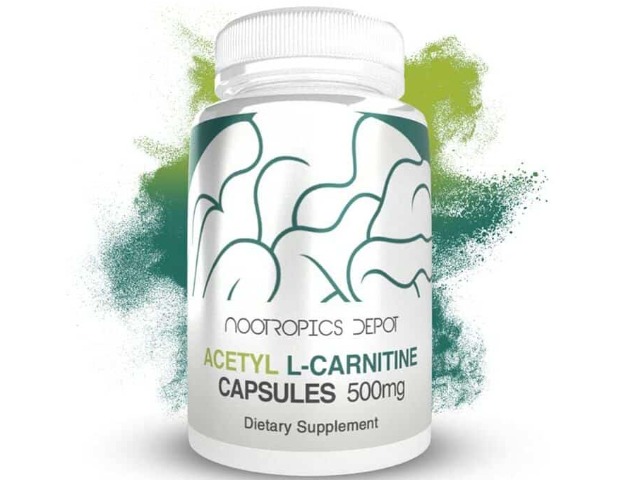
Acetyl L-Carnitine (ALCAR) by Nootropics Depot
Shop Now →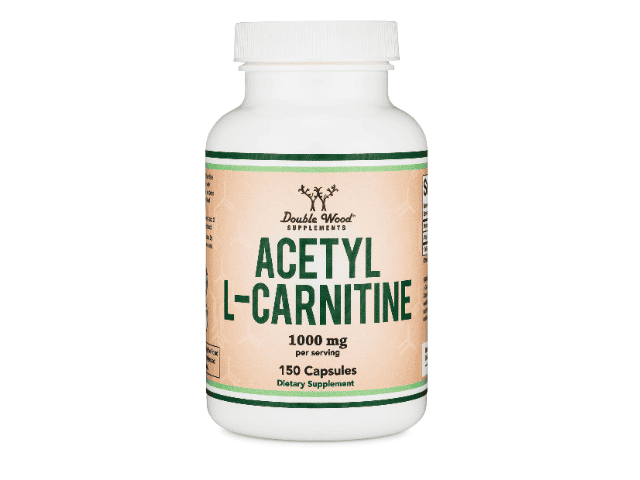
Acetyl L-Carnitine by DoubleWood Supplements
Shop Now →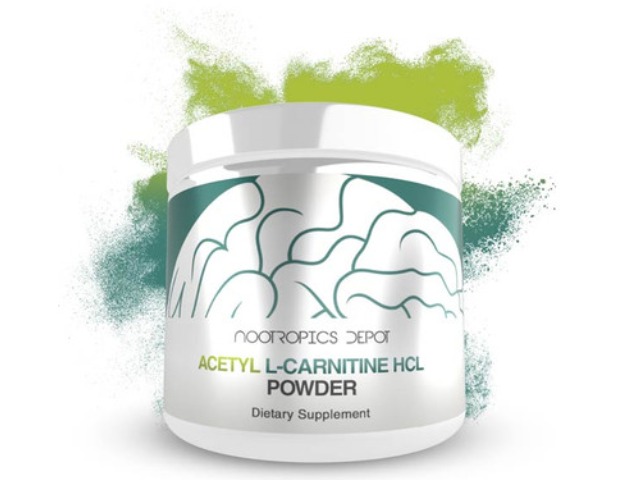
Nootropics Depot Acetyl L-Carnitine Hcl (Alcar) Powder
Shop Now →Disclosure: These are affiliate links. I earn a small commission if you purchase — at no extra cost to you. I only recommend products I personally use or have thoroughly researched.
Research & Studies
This section includes 5 peer-reviewed studies referenced in our analysis.