
- Immune system support through enhanced T-cell function
- Antioxidant protection via ergothioneine
- Mild cognitive support through gut-brain axis modulation
- Anti-inflammatory effects in brain regions
Four years ago, I dropped $300 on what I thought was a “comprehensive brain stack” — twelve different compounds in a fancy bottle with promises of mental clarity, better memory, and monk-like focus.
The result? Nothing. Well, not quite nothing — I got some stomach issues and lighter wallet. But zero cognitive benefits.
Turns out, I was missing the fundamentals. My gut was inflamed, I was getting five hours of sleep, and I was running on stress and coffee. No amount of exotic nootropics was going to fix that broken foundation. What I needed was to step back and address the basics — including nutrients and compounds my body could actually use to repair itself.
That’s where medicinal mushrooms like shiitake come in. Not as a magic bullet, but as part of a comprehensive approach to brain health.
The Short Version: Shiitake mushroom (Lentinula edodes) has strong evidence for immune support and antioxidant benefits, with emerging research suggesting cognitive benefits through gut-brain axis modulation. It’s significantly behind Lion’s Mane for direct cognitive enhancement but shines when used for immune resilience, inflammation reduction, and as part of multi-mushroom stacks. Always cook it thoroughly — raw shiitake can cause a nasty rash.
What Is Lentinula edodes?
Lentinula edodes — shiitake mushroom to anyone who’s not a mycologist — is one of those rare substances that bridges the gap between food and medicine. It’s been used in China and Japan for thousands of years, prized not just for its rich, umami flavor but for its health-promoting properties.
The name “shiitake” comes from Japanese: shii (the tree it grows on) and take (mushroom). Today, it’s the second most commercially cultivated mushroom worldwide and widely available in grocery stores across North America and Europe.
In the 1970s, Japanese researchers isolated lentinan, a beta-glucan polysaccharide compound that appeared responsible for many of shiitake’s medicinal effects. This kicked off modern scientific investigation into what traditional medicine had known for centuries — this mushroom does more than taste good in stir-fry.
Here’s the reality check, though: shiitake is not primarily a cognitive enhancer. It’s an immune-supporting, antioxidant-rich adaptogen that may have downstream cognitive benefits. If you’re looking for a nootropic that directly targets brain function, Lion’s Mane has far more robust evidence. But if you’re taking the holistic approach — supporting your body’s foundational systems so your brain can actually function optimally — shiitake deserves a spot in your protocol.
How Does Lentinula edodes Work?
Unlike single-mechanism compounds that flip one switch in your brain, shiitake works through multiple complementary pathways. Think of it less like a targeted drug and more like a systems upgrade.
The Gut-Brain Highway
Here’s where things get interesting. A 2025 study found that shiitake-derived vesicle-like nanoparticles (S-VLNs) significantly improved cognitive function in aged mice — but not by acting directly on the brain. Instead, shiitake modulated gut microbiota, which then influenced brain chemistry.
Specifically, it reduced kynurenic acid (KYNA), a compound that antagonizes key receptors involved in learning and memory — namely, NMDA receptors and alpha-7-nicotinic acetylcholine receptors. Lower KYNA means better receptor activity, which translates to improved cognitive performance.
Translation: Your gut and your brain are in constant communication. If your gut is out of balance, your brain pays the price. Shiitake helps restore that balance, creating the conditions for better cognitive function rather than forcing it through stimulation.
The Antioxidant Shield
Shiitake contains ergothioneine, a unique amino acid and thiol antioxidant that your brain specifically craves. Here’s what makes ergothioneine special: it crosses the blood-brain barrier, concentrates in tissues that need antioxidant protection most, and has been linked to cognitive health in aging populations.
Low ergothioneine levels have been associated with poorer cognitive performance and faster cognitive decline in elderly individuals. One serving of shiitake can provide 2.4 to 4.9 mg of ergothioneine — a meaningful dose.
Beyond ergothioneine, shiitake’s beta-glucans (lentinan, emitanin, and KS-2) neutralize free radicals and reduce oxidative stress. Your brain is particularly vulnerable to oxidative damage because it uses a disproportionate amount of oxygen relative to its size. Antioxidant support isn’t sexy, but it’s foundational.
Inflammation Reduction
The beta-glucans in shiitake demonstrate potent anti-neuroinflammatory properties. They significantly reduce pro-inflammatory cytokines — TNF-α, IL-6, and IL-1β — in critical brain regions like the hippocampus and prefrontal cortex.
Why does this matter? Chronic low-grade inflammation is increasingly recognized as a driver of cognitive decline, brain fog, and mood disorders. If your brain is stuck in a constant inflammatory state, no amount of “focus-enhancing” nootropics will give you the results you’re looking for. You have to address the inflammation first.
The Acetylcholine Connection
Shiitake appears to inhibit acetylcholinesterase (AChE), the enzyme that breaks down acetylcholine — your brain’s primary neurotransmitter for learning and memory. More acetylcholine available means better cholinergic neurotransmission.
The catch? This effect appears indirect and mild compared to dedicated cholinesterase inhibitors. Think of it as gentle support rather than aggressive intervention.
Benefits of Lentinula edodes
Let’s be honest about the evidence here. Shiitake has strong science behind some claims and preliminary support for others. I’m going to break down exactly where the evidence stands so you can make an informed decision.
| Benefit | Evidence Level | Key Research |
|---|---|---|
| Immune function | Strong (human RCTs) | 2016 dietary intervention trial |
| Antioxidant effects | Moderate (mechanistic + animal) | Multiple studies on ergothioneine |
| Cognitive support | Preliminary (animal + observational) | 2025 aged mice study; 2019 population study |
| Anti-inflammatory | Moderate (animal studies) | 2021 and 2023 beta-glucan research |
| Cardiovascular support | Preliminary (traditional use) | Limited clinical data |
Cognitive Function
Here’s what we know: a 2025 study showed that shiitake-derived nanoparticles significantly improved cognitive function in aged mice through gut microbiota modulation. A 2021 study found that shiitake beta-glucans prevented cognitive impairments in obese mice via the colon-brain axis. And a 2019 study in the Journal of Alzheimer’s Disease found that people who consumed more than two portions of mushrooms per week had reduced odds of mild cognitive impairment.
The reality: These are animal studies and population observations. There are no rigorous, placebo-controlled human trials demonstrating that shiitake enhances cognitive function in healthy adults. The mechanism makes sense, the preliminary evidence is promising, but we’re not there yet.
If you’re looking for a mushroom with stronger direct cognitive evidence, go with Lion’s Mane. If you’re building a comprehensive protocol that addresses foundational health while supporting cognition, shiitake fits beautifully.
Immune Support
This is where shiitake truly shines. A 2016 randomized dietary intervention in healthy young adults showed that consuming shiitake mushrooms daily improves immunity through enhanced T-cell function and reduced inflammatory responses.
The immune-modulating effects are well-established and repeatable. If you’re someone who catches every cold that goes around or feels run-down frequently, shiitake is worth trying.
Antioxidant & Anti-inflammatory Effects
Research from 2023 demonstrated shiitake’s potent phenolic composition, antioxidant activity, and antibacterial effects. The ergothioneine content alone makes it valuable — this is an antioxidant your brain specifically accumulates and uses.
The anti-neuroinflammatory effects are backed by animal research showing significant reductions in inflammatory markers in the hippocampus and prefrontal cortex. For someone dealing with brain fog from chronic inflammation (which describes more people than realize it), addressing inflammation is step one. Shiitake helps with that.
Reality Check: Shiitake isn’t going to give you laser focus an hour after taking it. It’s not that kind of compound. The benefits are subtle, cumulative, and work best when you’re also addressing sleep, stress, and nutrition. If you’re looking for an acute nootropic effect, this isn’t it.
How to Take Lentinula edodes
The “right” dose depends on your goal and what form you’re using. Here’s the breakdown:
| Use Case | Form | Dosage | Timing | Notes |
|---|---|---|---|---|
| General health | Fresh mushrooms | 50-100g | With meals | Culinary amounts |
| Immune support | Dried mushrooms | 3-5g | Daily with food | Traditional use |
| Therapeutic support | Fruiting body extract | 1-3g | Daily, split doses | 30%+ beta-glucans |
| Clinical use | Isolated lentinan | 2.5mg oral or 2-10mg IV | Medical guidance | Adjunctive therapy only |
For most people reading this: Start with 1 gram daily of a high-quality fruiting body extract standardized to at least 30% beta-glucans. Take it with food in the morning or split the dose between morning and afternoon.
Forms and Bioavailability
Not all shiitake products are created equal. In fact, most are garbage. Here’s what actually matters:
Hot water extraction: This is essential for pulling out the beta-glucans. A simple powder of ground-up mushroom won’t give you the therapeutic compounds in bioavailable form. Look for products explicitly labeled as “hot water extract.”
Dual extraction: Even better. This uses both water and alcohol to capture water-soluble compounds (like beta-glucans) and alcohol-soluble compounds (like triterpenes). More comprehensive extraction means more therapeutic benefit.
Fruiting body vs. mycelium: This is critical. US companies often sell “mycelium on grain” — essentially ground-up grain with a little bit of mushroom mycelium. These products are high in starch, low in beta-glucans, and not what traditional medicine or research studies used. Always choose fruiting body extracts.
Starting Protocol
Week 1-2: Start with 500mg daily with breakfast. Assess tolerance. Shiitake is gentle, but some people experience mild digestive adjustment.
Week 3-8: Increase to 1-2 grams daily (split into two doses if preferred). This is the therapeutic range for most people.
Month 3+: Assess results. Immune benefits typically emerge first (fewer colds, faster recovery). Cognitive benefits, if they appear, take longer — 8-12 weeks of consistent use.
Pro Tip: Consistency beats quantity every time. Taking 1 gram daily for three months will yield better results than taking 3 grams sporadically. Set a phone reminder, add it to your morning routine, make it automatic.
Cycling
Not necessary. Shiitake can be taken continuously. It’s a food-based supplement with a safety profile that supports long-term use.
Side Effects & Safety
Shiitake is generally safe when used properly. The key phrase: when used properly.
Common Side Effects (With High Doses)
When taken in large amounts (above 15-20 grams per day), some people experience:
- Stomach discomfort or bloating
- Diarrhea
- Mild photosensitivity (increased sun sensitivity)
These effects are dose-dependent and resolve when you reduce intake.
Shiitake Dermatitis (The Big One)
About 2% of people who consume raw or undercooked shiitake develop flagellate dermatitis — a streaky, red rash caused by lentinan. It’s distinctive, uncomfortable, and totally preventable.
The fix: Always cook shiitake thoroughly. Heat deactivates the compound responsible for the rash. This applies to fresh mushrooms — extracts are processed and don’t carry this risk.
The rash usually resolves within 8 weeks, but it’s better to avoid it entirely. Cook your shiitake.
Who Should Avoid Shiitake
Important: Do NOT use shiitake if you have autoimmune diseases (multiple sclerosis, lupus, rheumatoid arthritis, etc.). Shiitake activates the immune system, which can worsen autoimmune conditions.
Other contraindications:
- Hypereosinophilic syndrome: A rare blood disorder that shiitake may aggravate
- Pending organ transplant or immunosuppression: Shiitake may interfere with immunosuppressive medications
- Bleeding disorders or taking blood thinners: Shiitake contains eritadenine, which can enhance blood-thinning effects
Drug Interactions
Immunosuppressants (cyclosporine, tacrolimus, corticosteroids): Shiitake may reduce their effectiveness by activating the immune system. If you’re on these medications, skip shiitake.
Warfarin or other anticoagulants: Shiitake can enhance blood-thinning effects, increasing bleeding risk. Monitor closely if combining.
Liver-metabolized drugs: Shiitake may alter how your liver processes certain medications. If you’re on medications with narrow therapeutic windows, consult your prescriber.
Pregnancy & Nursing
Not enough reliable data exists. Stick to normal food amounts (a serving in a meal) and avoid medicinal doses during pregnancy or breastfeeding.
Stacking Lentinula edodes
Shiitake isn’t a solo act. It shines brightest when combined with other medicinal mushrooms or complementary nootropics.
Multi-Mushroom Stacks
The research suggests that stacking mushrooms provides not only individual benefits but potentially synergistic effects between compounds. Here’s what works:
Immune & Cognitive Stack:
- Shiitake (1-2g) — immune support, antioxidant protection
- Lion’s Mane (1g) — direct cognitive enhancement via NGF
- Reishi (500mg-1g) — stress resilience, sleep quality
- Why it works: Shiitake builds the foundation (immune, inflammation, antioxidants), Lion’s Mane targets cognition directly, and Reishi manages stress that undermines both.
Energy & Metabolic Stack:
- Shiitake (1-2g) — metabolic support, antioxidants
- Cordyceps (1g) — ATP production, physical energy
- Maitake (500mg) — blood sugar regulation
- Why it works: Complementary metabolic pathways. Shiitake supports cellular health, Cordyceps enhances energy production, Maitake stabilizes blood sugar.
Comprehensive Longevity Stack:
- Shiitake (1-2g)
- Reishi (1g)
- Turkey Tail (1g)
- Chaga (500mg)
- Why it works: Overlapping and complementary immune-modulating, anti-inflammatory, and antioxidant mechanisms. This is a “cover all bases” approach.
Complementary Nootropics
With Alpha-GPC or CDP-Choline: Shiitake mildly inhibits acetylcholinesterase (slowing breakdown of acetylcholine), while choline sources provide raw material for acetylcholine synthesis. The combination supports cholinergic function from both ends.
With B-Complex: Shiitake is naturally rich in B6 and folate. Combining with a comprehensive B-complex creates synergistic support for methylation, neurotransmitter synthesis, and energy production.
With Adaptogens (Rhodiola, Ashwagandha, Bacopa): Shiitake provides immune and antioxidant support while adaptogens manage stress response. Complementary mechanisms, no overlap or redundancy.
What NOT to Combine
Immunosuppressants: Direct opposition. Don’t do it.
Multiple blood thinners without medical supervision: Shiitake + warfarin + aspirin + fish oil = increased bleeding risk. One or two is manageable with monitoring; stacking multiple anticoagulants requires medical oversight.
Raw shiitake with anything: Just cook your shiitake. This isn’t a stacking issue, it’s a preparation issue, but it’s worth repeating.
My Take
I’m going to be blunt: if you came here looking for a “brain pill” that’s going to make you feel noticeably smarter within a week, shiitake isn’t it. That’s not what this mushroom does, and anyone selling it that way is lying to you.
What shiitake is — and why I include it in my own protocol — is a foundational support compound. It addresses immune function, reduces inflammation, provides antioxidant protection, and gently supports the systems your brain depends on to function optimally.
Here’s the thing I wish someone had told me years ago: your brain doesn’t exist in isolation. It’s connected to your gut, your immune system, your inflammatory state, your oxidative stress levels. When those systems are compromised, no amount of racetams or stimulants will give you the cognitive performance you’re after. You’re building on a broken foundation.
Shiitake helps repair that foundation.
Who should try shiitake:
- You catch colds frequently or feel run-down often (immune support is where shiitake excels)
- You’re dealing with chronic inflammation or brain fog
- You want a comprehensive mushroom stack and need the “immune and antioxidant support” piece
- You’re taking a long-term, holistic approach to brain health
Who should probably try something else:
- You want acute cognitive enhancement — try Lion’s Mane, Alpha-GPC, or caffeine + L-theanine
- You have an autoimmune condition — shiitake will activate your immune system, which is the opposite of what you need
- You’re impatient — shiitake takes 8-12 weeks to show benefits
In my experience, shiitake is most valuable as part of a multi-mushroom stack. I take it alongside Lion’s Mane and Reishi. Lion’s Mane handles the direct cognitive enhancement, Reishi manages my stress and sleep, and shiitake covers immune resilience and inflammation. That combination, combined with good sleep hygiene, regular exercise, and a nutrient-dense diet, has been genuinely transformative.
But it’s not magic. It’s biology. You’re giving your body the raw materials and support it needs to function the way it’s supposed to.
If that aligns with how you think about health — addressing root causes rather than chasing symptom relief — shiitake is absolutely worth trying. Just set realistic expectations, give it time, and make sure you’re buying a quality product (fruiting body extract, 30%+ beta-glucans, reputable source).
And for the love of all that is holy, cook your fresh shiitake.
Recommended Shiitake Mushroom Products
I know how frustrating it is to sort through dozens of brands making the same claims. These are the ones I've personally vetted — because quality is the difference between results and wasted money.
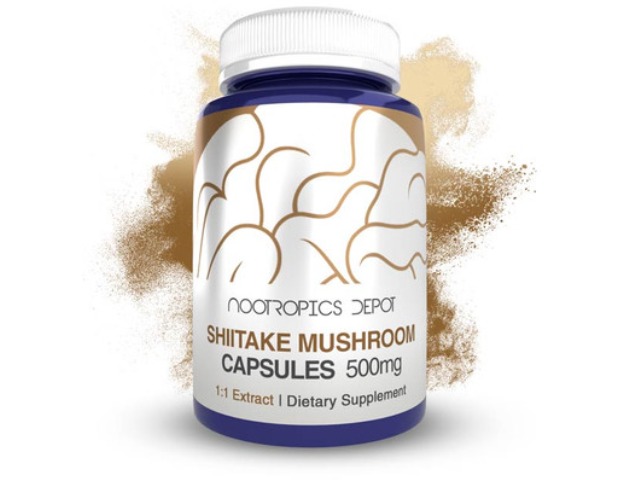
Disclosure: These are affiliate links. I earn a small commission if you purchase — at no extra cost to you. I only recommend products I personally use or have thoroughly researched.