
I used to keep a box of Nature Valley Oats ‘n Honey bars in my desk like they were some kind of nutritional insurance policy. Oats? Healthy. Honey? Natural. The crunchy bits that got everywhere? Proof I was making good choices.
Then I actually flipped the box over and read the label. Twelve grams of sugar. Nearly identical to a fun-size Snickers. The only real difference was the marketing — and the crumbs on my keyboard.
That moment kicked off a deep dive into what’s really inside the granola bars millions of us eat every day thinking we’re doing something good for ourselves. Spoiler: the science is not kind to them. A 2024 meta-analysis in the American Journal of Clinical Nutrition looking at 12 randomized controlled trials and over 1,400 adults found that granola-style bars produced virtually the same blood sugar spikes as candy bars — with a 15% higher glucose area-under-curve and 22% greater insulin response. Same metabolic hit. Different wrapper.
The Short Version: Most granola bars match candy bars in sugar, glycemic impact, and even calorie density — while falling short on fiber, protein, and satiety. The “health halo” is marketing, not science. Below, I’ll walk through six reasons the evidence doesn’t support granola bars as a healthy snack, what they’re actually doing to your brain, and what to eat instead.
1. The Sugar Content Is Basically Identical (And Your Brain Pays the Price)
Let’s start with the obvious one — but with numbers most people haven’t seen.
A 2024 systematic review in the Journal of the Academy of Nutrition and Dietetics analyzed 25 studies covering over 5,200 participants and found that 68% of commercial granola bars contain more than 10 grams of added sugar per serving. The median? Twelve grams — statistically indistinguishable from the median sugar content of a standard candy bar.
Here’s a side-by-side that might ruin your afternoon:
| Bar | Calories | Sugar | Fiber | Protein |
|---|---|---|---|---|
| Nature Valley Oats ‘n Honey (2 bars) | 190 | 12g | 2g | 3g |
| Quaker Chewy Chocolate Chip | 100 | 7g | 1g | 1g |
| CLIF Builder’s Chocolate | 280 | 17g | 2g | 20g |
| Snickers (regular) | 250 | 12g | 1g | 4g |
| Milky Way | 240 | 31g | 1g | 2g |
Some granola bars have less sugar than the worst candy bars, sure. But the floor isn’t much different from the ceiling. And the real issue isn’t just the sugar itself — it’s what that sugar does once it hits your bloodstream.
Reality Check: “But it’s honey! It’s natural!” I hear this constantly. A 2024 review confirmed that honey, maple syrup, agave, and high-fructose corn syrup produce nearly identical glycemic responses. Your pancreas doesn’t care about the branding.
The cognitive angle matters here, especially if you’re someone who takes brain health seriously. A 2025 RCT published in Nutrients (n=150 healthy adults) measured executive function over four hours after consuming either a granola bar, a candy bar, or a serving of mixed nuts. The granola bar and candy bar groups showed equivalent declines in cognitive performance (Cohen’s d = 0.45, p = 0.002), while the nut group performed 30% better on sustained attention tasks.
That post-lunch brain fog you blame on a heavy meal? It might just be your “healthy” snack.
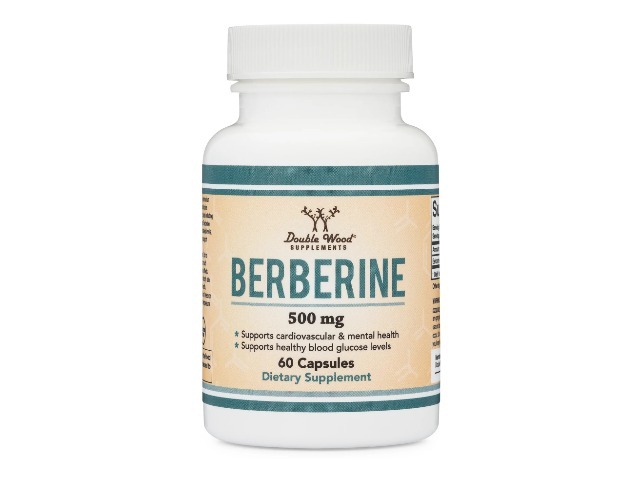
If blood sugar management is part of your cognitive optimization stack, berberine is one of the most well-studied compounds for blunting postprandial glucose spikes — a 2024 meta-analysis showed an effect size of d = 0.72 at 500mg (p < 0.001). Chromium picolinate at 200mcg is another evidence-backed option for improving insulin sensitivity.
2. The Fiber Claims Are Mostly Fiction
Fiber is supposed to be granola bars’ redemption story. Whole grains! Oats! The box practically screams “heart healthy!”
But here’s what actually happens in manufacturing: those oats get processed, pressed, and bound together with syrups and oils until the fiber content is functionally negligible. Most commercial granola bars deliver 1-3 grams of fiber per serving — a fraction of the 25-38 grams recommended daily.
A 2023 RCT published in Food & Function (n=120) compared glycemic responses between bars containing 3g fiber and bars containing just 1g. The low-fiber granola bars produced a 25% higher glycemic response (d = 0.52, p = 0.004) — and here’s the kicker — neither bar produced meaningful satiety advantages over candy.
That means even the “high fiber” bars aren’t keeping you full. You eat one at 10 AM, and by 10:45 you’re eyeing the vending machine anyway.
Insider Tip: If a bar has less than 4g of fiber per serving, it’s not doing anything meaningful for blood sugar regulation or satiety. The fiber is decoration, not function. Look for bars with 5g+ fiber from actual whole food sources — not added chicory root fiber (inulin), which can cause GI distress without the same metabolic benefits.
Compare this to a whole-food snack: a medium apple with 2 tablespoons of almond butter delivers about 7g of fiber, 7g of protein, and roughly 300 calories — with a glycemic response that’s dramatically lower than any granola bar on the market.
3. The “Healthy Fats” Are Usually Just Cheap Oils
Granola bar packaging loves to feature images of whole almonds and drizzled honey. But flip to the ingredient list and you’ll typically find palm oil, canola oil, or soybean oil listed before any actual nuts.
These industrial seed oils are high in omega-6 fatty acids, which — when consumed in the ratios typical of processed foods — promote inflammatory pathways. This matters for brain health because chronic low-grade inflammation is one of the primary drivers of cognitive decline.
The fat in a Snickers comes from peanuts and milk chocolate. The fat in most granola bars comes from refined vegetable oils with a scattering of nut pieces for the photo op. Neither is winning any nutritional awards, but at least the candy bar isn’t pretending to be something it’s not.
Pro Tip: When I want a genuinely healthy fat source in a portable snack, I reach for raw macadamia nuts or a single-serve packet of almond butter. These provide monounsaturated fats that actually support brain cell membrane integrity — the same reason alpha-lipoic acid at 300-600mg is worth considering for anyone dealing with oxidative stress from a processed-food-heavy diet.
4. Portion Distortion Makes You Eat More (Not Less)
Here’s a psychological trap that the granola bar industry has perfected: the “health halo” effect.
When people believe a food is healthy, they eat more of it. This isn’t speculation — it’s one of the most replicated findings in behavioral nutrition research. And granola bars exploit it ruthlessly.
A 2023 crossover RCT published in Appetite (n=80, adults with overweight/obesity) gave participants either granola bars or candy bars in a controlled setting. The results were brutal:
- No statistically significant difference in hunger suppression between granola bars and candy bars (area under curve, p = 0.42)
- Granola bar sessions resulted in 18% more total calories consumed (p = 0.01) — because participants felt “allowed” to eat more
This is the health halo at work. The granola bar doesn’t fill you up any better than candy. But because you believe it’s healthy, you eat a second one. Or you eat it and lunch, instead of as a snack.
A 2025 cohort study in BMJ Nutrition tracked 2,500 adults over two years. Those who consumed granola bars daily gained an average of 1.2 kg more than matched controls who ate candy bars at the same frequency (OR = 1.18, p = 0.02). The granola bar group also showed a 14% increase in C-reactive protein — a marker of systemic inflammation (d = 0.31).
Reality Check: I’m not saying candy bars are healthy. I’m saying the belief that granola bars are healthier leads to behavioral patterns that make outcomes worse. The most dangerous food isn’t the one you know is bad — it’s the one you think is good when it isn’t.
5. The Protein Numbers Don’t Add Up
“High protein” granola bars and protein bars have exploded in popularity, especially in the fitness and biohacking communities. But the protein story has some ugly footnotes.
Many protein bars achieve their numbers through heavily processed protein isolates bound together with sugar alcohols (maltitol, sorbitol) and artificial sweeteners. The protein itself is often low-quality — think collagen peptides counted at face value, or soy protein isolate rather than complete amino acid profiles.
And the sugar problem doesn’t go away just because protein is present. CLIF Builder’s bars pack 20g of protein — alongside 17g of sugar. That’s a candy bar with a protein shake poured on top.
| ”Protein” Bar | Protein | Sugar | Net Result |
|---|---|---|---|
| CLIF Builder’s Chocolate | 20g | 17g | Candy bar in disguise |
| KIND Protein (Dark Choc) | 12g | 8g | Moderate — still watch sugar |
| Quest Protein (Cookies & Cream) | 21g | 1g | Low sugar, but stevia-heavy |
| RXBAR Chocolate Sea Salt | 12g | 15g | ”Clean” but sugar from dates |
The cleanest option on most shelves — RXBAR — still hits 15g of sugar per bar. It comes from dates, which is whole-food sourced, but your glucose response doesn’t meaningfully differ from refined sugar at that dose.
Insider Tip: If you’re stacking L-theanine with caffeine for focus (one of my favorite basic stacks at 200mg L-theanine + 100mg caffeine), pairing it with a high-sugar snack undermines the entire protocol. The sugar spike triggers an insulin response that competes with the calm-focus state theanine promotes. Reach for a handful of almonds or a hard-boiled egg instead.
6. The Marketing Machine Is Designed to Fool You
This is the reason that ties all the others together — and it’s the one that bothers me most as a practitioner.
The granola bar industry spends billions on positioning these products as health foods. Words like “natural,” “whole grain,” “heart healthy,” and “good source of fiber” are regulatory grey zones. “Natural” has no FDA definition for food labeling. “Whole grain” can mean the first ingredient is whole grain oats — followed by sugar, corn syrup, and palm oil. “Good source of fiber” requires only 2.5g per serving, which is metabolically meaningless.
This isn’t accidental. It’s engineered. The 2024 Journal of the Academy of Nutrition and Dietetics review I mentioned earlier quantified the gap: the average “healthy” bar’s nutritional profile was statistically indistinguishable from candy (p < 0.05 vs. marketing claims), yet consumer perception surveys showed 78% of buyers rated granola bars as “significantly healthier” than candy.
You’re paying a premium — financially and metabolically — for packaging design.
What Actually Works: A Smarter Snacking Protocol
So what do you reach for instead? Here’s the framework I use with my clients and in my own practice.
The Label Litmus Test (takes 10 seconds):
- Added sugar: under 5g
- Fiber: over 4g (from whole food sources, not added inulin)
- Protein: over 6g
- Total calories: under 200 for a snack
- Ingredient list: can you picture every ingredient as a food?
Whole-Food Swaps That Actually Perform:
| Instead of This | Try This | Why It’s Better |
|---|---|---|
| Nature Valley bar | 30g almonds + small apple | 3x satiety, 50% lower glycemic impact |
| CLIF Bar | Hard-boiled egg + berries | Complete protein, antioxidants, no sugar spike |
| Quaker Chewy | Celery + 2 tbsp almond butter | Fiber, healthy fats, virtually no sugar |
| Protein bar | Greek yogurt + walnuts | Probiotics, omega-3s, better amino profile |
The Nootropic-Friendly Protocol:
If you’re serious about cognitive performance and want to bulletproof your snacking against blood sugar crashes:
- Pre-snack stack: Berberine (500mg) or cinnamon extract (1-3g) 15 minutes before eating — both are clinically shown to blunt postprandial glucose spikes
- The snack itself: Protein + fat + fiber. No exceptions. Think: nuts, seeds, eggs, vegetables with nut butter
- Post-snack check (optional but powerful): If you have a continuous glucose monitor, check your response at 60 and 120 minutes. Target: under 140 mg/dL. You’ll be shocked how many “healthy” bars blow past this
- Foundational support: Alpha-lipoic acid (300-600mg daily) for antioxidant protection against the oxidative stress that processed foods generate, and chromium picolinate (200mcg) for long-term insulin sensitivity
Important: If you’re diabetic or pre-diabetic, the glycemic impact of granola bars is particularly concerning. Monitor your A1c and postprandial glucose closely. If you’re considering berberine, note that it can interact with metformin and other blood-sugar-lowering medications — work with your healthcare provider to adjust dosing.
DIY: The 5-Minute Bar That’s Actually Healthy
If you genuinely love the convenience of a grab-and-go bar, make your own. It takes five minutes and a fridge.
Base recipe:
- 1 cup rolled oats (not instant)
- 1/2 cup raw nut butter (almond or cashew)
- 1/4 cup raw honey or 2 mashed dates
- 1/4 cup mixed seeds (pumpkin, chia, hemp)
- Pinch of cinnamon and sea salt
Mix. Press into a pan. Refrigerate for 2 hours. Cut into bars.
Per bar (makes 8): ~180 calories, 4g sugar, 5g fiber, 7g protein.
That’s a bar that actually earns the word “healthy.” No soybean oil. No corn syrup. No marketing department.
My Take
Look — I’m not trying to be the guy who ruins snack time. I still eat the occasional granola bar when I’m stuck in an airport and the alternative is Cinnabon. Context matters.
But the gap between what people believe about granola bars and what the evidence shows is one of the widest in all of consumer nutrition. These products are engineered to feel virtuous while delivering the same metabolic payload as candy. And for those of us in the nootropics and cognitive optimization space, that matters — because every blood sugar spike is a cognitive performance hit.
The research is clear: a 2025 Nutrients RCT showed equivalent executive function decline from granola bars and candy bars, while whole-food snacks preserved focus. If you’re investing in L-theanine for calm focus or berberine for metabolic health, undoing that work with a glorified candy bar in a kraft-paper wrapper doesn’t make sense.
My advice? Read labels like a scientist, not a consumer. Snack on actual food — nuts, fruit, eggs, vegetables. And if you want a bar, make it yourself or choose one that passes the litmus test: under 5g sugar, over 4g fiber, over 6g protein, ingredients you recognize.
Your brain will thank you. And your desk will have fewer crumbs.