
- Focus & Attention
- Neuroprotection
- Antioxidant Support
- Mitochondrial Function
Here’s something I learned the hard way after dropping $80 on a bottle of “premium” alpha-lipoic acid that did absolutely nothing: not all ALA is created equal.
Most supplements sold as “alpha-lipoic acid” are actually a 50/50 mix of R-ALA (the form your body makes and uses) and S-ALA (a synthetic mirror image that doesn’t do much). It’s like buying a case of wine where half the bottles are filled with grape juice—you’re paying full price but getting half the benefit.
R-Alpha Lipoic Acid is the real deal. It’s what I wish I’d known about before wasting money on inferior forms.
The Short Version: R-Alpha Lipoic Acid is the naturally occurring, bioactive form of alpha-lipoic acid—a unique antioxidant that protects both the fatty and watery parts of your cells, supports mitochondrial energy production, and helps maintain healthy brain function. Research suggests benefits for focus, neuroprotection, and metabolic health, with typical doses of 300-600mg daily.
What Is R-Alpha Lipoic Acid?
R-Alpha Lipoic Acid (R-ALA) is the naturally occurring form of alpha-lipoic acid, a compound your body produces in small amounts and uses as a crucial cofactor in mitochondrial energy production. Think of it as a master antioxidant—one that works in both the fatty membranes of your cells and the watery fluid inside them, giving it access to places other antioxidants can’t reach.
The “R” designation matters more than you might think. Alpha-lipoic acid exists in two mirror-image forms (enantiomers): R-ALA and S-ALA. Your body only makes and uses R-ALA. Most cheap supplements contain synthetic ALA, which is a 50/50 racemic mixture of both forms. The S form? It’s basically filler—your body doesn’t use it efficiently, and it may actually interfere with the R form’s activity.
Here’s why R-ALA has gained traction in the nootropics world: it’s one of the few antioxidants that readily crosses the blood-brain barrier, and it doesn’t just scavenge free radicals—it regenerates other spent antioxidants like Vitamin C, Vitamin E, and Glutathione. This creates a cascading protective effect throughout your brain and body.
Before you get too excited, let’s be clear: R-ALA isn’t a cognitive enhancer in the traditional stimulant sense. You won’t take it and feel a rush of focus. Instead, it works in the background—protecting neurons from oxidative damage, supporting the cellular energy systems that power cognition, and helping maintain the infrastructure your brain needs to function optimally over time.
Reality Check: R-ALA isn’t a “limitless pill.” It’s a foundational compound that works best when your basics—sleep, nutrition, stress management, gut health—are dialed in. If you’re chronically sleep-deprived and living on coffee and stress hormones, no amount of antioxidants will fix that broken foundation.
How Does R-Alpha Lipoic Acid Work? (The Science That Actually Matters)
Let me translate the mechanism into something that makes sense without a biochemistry degree.
The plain-English version: R-ALA acts like a cellular cleanup crew and power plant manager rolled into one. It neutralizes the toxic byproducts your cells produce during normal energy generation, helps recycle other protective compounds that get used up, and keeps your mitochondria (the energy factories in your cells) running efficiently.
The evidence: R-Alpha Lipoic Acid functions as both a direct antioxidant in its oxidized form and through its reduced metabolite, dihydrolipoic acid (DHLA). This dual-phase system allows it to neutralize reactive oxygen species in both lipid-rich cell membranes and aqueous cellular compartments—essentially providing comprehensive protection across all cellular environments. A 2024 review in Antioxidants highlighted that R-ALA’s ability to regenerate vitamins C and E, glutathione, and coenzyme Q10 creates a “network antioxidant” effect that multiplies its protective capacity.
But R-ALA does more than just clean up free radicals. It enhances cholinergic neurotransmission—the brain signaling system that’s fundamental for attention, learning, and memory. Research demonstrates that R-ALA can reverse age-related deficits in cholinergic function, essentially restoring activity in a neurotransmitter system that deteriorates with aging and neurodegenerative conditions. This isn’t speculative—it’s been demonstrated in both animal models and human trials.
R-ALA also modulates glutamatergic neurotransmission by helping restore optimal NMDA receptor function. NMDA receptors are crucial for synaptic plasticity (your brain’s ability to form new connections) and memory formation. The compound’s effects appear protective rather than stimulatory—it helps maintain the delicate balance of excitatory signaling necessary for learning without tipping into excitotoxicity (the harmful overactivation of neurons).
The anti-inflammatory mechanism is particularly interesting: R-ALA inhibits the activation of nuclear factor kappa B (NF-κB), a master regulator of inflammatory gene expression. It does this by preventing the degradation of IκB, an inhibitor protein that normally keeps NF-κB in check. This blocks the production of proinflammatory cytokines including TNF-α, IL-1β, and IL-6. In the brain, where chronic low-grade inflammation accelerates cognitive decline, this matters enormously.
So what? In practical terms, R-ALA helps your brain maintain its cellular infrastructure. It’s not giving you a cognitive boost in the acute sense—it’s preserving and supporting the systems that allow your brain to function well over time. The benefits are cumulative, not immediate.
Insider Tip: R-ALA works synergistically with Acetyl-L-Carnitine (ALCAR). Together, they’ve been shown to improve mitochondrial function more effectively than either compound alone. This combination—often called the “mitochondrial cocktail”—has solid research backing for both neuroprotection and cognitive support in aging.
Benefits of R-Alpha Lipoic Acid (What the Research Actually Shows)
Let’s talk about what R-ALA can reasonably be expected to do, based on actual evidence—not marketing hype.
Focus & Attention (Moderate Evidence)
A 2023 open-label pilot study published in International Journal of Environmental Research and Public Health examined alpha-lipoic acid supplementation in non-clinical elderly adults. Participants taking 600mg daily for 12 weeks showed improvements in cognitive function scores and self-reported mental clarity. The evidence here is moderate because the study was small and open-label (no placebo control), but the direction is promising.
The mechanism makes sense: by supporting mitochondrial energy production and protecting neurons from oxidative stress, R-ALA helps maintain the cellular energy your brain needs for sustained focus. This isn’t a caffeine-like stimulation—it’s more about reducing the cellular friction that makes concentration effortful.
Neuroprotection & Healthy Aging (Strong Mechanistic Evidence)
This is where R-ALA really shines. The 2024 review in Antioxidants compiled evidence showing R-ALA’s protective effects against oxidative stress, neuroinflammation, and mitochondrial dysfunction—three major contributors to cognitive decline and neurodegenerative conditions.
Animal studies show R-ALA can reverse age-related decline in memory and learning. Human data is more limited, but the mechanistic foundation is solid: R-ALA crosses the blood-brain barrier, accumulates in brain tissue, and protects neurons from the kinds of damage that accumulate over decades.
Translation: R-ALA is less about acute performance and more about long-term cognitive preservation. It’s a compound you take consistently over years, not something you pop before a big exam.
Metabolic & Mitochondrial Support (Strong Evidence)
R-ALA has been extensively studied for metabolic health, particularly in diabetes and metabolic syndrome. Multiple trials show it improves insulin sensitivity and helps regulate blood glucose. This matters for brain health because metabolic dysfunction and insulin resistance are increasingly recognized as risk factors for cognitive decline.
The mitochondrial benefits are well-established: R-ALA is a required cofactor for key mitochondrial enzymes involved in energy production. Supplementation appears to enhance mitochondrial efficiency, which translates to better cellular energy availability—including in neurons.
| Benefit | Evidence Level | Key Research | Notes |
|---|---|---|---|
| Focus & Attention | Moderate | Human pilot study (2023) | 600mg daily over 12 weeks improved cognitive scores in elderly adults |
| Neuroprotection | Strong (mechanistic) | Multiple reviews (2024) | Crosses BBB, reduces oxidative stress and neuroinflammation |
| Metabolic Health | Strong (RCTs) | Meta-analyses | Well-established for insulin sensitivity and glucose regulation |
| Mitochondrial Function | Strong (mechanistic) | Biochemical studies | Required cofactor for mitochondrial energy production |
Reality Check: The evidence for R-ALA as a direct cognitive enhancer in healthy young adults is thin. Most research focuses on elderly populations, metabolic dysfunction, or neuroprotection. If you’re 25 with no metabolic issues and perfect sleep, you might not notice much. If you’re 45+ or dealing with metabolic stress, the benefits become more apparent.
How to Take R-Alpha Lipoic Acid (Without Wasting Your Money)
Here’s where most people screw this up: they buy cheap racemic ALA, take it inconsistently, with food, and wonder why they don’t feel anything.
Dosage & Timing
| Use Case | Dosage | Timing | Notes |
|---|---|---|---|
| General antioxidant support | 100-200mg | Morning, empty stomach | Entry-level dose for healthy individuals |
| Cognitive & neuroprotective benefits | 300-600mg | Split into 2-3 doses, empty stomach | Sweet spot for most research-backed benefits |
| Metabolic/therapeutic use | 600-900mg | 2-3 times daily, empty stomach | Higher end for insulin sensitivity, metabolic support |
Start at the lower end. I recommend beginning with 100-200mg for the first week to assess tolerance, then increasing to 300-600mg if you’re targeting cognitive or neuroprotective benefits.
The empty stomach issue is real. R-ALA has poor bioavailability when taken with food—absorption can drop by 30% or more. Take it at least 30 minutes before eating, or 2+ hours after a meal.
Split your dose. R-ALA has a relatively short half-life (about 30 minutes in its free form). Splitting your total daily dose into 2-3 administrations maintains more stable blood levels. For example, if you’re taking 600mg daily, try 200mg three times a day rather than 600mg all at once.
Forms & Bioavailability
This is critical: Only buy R-Alpha Lipoic Acid, not racemic ALA. Check the label carefully. It should explicitly state “R-Alpha Lipoic Acid” or “R-ALA”—not just “alpha-lipoic acid” or “ALA.”
Some premium forms use sodium R-lipoate (Na-R-ALA), which has better stability and bioavailability than standard R-ALA. It’s more expensive, but you may get better results at lower doses. Sodium R-Lipoate deserves its own consideration if you’re serious about optimization.
Cycling
R-ALA doesn’t require cycling for safety, but some users prefer a 5 days on / 2 days off pattern to maintain sensitivity. Honestly, I haven’t seen compelling evidence that cycling is necessary for this compound—consistent daily use appears safe and effective for long-term neuroprotection.
Pro Tip: If you’re taking R-ALA for cognitive benefits, give it at least 8-12 weeks before assessing effectiveness. This isn’t a fast-acting compound. The protective and metabolic benefits accumulate over time. I’ve seen people give up after two weeks because “nothing happened”—that’s not how this works.
Side Effects & Safety (What Could Go Wrong)
R-ALA has a solid safety profile, but there are some considerations you need to know about.
Common Side Effects
Most people tolerate R-ALA well, but some report:
- Mild digestive upset (nausea, stomach discomfort)—usually resolved by taking with a small amount of food or reducing dose
- Skin rash or itching (rare, but documented)
- Headaches (uncommon, typically at higher doses)
- Hypoglycemia symptoms (dizziness, shakiness)—more common in people with diabetes or those taking blood sugar medications
The digestive issues are the most common, affecting maybe 10-15% of users in my experience. Starting with a lower dose and gradually increasing usually prevents this.
Blood Sugar Concerns
R-ALA improves insulin sensitivity and can lower blood glucose. This is beneficial for metabolic health, but it means anyone with diabetes or taking blood sugar medications needs to monitor glucose levels closely when starting R-ALA. Your medication dosages may need adjustment.
If you’re not diabetic but notice symptoms of low blood sugar (shakiness, sweating, irritability, brain fog), try taking R-ALA with a small protein-containing snack or reducing your dose.
Drug Interactions
| Medication/Substance | Interaction Type | Risk Level | Notes |
|---|---|---|---|
| Diabetes medications (insulin, metformin, sulfonylureas) | Blood glucose lowering | Moderate-High | R-ALA enhances insulin sensitivity; may cause hypoglycemia. Monitor blood sugar closely and adjust medications as needed. |
| Thyroid medications (levothyroxine) | Absorption interference | Moderate | R-ALA may reduce thyroid hormone absorption. Separate dosing by at least 4 hours. |
| Chemotherapy drugs | Potential interference | Moderate | Antioxidants may theoretically reduce effectiveness of some chemotherapy. Consult oncologist before use. |
| Alcohol | Enhanced detoxification effects | Low | R-ALA may support liver detoxification, potentially affecting alcohol metabolism. Moderate interaction. |
Important: If you’re taking thyroid medication, this interaction is significant. Take your thyroid med in the morning and R-ALA several hours later, or vice versa. Don’t take them together or absorption of one or both may be compromised.
Pregnancy & Nursing
There isn’t sufficient safety data for R-ALA use during pregnancy or breastfeeding. The precautionary principle applies here: unless you have a specific medical reason and physician oversight, skip it during these periods.
Who Should Avoid R-ALA
- Anyone with thiamine deficiency (R-ALA can worsen thiamine deficiency in rare cases)
- Those with autonomic neuropathy or severe diabetic neuropathy (without medical supervision)
- People with known hypersensitivity to alpha-lipoic acid
Stacking R-Alpha Lipoic Acid (The Combinations That Actually Work)
R-ALA is a versatile compound that synergizes well with several other nootropics and metabolic enhancers. Here’s how to combine it intelligently based on specific goals.
For Neuroprotection & Healthy Aging
This is the classic “mitochondrial support stack”—compounds that work together to protect neurons and enhance cellular energy production:
- 300mg R-ALA + 500mg Acetyl-L-Carnitine (ALCAR) + 100-200mg Coenzyme Q10 — Morning and afternoon doses, empty stomach
This combination has research backing. A series of studies by Dr. Bruce Ames at UC Berkeley showed that ALA + ALCAR improved mitochondrial function, reduced oxidative damage, and enhanced cognitive function in aged rats. The addition of CoQ10 further supports mitochondrial electron transport. This is my go-to stack for long-term brain health.
For Metabolic Support & Blood Sugar Regulation
If you’re targeting metabolic health alongside cognitive benefits:
- 600mg R-ALA (split into 3x 200mg doses) + 500mg Berberine + 200-400mg Magnesium Glycinate — R-ALA and berberine before meals, magnesium in the evening
Berberine and R-ALA have complementary mechanisms for improving insulin sensitivity. Magnesium is a cofactor for glucose metabolism and often depleted in metabolic dysfunction. This stack addresses multiple pathways simultaneously.
For Focus & Cognitive Performance
R-ALA provides background neuroprotection while other compounds handle acute cognitive enhancement:
- 200mg R-ALA + 300mg Alpha-GPC + 200mg L-Theanine + 100mg Caffeine — Morning stack, R-ALA on empty stomach 30 min before, others with breakfast
This pairs R-ALA’s long-term protective effects with cholinergic support (Alpha-GPC), calm focus (L-Theanine), and clean energy (caffeine). The R-ALA dose is kept moderate since the primary goal here is acute performance, not neuroprotection.
For Antioxidant & Detoxification Support
Maximizing the “network antioxidant” effect:
- 300mg R-ALA + 500mg N-Acetyl Cysteine (NAC) + 500mg Vitamin C + 400 IU Vitamin E — R-ALA and NAC in the morning empty stomach, vitamins C and E with food
NAC boosts glutathione production, which R-ALA then helps recycle. Vitamins C and E are also regenerated by R-ALA, creating a cascading antioxidant network. This is overkill for most people but useful if you’re dealing with high oxidative stress (intense training, environmental toxin exposure, chronic inflammation).
| Goal | Key Synergies | Mechanism |
|---|---|---|
| Mitochondrial function | R-ALA + ALCAR + CoQ10 | Complementary support for energy production and oxidative protection |
| Metabolic health | R-ALA + Berberine + Magnesium | Multiple pathways for insulin sensitivity and glucose regulation |
| Neuroprotection | R-ALA + NAC + Vitamin C/E | Network antioxidant effect with glutathione support |
What to Avoid Combining
Don’t stack R-ALA with high-dose Biotin at the same time. They compete for absorption via the same transporter. If you’re taking biotin supplements, separate them from R-ALA by at least 4 hours.
Be cautious combining R-ALA with multiple blood sugar-lowering supplements (like berberine, chromium, cinnamon extract) without monitoring glucose levels. The additive effects can potentially cause hypoglycemia in sensitive individuals.
Insider Tip: If you’re stacking R-ALA with ALCAR for mitochondrial support, some practitioners recommend adding a low dose (1-2mg) of Vitamin B1 (Thiamine) to prevent potential thiamine depletion. It’s a cheap insurance policy for long-term use.
My Take
I’ve been using R-ALA on and off for about four years, primarily in the mitochondrial support stack with ALCAR and CoQ10. Here’s my honest assessment.
R-ALA is not a feel-it-immediately nootropic. If you’re looking for something that gives you a noticeable boost in focus or energy within an hour, look elsewhere. This isn’t that. It’s a background player—a long-term investment in cellular health that pays dividends over months and years, not days.
That said, after 8-12 weeks of consistent use, I do notice a difference. It’s subtle—a baseline improvement in mental endurance, less afternoon brain fog, better resilience to stress. It’s the kind of thing where you don’t notice it’s working until you stop taking it for a few weeks and realize, “Oh, I actually felt better when I was on that.”
Who is R-ALA best for?
-
People 40+ focused on neuroprotection and healthy aging. This is the sweet spot. If you’re thinking long-term brain health and metabolic optimization, R-ALA belongs in your foundational stack.
-
Anyone dealing with metabolic issues—pre-diabetes, insulin resistance, metabolic syndrome. The blood sugar regulation benefits are well-established, and the cognitive benefits often follow as metabolic health improves.
-
Biohacker types running mitochondrial support protocols. If you’re already taking ALCAR, CoQ10, PQQ, and thinking about cellular energy optimization, R-ALA fits perfectly into that framework.
Who should probably try something else?
-
Healthy 20-somethings with zero metabolic issues. You might benefit, but there are more impactful places to spend your nootropic budget. Focus on sleep, stress management, and diet first. If you want a nootropic, try Lion’s Mane or Bacopa Monnieri for more noticeable cognitive effects.
-
People looking for acute cognitive enhancement. If you need focus and energy right now, Caffeine + L-Theanine or Alpha-GPC will serve you better. R-ALA is a supporting player, not a lead actor.
Is it worth trying?
If you fit the profile (over 40, interested in neuroprotection, or dealing with metabolic issues), absolutely. It’s safe, relatively affordable (especially compared to prescription options), and has solid mechanistic backing even if the human cognitive data is still developing.
Start with 300mg of pure R-ALA (not racemic ALA), taken on an empty stomach, split into 2-3 doses daily. Give it 12 weeks. Track subjective measures (energy, mental clarity, mood) weekly. If you notice improvement, keep it in your stack. If not, you’ve learned something about your biochemistry at minimal cost.
One last thing I wish I’d known earlier: get the pure R-form, and take it on an empty stomach. I wasted months on cheap racemic ALA taken with meals and got basically nothing from it. Once I switched to stabilized R-ALA taken properly, the difference was clear. Don’t make my mistake—do it right from the start.
Recommended R-Alpha Lipoic Acid Products
I know how frustrating it is to sort through dozens of brands making the same claims. These are the ones I've personally vetted — because quality is the difference between results and wasted money.
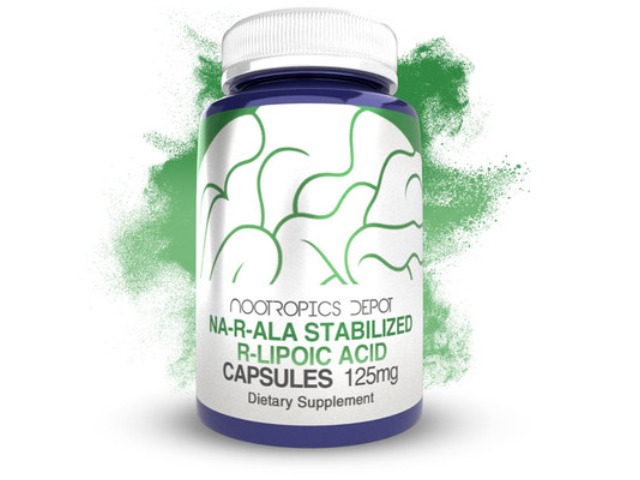
Buy Na-R-Ala Stabilized R-Lipoic Acid Capsules 125mg by Nootropics Depot
Shop Now →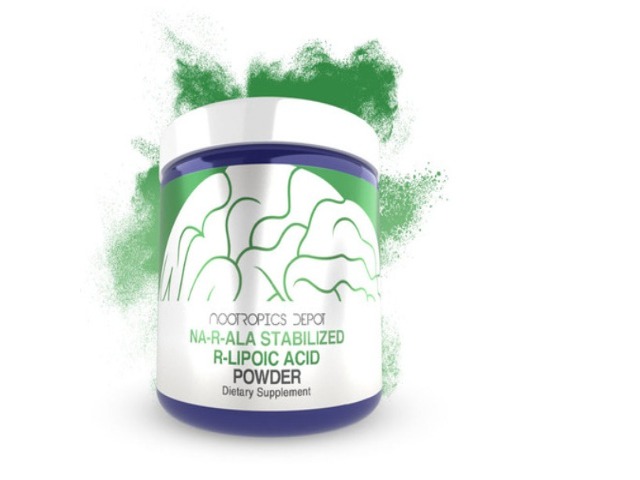
Buy Na-R-Ala Stabilized R-Lipoic Acid Powder by Nootropics Depot
Shop Now →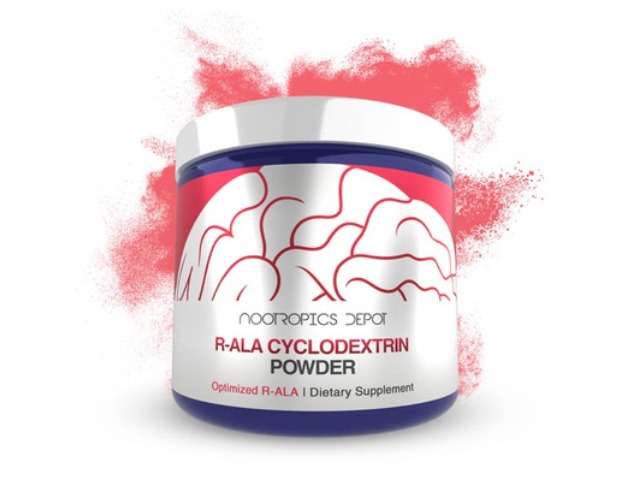
Buy R Alpha Lipoic Acid Cyclodextrin Powder by Nootropics Depot
Shop Now →Disclosure: These are affiliate links. I earn a small commission if you purchase — at no extra cost to you. I only recommend products I personally use or have thoroughly researched.
Research & Studies
This section includes 3 peer-reviewed studies referenced in our analysis.