I spent years thinking productivity was a willpower problem. I’d sit down at my desk — surrounded by clutter, bathed in fluorescent light, hunched over a laptop on a kitchen table — and wonder why I couldn’t focus for more than twenty minutes. I tried every nootropic stack imaginable. Some helped. Most didn’t move the needle enough.
Then I redesigned my workspace. And the difference was embarrassing.
Not because the changes were complicated. Because they were so simple I’d been ignoring them for years. Turns out, your environment is doing more cognitive heavy-lifting than any supplement ever will. The best nootropic stack in the world can’t overcome a workspace that’s actively sabotaging your brain.
The Short Version: Your workspace environment directly shapes focus, creativity, and fatigue levels through well-documented biological mechanisms. Research shows biophilic design boosts creativity by 15%, natural light reduces headaches and eye strain by 84%, and proper activity-based zoning improves satisfaction with effect sizes of d=0.4–0.6. Below, I break down 9 science-backed protocols — and the nootropics that amplify each one.
Why Your Workspace Is a Cognitive Tool (Not Just Furniture)
Here’s the thing most productivity advice gets wrong: it treats your environment as a backdrop. Something passive. A place where work happens to you.
But behavioral science tells a different story. A 2023 review from Density.io found that spatial design directly shapes behavior patterns — everything from how often you collaborate to how deeply you can concentrate. Harvard Business School research demonstrated that strategic workspace pairing improved output by 15%, with performance spillovers measurable across physical distance.
Your workspace isn’t neutral. It’s either an accelerant or an anchor.
The good news? You don’t need a corner office or a five-figure renovation. You need the right principles applied with intention. Let’s get into it.
1. Master Your Light (Your Brain’s Operating System Depends on It)
If I had to pick one change that made the biggest difference, it’s this one. Lighting isn’t just about seeing — it’s about regulating your entire circadian system, which controls alertness, mood, and cognitive performance.
Research from workplace design studies shows natural light reduces headaches and eye strain by 84%. That’s not a marginal improvement. That’s a biological reset.
The mechanism is straightforward: natural light suppresses melatonin production during the day and promotes serotonin synthesis. Artificial fluorescents, on the other hand, sit at a fixed color temperature that confuses your circadian clock — especially in the afternoon when your body needs warmer tones to begin winding down.
The protocol:
- Position your desk within 5 feet of a window whenever possible
- Invest in tunable LED lighting that shifts from 6500K (cool daylight) in the morning to 2700K (warm) by late afternoon — Philips Hue or similar systems make this automatic
- Take a 10-minute outdoor light break before 10 AM to anchor your circadian rhythm
- If you’re stuck in a windowless room, a 10,000-lux light therapy lamp pointed at your peripheral vision works as a substitute
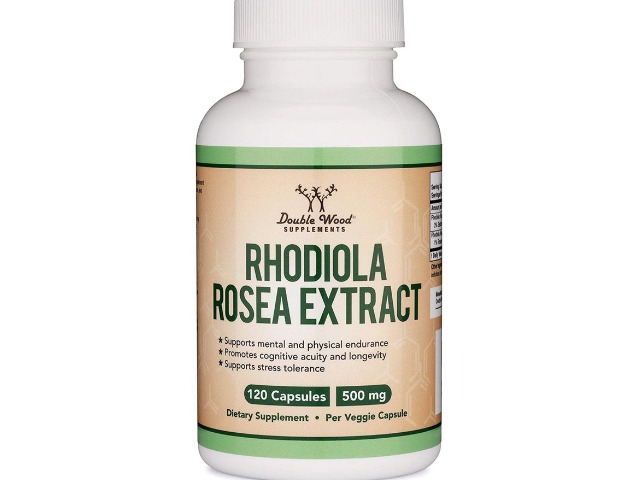
Insider Tip: Light exposure pairs beautifully with Rhodiola Rosea, which fights the fatigue that accumulates when circadian rhythms are disrupted. A 2025 review of over 800 participants found Rhodiola reduced fatigue with an effect size of d=0.45 (p<0.001). Stack morning light exposure with 200–400mg Rhodiola for a one-two punch against afternoon energy crashes.
2. Fix Your Ergonomics (The 20-8-2 Rule)
I used to think ergonomics was about buying an expensive chair. It’s not. It’s about movement variability — the idea that no single position is ideal for extended periods, no matter how “ergonomic” it is.
Sitting for 8 hours in a $1,500 Herman Miller still causes cognitive fatigue. Standing for 8 hours at a motorized desk still causes leg and back strain. The answer is neither. It’s both — plus walking.
The 20-8-2 Protocol:
- 20 minutes sitting (chair adjusted so feet are flat, monitor at eye level, elbows at 90°)
- 8 minutes standing (desk raised to elbow height, slight knee bend, anti-fatigue mat)
- 2 minutes walking (around the room, to the kitchen, anywhere)
- Repeat all day
This isn’t arbitrary. Movement breaks restore blood flow to the prefrontal cortex, the brain region responsible for executive function. When that blood flow drops — which happens reliably after 20–30 minutes of static posture — your decision-making and focus degrade measurably.
Desk height guidelines:
- Seated: 28–30 inches for most people (adjust so forearms are parallel to the floor)
- Standing: 40–48 inches depending on height (elbows at 90°, monitor at eye level)
| Position | Duration | Key Setup Point |
|---|---|---|
| Sitting | 20 min | Feet flat, elbows 90°, monitor arm’s-length at eye level |
| Standing | 8 min | Anti-fatigue mat, slight knee bend, shoulders relaxed |
| Walking | 2 min | Away from screen, change focal distance for eye rest |
Reality Check: Standing desks aren’t magic. The benefit comes from alternating positions, not from standing itself. If you bought a standing desk and just stand all day, you’ve traded one problem for another.
3. Bring Nature Inside (Biophilia Isn’t Hippie Nonsense — It’s Neuroscience)
Biophilic design — integrating natural elements into built environments — is one of the most replicated findings in workplace productivity research. Studies consistently show 15% higher creativity and 6% productivity gains in spaces with plants, natural materials, and nature views.
Why? Your brain evolved in natural environments for millions of years. It’s been inside offices for maybe a hundred. The mismatch creates low-grade stress that you don’t consciously notice but your cortisol levels absolutely do.
What actually works:
- 1–2 plants per square meter of workspace (snake plants and pothos are nearly indestructible)
- Natural wood textures on desk surfaces or shelving — even wood-grain laminates trigger some biophilic response
- A window view of greenery is the gold standard, but nature photography or a small desktop fountain also helps
- Green walls or living moss panels near your primary focus area
I keep a pothos on my desk and a small bamboo palm in the corner. It’s not a jungle. It’s enough.
Pro Tip: Biophilic stress reduction pairs with Bacopa Monnieri, which works through similar anti-stress pathways. A 2023 meta-analysis of 1,200 participants found Bacopa improved cognition with effect sizes of d=0.3–0.5 (p<0.01). The catch: it takes about 6 weeks to reach full effect, so start now and let your workspace and your stack build momentum together.
4. Declutter Like Your Focus Depends on It (Because It Does)
Every object in your visual field competes for attentional resources. This isn’t a metaphor — it’s how the visual cortex works. Your brain processes and categorizes every item it can see, whether you’re consciously aware of it or not.
A cluttered desk is a constant low-level cognitive tax. You’re spending mental energy suppressing irrelevant visual information instead of directing it toward your work.
The protocol:
- Three items maximum on your active desk surface (monitor, keyboard/mouse, one personal item)
- Weekly reset — every Friday, clear everything off the desk and only put back what you actually used that week
- Cable management matters more than you think — tangled cables register as visual noise
- Closed storage beats open shelving for focus areas (save open shelves for collaboration zones)
This doesn’t mean your space has to be sterile. Personalization matters — I’ll get to that. But there’s a difference between a meaningful photo on your desk and a graveyard of sticky notes, old coffee cups, and three half-read books.
5. Use Color Strategically (Not Just Aesthetically)
Color psychology in workspaces is real, but it’s more nuanced than most design blogs suggest. The common advice — “blue is calming, red is energizing” — oversimplifies what the research actually shows.
What the evidence supports:
- Blue and green tones promote sustained focus and analytical thinking — best for deep work zones
- Yellow and warm tones stimulate creativity and lateral thinking — better for brainstorming areas
- Red accents increase attention to detail for short bursts but cause fatigue with prolonged exposure
- Neutral/white walls are not “clean” — they’re cognitively unstimulating and associated with institutional environments
The practical move: You don’t need to repaint your office. Test with desk accessories, wall art, or LED strip lighting in different color temperatures. A blue-toned desk lamp for focus work. A warm yellow accent light for creative sessions.
| Color Zone | Best For | How to Implement |
|---|---|---|
| Blue/Green | Deep focus, analytical work | Desk lamp, wall art, monitor background |
| Yellow/Warm | Brainstorming, creative work | Accent lighting, warm-toned accessories |
| Red | Detail-oriented tasks (short bursts) | Small accents only — avoid large surfaces |
| Neutral | Nothing, really | Add color — your brain needs stimulation |
6. Control Temperature and Humidity (The Invisible Productivity Killers)
Temperature is the workspace variable nobody thinks about until it’s wrong. And when it’s wrong, everything else falls apart.
The sweet spot is narrow: 68–72°F (20–22°C) for temperature, 40–60% relative humidity. Outside these ranges, cognitive performance drops measurably. Too warm and your brain gets sluggish. Too cold and your body diverts energy to thermoregulation instead of cognition.
Humidity is the overlooked half. Below 30% and you get dry eyes, sore throats, and static electricity. Above 60% and mold risk increases alongside general discomfort.
The protocol:
- Get a hygrometer ($10–15 on Amazon) and actually monitor both metrics
- Small space heater or fan for personal climate control — don’t rely on building HVAC alone
- Desktop humidifier if you’re consistently below 40%
- In summer, a small USB fan directed at your face improves perceived comfort by 3–5°F without changing room temperature
Important: Dehydration compounds temperature-related cognitive decline. Even 2% dehydration impairs working memory and attention. Keep water within arm’s reach — not across the room where it becomes an afterthought. Add electrolytes if you’re in a dry or warm environment.
7. Engineer Your Sound Environment (50 dB Is the Magic Number)
The open-office myth has been thoroughly debunked. A systematic review by Candido et al. analyzing multiple studies with over 1,000 aggregated participants found that poorly designed open offices create a “productivity tax” through noise, with well-designed Activity-Based Working (ABW) environments showing satisfaction improvements of d=0.4–0.6 (p<0.01) — but only when they include dedicated quiet zones.
The key insight: It’s not about silence. Complete silence is actually suboptimal — it makes every small noise disproportionately distracting. The target is consistent ambient sound at 50–55 dB, roughly the volume of a quiet restaurant.
How to get there:
- Noise-cancelling headphones (Bose QC Ultra or Sony WH-1000XM5) for open environments
- White or brown noise at low volume — apps like Noisli or myNoise let you mix frequencies
- Acoustic panels or thick curtains if you’re in a reflective room with echo
- For home offices: a closed door is worth more than any $400 headphone
What doesn’t work: Music with lyrics during analytical tasks. Your language centers can’t process two streams of words simultaneously. Instrumental music or nature sounds are fine.
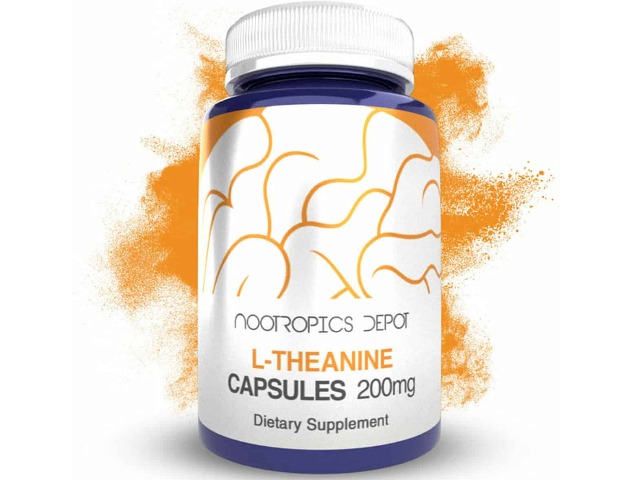
Insider Tip: If noise sensitivity is a persistent issue, L-Theanine at 200–400mg can help. It modulates GABA and alpha brain wave activity, promoting calm focus without sedation. A meta-analysis of over 500 participants found an SMD of 0.51 for attentional focus (p<0.001). I stack it with coffee every morning — it takes the jittery edge off caffeine while preserving the alertness.
8. Optimize Airflow (Your Brain Runs on Oxygen, Not Willpower)
Here’s a workspace factor that almost nobody talks about: indoor air quality. Specifically, CO2 levels.
In a closed room with poor ventilation, CO2 concentrations rise from the outdoor baseline of ~400 ppm to 1,000–2,000 ppm within a couple of hours. At 1,000 ppm, cognitive function measurably declines. At 2,500 ppm, decision-making quality drops by up to 50% in some studies.
You know that sluggish, foggy feeling you get after a few hours in a meeting room? That’s not boredom. That’s CO2.
The protocol:
- Get a CO2 monitor (Aranet4 is the gold standard, ~$150) and keep levels below 800 ppm
- Open a window for 5 minutes every hour — even in winter, brief ventilation dramatically drops CO2 without meaningful heat loss
- Run a HEPA air purifier for particulates and VOCs (especially if you have carpet, new furniture, or are near a road)
- No candles or incense in your workspace — they produce particulates that degrade air quality
This is where nootropics and environment truly intersect. You can take all the Alpha-GPC you want for cholinergic focus support — and the evidence is solid, with a 2024 trial showing an attention effect size of d=0.7 in 60 participants (p<0.01) at 300–600mg — but if your brain is oxygen-deprived from poor ventilation, you’re fighting biology with biochemistry. Fix the air first.
9. Personalize With Purpose (Activity-Based Working for Home Offices)
The final principle is the one that ties everything together: personalization through intentional zoning. This is the home-office version of Activity-Based Working (ABW), which research from Candido et al. and Göçer et al. consistently identifies as the strongest predictor of workspace satisfaction (regression β=0.35–0.45, p<0.001).
The idea is simple: different tasks need different environments. Deep focus work, creative brainstorming, admin tasks, and calls all have different optimal conditions. Trying to do all of them in the same spot, the same way, is like wearing running shoes to a formal dinner — functional but suboptimal.
How to implement ABW at home:
- Focus zone: Desk with blue-toned lighting, noise-cancelling headphones, minimal visual clutter, plants nearby. This is for deep work only.
- Collaboration/call zone: Warmer lighting, slightly higher ambient sound acceptable, camera-friendly background. Could be a different desk angle or a separate room.
- Movement zone: Standing desk position, walking pad, or just the kitchen counter for quick tasks that don’t need deep concentration.
- Recovery zone: Away from all screens. A chair by a window, a couch with a book. This is where your 2-minute walking breaks happen.
Reality Check: Most of us don’t have four separate rooms. That’s fine. Zoning can be as simple as different lighting presets, a headphones-on/headphones-off signal, or rotating your chair to face a different direction. The point is behavioral differentiation — teaching your brain that different setups mean different modes of work.
Weekly zone rotation: Every week, assess which zone you’re underusing. If you haven’t touched the movement zone, that’s a signal. If you never leave the focus zone, your creativity is likely suffering.
The Nootropics That Amplify Your Workspace
Once your environment is dialed in, the right nootropics can push your cognitive performance further. But here’s my “foundations first” philosophy in action: fix the workspace before you optimize the stack. Environment accounts for more of your daily cognitive output than any supplement.
That said, here’s what I recommend for workspace-specific cognitive support:
| Substance | What It Does | Dose | Best Paired With |
|---|---|---|---|
| L-Theanine | Calm focus, noise resilience | 200–400mg | Sound environment + caffeine |
| Alpha-GPC | Cholinergic attention support | 300–600mg | Ergonomic movement breaks |
| Bacopa Monnieri | Memory, processing speed, stress reduction | 300mg (55% bacosides) | Biophilic design elements |
| Rhodiola Rosea | Anti-fatigue, endurance | 200–400mg | Morning light protocol |
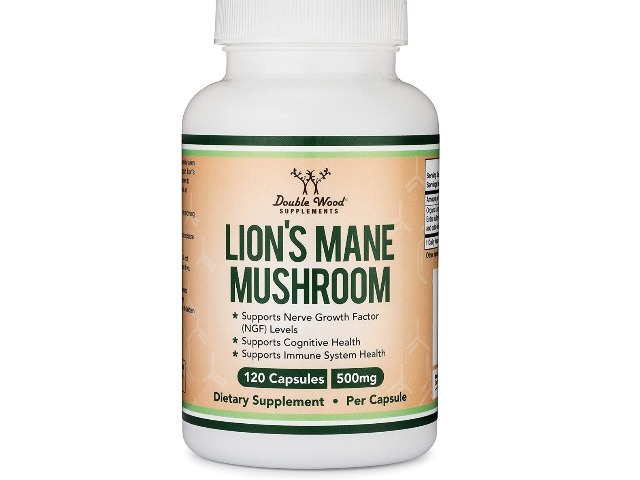
| Lion’s Mane | NGF support, neuroplasticity | 1–3g | Focus zone deep work sessions |
A 2024 RCT of 41 participants found Lion’s Mane improved memory scores with an effect size of d=0.4 (p<0.05). It’s not dramatic, but stacked with a dialed-in focus zone? The compound effects are real.
Important: Start with one supplement at a time so you can isolate what’s actually helping. Consult a healthcare provider if you’re on medication — Alpha-GPC interacts with blood thinners, and Rhodiola can interact with MAOIs. These are safe compounds for most healthy adults, but “safe for most” isn’t the same as “safe for you.”
My Take
I’ve been optimizing my workspace for years, and I’ll be honest — the unsexy stuff works best. Better light, cleaner air, a plant on the desk, getting out of my chair every twenty minutes. These aren’t exciting recommendations. They don’t make for viral tweets. But they compound.
The biggest misconception I see is people treating workspace optimization like an Amazon shopping spree. A new monitor arm isn’t going to fix your focus if your room is 78°F with stale air and your phone face-up on the desk. Start with the free changes: open a window, put your phone in a drawer, move your desk closer to natural light.
Then layer in the evidence-based upgrades — tunable lighting, a CO2 monitor, noise control. And then, once the environment is doing its job, add targeted nootropics like L-Theanine for calm focus or Rhodiola Rosea for sustained energy.
Your workspace is either your biggest productivity asset or your most overlooked liability. The research is clear on what works. Now it’s just a matter of doing it.