I used to think I was cheating at work. Every morning I’d put on headphones, queue up the same instrumental playlist, and suddenly two hours would vanish — in the best way possible. Tasks I’d been procrastinating on just… got done. Meanwhile, my colleague across the hall blasted pop hits and spent half the day re-reading the same email. We were both “listening to music at work,” but getting wildly different results.
Turns out, the difference wasn’t willpower. It was neuroscience. And after digging into the latest research — including a 2025 longitudinal study of 428 participants and a 2024 randomized controlled trial — I can tell you that most advice about music and productivity is either outdated or flat-out wrong.
The Short Version: Strategic music selection — specifically low-arousal instrumental or “work flow” playlists — measurably boosts processing speed, mood, and flow states during office work. But high-energy music with lyrics can actively hurt your focus. The key is matching your music to your task, rotating playlists monthly to avoid habituation, and pairing it with focus-supporting nootropics like L-Theanine for compounding effects.
The “Mozart Effect” Is (Mostly) a Myth — Here’s What Actually Happens
Let’s get the biggest misconception out of the way first. You’ve probably heard that “listening to Mozart makes you smarter.” This idea exploded after a 1993 study by Rauscher et al. published in Nature found that college students who listened to Mozart’s Sonata for Two Pianos (K448) performed better on spatial reasoning tasks immediately afterward.
The media ran with it. Parents started piping classical music into nurseries. Companies sold “Mozart for Babies” CDs. Georgia’s governor even proposed giving every newborn a classical music album.
Here’s the problem: the original effect was tiny, lasted about 10-15 minutes, and only applied to one narrow type of spatial reasoning. It was never about “making you smarter.” Decades of follow-up research have shown that the boost came from arousal and mood elevation — not some magical property of Mozart’s compositions specifically.
Reality Check: The Mozart Effect isn’t about Mozart. It’s about how certain types of music shift your brain into a state that’s better suited for focused work. Any music that moderately elevates your mood without over-stimulating you can produce similar benefits.
That said, a landmark 2025 study published in PMC finally gave us a much clearer picture of what’s actually going on — and it’s more interesting than “classical music good.”
What the Latest Science Actually Says (2024-2025 Evidence)
The 2025 Flow State Study: N=428, Two Phases
This is the most rigorous study on background music and work performance I’ve found. Researchers ran a two-phase longitudinal randomized controlled trial with 428 Chinese undergraduates, testing four conditions: silence (control), high-arousal music, low-arousal music, and Mozart K448 specifically.
The results were striking:
- Mozart K448 enhanced flow states with a mediation effect of β = 0.118 (95% CI [0.072, 0.181]) — meaning it reliably pushed people into that “in the zone” feeling
- High-arousal music actively impaired flow with β = -0.112 (95% CI [-0.182, -0.056]) — your hype playlist is literally working against you during cognitive tasks
- Flow fully mediated the path from engagement to performance — in other words, music doesn’t directly make you work better; it puts you in a flow state, and the flow state makes you work better
The researchers proposed a hybrid model: music initially triggers novelty-driven dopamine release (that “oh, this sounds good” feeling), which primes your prefrontal-parietal networks for sustained attention. Over time, the novelty fades and the music shifts into a cognitive priming role — a familiar sonic backdrop that signals “it’s focus time.”
But here’s the catch nobody talks about.
The Habituation Problem (Why Your Favorite Playlist Stops Working)
That same 2025 study tracked participants over 30 days and found something critical: the performance-enhancing effects of background music dropped by 53% after repeated exposure (B = 0.150 vs. 0.321 at baseline).
Your brain literally gets bored. The novelty-dopamine mechanism that initially boosted your focus fades as the music becomes too familiar. This is why that playlist that used to put you “in the zone” three months ago now feels like auditory wallpaper.
Pro Tip: Rotate your focus playlists every 3-4 weeks. Keep 4-5 playlists in rotation and cycle between them. Your brain needs just enough novelty to trigger that initial dopamine hit without being so unfamiliar that it becomes distracting.
The 2024 PLOS ONE Trial: “Work Flow” Beats “Deep Focus”
A 2024 randomized controlled trial published in PLOS ONE tested 196 adults on a Flanker attention task under four conditions: “work flow” music, “deep focus” music, pop hits, and office noise.
The findings challenge some popular assumptions:
| Condition | Mood Impact | Processing Speed | Accuracy |
|---|---|---|---|
| Work flow music | +76% PANAS increase (p<0.001) | Steeper RT decline, β = -0.421 (p<0.05) | No drop |
| Deep focus music | Moderate improvement | Slower improvement | No drop |
| Pop hits | Some mood lift | No significant RT benefit | No drop |
| Office noise (control) | Baseline | Baseline | Baseline |
The “work flow” category — characterized by low-arousal, rhythmically consistent instrumental tracks — outperformed everything else. And critically, these benefits were independent of baseline anxiety (DASS-21 non-interaction), meaning it worked whether people were relaxed or stressed going in.
The “deep focus” playlists that Spotify and YouTube push so heavily? They underperformed the work flow category. Not harmful, but not optimal either.
Insider Tip: Look for playlists labeled “work flow” or “productivity flow” rather than “deep focus” or “concentration.” The musical characteristics are subtly different — work flow tracks tend to have more rhythmic momentum that keeps your processing speed up, while deep focus tracks can be too ambient and lull you into a passive state.
Why Lyrics Are the Enemy of Deep Work (And When They’re Fine)
Here’s something most people get intuitively but don’t act on: lyrics compete with your language processing centers. When you’re reading, writing, analyzing data, or doing anything that involves verbal reasoning, lyrical music forces your brain to process two streams of language simultaneously.
The 2022 systematic review in Music & Science confirmed this pattern across multiple studies — effects of background music are highly variable depending on the interaction between task type, music type, and the individual. But the most consistent finding across the literature is that instrumental music supports cognitive tasks better than vocal music.
That said, context matters:
| Task Type | Best Music Choice | Why |
|---|---|---|
| Writing, reading, analysis | Instrumental only (classical, lo-fi, ambient) | Lyrics compete with verbal processing |
| Data entry, filing, repetitive tasks | Preferred music (lyrics OK) | Low cognitive demand; mood boost helps more than focus |
| Creative brainstorming | Moderate-tempo, familiar music | Familiar music reduces cognitive load, freeing resources for creative thinking |
| Email and admin | Work flow playlists | Moderate stimulation for moderate-demand tasks |
| Complex problem-solving | Silence or very minimal ambient | High-demand tasks can be impaired by any auditory input |
A 2021 study in PMC found that preferred background music (regardless of genre) reduced mind-wandering from 27% to 18% during sustained attention tasks (p<0.05). So for tasks that are boring but not cognitively demanding, your favorite music — even with lyrics — actually helps by keeping your brain engaged enough to avoid drifting.
Building Your Office Music Protocol (The Evidence-Based Way)
Enough theory. Here’s how to actually implement this.
The Pomodoro-Music Stack
Combine the Pomodoro technique with strategic music selection:
-
Focus block (25 minutes): Queue a “work flow” instrumental playlist. Keep volume at conversational level or below (~55-60 dB). Match the playlist to your task type using the table above.
-
Break (5 minutes): Switch to preferred music — anything you enjoy. This is your dopamine reward. Lyrics are fine here. Get up, move around.
-
Repeat for 4 cycles, then take a longer 15-20 minute break with no music (give your auditory system a rest).
-
Rotate playlists monthly. Keep a stable of 4-5 focus playlists and cycle through them across weeks to combat the 53% habituation effect found in the 2025 study.
Music Apps Worth Trying (2026 Landscape)
| App | What It Does | Price | Evidence Level |
|---|---|---|---|
| Brain.fm | AI-generated “work flow” tracks; neuroscience-designed | ~$7/mo | Third-party EEG validation |
| Focus@Will | Personalized instrumental channels; adapts over sessions | ~$13/mo | Some independent testing |
| Endel | Adaptive ambient soundscapes; integrates with Apple Health/HRV | ~$10/mo | Biofeedback-based |
| Spotify/YouTube playlists | Wide selection; “Deep Focus,” “Lo-Fi Beats” | Free-$11/mo | No formal testing |
Brain.fm is the closest thing to a purpose-built productivity music tool and aligns best with the “work flow” characteristics that outperformed other categories in the 2024 PLOS ONE trial. If you’re serious about this, it’s worth the $7/month.
Reality Check: Focus@Will claims a “400% focus improvement,” but that’s self-reported data from their own users. Take it with a grain of salt. The concept is sound — personalized instrumental music for work — but the marketing oversells the evidence.
The Nootropics + Music Stack (Amplifying the Flow State)
This is where things get interesting for the Holistic Nootropics community. Music enhances focus primarily through dopamine-driven flow states and mood elevation. Several well-studied nootropics work through overlapping mechanisms — and pairing them strategically can compound the effects.
L-Theanine + Music: The Calm Focus Stack
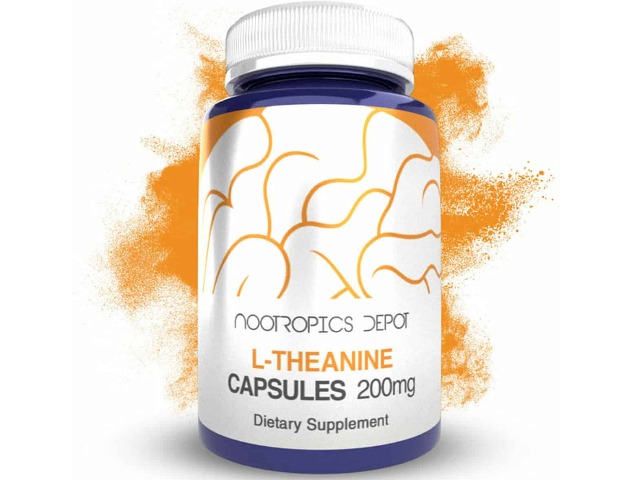
L-Theanine promotes alpha brain wave activity — the same neural signature associated with relaxed alertness and flow. When combined with low-arousal instrumental music (which also promotes alpha-wave dominance), you’re essentially hitting the same pathway from two angles.
- Dosage: 200mg, taken 30 minutes before your focus session
- Why it works: L-Theanine smooths out the arousal curve, keeping you in that sweet spot where music enhances focus without tipping into over-stimulation
- Best pairing: Work flow playlists or classical (Mozart K448 type)
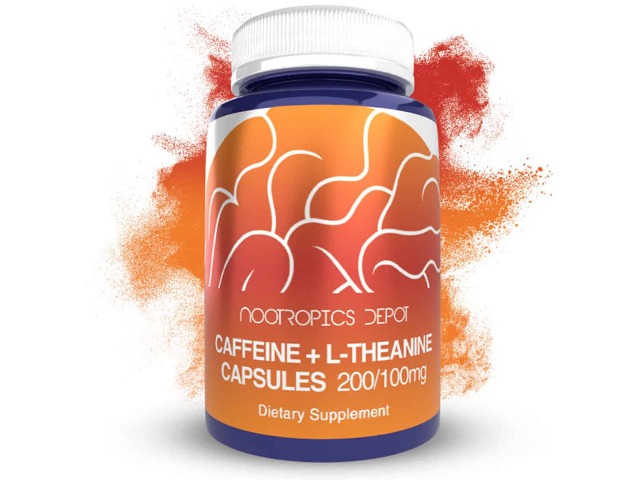
Caffeine + L-Theanine + Music: The Classic Triple Stack
The caffeine and L-Theanine combination is one of the most well-validated nootropic stacks in existence. Add strategic music, and you’ve got a three-pronged approach to sustained attention:
-
Caffeine provides the raw arousal and alertness
-
L-Theanine smooths out jitteriness and promotes alpha waves
-
Low-arousal music provides the environmental cue for flow
-
Dosage: 100mg caffeine + 200mg L-Theanine (the classic 1:2 ratio)
-
Timing: Take 20-30 minutes before starting your music-work session
Important: Be careful combining caffeine with high-arousal music. The 2025 study showed high-arousal music impairs flow (β = -0.112). Adding a stimulant on top of already-overstimulating music can push you past the inverted-U curve into anxiety and scattered attention. Stick to instrumental work flow tracks when using caffeine.
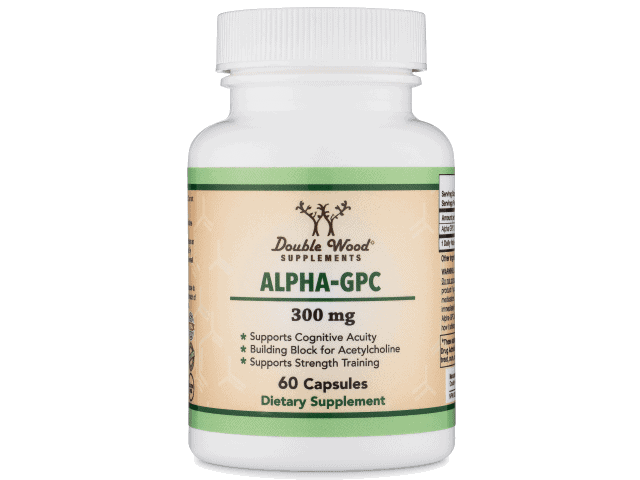
Alpha-GPC + Music: The Cholinergic Boost
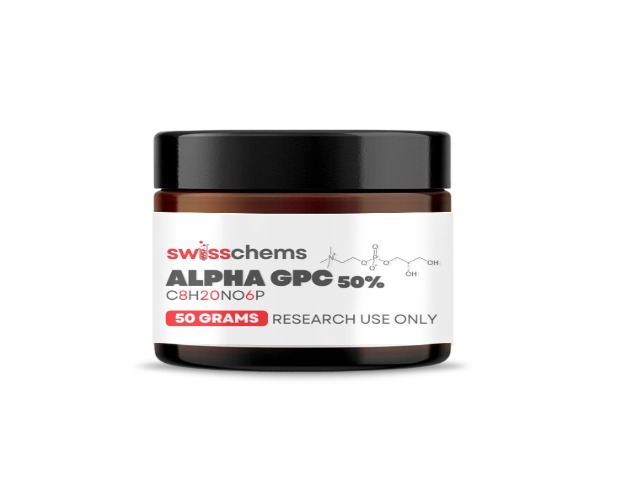
Alpha-GPC supports acetylcholine production — the neurotransmitter most directly tied to sustained attention and working memory. The 2025 flow study showed that music enhances performance through flow mediation in prefrontal-parietal networks — the same regions that acetylcholine primes for cognitive work.
- Dosage: 300-600mg, taken with your focus session
- Best for: Complex analytical tasks paired with minimal ambient music
Bacopa Monnieri: The Long Game
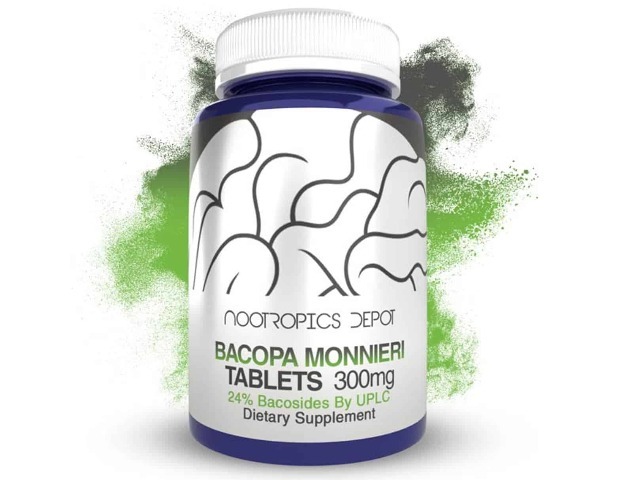
Bacopa Monnieri doesn’t work overnight — it typically requires 8-12 weeks of consistent use at 300mg (standardized to 55% bacosides) to show measurable effects on memory and sustained attention. But here’s why it’s relevant to a music-productivity discussion: the 2025 study showed that music’s flow-enhancing effects habituate by 53% over 30 days.
Bacopa’s mechanism — supporting long-term memory consolidation and sustained engagement — could theoretically buffer against this habituation by maintaining the cognitive engagement that music’s novelty initially provides. This is speculative extrapolation from their separate mechanisms, not a directly studied combination, but the logic is sound.
Pro Tip: Think of your focus stack in layers. Music is the immediate environmental trigger. Caffeine + L-Theanine is the 20-minute onset layer. Alpha-GPC supports the session. Bacopa is the long-term foundation. No single intervention does everything — it’s the stack that creates reliable, sustainable focus.
Common Questions About Music and Productivity
Does music help with studying? Yes — but specifically instrumental music. The 2024 PLOS ONE trial showed work flow music improved processing speed (β = -0.421) without hurting accuracy. Lyrical music can interfere with reading and verbal learning.
What’s the best music for focus at work? Low-arousal, rhythmically consistent instrumental music. The research consistently shows this category outperforms high-arousal music, “deep focus” ambient tracks, and pop/lyrical music for cognitive tasks.
Can music hurt productivity? Absolutely. High-arousal music impaired flow states in the 2025 study (β = -0.112). The 2022 systematic review in Music & Science found inconsistent effects for complex tasks — silence may be better for high-demand problem-solving.
Does it matter if I like the music? For low-demand tasks, yes. Preferred music reduced mind-wandering from 27% to 18% in the 2021 study. For high-demand cognitive work, the music’s characteristics (instrumental, low-arousal) matter more than personal preference.
Why did my focus playlist stop working? Habituation. The 2025 longitudinal study documented a 53% decline in music’s performance-enhancing effects after 30 days of repeated exposure. Rotate your playlists monthly.
My Take
I’ll be honest — when I first started researching this topic years ago, I expected to find that music was a straightforward cognitive enhancer. Put on some Mozart, get smarter. Simple.
The reality is more nuanced and, frankly, more useful. Music doesn’t make you smarter. It puts you into a psychological state — flow — where your existing capabilities can actually show up. And the specific type of music matters enormously. That high-energy hip-hop playlist that makes your commute better? It’s probably making your deep work worse.
The 53% habituation finding from the 2025 study was the biggest surprise for me. I’d noticed my go-to playlists losing their magic but assumed it was just my imagination. Nope — it’s a measurable, predictable neurological effect. Now I keep five playlists in rotation and treat them like a prescription: use as directed, rotate regularly, don’t overdo it.
The nootropics angle is where this gets really practical for our community. L-Theanine at 200mg before a focus session with work flow music has become my daily protocol, and the combination genuinely feels like more than the sum of its parts. The alpha-wave promotion from L-Theanine seems to lower the threshold for music-induced flow. Add Alpha-GPC on days when the cognitive demand is higher, and you’ve got a reliable, well-tolerated stack that costs pennies per day.
Start simple: one instrumental playlist, one Pomodoro timer, and 200mg of L-Theanine. Track your output for a week. Then start experimenting. The science is clear that this works — the only variable left is finding the specific combination that works for you.