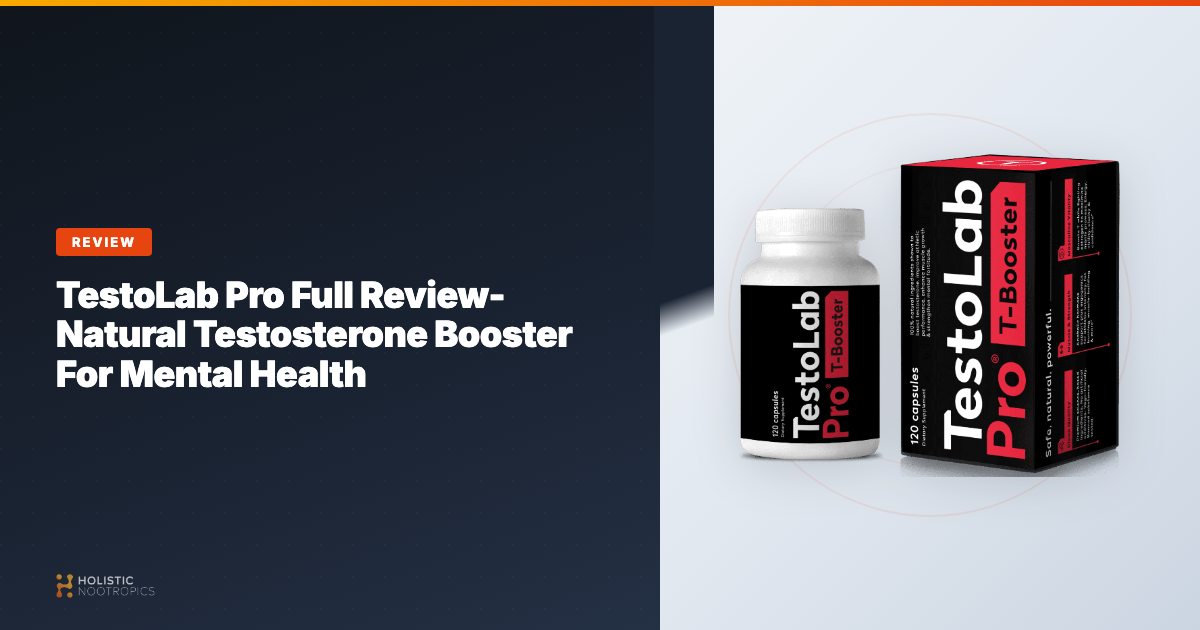
Most people think of testosterone as a muscle-building hormone. And while that’s true, it undersells what testosterone actually does for your brain. In my experience running Holistic Nootropics, the connection between testosterone and mental performance is one of the most underappreciated topics in cognitive optimization. I’ve personally seen how maintaining healthy testosterone levels affects everything from verbal memory and spatial reasoning to mood stability and stress resilience.
The reality is that testosterone levels are declining across populations — driven by environmental toxins, chronic stress, poor sleep, and nutrient-depleted diets. For men over 30, it’s a slow erosion that often manifests as brain fog, low motivation, and creeping anxiety before any physical symptoms show up. Synthetic testosterone replacement therapy (TRT) is an option, but it comes with real downsides: fertility suppression, dependency, and the need for ongoing medical supervision.
That’s what makes a well-formulated natural testosterone booster appealing. TestoLab Pro is one of the few products I’ve come across that uses clinically studied ingredients at meaningful doses, without fillers or proprietary blends. It’s not going to replace TRT for someone with clinically low testosterone, but for men looking to optimize their natural production and protect their cognitive function, it’s worth a serious look.
Key Takeaways: TestoLab Pro combines ashwagandha (KSM-66), mucuna pruriens, D-aspartic acid, luteolin, and essential micronutrients (zinc, boron, magnesium, vitamin D, vitamin K) to support natural testosterone production. The cognitive angle is the real story here — healthy testosterone levels protect against brain fog, memory decline, depression, and cortisol-driven stress. Each ingredient has independent evidence for both hormonal and neurological benefits.
Why Testosterone Matters for Your Brain
Testosterone doesn’t just affect your body — it directly influences brain structure and function. The brain has androgen receptors throughout the hippocampus, prefrontal cortex, and amygdala, meaning testosterone modulates memory, executive function, and emotional regulation at a fundamental level.
Here’s what the research shows:
Brain fog and cognitive clarity: Low testosterone strongly correlates with subjective brain fog — that hazy, unfocused feeling that makes it hard to think clearly. Research on testosterone replacement therapy in men with mild cognitive impairment shows measurable improvements in memory and concentration. A 2025 meta-analysis of 14 studies published in Biomedical Reports confirmed that androgen replacement therapy produces statistically significant cognitive improvements, with executive function (SMD=0.488) and memory (SMD=0.457) showing the largest effect sizes among cognitive domains tested. Testosterone appears to support the brain’s organizational capacity, helping you process and filter information more efficiently.
Memory: Both spatial and verbal memory decline with falling testosterone levels. Studies in older men undergoing androgen deprivation therapy (for prostate cancer) document significant drops in working memory and long-term recall. Conversely, testosterone supplementation improves these same functions, even in healthy men without clinical deficiency.
Depression and anxiety: The relationship between low testosterone and depression is well-established, particularly in hypogonadal men. Testosterone influences serotonin signaling and cortisol regulation — two systems that directly govern mood stability. Clinical trials consistently show that testosterone replacement improves symptoms of depression, anxiety, and irritability.
Stress resilience: Testosterone has a dampening effect on cortisol, the primary stress hormone. When testosterone is adequate, your brain can better moderate the cortisol response to stressful situations, preserving hippocampal function and memory performance under pressure. When testosterone drops, cortisol runs unchecked, creating a feedback loop of stress and cognitive decline. A 2024 study modeling the effects of prolonged high cortisol exposure on cognition confirmed that cortisol AM/PM ratio and morning cortisol concentration are significant independent risk factors for cognitive impairment — underscoring why testosterone’s cortisol-dampening effect is critical for brain protection.
TestoLab Pro’s Ingredient Breakdown
What sets TestoLab Pro apart from most testosterone supplements is the quality of its ingredient selection. Every component has independent research supporting both its hormonal and cognitive effects.
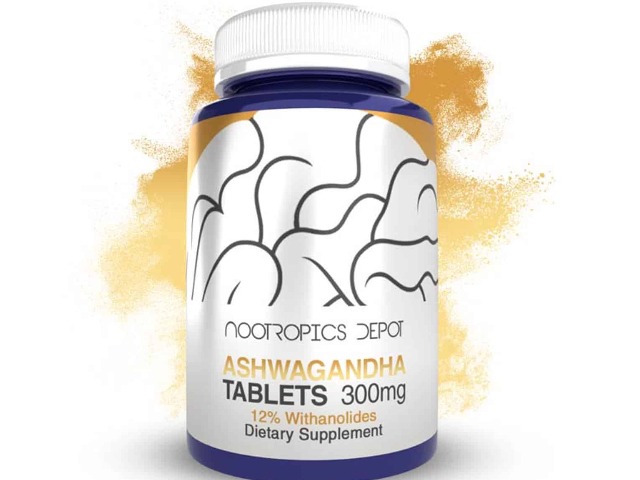
KSM-66 Ashwagandha
Ashwagandha is the cornerstone of this formula, and KSM-66 is the most clinically studied ashwagandha extract available. It has confirmed anxiolytic, anti-inflammatory, and antioxidant effects. For testosterone specifically, ashwagandha works by reducing cortisol (which suppresses testosterone production) and by directly supporting Leydig cell function.
The cognitive benefits are substantial on their own — ashwagandha improves stress resilience, working memory, and reaction time. A 2024 randomized, placebo-controlled trial published in the Journal of Psychoactive Drugs (Kale et al., 120 participants aged 30-75) found that 600mg daily ashwagandha root extract significantly improved episodic memory, working memory, and accuracy of attention after just eight weeks, while also reducing mental fatigue and improving executive function scores. A separate 12-month safety study confirmed that KSM-66 at 600mg daily showed no serious adverse events even with continuous long-term use. Combined with its testosterone-boosting properties, it’s doing double duty.
Mucuna Pruriens
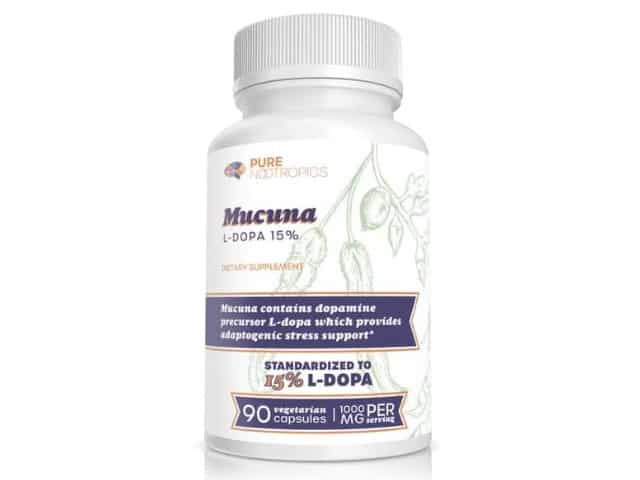
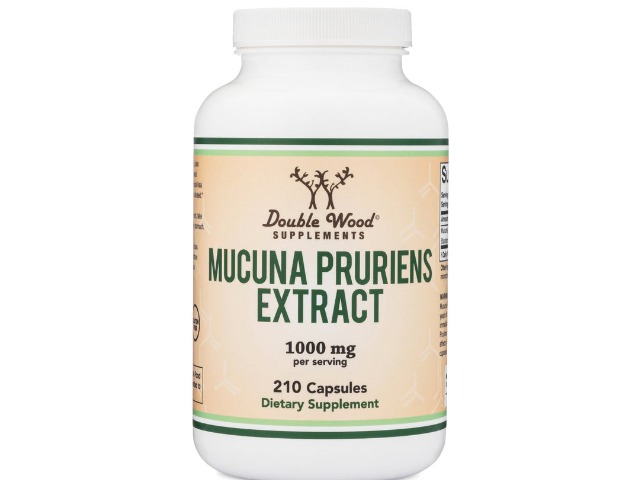
Mucuna pruriens contains L-DOPA, the direct precursor to dopamine. Studies show it improves testosterone levels while simultaneously reducing stress and providing neuroprotective benefits. The dopamine connection is important because dopamine and testosterone have a bidirectional relationship — each supports the production of the other. A 2024 systematic review and meta-analysis confirmed that mucuna pruriens’ constituents exhibit anti-inflammatory and antioxidative properties beyond L-DOPA alone, with fructo-oligosaccharides in the plant acting as prebiotics that modulate gut-brain immune signaling and attenuate neuroinflammatory responses. Preclinical research published in 2024 also demonstrated that mucuna pruriens extract prevented depression-like behaviors following mild traumatic brain injury by reducing nitrite and nitrate concentrations in key brain regions involved in mood and motivation.
D-Aspartic Acid
D-aspartic acid plays a role in both the central nervous system and hormone production. It signals the hypothalamus to release gonadotropin-releasing hormone, which stimulates testosterone synthesis. It also has relevance in neuropsychological function.
Luteolin
A flavone found in parsley, thyme, and celery, luteolin supports steroidogenesis (the process of testosterone production) while also offering cognitive benefits. It helps clear brain fog, improves cognitive function in neurodegenerative conditions, and has anti-inflammatory properties relevant to metabolic health.
Essential Micronutrients
The mineral and vitamin profile rounds out the formula:
- Zinc: An essential mineral for testosterone modulation. Low zinc levels appear frequently in psychiatric disorders, and supplementation benefits both hormonal and mental health.
- Boron: A trace mineral that increases free testosterone levels. Boron deprivation negatively affects motor speed, attention, and short-term memory.
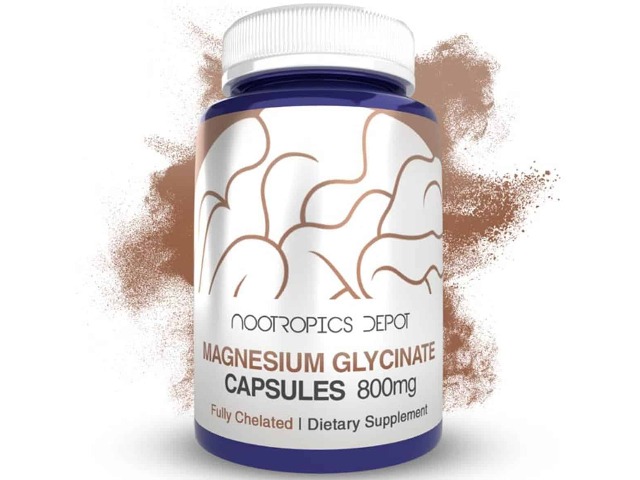
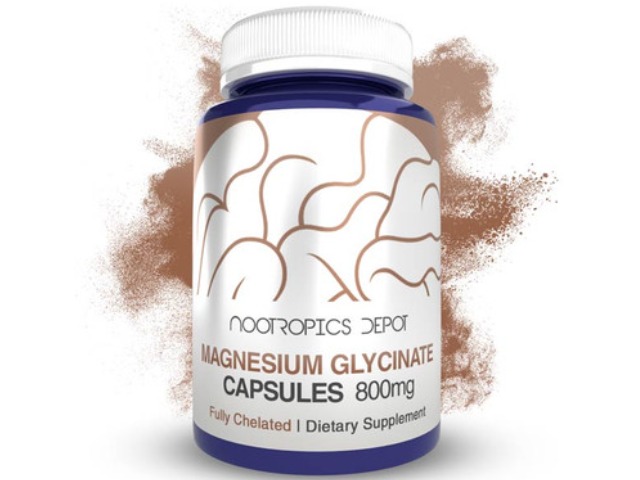
- Magnesium: Increases testosterone bioactivity by reducing oxidative stress. Magnesium also demonstrates positive effects on anxiety, mood disorders, and central nervous system function.
- Vitamin D: Deficiency correlates with hypogonadism and increased risk of mental health disorders. Supplementation can meaningfully increase testosterone in deficient individuals.
- Vitamins K1 and K2: Low vitamin K levels are associated with reduced testosterone production, increased depression, and earlier onset of cognitive decline. Higher vitamin K intake supports improved memory.
Cognitive Benefits of Optimizing Testosterone
Beyond the ingredient-level evidence, here’s what you can realistically expect from maintaining healthy testosterone levels:
Mental clarity: By moderating cortisol’s effect on the hippocampus, adequate testosterone preserves the brain region most critical for learning and memory consolidation. This translates to clearer thinking, especially under stress.
Mood stability: Testosterone’s influence on serotonin and dopamine systems means it acts as a natural mood regulator. Men with optimized testosterone report less irritability, better emotional control, and more consistent energy throughout the day.
Motivation and drive: This is where the dopamine connection matters most. Testosterone supports the reward circuitry that drives goal-directed behavior. When it’s optimized, you feel more motivated, more confident, and more willing to take on challenges.
Stress management: The testosterone-cortisol relationship is perhaps the most practically important benefit. Adequate testosterone doesn’t eliminate stress — it gives your brain the tools to handle stress without spiraling into anxiety, fatigue, and cognitive shutdown.
Physical Benefits Worth Noting
While this review focuses on cognitive effects, the physical benefits reinforce the mental ones:
- Muscle strength and size: Testosterone is essential for muscle protein synthesis. Stronger physical capacity supports confidence and overall vitality.
- Fat loss: Low testosterone promotes fat gain, which further suppresses testosterone. Breaking this cycle has cascading benefits for energy and mood.
- Sexual function: Testosterone supplementation shows clear benefits for libido and sexual function, which has obvious implications for confidence and relationship satisfaction.
What I Like About TestoLab Pro
TestoLab Pro is free from caffeine, gluten, soy, artificial additives, and synthetic fillers. It uses plant-based, prebiotic-enriched capsules, is non-GMO, and is third-party tested. The formula avoids proprietary blends, so you know exactly what you’re getting and at what doses.
OptiNutra (the parent company) offers a 30-day money-back guarantee and uses eco-friendly, recyclable packaging.
Who Should Consider TestoLab Pro
This product makes the most sense for men over 30 who are experiencing early signs of testosterone-related cognitive decline — persistent brain fog, low motivation, mood instability, or declining stress resilience. It’s not a replacement for medical testosterone therapy in cases of clinical hypogonadism, but it’s a solid option for natural optimization.
If you’re already dialing in sleep, exercise, and nutrition and want an additional edge, the combination of ashwagandha, mucuna pruriens, and targeted micronutrients addresses testosterone from multiple angles while simultaneously supporting cognitive function.
For more on the individual ingredients, check out our substance pages on ashwagandha, mucuna pruriens, and magnesium.