
- Mimics BDNF to support neuroplasticity and learning
- Supports neuroprotection across multiple preclinical models
- May enhance memory encoding and cognitive function
- Promotes neurogenesis in the hippocampus
- Provides antioxidant and anti-inflammatory activity
I’ll be honest — the first time I read a study on 7,8-Dihydroxyflavone, I thought the researchers were exaggerating. A tiny flavonoid molecule that mimics one of the most important growth factors in your brain? That crosses the blood-brain barrier when the actual protein can’t? It sounded like science fiction.
Then I kept reading. And reading. Over 190 preclinical studies later, 7,8-DHF remains one of the most mechanistically compelling nootropic compounds I’ve come across — and one of the most frustrating, because we still don’t have a single completed human trial to point to.
That tension — between extraordinary preclinical promise and zero clinical confirmation — is what makes this compound worth understanding deeply.
The Short Version: 7,8-Dihydroxyflavone (7,8-DHF) is a rare flavonoid that directly activates TrkB receptors in the brain, mimicking the effects of BDNF — your brain’s primary growth and plasticity signal. Animal research is extensive and consistently positive across memory, neuroprotection, and mood models. However, no human clinical trials exist, oral bioavailability is very poor (~4.6%), and all dosing guidelines are extrapolated from animal data. This is an experimental compound for informed self-experimenters, not a first-line nootropic recommendation.
What Is 7,8-Dihydroxyflavone?
7,8-Dihydroxyflavone — commonly called 7,8-DHF or tropoflavin — is a naturally occurring flavone, a subclass of flavonoids. What makes it unusual is the specific placement of two hydroxyl groups at the C7 and C8 positions on its A ring. That catechol arrangement is rare in nature, which is why you won’t find meaningful amounts of this compound in any food or common herb.
Small quantities exist in a handful of tropical plants — Godmania aesculifolia, Tridax procumbens (tridax daisy), and Primula vulgaris (common primrose) — but the amounts are negligible. Practically all 7,8-DHF used in research and supplements is chemically synthesized.
The compound had been cataloged as a flavonoid for decades without attracting much attention. That changed dramatically in 2010, when a research team led by Keqiang Ye at Emory University published a landmark paper in Proceedings of the National Academy of Sciences. They identified 7,8-DHF as the first potent, selective small-molecule agonist of the TrkB receptor — the primary receptor for brain-derived neurotrophic factor (BDNF). That single discovery transformed an obscure flavonoid into one of the most studied compounds in neuroscience.
Why does that matter? BDNF is essentially your brain’s growth signal. It drives neuroplasticity, supports neuronal survival, and strengthens synaptic connections — the physical basis of learning and memory. The problem is that BDNF itself is a large protein that can’t cross the blood-brain barrier and degrades rapidly. You can’t take it as a supplement. 7,8-DHF offered something researchers had been chasing for years: a small, orally bioavailable molecule that activates the same receptor BDNF does.
How Does 7,8-Dihydroxyflavone Work?
Think of TrkB receptors as docking stations on the surface of your neurons, waiting for BDNF to arrive and flip the switch that tells the cell to grow, strengthen connections, and stay alive. 7,8-DHF essentially walks up to that same docking station and flips the switch itself — no BDNF required.
When 7,8-DHF binds to TrkB, it triggers the receptor to pair up (dimerize) and activate itself through a process called autophosphorylation. This kicks off three major downstream signaling cascades that are central to brain health:
- PI3K-Akt pathway — promotes neuronal survival and blocks programmed cell death. This is the “keep neurons alive” signal.
- MAPK-ERK1/2 pathway — drives neuronal differentiation and synaptic plasticity. This is the “build new connections” signal.
- PLCγ-CaMKII-CREB pathway — activates gene expression involved in long-term potentiation (LTP), the cellular mechanism behind memory consolidation. This is the “lock in what you just learned” signal.
In plain English: 7,8-DHF tells your brain cells to survive, grow new connections, and consolidate memories. That’s a powerful combination.
But the story doesn’t end at TrkB. A 2024 study published in eLife uncovered a completely separate mechanism — 7,8-DHF directly inhibits pyridoxal phosphatase (PDXP), the enzyme that degrades the active form of vitamin B6. This increases bioactive B6 levels in hippocampal neurons, which supports the synthesis of key neurotransmitters like serotonin, dopamine, and GABA. It’s a secondary neuroprotective pathway that nobody saw coming, and it adds depth to our understanding of why this compound shows such broad effects in animal studies.
On top of all that, 7,8-DHF carries the standard flavonoid benefits: antioxidant activity that scavenges reactive oxygen species, and anti-inflammatory effects that suppress TNF-α, IL-1β, and NF-κB — markers linked to neurodegeneration and cognitive decline.
Pro Tip: The TrkB activation from 7,8-DHF is mechanistically complementary to — not redundant with — compounds that increase your body’s own BDNF production (like exercise, Bacopa Monnieri, or Polygala tenuifolia). One provides the signal, the other activates the receptor directly. This is why stacking strategies can make theoretical sense.
Benefits of 7,8-Dihydroxyflavone
Let me be clear upfront: every benefit listed here comes from animal models or cell studies. The preclinical evidence is unusually consistent and spans multiple labs, disease models, and dosing protocols — but “preclinical” means we don’t know if these results translate to humans. With that caveat firmly in place, here’s what the research shows.
Cognitive Enhancement and Memory
This is where the evidence is deepest. In Alzheimer’s disease model mice (5XFAD transgenics), 7,8-DHF reversed memory deficits and reduced the elevation of BACE1, the enzyme responsible for amyloid-beta production. The R13 prodrug version dose-dependently reversed cognitive defects in the same model. In aged rats with natural cognitive decline, it rescued spatial memory and restored synaptic plasticity.
The effects aren’t limited to damaged brains. A study using unimpaired rats found that a single infusion of 7,8-DHF into the striatum enhanced response learning — suggesting acute cognitive enhancement beyond just rescuing deficits. Other studies demonstrated benefits in vascular dementia and schizophrenia-related cognitive models.
Neuroprotection
The original 2010 discovery paper demonstrated protection against kainic acid toxicity, stroke (reduced infarct volumes), and Parkinson’s disease models. Since then, research has shown protection against anesthetic-induced neurotoxicity in developing brains, traumatic brain injury pathology, and restored synaptic plasticity in Christianson syndrome models. The neuroprotective signal is consistent across a wide range of insults.
Mood and Stress
Multiple studies show antidepressant-like effects, including reversal of depressive behavior after inflammation and enhanced efficacy when combined with the SSRI fluoxetine. For stress and anxiety, 7,8-DHF blocked long-term spatial memory impairment caused by immobilization stress (a PTSD model) when given either before or up to 8 hours after the stressor.
However, there’s a critical finding here: in fear extinction studies, 7,8-DHF enhanced cued fear extinction in male mice but attenuated it in females. That sex difference is significant and suggests the compound may affect mood and anxiety processing differently depending on biological sex.
Reality Check: The preclinical evidence for 7,8-DHF is genuinely impressive — more consistent and mechanistically coherent than what you see for most nootropic compounds. But “no human trials” isn’t a minor footnote. It means we don’t know the effective human dose, whether the benefits translate across species, or what the real side effect profile looks like. Treat this compound as experimental, not established.
How to Take 7,8-Dihydroxyflavone Without Wasting Your Money
The single biggest practical challenge with 7,8-DHF is that it barely survives your digestive system. Oral bioavailability sits at roughly 4.6% — meaning over 95% of what you swallow gets metabolized by your liver before it reaches your brain. That catechol group that makes it biologically interesting also makes it a target for glucuronidation, sulfation, and methylation.
Dosage
The most common supplemental dose is 25 mg once or twice daily. User reports range from 10–50 mg/day. There is no established human dose — these numbers are based on animal study extrapolations and supplement market conventions.
Start with 25 mg in the morning. Assess for two weeks before adjusting.
Timing
Morning dosing is strongly preferred. Users consistently report stimulating and activating effects that can disrupt sleep when taken in the afternoon or evening. Take it with food — some evidence suggests this may modestly improve absorption.
Forms and Bioavailability Workarounds
| Form | Typical Dose | Notes |
|---|---|---|
| 7,8-DHF capsules | 25 mg | Standard form; ~4.6% oral bioavailability |
| 7,8-DHF powder | ~25–40 mg | Allows sublingual use to bypass first-pass metabolism |
| 4’-DMA-7,8-DHF | 8–10 mg | Synthetic derivative; more potent, longer-lasting (12–15 hrs) |
Sublingual administration — holding the powder under your tongue for 30–60 seconds before swallowing — is widely recommended in the nootropic community to bypass first-pass liver metabolism. It’s not a perfect solution, but it’s the most practical bioavailability hack available.
The derivative 4’-DMA-7,8-DHF (sometimes called eutropoflavin) is a modified version with better TrkB agonist activity and a much longer duration of action. Some users find it too stimulating and take a fraction of a capsule.
Insider Tip: If you try 4’-DMA-7,8-DHF, start with a quarter or third of a capsule. The 12–15 hour duration is no joke — taking a full dose your first time is a recipe for a sleepless night. You can always take more tomorrow. You can’t un-take what you already swallowed.
Cycling
No formal cycling protocols exist in research. Users commonly report that daily use leads to diminishing effects over weeks. The most popular approaches are 5 days on / 2 days off, or every-other-day dosing. One experienced user reported no tolerance after a month of every-other-day use, which tracks with the general principle that receptor agonists benefit from periodic breaks.
The Side Effects Nobody Warns You About
What animal studies tell us
The safety data from animal research is actually reassuring. Mice showed no detectable toxicity after 7 months of chronic treatment at 30 mg/kg — roughly six times the typical human-equivalent dose. Monkey studies reported no obvious toxic effects. The preclinical safety profile is favorable.
What users report
Since we don’t have human trial data, side effects come from self-reported experiences:
Common: Insomnia and sleep disruption (especially with late dosing or the 4’-DMA form), overstimulation and restlessness, mild headaches, and gastrointestinal upset including nausea and stomach discomfort.
Less common: Irritability, dizziness, and vivid dreams.
The insomnia issue deserves emphasis. This isn’t a subtle effect — multiple users describe it as the primary reason they adjusted their dosing protocol. Morning-only dosing and cycling seem to mitigate it for most people.
Who should exercise caution
- Individuals with hormone-sensitive conditions — TrkB signaling interacts with hormonal pathways in ways that aren’t fully characterized
- Those with active cancers — BDNF/TrkB signaling promotes cell survival, raising theoretical (not proven) concerns about tumor growth
- Anyone on SSRIs or antiepileptic drugs — interactions haven’t been studied, and TrkB modulation could theoretically affect both serotonergic signaling and seizure thresholds
- Pregnant or nursing women — insufficient safety data, despite one interesting animal study showing cognitive benefits in offspring
Important: 7,8-DHF has zero established drug interactions because drug interactions have never been formally studied. “No known interactions” is not the same as “no interactions exist.” If you take prescription medications — especially psychiatric medications — discuss this with your prescriber before experimenting.
Stacking 7,8-Dihydroxyflavone
The most logical stacking approach is to combine 7,8-DHF’s direct TrkB activation with compounds that work through complementary pathways rather than the same one.
Lion’s Mane Mushroom is the most popular pairing. Lion’s Mane stimulates Nerve Growth Factor (NGF) through a completely different receptor system. You’re essentially covering two major neurotrophin pathways simultaneously — BDNF via TrkB and NGF via TrkA. The popular “Instant Learning Stack” in the nootropic community combines Lion’s Mane (500 mg 3x/day) + 7,8-DHF (10–25 mg) + Huperzine A (200 mcg) for an approach that hits neuroplasticity, cholinergic function, and TrkB activation simultaneously.
Polygala tenuifolia and Bacopa Monnieri both increase your body’s endogenous BDNF release. Pairing them with 7,8-DHF creates a “both sides of the equation” approach — more BDNF being released AND the receptor being directly activated.
Magnesium L-Threonate supports synaptic plasticity through NMDA receptor modulation — a different pathway entirely that complements TrkB-mediated plasticity.
Exercise deserves mention here even though it’s not a supplement. Physical activity is the most potent known natural BDNF enhancer. Combining an exercise protocol with 7,8-DHF is arguably the highest-leverage stack available.
What to avoid combining: Other potent TrkB-targeting compounds (risk of overstimulation), high-dose stimulants (may amplify the restlessness and insomnia), and SSRIs until the interaction profile is better understood.
My Take
I find 7,8-DHF genuinely fascinating — and I say that as someone who’s skeptical of most compounds that sound too good to be true. The mechanism is elegant, the preclinical evidence is unusually consistent, and the 2024 PDXP discovery adds a compelling second pathway that nobody predicted.
But I can’t recommend it as a go-to nootropic. Not yet.
The bioavailability problem is real. You’re paying for a compound where 95% of it never reaches your brain. Sublingual dosing helps, and the 4’-DMA derivative is a meaningful improvement, but it’s still a fundamental limitation that human pharmacokinetic studies might solve — if they ever happen.
The lack of human data is the bigger issue. We have over 190 animal studies but zero completed clinical trials. That’s not a gap — it’s a canyon. I’ve seen too many compounds with beautiful preclinical profiles disappoint in human testing to assume translation is guaranteed.
Who this is best for: Experienced nootropic users who’ve already dialed in their foundations — sleep, nutrition, gut health, stress management — and want to explore a compound with a strong mechanistic rationale. People who are comfortable being their own n=1 experiment and can assess effects honestly.
Who should try something else first: If you’re new to nootropics, start with compounds that have actual human evidence behind them. Bacopa Monnieri for memory, Lion’s Mane for neuroplasticity, Magnesium L-Threonate for synaptic support. Build on a foundation that’s been validated in people, not just mice.
If you do try 7,8-DHF, start at 25 mg in the morning, give it two weeks, use it every other day, and pay attention. The effects are reportedly subtle for many people — this isn’t a compound that hits you over the head. And keep your expectations calibrated to what the evidence actually supports: promising but unproven.
Recommended 7,8-DHF (Tropoflavin) Products
I know how frustrating it is to sort through dozens of brands making the same claims. These are the ones I've personally vetted — because quality is the difference between results and wasted money.
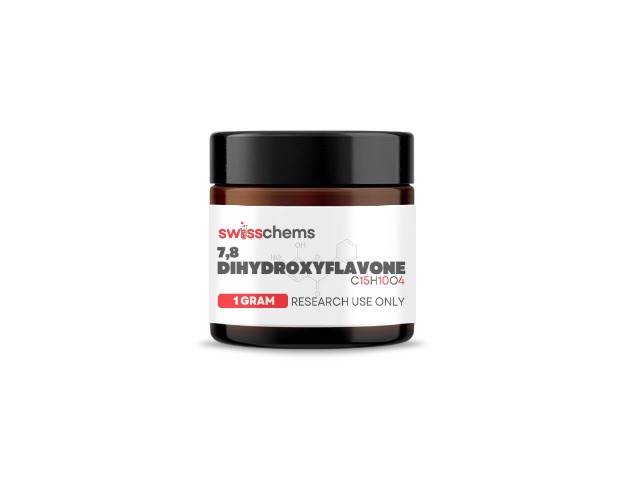
7,8-Dihydroxyflavone by Swiss Chems
Shop Now →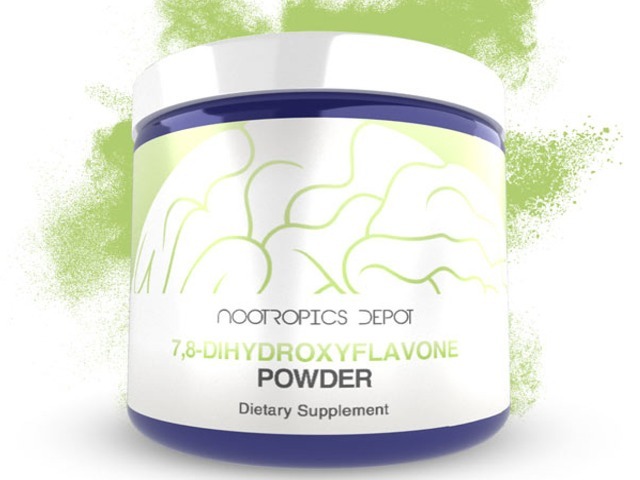
7,8-Dihydroxyflavone Powder by Nootropics Depot
Shop Now →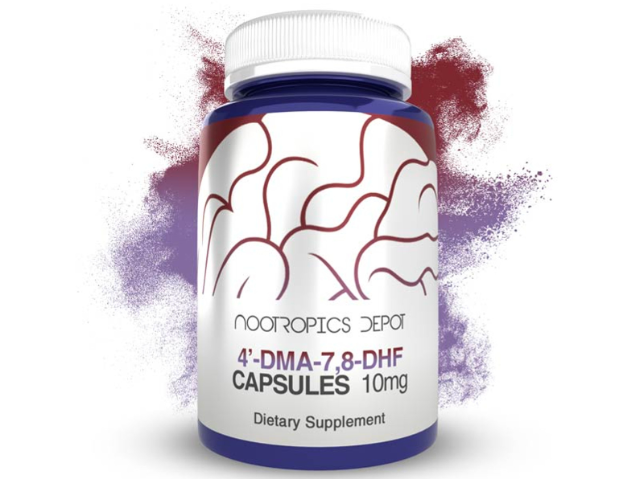
4’-DMA-7,8-DHF Capsules by Nootropics Depot
Shop Now →Disclosure: These are affiliate links. I earn a small commission if you purchase — at no extra cost to you. I only recommend products I personally use or have thoroughly researched.
Research & Studies
This section includes 5 peer-reviewed studies referenced in our analysis.