
- Enhanced learning and memory
- Improved sleep quality
- Reduced brain fog
- Supports synaptic plasticity
- May slow cognitive aging
I used to think all magnesium was the same. Oxide, citrate, glycinate — just pick the cheapest one and call it a day. Then I spent six months wondering why my $8 bottle of magnesium oxide wasn’t doing a thing for the brain fog that had been following me around like a stray cat.
Turns out, there’s a massive difference between raising the magnesium in your blood and raising the magnesium in your brain. And that distinction is exactly why Magnesium L-Threonate exists.
If you’ve been hearing about this compound from podcasts, Reddit threads, or your biohacker friend who won’t stop talking about sleep stacks — this guide breaks down what the science actually says, what it can and can’t do, and whether it’s worth the premium price tag.
The Short Version: Magnesium L-Threonate (MgT) is the only magnesium form clinically proven to elevate brain magnesium levels. Human trials show it improves cognitive performance, working memory, and sleep quality at 2,000mg per day. It’s not cheap, and it takes 4–12 weeks to feel the full effects — but for cognitive support, especially as you age, the evidence is stronger than most nootropics on the market.
What Is Magnesium L-Threonate?
Magnesium L-Threonate is a magnesium salt bound to L-threonic acid, a metabolite of vitamin C. It was developed through nearly two decades of research across Stanford, MIT, and Tsinghua University, with the landmark study published in Neuron in 2010 by Dr. Guosong Liu’s team at MIT’s Picower Institute for Learning and Memory.
The whole point of this compound is one thing: get more magnesium into the brain. Most magnesium forms — oxide, citrate, even glycinate — do a fine job raising serum levels. But the blood-brain barrier is selective, and those forms don’t meaningfully elevate magnesium in cerebrospinal fluid. In rat studies, oral MgT raised CSF magnesium by 7–15% in 24 days. Other forms couldn’t get a statistically significant bump.
The compound is sold under the patented brand name Magtein, exclusively licensed by AIDP/ThreoTech LLC. Each 2,000mg dose delivers roughly 144mg of elemental magnesium — which is about 8% by weight. That’s worth knowing, because it means MgT alone isn’t enough to fix a general magnesium deficiency. It’s a targeted brain supplement, not a full-spectrum magnesium replacement.
And here’s the bigger picture: roughly half of Americans aren’t getting enough magnesium from their diet. This one mineral is involved in over 300 enzymatic processes, including the ones that build neurotransmitters, regulate sleep, and manage stress. So when brain magnesium runs low, the effects cascade.
Reality Check: Before you throw money at any supplement, make sure the basics are covered. Gut health, sleep hygiene, stress management, and a nutrient-dense diet are the foundation. Magnesium L-Threonate works best when it’s optimizing a system that’s already reasonably healthy — not trying to patch over a broken one.
How Does Magnesium L-Threonate Work?
Here’s the plain-English version: MgT gets magnesium into your brain, and once there, it helps your neurons communicate more effectively — especially the ones involved in learning and memory.
Now the deeper layer.
NMDA Receptor Remodeling
The primary mechanism is NR2B subunit upregulation on NMDA receptors in the hippocampus. In the 2010 Neuron study, chronic MgT supplementation increased NR2B expression by roughly 60% above controls, without altering other NMDA subunits. Here’s why that matters: NR2B-type NMDA receptors have slower kinetics, which makes them better at coincidence detection — the brain’s way of saying “these two signals happened together, so this is probably important.”
The mechanism is elegant. More magnesium in the extracellular space means more voltage-dependent blockade of NMDA channels at resting potential. The brain compensates by building more NR2B-containing receptors. The result is a system that’s more responsive to meaningful input and less reactive to background noise.
Synaptic Rewiring
MgT increases the number of functional presynaptic release sites while reducing individual release probability. Think of it like upgrading from a single firehose to dozens of precision sprinklers. The brain becomes better at responding to burst inputs — the kind of signaling that mimics actual learning patterns — while filtering out irrelevant chatter. Downstream, this activates CaMKII and CREB signaling, both critical for converting short-term experience into long-term memory.
The Calming Side
Magnesium is a positive modulator of GABA-A receptor activity. More brain magnesium means better GABA function, which is why users consistently report a calming, anxiolytic effect — especially in the evening. This isn’t sedation. It’s more like turning down the volume on a nervous system that’s been stuck at 11.
Newer Findings
A 2025 mouse study found that MgT rescues hippocampal neurogenesis in an Alzheimer’s disease model — meaning it helps the brain grow new neurons even under neurodegenerative conditions. And a 2024 study showed MgT modifies the gut microbiota in ways that improve Alzheimer’s markers, adding a gut-brain axis dimension to its mechanism. Both are animal studies, but they point to pathways that go well beyond simple magnesium supplementation.
Pro Tip: MgT’s effects are cumulative, not acute. Unlike caffeine or a racetam, you won’t feel a “hit” after your first dose. The synaptic remodeling takes weeks. If you’re evaluating whether it works for you, commit to at least 6 weeks before making a judgment.
Benefits of Magnesium L-Threonate
Cognitive Performance — Strong Evidence
The strongest human data comes from a 2025 randomized, double-blind, placebo-controlled trial published in Frontiers in Nutrition. One hundred adults (ages 18–45) took 2g of Magtein daily for 6 weeks. The results:
- NIH Total Cognition Composite improved by 8.40 points (vs. 5.60 in placebo)
- Estimated brain cognitive age reduced by 7.5 years
- Significantly faster reaction time (p = 0.031)
- No significant adverse reactions
That “7.5 years younger” figure is going to get overhyped by marketers, so let me be clear: it’s an estimated age-equivalent based on composite scoring, not a literal reversal of aging. But the direction and statistical significance are real.
A 2022 Chinese study found that a Magtein®PS formula (MgT combined with phosphatidylserine, vitamin C, and vitamin D) significantly improved all 5 subcategories of the Clinical Memory Test. The caveat: it was a multi-ingredient formula, so you can’t attribute all the benefit to MgT alone.
Sleep Quality — Strong Evidence
A 2025 RCT showed MgT significantly improved sleep quality and daytime functioning:
- Sleep-Related Impairment score dropped by 6.35 points (vs. 3.38 in placebo, p = 0.043)
- Better alertness, coordination, and balance upon waking
- Reduced resting heart rate (p = 0.030) and increased heart rate variability (p = 0.036) — objective markers of improved autonomic balance
This is one of the more convincing sleep supplement studies I’ve seen, because it didn’t just rely on subjective “I feel like I slept better” surveys. The HRV and heart rate data give it physiological teeth.
Learning and Memory — Foundational Preclinical Evidence
The 2010 Neuron study remains the cornerstone. MgT enhanced working memory, short-term memory, and long-term memory in both young and aged rats. Pattern completion — a skill that declines sharply with age — was significantly improved in older animals.
Alzheimer’s Disease — Preliminary
Two recent animal studies (2024 and 2025) show promising results for AD pathology, but no human Alzheimer’s trials have been published yet.
| Benefit | Evidence Level | Key Research |
|---|---|---|
| Cognitive performance | Strong (Human RCTs) | Frontiers in Nutrition 2025 |
| Sleep quality | Strong (Human RCT) | PMC 2025 |
| Memory improvement | Moderate (Human RCT + animal) | PMC 2022, Neuron 2010 |
| Neuroprotection / AD | Preliminary (animal only) | 2024, 2025 mouse studies |
Reality Check: Three human RCTs is better than most nootropic supplements can claim — but it’s still a small evidence base. Most mechanistic data comes from rats. The Magtein patent holder (AIDP/ThreoTech) funded or facilitated most published research, which is a potential conflict of interest. The effects are real, but keep your expectations proportional to the evidence.
How to Take Magnesium L-Threonate
Standard Protocol
| Use Case | Daily Dose | Timing | Notes |
|---|---|---|---|
| Cognitive support | 2,000mg MgT (~144mg elemental Mg) | 1,000mg morning + 1,000mg evening | The dose used in clinical trials |
| Sleep-focused | 2,000mg MgT | Full dose 1–2 hours before bed | May cause morning drowsiness initially |
| Starting out | 1,000mg MgT | Evening only, first week | Assess tolerance before increasing |
Key Details
- With or without food — taking with food may reduce mild GI effects
- Timeline to effects:
- Days 1–7: Some users notice calmer evenings and improved sleep
- Weeks 2–4: Subtle clarity improvements, reduced brain fog
- Weeks 4–12: Full cognitive benefits emerge
- Cycling: Not required. Clinical research uses continuous daily dosing. Some users do 5 days on / 2 off, but that’s anecdotal, not evidence-based.
- Forms: Capsules are most common (typically 500mg or 667mg per cap, meaning 3–4 capsules daily). Powder exists but is less popular. Liposomal versions are marketed as enhanced absorption but lack comparative data.
The Elemental Magnesium Issue
This is critical: 2,000mg of Magnesium L-Threonate only delivers ~144mg of elemental magnesium. That’s well below the RDA (400–420mg for men, 310–320mg for women). If you’re magnesium-deficient — and statistically, there’s a coin-flip chance you are — MgT alone won’t fix it.
Insider Tip: Pair MgT with a second magnesium form for whole-body coverage. I use Magnesium Glycinate (200–400mg elemental) for general needs and MgT specifically for the brain. Just watch your total supplemental magnesium — the tolerable upper limit for supplemental magnesium is 350mg per day.
Side Effects and Safety
Common Side Effects
- GI discomfort — nausea, loose stools, stomach cramps (mild; usually resolves with food)
- Drowsiness — expected, especially with evening dosing
- Headache — occasionally reported, typically transient in the first week
Who Should NOT Take MgT
- Kidney disease (especially eGFR <30) — impaired magnesium clearance creates hypermagnesemia risk
- Heart block or myocardial damage — magnesium supplementation is contraindicated
- Severe hypotension — MgT may further lower blood pressure
- Anyone already on high-dose magnesium from multiple sources — risk of exceeding the UL
Drug Interactions
There are 67 documented interactions with magnesium threonate. The major ones:
| Medication | Interaction | What to Do |
|---|---|---|
| Antibiotics (tetracyclines, quinolones) | Magnesium binds the drug, reducing absorption | Separate by 2+ hours |
| Blood pressure meds (calcium channel blockers) | Additive blood pressure lowering | Monitor BP; consult physician |
| Bisphosphonates (alendronate) | Reduced drug absorption | Separate by 2+ hours |
| Thyroid meds (levothyroxine) | Reduced absorption | Separate by 4 hours |
| Sedatives / sleep aids | Additive drowsiness | Use caution; reduce doses |
| Muscle relaxants | Potential additive relaxation | Monitor effects |
Important: If you have kidney disease, take blood pressure medication, or are on any prescription drugs, talk to your doctor before starting MgT. Magnesium interactions are manageable but real — especially the timing separations with antibiotics and thyroid medications.
Pregnancy & Nursing
Insufficient data specific to MgT. Magnesium is essential during pregnancy, but supplemental forms should be cleared with a healthcare provider. Not recommended without medical supervision.
Stacking Magnesium L-Threonate
The Huberman Sleep Stack
This is probably the most popular MgT stack right now, popularized by neuroscientist Andrew Huberman. Taken 30–60 minutes before bed:
- Magnesium L-Threonate — 2,000mg
- L-Theanine — 200–400mg
- Apigenin — 50mg
The rationale: MgT for GABA modulation and brain relaxation, L-Theanine for alpha-wave promotion without sedation, and Apigenin as a mild anxiolytic. The three target different calming pathways without redundancy.
Cognitive Enhancement Stacks
- MgT + Phosphatidylserine + Vitamin D + Vitamin C — This is the actual combination tested in the 2022 clinical trial. Not theoretical — it’s been studied together.
- MgT + Lion’s Mane — Complementary neurogenesis support. MgT works through NMDA/synaptic remodeling; Lion’s Mane stimulates NGF. Different pathways, same direction.
- MgT + DHA (Omega-3) — Brain membrane integrity plus synaptic enhancement.
Absorption Boosters
- Vitamin B6 (P5P) (50–100mg) — Facilitates magnesium transport into cells
- Vitamin D3 (4,000–5,000 IU) — Promotes magnesium reabsorption in the kidney
What to Avoid
- High-dose calcium supplements taken at the same time — calcium and magnesium compete for absorption. Separate by 2+ hours.
- Stacking multiple high-dose magnesium forms without tracking total elemental intake — easy path to exceeding the 350mg supplemental UL
- CNS depressants (benzodiazepines, alcohol, prescription sleep aids) without medical guidance — additive sedation
My Take
I’ve been taking Magnesium L-Threonate for over two years now, and it’s one of the few supplements that has earned a permanent spot in my daily stack. Not because it felt dramatic — it didn’t. There was no lightning-bolt moment. It was more like I slowly realized I wasn’t losing my train of thought mid-sentence anymore. I stopped re-reading the same paragraph three times. My sleep got noticeably deeper within the first week.
Here’s who I think this is best for:
- Anyone over 30 noticing subtle cognitive slippage — slower recall, more brain fog, tip-of-the-tongue moments
- Poor sleepers who want something with actual clinical data behind it (not just “take melatonin and hope”)
- People already doing the basics — clean diet, regular movement, stress management — who want targeted cognitive support
- Students or knowledge workers looking for long-term memory and learning support (with the patience for a 6-week ramp-up)
And here’s who should probably look elsewhere:
- If you’re magnesium-deficient and need to correct that first, start with Magnesium Glycinate or Magnesium Malate — they deliver more elemental magnesium per dollar
- If you want an acute cognitive boost you can feel in 30 minutes, MgT isn’t that. Try caffeine and L-Theanine instead.
- If you’re on a tight budget, MgT is one of the more expensive magnesium forms. Generic versions without the Magtein trademark are a gamble on quality.
The honest assessment: Magnesium L-Threonate is one of the better-substantiated nootropics I’ve come across. Three human RCTs, a clear mechanism, an excellent safety profile, and effects that align with what users actually report. It’s not going to make you limitless. But if your brain magnesium has been running low — and there’s a good chance it has — this is the most targeted way to fix it.
Start with 2,000mg daily, split between morning and evening. Give it at least 6 weeks. And look for the Magtein trademark — that’s how you know you’re getting the real thing.
Recommended Magnesium L-Threonate Products
I know how frustrating it is to sort through dozens of brands making the same claims. These are the ones I've personally vetted — because quality is the difference between results and wasted money.
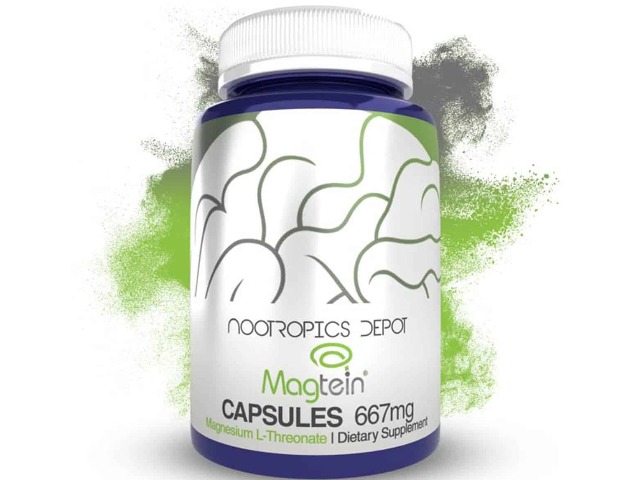
Magnesium Threonate
Shop Now →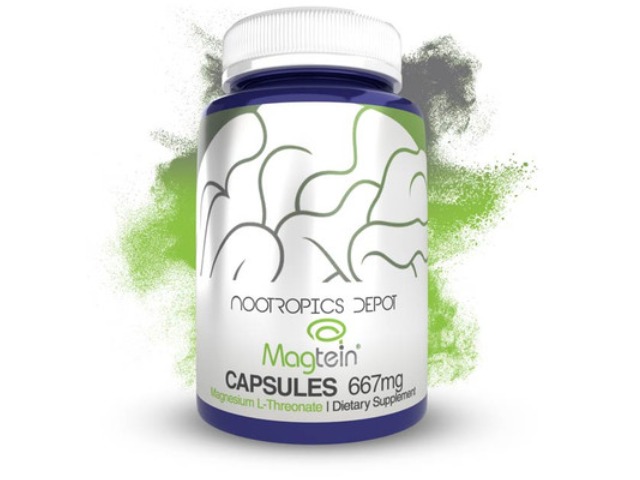
Magtein Magnesium L-Threonate Capsules | 667mg by Nootropics Depot
Shop Now →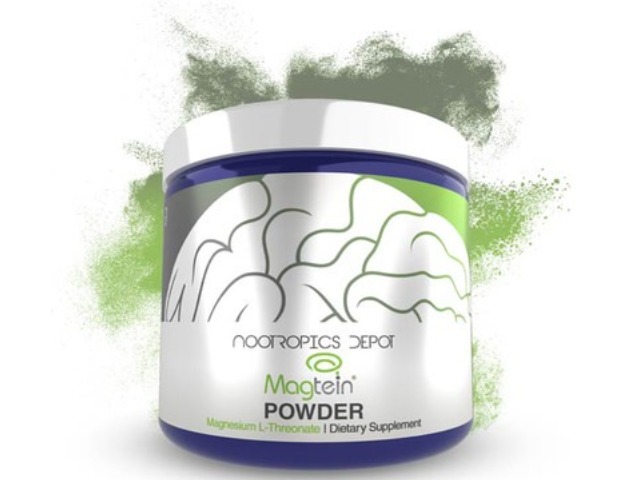
Magtein Magnesium L-Threonate Powder by Nootropics Depot
Shop Now →Disclosure: These are affiliate links. I earn a small commission if you purchase — at no extra cost to you. I only recommend products I personally use or have thoroughly researched.
Research & Studies
This section includes 4 peer-reviewed studies referenced in our analysis.