

- Enhanced verbal fluency and articulation
- Reduced anxiety without sedation
- Improved mood and emotional well-being
- Cognitive support in age-related decline
- Enhanced creative and holistic thinking
- Increased acetylcholine, dopamine, and serotonin activity
I remember the first time aniracetam actually clicked for me. I was mid-conversation at a dinner party — the kind where you’re usually reaching for the right word while it hides somewhere behind your third glass of water — and everything just flowed. Words came easier. Thoughts connected faster. I wasn’t smarter, exactly. I was just… less in my own way.
That experience is what keeps aniracetam near the top of the racetam family for a lot of people, myself included. It’s not the most potent racetam. It’s not the most studied. But it might be the most versatile — and it does something no other racetam really does: it takes the edge off while sharpening the blade.
The Short Version: Aniracetam is a fat-soluble racetam nootropic that modulates AMPA glutamate receptors, enhances acetylcholine and dopamine activity, and provides a unique combination of cognitive enhancement and anxiety reduction. It’s best suited for people dealing with brain fog, verbal fluency issues, social anxiety, or creative blocks — especially when foundational health factors are already addressed. Standard dose is 750–1500 mg/day taken with fat, split across 2–3 doses.
What Is Aniracetam?
Aniracetam was synthesized in the 1970s by Hoffmann-La Roche in Switzerland as a more potent, fat-soluble cousin of piracetam — the compound that started the entire racetam family. The key structural tweak was adding a methoxybenzoyl group to piracetam’s pyrrolidone ring, which made it lipophilic (fat-loving) and roughly 3–8 times more potent by weight.
It’s been prescribed in parts of Europe for decades — you’ll find it as Ampamet in Italy, Memodrin in Greece — primarily for cognitive decline in elderly patients. Japan approved it for post-stroke anxiety and depression before withdrawing it in the 1990s. In the United States, it’s in a gray zone: not FDA-approved as a drug or supplement, but not a controlled substance either. You can buy it freely.
Here’s what I want you to understand before we go further: aniracetam is a tool, not a foundation. If your sleep is wrecked, your gut is inflamed, and you’re running on stress hormones and caffeine, no racetam is going to save you. Fix the engine before you upgrade the fuel. But if your foundations are solid and you’re looking for a targeted cognitive edge — particularly around verbal fluency, mood, and creative thinking — aniracetam is one of the more interesting options on the table.
How Does Aniracetam Work?
Most nootropics have one trick. Aniracetam has several, and they work together in ways that explain why the subjective experience feels so different from other racetams.
The AMPA Connection
Your brain’s fast-lane communication system runs on glutamate — the primary excitatory neurotransmitter — and the AMPA receptor is the main gatekeeper for that signal. Aniracetam acts as a positive allosteric modulator of AMPA receptors, which is a fancy way of saying it doesn’t activate them directly — it makes them work better when they’re already firing.
Specifically, research by Jin et al. (2005) in The Journal of Neuroscience showed aniracetam binds within the dimer interface of the AMPA receptor’s ligand-binding domain. This slows both deactivation (channels stay open longer) and desensitization (receptors don’t go dormant as quickly). The practical result is stronger, longer-lasting excitatory signals between neurons — which enhances long-term potentiation, the cellular mechanism behind learning and memory.
Think of it like upgrading the bandwidth on your internet connection. The information was always there — it just moves faster and more reliably.
What makes this more interesting is a finding from Pittaluga et al. (1999): aniracetam has a dual effect on glutamate transmission. At nanomolar concentrations, it modulates NMDA receptors. At higher micromolar concentrations, it shifts to AMPA modulation. This layered activity likely contributes to the nuanced cognitive effects users report.
The Mood and Anxiety Piece
Here’s where aniracetam separates itself from the pack. Nakamura et al. (2001) demonstrated that aniracetam selectively enhances dopamine and serotonin release in the prefrontal cortex, basolateral amygdala, and dorsal hippocampus — but not in the striatum or nucleus accumbens. That distinction matters enormously. It means aniracetam activates the mesocorticolimbic system (mood, motivation, emotional regulation) without hitting the reward circuitry associated with addiction and compulsive behavior.
This is why people report feeling calmer and more socially confident on aniracetam without the sedation of a benzo or the emotional flattening of an SSRI. It’s a different mechanism entirely.
The Metabolite Story
Here’s a curveball that confused me for years: aniracetam has a plasma half-life of roughly 30 minutes and only about 0.2% oral bioavailability. By every standard pharmacokinetic measure, it shouldn’t work at all after that first hour.
But it does. And the reason is its metabolites.
When your liver breaks down aniracetam, it produces N-anisoyl-GABA (70–80% of metabolites) and p-anisic acid (20–30%). Both are pharmacologically active. N-anisoyl-GABA drives cholinergic enhancement and mediates the dopamine/serotonin release. P-anisic acid independently produces anxiolytic effects. These metabolites persist far longer than the parent compound, which is why the subjective effects last 4–5 hours per dose even though aniracetam itself is gone in under an hour.
Pro Tip: Don’t judge aniracetam by its half-life on paper. The metabolites are doing most of the heavy lifting. This also means the effects build over days and weeks of consistent use — it’s not just about what you feel in the first hour.
The Acetylcholine Boost
Nakamura & Shirane (1999) showed that aniracetam at 100 mg/kg produces a sustained 58% increase in hippocampal acetylcholine release lasting about two hours. This is primarily driven by those metabolites acting on the reticulothalamic cholinergic pathway. It’s also why choline supplementation isn’t optional with aniracetam — your brain is burning through more of it, and if you don’t replenish the supply, headaches and diminished returns follow quickly.
Benefits of Aniracetam
Let me be straight about the evidence landscape here, because honesty about what we know and don’t know is what separates useful guidance from hype.
Cognitive Support in Decline — Moderate Human Evidence
The strongest clinical data comes from Senin et al. (1991): a 6-month, double-blind, placebo-controlled trial with 109 patients with mild-to-moderate Alzheimer’s disease. Aniracetam at 1,500 mg/day was significantly more effective than placebo across multiple cognitive and behavioral measures. The placebo group deteriorated steadily; the aniracetam group improved. Tolerability was rated “excellent.”
A review by Lee & Benfield (1994) in Drugs & Aging noted that aniracetam 1,500 mg/day also outperformed piracetam 2,400 mg/day in 8 of 18 cognitive tests in a head-to-head comparative trial. A 2011 open study of 276 patients with cognitive disorders found that aniracetam maintained neuropsychological function for 12 months and improved emotional state at 3 months.
An earlier trial by Sourander et al. (1987) with 44 patients found no significant difference from placebo at 1,000 mg/day over 3 months — but the lower dose and shorter duration likely explain the discrepancy.
Anxiolytic Effects — Strong Animal Data, No Human Trials
Nakamura & Kurasawa (2001) demonstrated anxiolytic effects across three different mouse anxiety models — social interaction, elevated plus-maze, and conditioned fear. Aniracetam was effective in more models than diazepam, working through nicotinic acetylcholine, serotonin 5-HT2A, and dopamine D2 receptors.
Reality Check: The anxiolytic effects of aniracetam are among its most consistently reported benefits by users, but we don’t have a single human RCT specifically testing this. The animal evidence is strong and the mechanistic explanation is solid, but this is still an area where personal experience is running ahead of formal clinical proof.
Antidepressant Properties — Age-Dependent, Animal Only
Nakamura & Tanaka (2001) found aniracetam reduced depression-like behavior in aged rats but not in young ones — mediated through dopaminergic pathways activated via nicotinic acetylcholine receptors. This is consistent with the pattern that aniracetam seems to work best in brains that have something to fix.
Neuroprotection — Compelling Preclinical Evidence
Vaglenova et al. (2007) showed aniracetam reversed cognitive deficits and AMPA receptor impairment caused by prenatal ethanol exposure in rats, with effects persisting after treatment ended. More recently, Cui et al. (2026) published findings showing aniracetam restores excitation-inhibition balance in the prefrontal cortex of ADHD model mice.
What About Healthy Brains?
Two well-designed studies (2014 and 2017) found aniracetam had no measurable effect on learning, memory, anxiety, or behavior in healthy adult mice without pre-existing cognitive issues. This is an important finding. Aniracetam may function more as a restorative agent than a supercharger — optimizing impaired systems rather than pushing normal ones past their ceiling.
How to Take Aniracetam
Dosage
- Standard range: 750–1,500 mg per day
- Clinical trial dose: 1,500 mg/day (this is where the best evidence sits)
- Starting dose: 750 mg/day for the first week to assess tolerance
Timing and Splitting
Because of the short parent-compound half-life, split your daily dose into 2–3 administrations:
- Two-dose protocol: 750 mg morning + 750 mg early afternoon
- Three-dose protocol: 500 mg morning + 500 mg midday + 500 mg afternoon
Avoid taking it after 4 PM unless you want to stare at the ceiling at midnight.
The Fat Rule
This is non-negotiable. Aniracetam is fat-soluble. Taking it on an empty stomach or with just water dramatically reduces absorption. Take each dose with a fat source — fish oil (which also provides complementary omega-3 cognitive benefits), a spoonful of coconut oil, olive oil, or simply with a meal containing fat.
Insider Tip: Fish oil is the ideal fat vehicle for aniracetam. You’re solving two problems at once — fat-soluble absorption and omega-3 delivery to the brain. Some users report up to a three-fold improvement in perceived effects when pairing with fish oil versus taking it dry.
What to Expect
- Acute effects: 30–60 minutes after dosing
- Noticeable cumulative benefits: 2–4 weeks of consistent use
- Full clinical benefit: 3–6 months (based on trial data)
Don’t judge aniracetam off a single dose. Some people feel it immediately; others need weeks of daily use before the effects become clear.
Cycling
Clinical trials used continuous daily dosing for 6–12 months without reported tolerance. Animal studies confirmed no tolerance with chronic treatment. There’s no evidence-based reason to cycle aniracetam, though some users prefer 5 days on / 2 days off as a personal preference.
Side Effects and Safety
Aniracetam has a solid safety profile. In the 6-month Senin trial, tolerability was rated “excellent” with no withdrawals due to side effects.
Common (mild, infrequent):
- Headache — the most reported side effect, and almost always a sign you need more choline
- Mild GI discomfort or nausea
- Insomnia if taken too late in the day
- Restlessness or jitteriness at higher doses
Less common:
- Confusion (noted in 4 of 22 patients in the Sourander 1987 trial at 1,000 mg/day)
- Vertigo (rare)
Important: Aniracetam carries an H361 classification — “suspected of damaging fertility or the unborn child.” Avoid during pregnancy and nursing, as it passes into breast milk. Also avoid combining with MAOIs (dangerous neurotransmitter elevation), anticoagulants (increased bleeding risk), and use caution with SSRIs due to theoretical serotonin concerns.
Drug interactions to watch:
- MAOIs — avoid completely
- Blood thinners (warfarin, aspirin, etc.) — may increase bleeding risk
- SSRIs — no documented interaction, but the serotonin modulation warrants caution
- CYP450 modulators — may alter how aniracetam is metabolized
The oral LD50 in rats is 4,500 mg/kg — relatively low acute toxicity. No fatal human overdoses have been reported.
Stacking Aniracetam
Choline — The Non-Negotiable Pairing
Aniracetam increases your brain’s demand for acetylcholine. If you don’t supply extra choline, you’ll get headaches and the benefits will plateau. Period.
- Alpha-GPC: 300–600 mg/day — the most bioavailable option, crosses the blood-brain barrier efficiently
- Citicoline (CDP-Choline): 250–500 mg/day — also provides uridine for membrane synthesis, a nice secondary benefit
- Rough ratio: ~250–300 mg choline source per 750 mg aniracetam
Complementary Stacks
The Essentials Stack: Aniracetam 750–1,500 mg + Alpha-GPC 300 mg + Fish Oil 1–2g
This is where most people should start. Simple, effective, covers all your bases.
The Enhanced Cognitive Stack: Aniracetam + Citicoline 250 mg + Alpha-GPC 300 mg + Omega-3 + Lion’s Mane 500 mg
Lion’s Mane provides NGF support that pairs beautifully with aniracetam’s AMPA modulation — you’re enhancing both signal transmission and neural growth. Bacopa monnieri is another solid addition for complementary memory-consolidation mechanisms, though its effects take 8–12 weeks to manifest.
The Multi-Racetam Stack (advanced): Aniracetam (mood/verbal fluency) + Oxiracetam (logic/analytical) + extra choline source
This approach targets different cognitive domains simultaneously. Just make sure you increase choline proportionally — stacking racetams without extra choline is a recipe for brutal headaches.
What to Avoid
- MAOIs — dangerous, full stop
- Excessive stimulants — unpredictable interactions with the dopaminergic effects
- Alcohol and CNS depressants — counterproductive and potentially unsafe
- Blood thinners without medical oversight — aniracetam may affect platelet aggregation
My Take
Aniracetam occupies a special spot in my toolkit. It’s not the racetam I reach for when I need raw analytical horsepower — that’s oxiracetam or pramiracetam. It’s the one I reach for when I need to communicate — when I’m recording a podcast episode, writing something that needs to flow, or heading into a social situation where I want to be present without that low-grade hum of self-consciousness.
The verbal fluency effect is real. It’s the most consistently reported benefit across thousands of user experiences, and I’ve felt it myself enough times to trust it. The anxiolytic quality is subtler but equally valuable — it’s not a benzo-like numbness, it’s more like the volume knob on background worry gets turned down a few notches.
Who this is best for:
- People who struggle with word-finding or verbal hesitation
- Anyone dealing with social anxiety who wants relief without sedation
- Creative professionals who need ideas to connect more fluidly
- People with age-related cognitive concerns (the clinical evidence here is real)
Who should look elsewhere:
- If you need pure memory enhancement, pramiracetam or bacopa are better bets
- If you need stimulation and focus, phenylpiracetam or oxiracetam are more appropriate
- If you’re in perfect cognitive health and expect limitless-style enhancement, the evidence suggests you’ll be disappointed
My honest assessment: aniracetam is worth trying if verbal fluency, mood, or social cognition are your targets. Start at 750 mg/day with Alpha-GPC and fish oil, give it 2–4 weeks of consistent use, and pay attention to how conversations feel — not just how you score on some memory test. That’s where aniracetam shines. The conversations. The connections. The moments where the right word shows up exactly when you need it.
Recommended Aniracetam Products
I know how frustrating it is to sort through dozens of brands making the same claims. These are the ones I've personally vetted — because quality is the difference between results and wasted money.
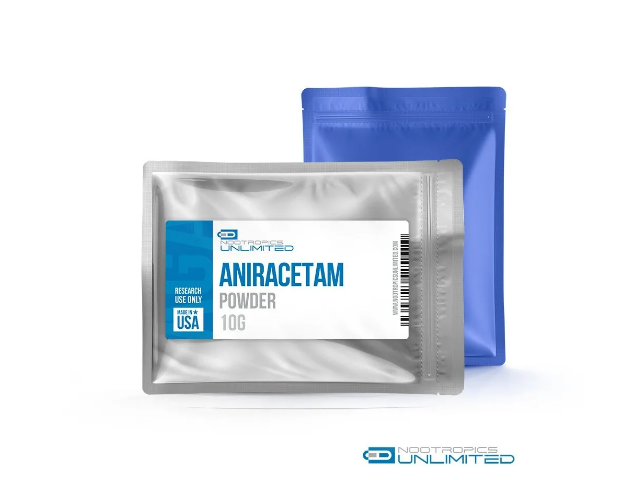
Aniracetam by Nootropics Unlimited
Shop Now →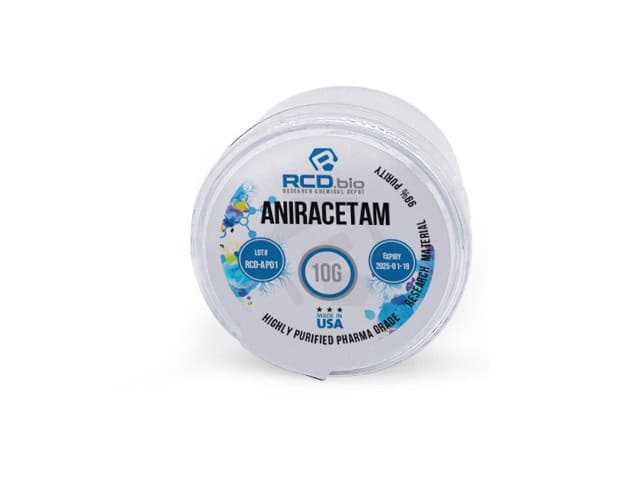
Aniracetam Powder by Research Chemical Depot
Shop Now →Disclosure: These are affiliate links. I earn a small commission if you purchase — at no extra cost to you. I only recommend products I personally use or have thoroughly researched.
Research & Studies
This section includes 19 peer-reviewed studies referenced in our analysis.
Excitatory amino acids and neuronal plasticity: modulation of AMPA receptors as a novel substrate for the action of nootropic drugs.
Nootropic drugs positively modulate alpha-amino-3-hydroxy-5-methyl-4-isoxazolepropionic acid-sensitive glutamate receptors in neuronal cultures.
Effects of aniracetam on one-trial passive avoidance tests and cholinergic neurons in discrete brain regions of rats.
The effects of various cognition-enhancing drugs on in vitro rat hippocampal synaptosomal sodium dependent high affinity choline uptake.
Piracetam and other structurally related nootropics.
Attenuation of excitatory amino acid toxicity by metabotropic glutamate receptor agonists and aniracetam in primary cultures of cerebellar granule cells.
Aniracetam. An overview of its pharmacodynamic and pharmacokinetic properties, and a review of its therapeutic potential in senile cognitive disorders.
Anxiolytic effects of aniracetam in three different mouse models of anxiety and the underlying mechanism.
Aniracetam enhances cortical dopamine and serotonin release via cholinergic and glutamatergic mechanisms in SHRSP.
Antidepressant-like effects of aniracetam in aged rats and its mode of action.
Showing 10 of 19 studies. View all →