
- Supports healthy sleep quality and onset
- Promotes relaxation and calm without sedation
- Boosts NAD+ levels via CD38 inhibition
- Supports neuroprotection and BDNF signaling
- Reduces neuroinflammation
I used to lie awake at 2 AM with my brain running like a browser with forty tabs open — half of them playing music. I’d tried melatonin (groggy mornings), valerian root (smelled like old socks, didn’t work), and even prescription options that left me feeling like a zombie the next day. Then a friend handed me a bottle of apigenin and said, “just try it for a week.”
That was three years ago. It didn’t knock me out. It didn’t make me drowsy. It just… quieted things down. The mental chatter dialed back, and sleep came naturally. That subtlety is actually what makes apigenin interesting — and what makes it misunderstood.
The Short Version: Apigenin is a flavonoid found in chamomile, parsley, and celery that gently promotes sleep, reduces anxiety, and boosts NAD+ levels through multiple brain pathways. It’s best for people who need help “turning off” at night without pharmaceutical sedation. Below, I break down the mechanisms, the evidence (including where it’s thin), and how to actually use it.
What Is Apigenin?
Apigenin is a flavone — a specific type of flavonoid — that’s been hiding in plain sight in your diet for your entire life. Every time you’ve sipped chamomile tea, eaten parsley, or bitten into celery, you’ve consumed small amounts of it. Chamomile flowers are the richest source at roughly 840 mg per 100g of dried flowers, though a typical cup of chamomile tea delivers only about 1.5–5 mg.
Here’s the thing: humans have been using chamomile medicinally for thousands of years. Ancient Egyptians dedicated it to the sun god Ra. Medieval Europeans used it for everything from digestive complaints to wound healing. Ayurvedic practitioners prescribed it for calming the mind. They didn’t know why it worked — they just knew it did.
Modern science has since isolated apigenin as one of the key active compounds behind chamomile’s calming reputation, and the story turns out to be far more interesting than “it helps you relax.” Apigenin touches an unusually wide range of brain systems — GABA, acetylcholine, glutamate, NAD+, BDNF — which is rare for a single plant compound. It gained mainstream attention after Andrew Huberman started recommending it for sleep, but the science behind it goes much deeper than a bedtime supplement.
Reality Check: Before you rush to buy apigenin hoping it’ll fix your insomnia, let’s be honest about something. Most of the human clinical data we have is on chamomile extract — not isolated apigenin. The mechanistic science is genuinely impressive, but direct human trials with pure apigenin are still catching up. I’ll flag where the evidence is strong and where it’s still emerging throughout this guide.
How Does Apigenin Work?
Most supplements do one thing. Apigenin does about six things, which is both its greatest strength and the reason it’s hard to pin down.
It Calms Your Brain — But Not Like a Benzo
Apigenin binds to GABA_A receptors, the same system targeted by benzodiazepines like Xanax and Valium. But here’s the critical difference: electrophysiological studies show that apigenin’s effects are insensitive to flumazenil, the drug that reverses benzodiazepine effects. That means it’s working through a completely different binding site on the GABA receptor.
In practical terms, this means you get anxiolytic and calming effects without the tolerance buildup, dependency risk, or cognitive blunting that benzodiazepines are notorious for. Think of it like this: if benzos are a sledgehammer hitting the GABA system, apigenin is more like a gentle press on a different button on the same control panel.
It Turns Down Excitatory Signaling
Apigenin also works the other side of the equation by inhibiting glutamate release in hippocampal nerve terminals. It does this by blocking N-type and P/Q-type calcium channels — the gates that neurons use to release excitatory neurotransmitters. Less glutamate firing means less neural “noise,” which partly explains why users describe the experience as a “quieter mind” rather than sedation.
It Boosts NAD+ by Blocking the Enzyme That Destroys It
This is where apigenin gets genuinely exciting for the longevity crowd. A landmark 2013 study from the Mayo Clinic found that apigenin potently inhibits CD38, the primary enzyme responsible for degrading NAD+ in your body. NAD+ is essential for mitochondrial function, DNA repair, and cellular energy — and it declines significantly with age.
By blocking CD38, apigenin raises intracellular NAD+ levels, which in turn activates SIRT1 and SIRT3 — the “longevity sirtuins” that regulate metabolism, inflammation, and cellular stress responses. This is a fundamentally different approach than NMN or NR, which provide raw materials to make NAD+. Apigenin stops your body from breaking it down.
It Supports Brain Growth and Plasticity
Apigenin activates the ERK/CREB/BDNF signaling cascade — the molecular pathway responsible for neuroplasticity, new neuron growth, and memory consolidation. A 2025 study confirmed that apigenin enhances memory in stressed mice specifically through upregulation of this pathway alongside restoration of oxidative balance. It also potentiates α7-nicotinic acetylcholine receptors with an EC₅₀ of 5.4 µM, enhancing norepinephrine release in the hippocampus — a key mechanism for attention and learning.
The bottom line: apigenin simultaneously calms overactive signaling, protects existing neurons, and promotes the growth of new connections. That’s a rare combination.
Benefits of Apigenin
Sleep Quality
The benefit apigenin is most famous for — and the evidence is decent, though nuanced. A large Italian cohort study of nearly 2,000 participants found that higher dietary apigenin intake correlated positively with better sleep quality on the Pittsburgh Sleep Quality Index. Multiple RCTs using chamomile extract standardized for apigenin content show improvements in sleep onset and quality.
A 2024 review in Frontiers in Nutrition specifically positioned apigenin at the “intersection of sleep and aging,” noting consistent sedative effects in animal models and supportive human data from chamomile trials.
The honest caveat: most human sleep data is on chamomile extract, not isolated apigenin. We’re extrapolating from the whole plant, which contains other active compounds. Still, the mechanistic rationale — GABA modulation plus glutamate inhibition — makes a compelling case.
Anxiety and Stress Response
Several RCTs demonstrate that chamomile extract standardized for apigenin reduces anxiety symptoms, including one notable trial showing significant reduction in moderate-to-severe generalized anxiety disorder symptoms with long-term use. The non-benzodiazepine mechanism suggests a better safety profile for ongoing use than pharmaceutical anxiolytics.
NAD+ and Cellular Aging
The CD38 inhibition data is genuinely strong at the mechanistic level. Apigenin has been shown to increase NAD+ levels, improve glucose and lipid homeostasis in obese mice, ameliorate oxidative stress-induced cellular senescence via the SIRT1-NAD+-CD38 axis, and restore mitochondrial function through Sirt3 activation.
Insider Tip: If you’re already taking NMN or NR for NAD+ support, adding apigenin is one of the smartest moves you can make. NMN/NR gives your body more raw material to build NAD+, while apigenin blocks CD38 from tearing it down. It’s like filling a bathtub while also plugging the drain.
Neuroprotection
Consistent preclinical evidence shows apigenin reduces neuroinflammation through NF-κB suppression and COX-2 inhibition. A systematic review of preclinical investigations found benefits across cognition and neurobehavior models, including protective effects on the brain transcriptome with aging. It’s also one of the most potent natural xanthine oxidase inhibitors studied among flavonoids.
The honest assessment: The mechanistic science across all these benefits is legitimately multi-pathway and well-characterized. But I need to be straight with you — neuroprotection and cognitive enhancement data is almost entirely from animal models. If someone tells you apigenin is “clinically proven” to boost your brainpower, they’re overstating the evidence.
How to Take Apigenin
Dosing
| Goal | Dose | When |
|---|---|---|
| General calming / mild anxiety support | 25–50 mg/day | Any time |
| Sleep support | 50–100 mg/day | 30–60 min before bed |
| NAD+ optimization / anti-aging | 100–200 mg/day | With a meal |
Start at the lower end of whatever range matches your goal. Give it at least 5–7 days of consistent use before adjusting upward. Some people notice effects within 30 minutes; others need a week of daily dosing before the baseline shift kicks in.
Forms and Absorption
Apigenin is lipophilic — it dissolves in fat, not water. This matters for absorption.
- Capsules (most common: 50 mg or 200 mg) — convenient, consistent dosing
- Powder (≥98% purity) — slightly bitter, allows flexible dosing
- Chamomile extract (standardized to ~1.2% apigenin) — gentler, but you’d need a lot of it to match supplement doses
- Glycosidic forms (apigenin-7-O-glucoside) — more water-soluble, potentially better absorbed
Only about 5–10% of ingested apigenin gets absorbed in the small intestine, so taking it with a fat-containing meal isn’t optional — it’s essential for getting your money’s worth.
Pro Tip: Take apigenin with dinner or a bedtime snack that includes some fat — a handful of nuts, a spoonful of nut butter, or even full-fat yogurt. This alone can meaningfully improve how much you actually absorb. Don’t take it on an empty stomach; you’ll absorb less and risk stomach discomfort.
Cycling
No established cycling protocol exists in the literature. Some users follow a 5-days-on, 2-days-off pattern, though there’s no strong evidence that this is necessary for apigenin. Unlike compounds that cause receptor downregulation, apigenin’s multi-target mechanism doesn’t appear to build tolerance in a clinically meaningful way. That said, I generally recommend periodic breaks from any supplement — a week off every 2–3 months is reasonable.
Side Effects and Safety
Apigenin has low intrinsic toxicity and is generally well-tolerated at standard supplement doses. But “generally safe” doesn’t mean “zero concerns.”
Common side effects:
- Daytime drowsiness, especially at doses above 100 mg or in sensitive individuals
- Mild digestive discomfort, bloating, or nausea (usually from taking it on an empty stomach)
- Vivid or unusual dreams — not necessarily unpleasant, but noticeable
- Lightheadedness
Drug interactions — this is where it gets serious. Apigenin inhibits CYP1A2, CYP2C9, and CYP3A4 cytochrome P450 enzymes. These are the liver enzymes that metabolize a huge percentage of common medications. If you’re taking blood thinners (especially warfarin), cyclosporine, benzodiazepines, diabetes medications, or certain chemotherapy drugs, talk to your doctor before adding apigenin.
Important: Women on hormone replacement therapy containing progestins should exercise extreme caution. Research found that apigenin combined with progestin therapy reversed protective benefits and was associated with higher tumor incidence. Do not combine these without explicit medical supervision. Additionally, if you have a ragweed or Asteraceae family allergy, you may react to chamomile-derived apigenin.
Discontinue apigenin at least two weeks before any planned surgery due to potential blood-thinning effects. Pregnant and breastfeeding women should stick to dietary amounts from food rather than concentrated supplements.
Stacking Apigenin
Apigenin’s multi-target mechanism makes it a natural team player. It’s moderate at each individual target rather than overwhelming at any single one — which is exactly why it stacks so well.
The Sleep Stack (most popular)
Apigenin (50–100 mg) + Magnesium Glycinate (200–400 mg) + L-Theanine (200 mg)
This is the combination that keeps showing up in sleep communities for good reason. Apigenin handles GABA modulation and glutamate inhibition, magnesium glycinate supports GABA production and muscle relaxation, and L-theanine promotes alpha brain waves associated with calm wakefulness transitioning into sleep. Users report roughly 45% greater improvements in sleep quality metrics compared to any single compound alone. Take the whole stack 30–60 minutes before bed.
The NAD+ Stack
Apigenin (100–200 mg) + NMN (250–500 mg)
The “fill the tub and plug the drain” approach. NMN provides the precursor your body converts into NAD+, while apigenin blocks CD38 from degrading it. Complementary mechanisms, not redundant ones.
The Cognitive Stack
Apigenin + Bacopa Monnieri + Lion’s Mane
All three upregulate BDNF and neuroplasticity through different mechanisms. Bacopa enhances dendritic branching, Lion’s Mane stimulates NGF, and apigenin activates ERK/CREB/BDNF signaling. This is a long-game stack — expect 8–12 weeks before the cumulative effects become obvious.
What NOT to Combine
- Benzodiazepines or strong sedatives — risk of excessive sedation from additive GABA effects
- Warfarin or other anticoagulants — CYP2C9 inhibition can raise warfarin levels dangerously
- Progestin-containing HRT — see the safety section above
- Other potent CYP3A4 inhibitors — stacking enzyme inhibitors creates unpredictable drug metabolism
My Take
After three years of using apigenin consistently, here’s my honest assessment: it’s not going to change your life overnight, and if you’re expecting it to hit like a sleeping pill, you’ll be disappointed. That’s actually the point.
What apigenin does — and does reliably, in my experience — is take the edge off. The mental chatter quiets down. The transition from “wired” to “ready for sleep” happens more naturally. And unlike melatonin, I’ve never woken up feeling groggy or “hung over” from it.
I take 50 mg about 45 minutes before bed, stacked with magnesium glycinate and L-theanine. It’s become the most consistent part of my sleep protocol — the thing I notice when I skip it for a few days.
The NAD+ angle is what keeps me genuinely excited about this compound long-term. The CD38 inhibition data is solid at the mechanistic level, and pairing apigenin with NMN just makes logical sense from a “preserve what you’re building” perspective. We’re still waiting on human clinical trials to confirm the longevity claims, but the animal data is compelling enough that I’m comfortable being an early adopter here.
Who should try apigenin: Overthinkers who can’t shut their brains off at night. People looking for a gentle, non-habit-forming sleep support. Anyone already taking NMN or NR who wants to protect their NAD+ investment. Folks who want multi-pathway neuroprotective support without adding five different supplements.
Who should probably look elsewhere: If you have severe insomnia, apigenin alone won’t cut it — it’s too subtle as a monotherapy. If you’re on blood thinners or multiple medications, the CYP enzyme interactions make this more complicated than it’s worth without medical guidance. And if you want something you’ll feel working within 20 minutes, L-theanine or magnesium glycinate will give you more immediate feedback.
The bottom line: apigenin is one of those rare compounds where the science is genuinely interesting across multiple pathways, the safety profile is excellent, and the practical experience matches the theory. It’s not flashy. It’s not dramatic. But three years in, it’s still in my nightly stack — and that says more than any study abstract.
Recommended Apigenin Products
I know how frustrating it is to sort through dozens of brands making the same claims. These are the ones I've personally vetted — because quality is the difference between results and wasted money.
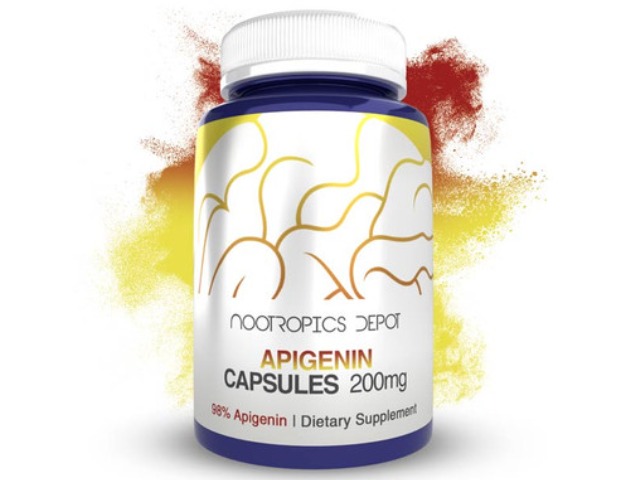
Nootropics Depot Apigenin Capsules
Shop Now →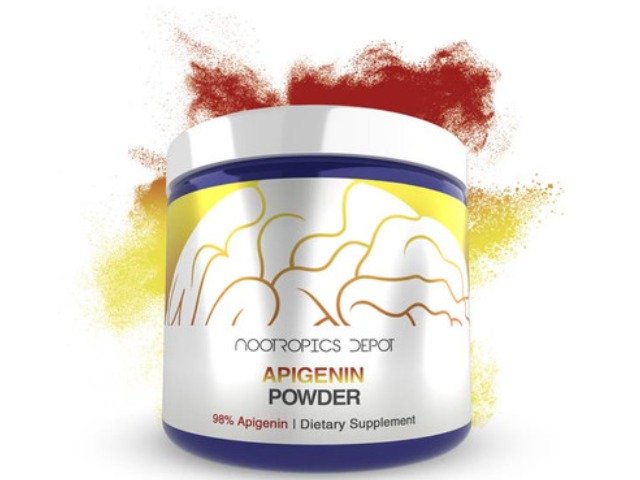
Nootropics Depot Apigenin Powder | Minimum 98% Apigenin
Shop Now →Disclosure: These are affiliate links. I earn a small commission if you purchase — at no extra cost to you. I only recommend products I personally use or have thoroughly researched.
Research & Studies
This section includes 4 peer-reviewed studies referenced in our analysis.