
- Elevates NAD+ levels to support cellular energy production
- Supports physical performance and exercise endurance
- Promotes healthy aging and neuroprotection
- May improve sleep quality
- Supports mitochondrial function and DNA repair
I hit forty and started forgetting why I walked into rooms. Not occasionally — regularly. I’d open my laptop, stare at the screen, and genuinely have no idea what I sat down to do. My energy cratered by 2pm every single day, and no amount of coffee was fixing it.
Then I stumbled across a concept that reframed everything: NAD+ decline. Turns out, by middle age, your levels of this critical cellular fuel drop by 40–60%. Your cells are literally running on a half-empty tank. NMN — nicotinamide mononucleotide — is one of the most direct ways to fill it back up. But does the science actually hold up, or is this another overhyped longevity supplement? Let me break down what I’ve found after years of digging into the research and personal experimentation.
The Short Version: NMN is a direct precursor to NAD+, the coenzyme essential for cellular energy, DNA repair, and healthy aging. Human trials consistently show it raises NAD+ levels and may improve physical performance and sleep quality. It’s best suited for adults 35+ looking for long-term cellular health support rather than an immediate cognitive boost. The sweet spot for most people is 250–500mg daily.
What Is Nicotinamide Mononucleotide?
NMN is a naturally occurring molecule — a nucleotide made up of nicotinamide, ribose, and a phosphate group. Your body already makes it. It’s also found in trace amounts in foods like edamame, broccoli, avocado, and cabbage, though you’d need to eat absurd quantities to match a supplement dose.
What makes NMN matter is what it becomes. NMN is a direct precursor to NAD+ (nicotinamide adenine dinucleotide), a coenzyme involved in over 500 enzymatic reactions in your body. NAD+ is essential for converting food into cellular energy, repairing damaged DNA, regulating your circadian rhythm, and activating longevity proteins called sirtuins. Without enough NAD+, nothing in your cells works at full capacity.
Here’s the problem: NAD+ levels plummet as you age. The research on this is unambiguous. By the time you’re 50, you may have half the NAD+ you had at 20. This decline is linked to virtually every hallmark of aging — mitochondrial dysfunction, increased inflammation, impaired DNA repair, and cognitive decline.
The modern era of NMN research traces back to Shin-ichiro Imai’s work at Washington University. His 2016 landmark mouse study demonstrated that long-term NMN administration mitigated age-associated physiological decline across multiple organ systems. Since then, the field has exploded — with human trials confirming that oral NMN reliably elevates NAD+ levels and the FDA confirming in September 2025 that NMN is lawful for sale as a dietary supplement in the US.
How Does Nicotinamide Mononucleotide Work?
Think of NAD+ like the battery that powers every cell in your body. NMN is the charger. When you take NMN, you’re plugging your cells back in.
Here’s what happens at the molecular level. NMN enters your gut and gets absorbed through a dedicated transporter called Slc12a8 — a protein expressed about 100-fold higher in the small intestine than in other tissues. This was a critical discovery published in Nature Metabolism in 2019 by Imai’s team, because it meant NMN doesn’t just passively diffuse into cells. Your body has built specific infrastructure to absorb it. Once inside, NMN adenylyltransferases (NMNATs) convert NMN directly into NAD+ in a single enzymatic step.
This matters because of something called the salvage pathway — your body’s primary recycling system for NAD+. Here’s the cycle: NAD+ gets consumed by enzymes like sirtuins, PARPs (DNA repair enzymes), and CD38. Nicotinamide gets released as a byproduct. Then the rate-limiting enzyme NAMPT converts nicotinamide back into NMN, and NMNATs convert NMN back into NAD+. The bottleneck is NAMPT — it slows down with age. When you supplement NMN directly, you bypass that bottleneck entirely.
So what does more NAD+ actually do for your brain? Three big things. First, it fuels sirtuins — particularly SIRT1 — which regulate gene expression, reduce neuroinflammation, and support mitochondrial function. Second, it supports PARP-mediated DNA repair, which is critical for neuronal health. A 2023 study in Neuron found that NMN supplementation rescued NAD+ levels and alleviated aging-associated blood-brain barrier leakage. Third, it directly supports your mitochondria — the energy factories in every neuron. Better mitochondrial function means better energy production, cleaner cellular housekeeping, and less oxidative stress.
Pro Tip: An interesting recent finding — when researchers used isotope-labeled NMN, they found increases in unlabeled NAD+ metabolites. This suggests NMN may also stimulate your body’s own NAD+ production through an unknown signaling pathway, not just serve as a direct precursor. You’re potentially getting a two-for-one effect.
Benefits of Nicotinamide Mononucleotide
Let me be straight with you about the evidence here, because there’s a lot of hype in this space and I think honesty builds more trust than cheerleading.
NAD+ Elevation — The Strongest Evidence
This is the benefit you can bank on. Multiple human RCTs consistently demonstrate that NMN raises NAD+ levels. A dose-dependent trial testing 300, 600, and 900mg doses showed statistically significant NAD+ increases at all doses by day 30 and 60 (p ≤ 0.001). This isn’t a “maybe it works” situation. Oral NMN reliably does what it says on the label — it raises NAD+.
Physical Performance — Solid Human Data
The same dose-dependent trial showed significantly increased walking distance on the 6-minute walk test at all dose levels. A separate study in healthy older adults (65–75 years) taking 250mg daily for 12 weeks showed significantly shorter 4-meter walking time. If you’re 40+ and noticing your physical stamina declining, this is a meaningful benefit.
Sleep Quality — Promising but Limited
Improvements in sleep quality were reported in the 250mg/day older adult study. This aligns with NAD+‘s role in circadian rhythm regulation and with what many long-term users report anecdotally. Not enough data for a strong claim, but the mechanism makes sense.
Metabolic Health — The Mixed Bag
Here’s where I have to pump the brakes. A 2024 meta-analysis of 12 RCTs with 513 participants found no significant benefit on fasting glucose, fasting insulin, HbA1c, HOMA-IR, or lipid profiles. One small trial in postmenopausal women with prediabetes showed improved muscle insulin sensitivity, but the overall metabolic picture is underwhelming so far.
Cognitive Function — The Honest Truth
The animal data is genuinely impressive — reduced amyloid plaque burden, preserved synapses, improved neurovascular coupling, protected blood-brain barrier integrity. A 2021 study in Cancer Research showed NMN prevented cisplatin-induced cognitive impairments by restoring NAD+ levels and supporting neurogenesis. But human cognitive trials? Modest at best. Larger, longer studies are needed before I’d call NMN a nootropic in the traditional sense.
Reality Check: A 2024 meta-analysis concluded there may be an “exaggeration of the benefits of NMN supplementation” in the field. NMN reliably raises NAD+, but translating that into dramatic clinical outcomes in humans has been harder than the mouse studies suggested. This doesn’t mean NMN is useless — it means you should approach it as a long-game cellular health investment, not a quick fix.
How to Take Nicotinamide Mononucleotide
Dosage
Start at 250mg daily. This is the minimum effective dose demonstrated in human trials. Most people do well in the 250–500mg range. Studies have tested up to 1,200mg with good safety profiles, but no additional benefit has been clearly shown above 900mg.
| Goal | Daily Dose |
|---|---|
| Starting / maintenance | 250mg |
| Standard supplementation | 250–500mg |
| Higher dose protocol | 600–900mg |
Timing
Take it in the morning. NAD+ metabolism follows a circadian pattern, and morning dosing aligns with your body’s natural rhythm. Some users report sleep disruption when taking NMN late in the day due to its energy-supporting effects. You can take it with or without food — the Slc12a8 transporter handles absorption either way.
Forms
Standard oral capsules and powder are the best-studied form. Full stop. Sublingual formulations claim about 30% direct absorption, but no clinical trials have validated this delivery route. Liposomal versions showed an 84% NAD+ increase in one small study and may offer 3–5x better bioavailability, but the evidence is thin. Enteric-coated capsules are designed to bypass stomach acid, but again, limited comparative data.
Insider Tip: NMN degrades to nicotinamide at room temperature — and nicotinamide may actually inhibit sirtuins, which is the opposite of what you want. Store your NMN in a cool, dry place away from light, and refrigerate it if you’re keeping it longer than three months. This alone can make the difference between a supplement that works and expensive powder that does nothing.
Cycling
No evidence suggests cycling is necessary. Within clinical study timeframes up to 12 months, no tolerance development has been documented and NAD+ levels remain elevated with consistent use. Some people follow 5-on/2-off or 3-weeks-on/1-week-off protocols, but these are theoretical, not evidence-based.
Side Effects and Safety
NMN has a clean safety profile in human trials at doses up to 1,200mg daily. The most common issue is mild GI discomfort — some nausea, occasional loose stools, or abdominal discomfort, particularly when starting. These typically resolve within a few days.
Less common: headache, skin flushing, or cold-like symptoms. Rare across trials.
No serious adverse events have been identified in any human study to date. That said, the longest trials have only run about 12 weeks, so long-term safety beyond a year hasn’t been formally established.
Important: If you have active cancer or are undergoing cancer treatment, talk to your oncologist before taking NMN. While animal studies haven’t shown tumor promotion, elevated NAD+ could theoretically support rapidly dividing cells. Most longevity researchers recommend pausing NAD+ precursors during active cancer treatment. Additionally, if you’re on blood sugar-lowering medications, blood pressure medications, or thyroid medications, coordinate with your doctor — NMN may influence these pathways. There is no human safety data for pregnancy or lactation.
Quality Warning
This is a real problem in the NMN market. A ChromaDex investigation found that 14 of 22 NMN brands tested contained less than 1% of the claimed amount, and 3 had zero NMN detected. Look for third-party Certificates of Analysis, purity of 98% or higher (reputable brands hit 99%+), and confirmation that it’s the β-NMN form — that’s the biologically active isomer. If a brand can’t show you their testing, move on.
Stacking Nicotinamide Mononucleotide
NMN + Resveratrol — The Classic Pairing
This is the combination with the strongest theoretical basis. Resveratrol activates SIRT1, one of the key longevity proteins. But SIRT1 needs NAD+ as a cofactor to function. NMN supplies the NAD+. It’s like putting gas in the car (NMN) and pressing the accelerator (resveratrol). Typical dosing: 250–500mg NMN alongside 250–500mg trans-resveratrol. Take resveratrol with a fat-containing meal — it’s fat-soluble and poorly absorbed otherwise.
NMN + TMG (Trimethylglycine)
NAD+ metabolism increases demand on your methylation cycle. TMG donates methyl groups to support this process. This is especially relevant if you’re taking higher NMN doses (500mg+), have MTHFR gene variants, or have elevated homocysteine. A 1:1 ratio works well — 500mg NMN with 500mg TMG.
Other Solid Pairings
- NMN + CoQ10 — complementary mitochondrial support through different mechanisms
- NMN + Vitamin D3 — both decline with age, synergistic metabolic benefits
- NMN + Spermidine — NAD+ restoration paired with autophagy promotion covers two major aging pathways
- NMN + Quercetin — senolytic activity alongside cellular energy restoration
What to Skip
Don’t stack NMN with high-dose niacin — it’s redundant and may cause uncomfortable flushing. Similarly, combining NMN + NR + niacinamide simultaneously is overkill. Pick your NAD+ precursor and stick with it. There’s no evidence that stacking multiple precursors produces better results than a single one at an adequate dose.
My Take
NMN is one of the most interesting supplements in the longevity space, and I’ve been taking it consistently for over two years. Here’s what I’ll tell you honestly.
I noticed steadier energy first — not a stimulant buzz, but a real reduction in that afternoon crash that used to flatten me. Sleep quality improved around month two. The cognitive effects? Subtle. I’d describe it as reduced brain fog rather than enhanced brainpower. If you’re expecting a limitless pill, you’ll be disappointed. If you’re looking for a long-term investment in cellular health that compounds over months and years, NMN delivers.
This is best suited for adults 35 and older who are noticing the early signs of aging — flagging energy, slower recovery, that creeping sense that your brain isn’t as sharp as it used to be. If you’re 25 and healthy, your NAD+ levels are probably fine, and your money is better spent on sleep optimization, exercise, and a solid diet.
If you’ve already got your foundations locked in — good gut health, consistent sleep, managed stress — and you want to add something that addresses aging at the cellular level, NMN is one of the most evidence-backed options available. Start at 250mg in the morning, give it 8–12 weeks, and pay attention to energy and sleep quality as your early indicators.
One thing I wish I’d known earlier: quality matters enormously in this space. With nearly two-thirds of tested brands containing essentially no NMN, buying cheap is buying nothing. Invest in a brand with transparent third-party testing, store it properly, and be patient. The benefits of restoring your NAD+ levels aren’t dramatic overnight — they’re the slow, steady reclaiming of cellular function that your body has been quietly losing for years.
Recommended NMN Products
I know how frustrating it is to sort through dozens of brands making the same claims. These are the ones I've personally vetted — because quality is the difference between results and wasted money.
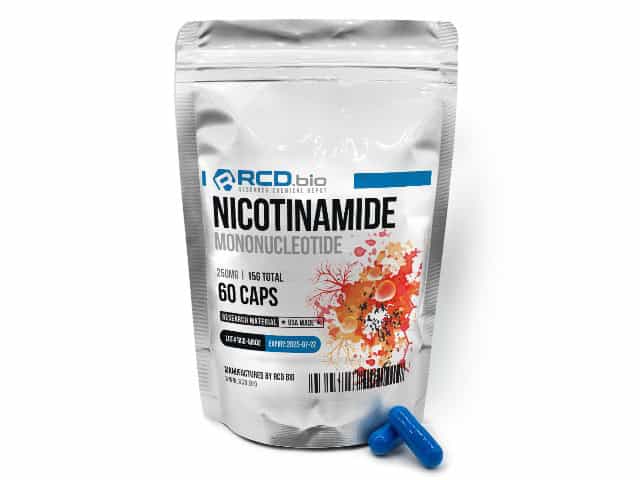
Nicotinamide Mononucleotide by Research Chemical Depot
Shop Now →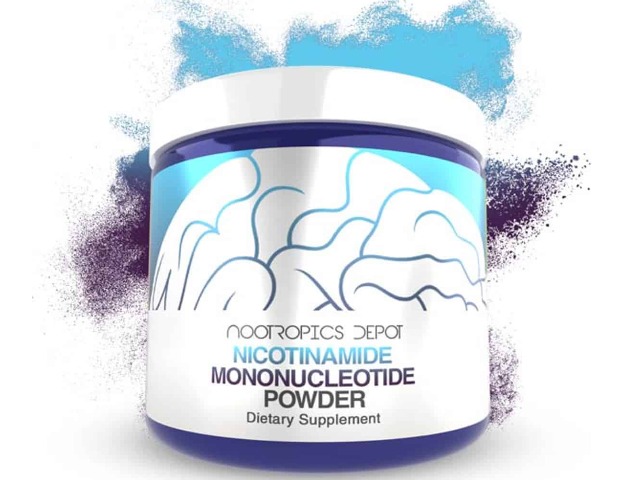
NMN- Nootropics Depot
Shop Now →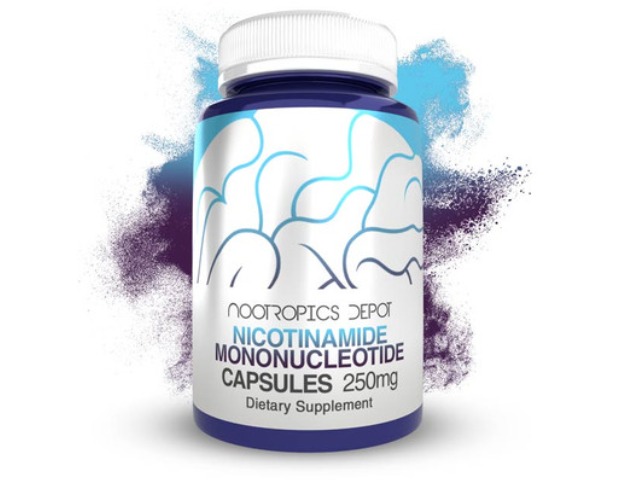
Buy Nicotinamide Mononucleotide (Nmn) Capsules by Nootropics Depot
Shop Now →Disclosure: These are affiliate links. I earn a small commission if you purchase — at no extra cost to you. I only recommend products I personally use or have thoroughly researched.