
- Supports dopamine and norepinephrine synthesis
- Protects neurons from oxidative damage and excitotoxicity
- Enhances sustained attention and mental vitality
- Reduces anxiety and supports stress resilience
- Recycles glutathione and vitamin E antioxidant networks
Here’s something most people don’t think about: your brain is hoarding vitamin C. Seriously — it maintains concentrations ten times higher than what’s floating around in your blood, and it has a dedicated transport system to make sure it stays that way.
When I first learned that, it completely changed how I thought about this “boring” vitamin. We all know vitamin C fights colds (sort of), but the reason your brain is stockpiling the stuff like a doomsday prepper has almost nothing to do with your immune system. It has everything to do with how your brain makes the neurotransmitters that keep you focused, motivated, and mentally sharp.
The Short Version: Ascorbic acid (Vitamin C) is an essential cofactor for producing dopamine, norepinephrine, and serotonin — the neurotransmitters that drive focus, motivation, and mood. It also protects neurons from oxidative damage and recycles your body’s other key antioxidants. The biggest cognitive gains come from correcting deficiency, not megadosing. At 250–1,000mg daily, it’s one of the highest-value, lowest-risk additions to any nootropic foundation.
What Is Ascorbic Acid?
Ascorbic acid is vitamin C — the same nutrient that saved 18th-century sailors from losing their teeth to scurvy. Chemically, it’s a six-carbon molecule (C₆H₈O₆) that humans lost the ability to synthesize millions of years ago due to a mutation in the gene for L-gulonolactone oxidase. Most animals make their own. We don’t. That makes dietary intake non-negotiable.
The name itself tells you the origin story: “a-scorbic” literally means “anti-scurvy.” Scottish physician James Lind documented in 1757 that citrus fruits cured the disease, but it wasn’t until 1928 that Hungarian biochemist Albert Szent-Györgyi isolated the actual compound from adrenal glands. He eventually extracted over three pounds of pure crystalline vitamin C from paprika peppers and earned the 1937 Nobel Prize for the work.
But here’s where it gets interesting for us. The RDA for vitamin C — the amount that prevents scurvy — is 75–90mg per day. That’s the floor to not get sick. The amount your brain actually wants for optimal neurotransmitter production? That’s a very different conversation. And it’s the conversation most doctors aren’t having.
Reality Check: Vitamin C is not going to make you feel like Bradley Cooper in Limitless. It’s foundational support — more like making sure the factory that builds your neurotransmitters has all the raw materials it needs. If the factory is already fully stocked (you eat plenty of fruits and vegetables), extra shipments won’t speed up the assembly line much. But if you’re running low? Everything slows down.
How Does Ascorbic Acid Work?
Think of your brain’s neurotransmitter production like a relay race. Tyrosine gets passed to dopamine, dopamine gets passed to norepinephrine, tryptophan gets passed to serotonin. At every handoff, there’s an enzyme doing the work — and most of those enzymes need vitamin C to function.
The most important job is the conversion of dopamine into norepinephrine. The enzyme responsible — dopamine β-hydroxylase (DBH) — literally cannot work without ascorbic acid donating electrons to the reaction. No vitamin C, no norepinephrine. It’s that simple.
But it goes deeper. Vitamin C also recycles tetrahydrobiopterin (BH4), which is the essential cofactor for both tyrosine hydroxylase (the rate-limiting enzyme for dopamine and norepinephrine) and tryptophan hydroxylase (rate-limiting for serotonin). In animal models, low brain ascorbate reduces cortical dopamine and norepinephrine by roughly 33%. That’s a third of your motivation and focus chemicals — gone — because of one nutrient deficiency.
Beyond neurotransmitter synthesis, vitamin C acts as a neuromodulator. It inhibits glutamate binding to the NMDA receptor, which provides a buffer against excitotoxicity — one of the primary drivers of neuronal damage in conditions from chronic stress to neurodegeneration. It also promotes the release of acetylcholine and norepinephrine from synaptic vesicles, and plays a role in myelin sheath formation — the insulation that determines how fast your nerve signals travel.
And then there’s the antioxidant network. Vitamin C doesn’t just scavenge free radicals on its own — it regenerates vitamin E from its oxidized form and recycles glutathione (your body’s master antioxidant) back to its active state. It’s the linchpin of the entire antioxidant recycling system.
Pro Tip: If you’re already supplementing glutathione or NAC, adding vitamin C amplifies their effects. Vitamin C recycles the glutathione they help produce, so you get more mileage from each one.
Benefits of Ascorbic Acid
Sustained Attention and Mental Vitality
This is where the human RCT evidence is strongest. A randomized, double-blind, placebo-controlled trial with 214 healthy young adults found that vitamin C supplementation significantly increased attention, work absorption, and performance on cognitive tasks requiring sustained focus. If you’ve ever felt like your brain checks out halfway through a demanding task, this is the mechanism worth paying attention to.
Anxiety Reduction
Multiple RCTs support a genuine anxiolytic effect. One double-blind trial found vitamin C significantly reduced anxiety levels compared to placebo. Another 14-day study using 3,000mg/day of sustained-release ascorbic acid in 42 healthy adults showed increased mood scores and decreased subjective stress. The mechanism likely relates to vitamin C’s role in modulating cortisol and supporting adrenal function.
Cognitive Protection Over Time
A meta-analysis found that dietary vitamin C intake lowered Alzheimer’s disease risk with a pooled relative risk of 0.83 — meaning a 17% reduction. A major 2017 systematic review examining 50 studies consistently showed that people with adequate vitamin C status performed better on cognitive tests than those who were deficient. The pattern is clear: maintaining sufficient levels protects your brain. Letting them slip does not.
Mood Support
Observational data links higher vitamin C intake with lower depression rates. However — and this is where honesty matters — RCTs adding vitamin C to existing antidepressant therapy showed no significant additive benefit. Where it does seem to help is in people with subclinical depressive symptoms who aren’t on medication, likely by supporting the serotonin and norepinephrine synthesis pathways from the ground up.
Insider Tip: Recent 2025 research found nonlinear dose-response associations between vitamin C intake and cognitive function in older adults, with effect modification by smoking status. Translation: there’s a sweet spot, and more isn’t always better. If you smoke, your needs are significantly higher.
Neuroprotection
Animal research shows vitamin C supplementation alleviates cognitive deficits and restores myelin integrity in models of neurotoxicity, and reduces brain injury in neonatal hypoxic-ischemic damage models. These are animal studies — not proof it’ll do the same in humans — but they consistently point to vitamin C as a legitimate neuroprotectant, not just an immune supplement.
How to Take Ascorbic Acid
Dosage ranges:
- General maintenance: 250–500mg/day
- Cognitive optimization: 500–1,000mg/day
- Stress and anxiety support: 1,000–3,000mg/day (based on RCT evidence)
- Upper limit: 2,000mg/day without medical supervision
Timing: Split your dose — morning and evening with food. Vitamin C is water-soluble and gets excreted quickly, so a single large dose means most of it ends up in your toilet. Two smaller doses maintain more consistent plasma levels throughout the day.
Forms matter more than you’d think:
Plain L-ascorbic acid is the most studied form, the cheapest, and perfectly fine for most people at moderate doses. If you’re going above 1,000mg, consider liposomal vitamin C — research shows approximately 1.77x higher bioavailability because it absorbs through a different pathway (endocytosis) that bypasses the saturation point of regular absorption. At 500mg, your body only absorbs about 73% of standard vitamin C. At 1,250mg, it drops to 46%. Liposomal gets around this.
If vitamin C gives you stomach trouble, buffered forms like sodium ascorbate or calcium ascorbate are gentler. One caveat: sodium ascorbate delivers 111mg of sodium per 1,000mg dose, so watch out if you’re on a sodium-restricted diet.
Skip the premium-priced Ester-C — studies show no meaningful absorption advantage over plain ascorbic acid.
Starting protocol: Begin at 250–500mg daily for one week, then increase to your target dose. This minimizes the GI adjustment period. No cycling is needed — this is an essential nutrient, not a stimulant. There’s no tolerance buildup.
Insider Tip: Here’s the absorption hack most people miss: at 200mg or less, your body absorbs nearly 100%. Taking 200mg five times a day delivers more total vitamin C to your cells than a single 1,000mg dose. If you want maximum efficiency from cheap L-ascorbic acid, smaller and more frequent wins.
Side Effects and Safety
The good news: vitamin C has one of the best safety profiles of any supplement. The bad news: it’s not zero-risk at high doses.
Common side effects (usually above 1,000mg): diarrhea, nausea, stomach cramps, bloating, and heartburn. These are dose-dependent — back off and they resolve.
The kidney stone question: This is the big one. Supplemental vitamin C at or above 1,000mg/day in men is associated with a 19% increased risk of kidney stones. Vitamin C partially converts to oxalate in the body, and calcium oxalate stones are the most common type. If you have a history of kidney stones, keep your dose under 1,000mg/day.
Important: If you have hemochromatosis or any iron overload condition, be very cautious with vitamin C supplementation. It dramatically enhances non-heme iron absorption, which can push already-elevated iron levels into dangerous territory. Same applies to G6PD deficiency, thalassemia, and sickle cell disease.
Drug interactions to know about:
- Warfarin: High-dose vitamin C may reduce its blood-thinning efficacy
- Aluminum-containing antacids: Vitamin C increases aluminum absorption — avoid this combination
- Chemotherapy drugs: Vitamin C may interfere with doxorubicin, cisplatin, and methotrexate — always consult your oncologist
- Statins + niacin combos: May reduce the HDL-raising effects
Pregnancy and nursing: Safe at recommended levels (85mg pregnant, 120mg nursing) with an upper limit of 2,000mg/day. No increased birth defect risk at studied doses.
Stacking Ascorbic Acid
Vitamin C plays exceptionally well with others. Here’s why:
Glutathione + Vitamin C: These two recycle each other in a continuous loop — vitamin C regenerates oxidized glutathione back to its active form, and glutathione returns the favor. Stacking them at a 2:1 ratio (vitamin C to glutathione) creates a self-reinforcing antioxidant system that’s greater than the sum of its parts.
L-Tyrosine + Vitamin C: This is the logical catecholamine stack. Tyrosine is the raw material for dopamine; vitamin C is the cofactor that converts dopamine into norepinephrine. You’re feeding both ends of the production line. If you’re using tyrosine for focus and motivation, vitamin C ensures the enzymatic machinery actually works.
NAC + Vitamin C: NAC is a glutathione precursor; vitamin C recycles the glutathione that NAC helps produce. Together they build and maintain your primary antioxidant defense network.
Alpha-GPC + Vitamin C: Vitamin C promotes acetylcholine release from synaptic vesicles while Alpha-GPC provides the choline substrate. Complementary cholinergic support.
Vitamin E + Vitamin C: The classic pair. Vitamin E handles lipid-soluble antioxidant defense (cell membranes), vitamin C handles water-soluble (cytoplasm and blood). Vitamin C regenerates spent vitamin E, extending its protective lifespan.
Avoid combining high-dose vitamin C with high-dose iron supplements unless you specifically need enhanced iron absorption — you risk pushing iron levels too high. Also separate from copper supplements, as vitamin C may reduce copper absorption.
My Take
Vitamin C is one of those supplements that doesn’t get the respect it deserves in nootropic circles because it doesn’t feel like anything. There’s no buzz, no rush, no “I can suddenly see the Matrix” moment. But behind the scenes, it’s doing more heavy lifting for your cognitive function than most of the flashy compounds people spend ten times as much money on.
In my experience, adding consistent vitamin C to my stack didn’t produce a dramatic overnight transformation. What it produced was a subtle but real sense of steadier energy, better stress tolerance, and that hard-to-pin-down feeling of just functioning more smoothly. It wasn’t until I tracked my mood and focus scores over a few months that the pattern became obvious.
Here’s who I think benefits most: if you eat fewer than five servings of fruits and vegetables daily (that’s most of us), if you’re under chronic stress, if you smoke, or if you’re over 50 — your vitamin C levels are likely suboptimal, and correcting that will do more for your cognition than you’d expect. If you already eat a pristine diet rich in produce, the gains from supplementation will be more modest.
My practical recommendation: 500mg of plain L-ascorbic acid twice daily with meals. It’s cheap, well-studied, and covers the gap between what most people eat and what the brain actually wants. If you’re doing a high-dose protocol for stress or you want maximum absorption, go liposomal.
This is the definition of a foundational nootropic — not exciting, not expensive, not optional. Get this right before you start chasing the exotic stuff. Your dopamine and norepinephrine synthesis pathways will thank you.
Recommended Vitamin C Products
I know how frustrating it is to sort through dozens of brands making the same claims. These are the ones I've personally vetted — because quality is the difference between results and wasted money.
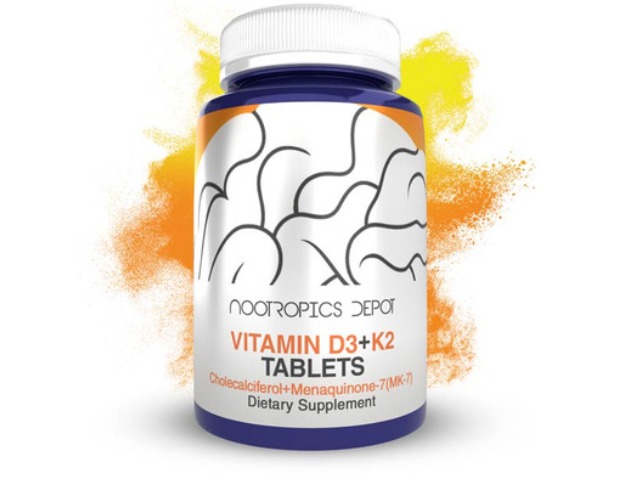
Buy Vitamin D3 + K2 with Vitamin C Supplement by Nootropics Depot
Shop Now →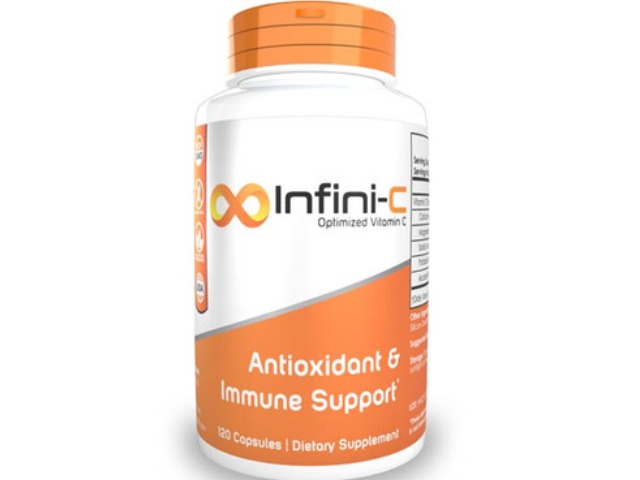
Infini-C Capsules | 500mg | Optimized Vitamin C | Immune by Nootropics Depot
Shop Now →Disclosure: These are affiliate links. I earn a small commission if you purchase — at no extra cost to you. I only recommend products I personally use or have thoroughly researched.