
- Supports focus and mental clarity under stress
- May enhance cognitive performance during multitasking
- Supports dopamine and norepinephrine production
- May improve working memory in demanding situations
- Supports alertness during sleep deprivation
Three years ago, I was preparing for a podcast interview with a neuroscientist while simultaneously troubleshooting website issues and responding to a backlog of emails. My brain felt like a computer with 47 browser tabs open—everything was lagging, nothing was getting done well.
That’s when I discovered L-Tyrosine. Not as a daily “make me smarter” pill, but as a targeted tool for exactly those high-pressure, multitasking situations where my brain needed to perform despite being maxed out.
Turns out, there’s actually solid research backing this specific use case—and equally good reasons why it doesn’t work the way most people expect.
The Short Version: L-Tyrosine is an amino acid that your brain uses to make dopamine, norepinephrine, and epinephrine. Research shows it works best for maintaining cognitive performance during acute stress, multitasking, and sleep deprivation—not for boosting baseline brain function. Think of it as cognitive insurance for demanding situations, not a daily enhancement pill.
What Is L-Tyrosine?
L-Tyrosine is a non-essential amino acid, which means your body can make it from another amino acid called phenylalanine. You also get it from protein-rich foods like chicken, turkey, fish, dairy, eggs, nuts, and seeds.
Here’s what makes it interesting for brain function: tyrosine is the raw material your brain uses to manufacture three critical neurotransmitters—dopamine, norepinephrine, and epinephrine (also called adrenaline). These are collectively called catecholamines, and they’re heavily involved in motivation, focus, alertness, and stress response.
The theory behind supplementing with L-Tyrosine is straightforward. When you’re under stress—whether physical, mental, or from sleep deprivation—your brain burns through catecholamines faster than usual. If the supply of tyrosine runs low, catecholamine production slows down, and cognitive performance suffers. By supplementing with extra tyrosine, you give your brain the building blocks it needs to keep production humming.
The U.S. military has actually studied this extensively, looking at whether tyrosine could help soldiers maintain performance in extreme conditions. That research, along with studies on multitasking and sleep deprivation, forms the backbone of what we know about how tyrosine works.
Reality Check: L-Tyrosine isn’t going to make you smarter or more focused under normal, well-rested conditions. Your body already produces plenty of tyrosine when you’re functioning normally. This is a tool for specific high-demand situations, not a daily cognitive enhancer for most people.
How Does L-Tyrosine Work?
Think of your brain’s catecholamine system like a factory. The factory (your neurons) uses tyrosine as raw material to manufacture three products: dopamine, norepinephrine, and epinephrine. Under normal conditions, the factory has plenty of raw materials and everything runs smoothly.
But when you’re stressed, multitasking, or sleep-deprived, the factory is running triple shifts. Production demand skyrockets. The raw material supply—tyrosine—gets depleted faster than it can be replenished through normal diet and internal production.
This is where the “catecholamine depletion hypothesis” comes in. Multiple studies, particularly from the Netherlands and the U.S. military research programs, have shown that acute stress depletes brain catecholamine stores. When those stores run low, cognitive performance drops—particularly working memory, attention, and executive function.
Supplemental L-Tyrosine works by flooding the system with extra raw materials. Once absorbed, tyrosine crosses the blood-brain barrier (that protective filter around your brain) via the large neutral amino acid transporter. Inside neurons, an enzyme called tyrosine hydroxylase converts tyrosine into L-DOPA, which then becomes dopamine. Dopamine can be further converted into norepinephrine, and then into epinephrine.
Here’s the important part: tyrosine hydroxylase is the rate-limiting enzyme in this pathway. That means it controls how fast the whole process happens. Under normal conditions, you already have enough tyrosine, and the enzyme is the bottleneck. But under stress, when catecholamine demand is high and stores are depleted, having extra tyrosine available can help maintain production rates.
A 2015 study in the Journal of Psychiatric Research found that tyrosine supplementation specifically helped with cognitive flexibility—the ability to switch between tasks—during demanding conditions. A 1999 study published in Pharmacology Biochemistry and Behavior showed that 150mg/kg of tyrosine (about 10 grams for a 150-pound person) improved working memory and information processing during a cognitively demanding task.
In plain English: L-Tyrosine doesn’t upgrade your brain’s hardware. It keeps the existing system running closer to normal when conditions would otherwise cause it to sputter. That’s why it shines during acute stress but doesn’t do much when you’re already well-rested and functioning normally.
Benefits of L-Tyrosine
Let me be crystal clear about what the research actually shows, because there’s a lot of hype around tyrosine that doesn’t match the evidence.
Cognitive Performance Under Acute Stress — This is where tyrosine has the strongest evidence. Multiple studies show it helps maintain working memory, attention, and cognitive flexibility when you’re under pressure. A 1989 military study found that soldiers performing in cold stress conditions showed improved performance with tyrosine supplementation. Another study from 1995 showed similar benefits for cognitive performance in heat stress and after intense physical exertion.
Evidence level: Strong (human RCTs in multiple stressor conditions)
Multitasking Performance — A 1999 study published in Pharmacology Biochemistry and Behavior found that tyrosine supplementation improved performance on a demanding multitasking simulation. Participants who took tyrosine made fewer errors and showed better working memory compared to placebo. This aligns with the catecholamine depletion theory—multitasking is cognitively demanding and burns through dopamine and norepinephrine quickly.
Evidence level: Moderate (fewer studies, but well-designed)
Sleep Deprivation — Several military-funded studies have looked at whether tyrosine can help maintain cognitive function during sleep deprivation. A 1995 study found that a single dose of tyrosine (150mg/kg) helped maintain performance on cognitive tasks for about three hours during sleep deprivation. Not a replacement for actual sleep, but potentially useful for short-term situations where sleep isn’t an option.
Evidence level: Moderate (multiple studies, but specific populations)
Mood and Depression — This is where things get murky. Some older studies suggested tyrosine might help with depression, but more recent research hasn’t consistently replicated those findings. A 2015 review noted that while tyrosine can influence neurotransmitter synthesis, this doesn’t reliably translate into mood improvements in depressed individuals. The brain is more complex than just “add more dopamine precursor = better mood.”
Evidence level: Weak (inconsistent findings, doesn’t hold up in systematic reviews)
Baseline Cognitive Enhancement — Here’s what most people want tyrosine to do, and here’s where the evidence falls apart. If you’re well-rested, not stressed, and functioning normally, tyrosine supplementation doesn’t appear to meaningfully boost cognitive performance. Your brain already has sufficient tyrosine and catecholamines. Adding more raw material doesn’t speed up a factory that’s already running at normal capacity.
Evidence level: Weak (studies consistently show no benefit for baseline enhancement)
| Benefit | Evidence Level | Best Research |
|---|---|---|
| Stress resilience | Strong | Multiple military studies (1989-1999) |
| Multitasking | Moderate | Colzato et al. 2013, Deijen et al. 1999 |
| Sleep deprivation | Moderate | Neri et al. 1995 |
| Mood/depression | Weak | Inconsistent findings |
| Baseline cognition | Weak | No consistent benefit shown |
Insider Tip: The research consistently uses doses around 100-150mg per kilogram of body weight for acute effects. For a 150-pound (68kg) person, that’s roughly 7-10 grams—much higher than the “500mg daily” you’ll see on most supplement bottles. The lower doses might work for some people, but the robust research effects were seen at significantly higher amounts.
How to Take L-Tyrosine
This is where most people get it wrong. They take 500mg every morning and wonder why nothing happens. Let me save you the disappointment and wasted money.
Dosage
For acute cognitive support under stress:
- Standard dose: 500-1000mg taken 30-60 minutes before a cognitively demanding situation
- Research-backed dose: 100-150mg per kilogram of body weight (roughly 7-10 grams for a 150-pound person)
- Conservative approach: Start with 500mg and increase to 1000-2000mg if needed
The gap between “what studies used” and “what’s practical” is significant. The military studies that showed clear benefits used massive doses—10 grams or more. Most people report benefits at lower doses (1-2 grams), but the effect size is probably smaller.
Timing
Take L-Tyrosine on an empty stomach, 30-60 minutes before you need the cognitive support. Food—especially protein—competes for the same transporters that carry tyrosine across the blood-brain barrier. If you take it with a meal, you’ll get less tyrosine into your brain.
This is a “take it when you need it” compound, not a “take it every day regardless” compound. Save it for:
- High-stress presentations or meetings
- Intense study sessions or exams
- Days when you’re sleep-deprived but need to perform
- Situations requiring sustained multitasking
Forms
There are two main forms on the market:
| Form | Absorption | Cost | Best For |
|---|---|---|---|
| L-Tyrosine (free form) | Good | $ | Most people—standard and effective |
| N-Acetyl L-Tyrosine (NALT) | Theoretically better, actually worse | $$ | Skip it—research shows it’s less effective |
You’d think the fancy acetylated form would be superior, right? Nope. Studies show NALT has lower bioavailability than plain L-Tyrosine. The free form is cheaper and works better. Stick with that.
Cycling
You don’t need to cycle L-Tyrosine if you’re using it situationally (a few times per week for specific high-demand situations). If you were taking it daily at high doses, there’s a theoretical concern about downregulation of tyrosine hydroxylase or dopamine receptors, but the research on this is limited.
My approach: use it tactically, not habitually. That naturally prevents any tolerance issues and keeps it effective when you actually need it.
Starting Protocol
Week 1-2: Try 500mg on an empty stomach before a moderately demanding task. Notice if you feel any difference—sharper focus, better ability to handle multiple things at once, less mental fatigue.
Week 3-4: If 500mg wasn’t noticeable, increase to 1000mg. If 1000mg still doesn’t do much, you might be someone who needs higher doses (closer to the research doses of 2-3 grams), or tyrosine might just not be your compound.
Pro Tip: Keep a log of when you take tyrosine, what dose, and what you’re doing that day. The effect is subtle enough that you might not notice it in the moment, but over time you’ll see patterns—“Oh, every time I took 1000mg before a stressful meeting, the meeting went smoother.” That’s your signal that it’s working.
Side Effects & Safety
L-Tyrosine is generally well-tolerated, but it’s not side-effect-free. Here’s what you need to know:
Common side effects (usually at higher doses):
- Mild headaches
- Nausea or upset stomach
- Jitteriness or restlessness (similar to too much caffeine)
- Fatigue or lethargy (paradoxical, but some people experience this)
Who should avoid L-Tyrosine:
- Hyperthyroidism: Tyrosine is a building block for thyroid hormones. If you already produce too much thyroid hormone, adding more tyrosine could theoretically make it worse.
- Taking MAOIs: Monoamine oxidase inhibitors (a class of antidepressants) interact with catecholamines. Combining them with tyrosine could lead to dangerous spikes in blood pressure.
- Taking L-DOPA for Parkinson’s: Tyrosine and L-DOPA compete for the same transporter to cross the blood-brain barrier. Taking them together reduces the effectiveness of the medication.
- Graves’ disease or thyroid tumors: Same concern as hyperthyroidism—tyrosine contributes to thyroid hormone production.
Anxiety considerations:
Here’s something the supplement companies won’t tell you: for some people, especially those prone to anxiety, tyrosine can make things worse. Why? Because it increases catecholamines—including norepinephrine and epinephrine, which are directly involved in the stress and anxiety response.
If you’re already anxious, flooding your system with precursors to stress hormones might not be the move. Start with a low dose and pay attention to how you feel.
Pregnancy and nursing:
There isn’t great data on tyrosine supplementation during pregnancy or nursing. It’s probably fine at dietary levels, but megadoses haven’t been studied. If you’re pregnant or nursing, talk to a doctor before supplementing.
Important: If you have a genetic condition called phenylketonuria (PKU), do not take L-Tyrosine or L-Phenylalanine without medical supervision. Your body can’t properly metabolize these amino acids, and supplementation could be dangerous.
Stacking L-Tyrosine
Tyrosine works well in combination with other compounds that support focus and stress resilience. But as always, understand why you’re combining things, not just throwing random nootropics together.
Tyrosine + Caffeine
This is probably the most common and effective stack. Caffeine blocks adenosine receptors (reducing the “I’m tired” signal) and also promotes dopamine and norepinephrine release. Tyrosine provides the raw materials to make those neurotransmitters. Together, they’re synergistic for alertness and focus.
Typical doses: 100-200mg caffeine + 500-1000mg L-Tyrosine
Tyrosine + Rhodiola Rosea
Rhodiola is an adaptogen that helps regulate the stress response and may reduce catecholamine depletion. Combining it with tyrosine gives you both the raw materials (tyrosine) and the regulatory support (rhodiola) for better stress resilience.
Typical doses: 500-1000mg L-Tyrosine + 200-400mg rhodiola extract (standardized to 3% rosavins)
Tyrosine + Alpha-GPC or CDP-Choline
Alpha-GPC and CDP-Choline support acetylcholine production, which is critical for memory and focus. Tyrosine supports dopamine and norepinephrine. Together, you’re covering multiple neurotransmitter systems involved in cognitive performance.
Typical doses: 500-1000mg L-Tyrosine + 300-600mg Alpha-GPC
Tyrosine + L-Theanine
L-Theanine promotes relaxation without sedation and can smooth out the jitteriness that sometimes comes with stimulating compounds. If you find tyrosine makes you a bit too wired, adding theanine can balance it out.
Typical doses: 500-1000mg L-Tyrosine + 200-400mg L-Theanine
What to AVOID:
- Tyrosine + strong stimulants (beyond moderate caffeine): Combining tyrosine with powerful stimulants can overstimulate catecholamine systems and lead to anxiety, racing heart, or crashes.
- Tyrosine + 5-HTP or L-Tryptophan: Both tyrosine and 5-HTP/tryptophan compete for the same transporter to cross the blood-brain barrier. Taking them together reduces the effectiveness of both. If you’re stacking for mood support, take them at different times of day (tyrosine in the morning, 5-HTP in the evening).
- Tyrosine + other dopamine precursors (like Mucuna Pruriens): You’re just stacking more of the same mechanism. It doesn’t add much and increases the risk of overstimulation.
Pro Tip: If you’re stacking tyrosine with anything else, start by testing each compound individually first. That way, you’ll know what each one does for you and can troubleshoot if the stack doesn’t work as expected.
My Take
I’ve been using L-Tyrosine on and off for about four years, and here’s what I’ve learned: it’s incredibly useful when used correctly, and incredibly disappointing when used the way most people try to use it.
If you’re hoping for a daily cognitive boost—something that makes you sharper, more motivated, and more focused every single day—tyrosine is not that compound. You’ll take it for a week, feel nothing, and wonder why you wasted your money.
But if you’re looking for a tool to help you maintain performance during specific high-demand situations—a brutal work deadline, a sleep-deprived day where you still need to function, a high-pressure presentation—tyrosine is legitimately useful.
For me, it’s most noticeable during podcast recording days when I’m doing back-to-back interviews. There’s a mental fatigue that sets in after two or three intense conversations, and tyrosine helps me stay sharp through interview four and five. It’s not a dramatic “whoa, I can feel this” effect. It’s more like… the usual decline doesn’t happen as fast.
Who should try L-Tyrosine:
- People who deal with high-stress work situations regularly
- Students preparing for exams or working on intense projects
- Anyone who occasionally needs to perform well despite being sleep-deprived
- People who multitask heavily and feel mentally drained afterward
Who should probably skip it:
- People looking for daily baseline cognitive enhancement (it doesn’t do that)
- People prone to anxiety (tyrosine can make it worse)
- Anyone with hyperthyroidism or taking thyroid medication
- People who want a “feel-good” or motivation boost (tyrosine isn’t a mood enhancer)
My honest assessment: Tyrosine is a solid tactical nootropic with good research backing for specific use cases. It’s not magic, it’s not going to transform your brain, and it doesn’t work for everyone. But when it works—when you’re genuinely depleted and need to keep going—it works well.
If you’re going to try it, do it right. Take it on an empty stomach, use it situationally, and start with at least 1000mg (the 500mg caps you’ll find everywhere are probably underdosed for most people). Give it a fair shot in the right context.
And remember: no supplement fixes broken foundations. If you’re chronically stressed, sleep-deprived, or dealing with gut issues, fix those first. Tyrosine is a tool for acute situations, not a band-aid for chronic dysfunction.
Recommended L-Tyrosine Products
I know how frustrating it is to sort through dozens of brands making the same claims. These are the ones I've personally vetted — because quality is the difference between results and wasted money.
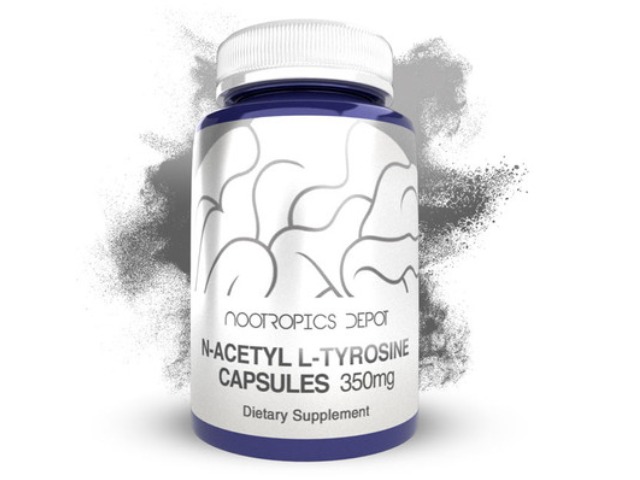
Buy N-Acetyl L-Tyrosine Capsules 350mg | Nalt by Nootropics Depot
Shop Now →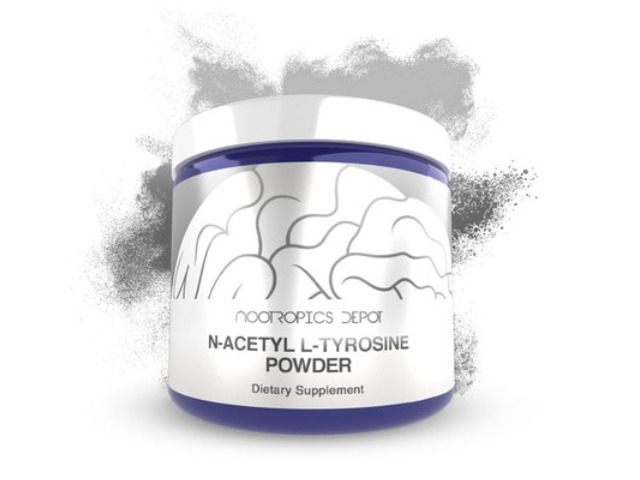
Buy N-Acetyl L-Tyrosine Powder (Nalt) by Nootropics Depot
Shop Now →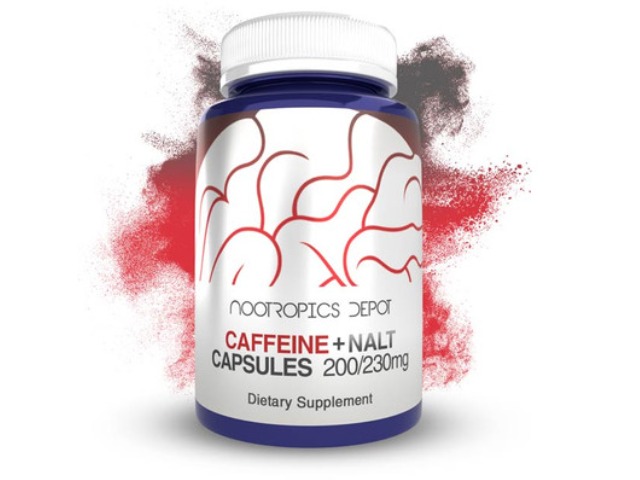
Caffeine + N-Acetyl L-Tyrosine Capsules by Nootropics Depot
Shop Now →Disclosure: These are affiliate links. I earn a small commission if you purchase — at no extra cost to you. I only recommend products I personally use or have thoroughly researched.
Research & Studies
This section includes 7 peer-reviewed studies referenced in our analysis.