
- May reduce neuroinflammation and brain fog
- Supports cognitive function in aging and impaired populations
- Potent 5-lipoxygenase inhibition for systemic inflammation
- May protect neurons through Nrf2/HO-1 antioxidant pathway activation
- Supports joint health and mobility
I used to think brain fog was just what happened when you didn’t sleep enough or drank too much coffee. So I’d slam another espresso, push through, and wonder why my thinking still felt like wading through wet cement by 2 PM.
It wasn’t until I started digging into the research on neuroinflammation that I realized something uncomfortable: my brain wasn’t tired — it was inflamed. And no amount of caffeine was going to fix that.
That realization is what led me down the Boswellia rabbit hole. This ancient resin — the same stuff that’s been burned in churches and temples for thousands of years — turns out to be one of the most potent natural anti-inflammatory compounds ever studied. And the emerging research on what it does for your brain? Genuinely exciting.
The Short Version: Boswellia serrata is an Ayurvedic resin extract containing boswellic acids (especially AKBA) that powerfully inhibit 5-lipoxygenase, a key driver of neuroinflammation. Early clinical trials show cognitive improvements in Alzheimer’s patients and TBI recovery, though evidence in healthy adults is still limited. It’s best used as a long-term neuroprotective anti-inflammatory, always taken with fatty food to boost absorption by up to 387%. Prioritize bioavailability-enhanced forms like Aflapin over generic extracts.
What Is Boswellia Serrata?
Boswellia serrata is a deciduous tree native to the dry, hilly regions of India, the Middle East, and North Africa. When you score the bark, it weeps an oleo-gum-resin that hardens into the yellowish lumps we call frankincense. That resin has been used in Ayurvedic medicine for over 3,000 years — long before anyone knew what a lipoxygenase enzyme was.
In Ayurveda, Boswellia is classified as Shallaki and prescribed as a rejuvenative for arthritis, respiratory conditions, digestive problems, and — interestingly — mental clarity. The ancient Egyptians referenced it in the Papyrus Ebers around 1500 BCE. And yes, it’s one of the three gifts the Magi brought, right alongside gold and myrrh.
Modern pharmacology caught up in the 1990s when German and Indian researchers isolated the active compounds — a family of pentacyclic triterpenic acids called boswellic acids. The star of the show is 3-O-acetyl-11-keto-β-boswellic acid, mercifully abbreviated as AKBA. This single compound turned out to be one of the most potent natural inhibitors of the 5-lipoxygenase (5-LOX) enzyme ever discovered.
Most people encounter Boswellia as a joint health supplement — and that’s where the bulk of clinical evidence sits. But the nootropic angle is where things get interesting, because the same inflammatory pathways that destroy cartilage also damage neurons. If you’re dealing with persistent brain fog, poor focus, or cognitive decline — and especially if you suspect inflammation is part of the picture — Boswellia deserves a serious look.
How Does Boswellia Serrata Work in Your Brain?
Think of inflammation like a fire alarm system in your body. When it works correctly, it alerts you to threats and then shuts off. But when it gets stuck in the “on” position — chronic, low-grade inflammation — it starts damaging the very things it’s supposed to protect. Including your neurons.
Boswellia attacks this problem through several overlapping mechanisms, and understanding them helps you see why it’s more than just “another anti-inflammatory.”
The 5-LOX connection — Boswellia’s signature move. Your body produces inflammatory molecules called leukotrienes via the 5-lipoxygenase pathway. These leukotrienes drive neuroinflammation, contribute to blood-brain barrier dysfunction, and are elevated in conditions from Alzheimer’s to traumatic brain injury. AKBA is the most potent natural 5-LOX inhibitor identified to date. It essentially tells that stuck fire alarm to shut off.
This matters because most common anti-inflammatories — ibuprofen, curcumin, aspirin — primarily target the COX pathway (cyclooxygenases). Boswellia hits the other major inflammatory pathway. That’s why combining it with COX-targeting compounds can be so effective — you’re covering both flanks.
Beyond 5-LOX, Boswellia also:
- Suppresses NF-κB, the master switch that turns on inflammatory gene expression throughout the body and brain
- Inhibits acetylcholinesterase (AChE), the enzyme that breaks down acetylcholine — your primary learning and memory neurotransmitter. This mechanism is shared with Alzheimer’s drugs like donepezil
- Activates the Nrf2/HO-1 pathway, essentially switching on your cells’ built-in antioxidant defense system to protect neurons from oxidative damage
- Modulates Wnt/β-catenin signaling, which supports neuronal survival, synaptic plasticity, and may reduce amyloid-beta aggregation
- Reduces pro-inflammatory cytokines IL-6, TNF-α, and IL-1α — measurably, in human clinical trials
In plain English: Boswellia doesn’t just mask inflammation — it intervenes at multiple upstream switches that control whether your brain stays in “damage mode” or shifts toward repair. The AChE inhibition is particularly interesting because it means Boswellia has a direct, not just indirect, mechanism for supporting cognitive function.
Pro Tip: Boswellic acids are fat-soluble. Taking Boswellia on an empty stomach means most of it passes right through you. Taking it with a meal containing fat increases absorption by up to 387%. This isn’t a minor detail — it’s the difference between a supplement that works and one that doesn’t.
Benefits of Boswellia Serrata
Let me be straight about the evidence here. Boswellia’s anti-inflammatory effects are well-established across dozens of clinical trials. Its cognitive benefits are more recent and the evidence base is smaller. Here’s the honest breakdown:
Cognitive Function in Alzheimer’s Disease — Promising But Early
A 2023 double-blind, placebo-controlled trial gave 85 Alzheimer’s patients either boswellic acids (K-Vie™) or placebo for six months. The treatment group showed a 3.1-point improvement on the MMSE (a standard cognitive assessment) and significant improvements in daily functioning. More impressively, their inflammatory markers dropped substantially — IL-6 (p<0.0001), TNF-α (p=0.0005) — and their amyloid-β42/β40 ratio improved, suggesting actual disease-modifying effects.
Cognitive Recovery After Traumatic Brain Injury — Encouraging Pilot Data
A 2022 pilot trial in 80 TBI patients found significant improvements in memory (RAVLT), processing speed (DSST), and executive function (TMT-B) over three months of boswellic acid supplementation compared to placebo.
Cognition in Aging Adults — Combination Evidence
A 2025 trial found that Boswellia combined with Terminalia chebula improved visual learning, processing speed, delayed recall, and sleep quality in 100 aging adults — with measurable increases in BDNF (brain-derived neurotrophic factor).
Reality Check: Both cognitive trials used patented extracts from companies that funded the research. That doesn’t mean the results are wrong — industry-funded trials can be rigorous — but it means we need independent replication before getting too excited. The biological plausibility is strong, but if you’re a healthy 30-year-old hoping for a noticeable brain boost, temper your expectations. The evidence is strongest for people who already have elevated neuroinflammation.
Anti-Inflammatory Effects — The Strongest Evidence
This is where Boswellia really shines. Multiple large RCTs demonstrate significant reductions in inflammatory markers, improvements in osteoarthritis symptoms, and even MRI-confirmed cartilage preservation. If you have systemic inflammation — and brain fog, joint pain, or gut issues suggest you might — this anti-inflammatory activity is likely how Boswellia improves cognitive function: by removing the inflammatory brake on your brain’s performance.
Brain Tumor-Related Edema — A Unique Application
A 2025 systematic review examined Boswellia as a potential corticosteroid-sparing agent for radiation-induced cerebral edema. This is a niche application, but worth mentioning because it highlights how potent Boswellia’s anti-inflammatory effects are — strong enough to be studied as an alternative to steroids in neuro-oncology.
How to Take Boswellia Serrata Without Wasting Your Money
Dosing Boswellia correctly is where most people go wrong, because the form you choose matters as much as the dose.
Dosage
- Standard extract (≥65% boswellic acids): 300–500mg, two to three times daily (600–1,500mg total)
- 5-Loxin (30% AKBA): 100–250mg per day
- Aflapin (20% AKBA, enhanced bioavailability): 100–250mg per day
- For cognitive applications specifically: 300–500mg per day of a high-AKBA extract
Start at the lower end for the first two weeks and work up. There’s no benefit to megadosing.
Timing and Absorption
Always take with a fat-containing meal. I can’t stress this enough. The bioavailability difference is enormous — up to 387% improvement with dietary fat. Take it with breakfast if you eat eggs and avocado, or with dinner if that’s your fattier meal. Split doses work well for sustained levels throughout the day.
Effects aren’t immediate. Most people notice anti-inflammatory benefits within 1–4 weeks. Cognitive benefits, based on the clinical trial data, take longer — expect 4–12 weeks of consistent dosing before assessing whether it’s working for you.
Choosing the Right Form
This is where it gets interesting. Here’s what you need to know:
Aflapin (20% AKBA) outperforms 5-Loxin (30% AKBA) in head-to-head clinical trials, despite having a lower AKBA percentage. Why? Because Aflapin’s formulation dramatically improves bioavailability. It’s not about how much AKBA is in the capsule — it’s about how much actually gets into your bloodstream. Both are manufactured by Laila Nutraceuticals and well-studied.
Generic “Boswellia extract” without a specified AKBA percentage is a gamble. You might be getting effective levels of active compounds, or you might be getting expensive sawdust. Look for products that list both total boswellic acid percentage and AKBA percentage on the label.
Insider Tip: If a Boswellia product doesn’t tell you its AKBA content, that’s a red flag. Reputable manufacturers are proud of their standardization and put it front and center. Also, phytosome and liposomal formulations are worth the premium — they solve the same bioavailability problem that makes Aflapin superior to 5-Loxin.
Cycling
There’s no strong evidence that you need to cycle Boswellia. Clinical trials running up to six months show sustained efficacy without tolerance issues. Some practitioners suggest eight weeks on, two weeks off, but that’s tradition rather than data. If it’s working, keep taking it. Discontinue two weeks before any scheduled surgery due to potential blood-thinning effects.
Side Effects and Safety
Boswellia has a remarkably clean safety profile for something this pharmacologically active.
Common side effects are mild and GI-related: stomach discomfort, nausea, acid reflux, occasional diarrhea. These usually resolve within a few days and are less common when taken with food (which you should be doing anyway for absorption).
Serious adverse events are rare. No significant safety concerns emerged in clinical trials lasting up to six months.
Important: Avoid Boswellia during pregnancy — it may stimulate uterine contractions. Discontinue two weeks before surgery due to potential anticoagulant effects. If you’re on blood thinners (warfarin, etc.), NSAIDs, or immunosuppressants, talk to your doctor before adding Boswellia — it can have additive effects with all three drug classes.
Drug interactions to watch:
- Blood thinners: Increased bleeding risk — space Boswellia at least two hours from anticoagulant medications
- NSAIDs: Additive anti-inflammatory effects with potential for increased GI side effects
- Immunosuppressants: Additive immune modulation — requires medical oversight
- CYP450-metabolized drugs: Boswellia may inhibit certain liver enzymes, potentially increasing blood levels of other medications
Stacking Boswellia Serrata
Boswellia is a natural team player because its primary mechanism — 5-LOX inhibition — is complementary to most other anti-inflammatory and nootropic compounds.
The Classic Pairing: Boswellia + Curcumin
This is the most studied synergy and the one I’d recommend starting with. Boswellia targets the 5-LOX/leukotriene pathway while curcumin targets the COX-2/prostaglandin pathway. Together, you’re covering both major inflammatory cascades. A phase I study confirmed no adverse pharmacokinetic interactions between the two. Typical stack: 500mg Boswellia + 500–1,000mg curcumin (bioavailability-enhanced form), twice daily with meals.
The Neuroprotective Stack: Boswellia + Lion’s Mane + Omega-3s
Lion’s Mane provides neurotrophic support via NGF stimulation while Boswellia clears the inflammatory environment that prevents neurogenesis. Add omega-3 fatty acids (which produce anti-inflammatory resolvins through yet another pathway) and you’ve got a triple-mechanism neuroprotective stack. Users commonly report enhanced mental clarity and reduced brain fog with this combination.
The Memory Stack: Boswellia + Bacopa Monnieri
Bacopa enhances cholinergic signaling and supports memory consolidation. Since Boswellia also inhibits acetylcholinesterase, there’s a theoretical synergy for preserving acetylcholine levels from two different angles. Both require consistent dosing over weeks to show benefits — this is a patience stack, not a quick fix.
What NOT to Stack
Avoid combining Boswellia with high-dose NSAIDs (redundant and increased GI risk), multiple blood thinners without medical oversight, or stacking several immunomodulatory compounds at once without understanding how they interact. More anti-inflammatory isn’t always better — there’s a point where you’re suppressing beneficial inflammatory responses too.
My Take
I’ll be honest — I didn’t start taking Boswellia for my brain. I started taking it because my knees sounded like a bag of microwave popcorn every time I went up stairs. The cognitive benefits were a surprise.
About six weeks into daily Aflapin (250mg, twice daily with meals), I noticed something subtle: the afternoon brain fog that had become my normal started lifting. Not dramatically — this isn’t modafinil. More like someone cleaned a window I didn’t realize was dirty. Thoughts connected a little faster. I could hold complex ideas in working memory a bit longer.
Was it placebo? Maybe. But my inflammatory markers (which I track through regular bloodwork) dropped noticeably over the same period, and the mechanism connecting reduced neuroinflammation to improved cognition is well-established. I think the cognitive improvements were real, and I think they came from turning down systemic inflammation rather than from any direct nootropic effect.
Who should try Boswellia: Anyone dealing with brain fog alongside other inflammatory symptoms (joint pain, gut issues, skin problems). Post-concussion recovery. Adults over 50 noticing cognitive slowing. Anyone already taking curcumin who wants to cover the 5-LOX pathway too.
Who should probably try something else first: If you’re a healthy 25-year-old looking for acute cognitive enhancement, Boswellia isn’t your compound. Look at Lion’s Mane for neurotrophin support, Bacopa for memory, or even Alpha-GPC for direct cholinergic boost. Boswellia is a slow-burn neuroprotective — it shines when there’s inflammation to fix.
My recommendation: Start with Aflapin (not generic extract — the bioavailability difference is real), 250mg twice daily with your fattiest meals. Give it 8 weeks before judging. Stack it with curcumin for the best-supported synergy. Track your inflammatory markers if you can — objective data beats subjective impressions every time. And address your foundations first — the best anti-inflammatory supplement in the world can’t outrun a diet of processed food and four hours of sleep.
Recommended Boswellia Products
I know how frustrating it is to sort through dozens of brands making the same claims. These are the ones I've personally vetted — because quality is the difference between results and wasted money.
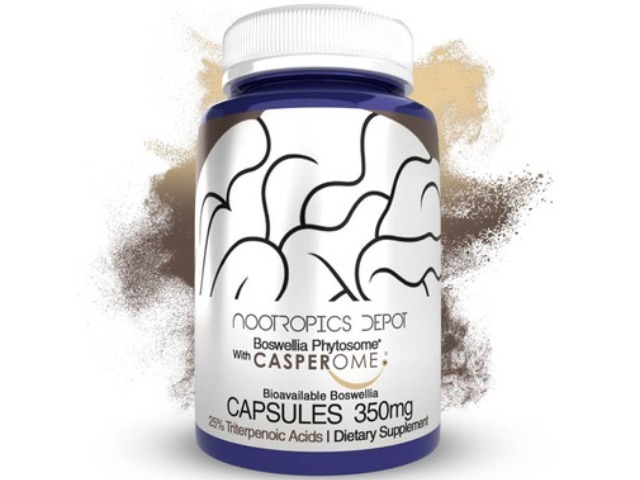
Disclosure: These are affiliate links. I earn a small commission if you purchase — at no extra cost to you. I only recommend products I personally use or have thoroughly researched.
Research & Studies
This section includes 7 peer-reviewed studies referenced in our analysis.