
- Reduces anxiety and stress without sedation
- Supports focus and mental clarity
- Promotes neuroprotection and brain health
- Modulates inflammation through multiple pathways
- Enhances endocannabinoid tone via FAAH inhibition
I’ll be honest — when I first heard people calling CBG the “mother of all cannabinoids,” I rolled my eyes so hard I almost pulled a muscle. The cannabis world loves its hype. Every month there’s a new “miracle cannabinoid” that’s supposed to change everything.
But then I actually dug into the research. And then I tried it. And I had one of those quiet moments where I thought, “Okay — this one’s different.”
Not because CBG hit me over the head with some dramatic effect. The opposite, actually. It was the cleanest, clearest sense of calm focus I’d gotten from any cannabinoid. No brain fog. No couch-lock. Just… less noise.
If you’ve been curious about CBG but didn’t know whether it was worth the steep price tag or just another overhyped extract, this guide breaks down everything I’ve found — the real science, the honest limitations, and exactly how to use it.
The Short Version: Cannabigerol (CBG) is a non-psychoactive cannabinoid that acts as the biochemical parent of THC, CBD, and most other cannabinoids. The first human clinical trial found 20mg significantly reduced anxiety and stress while actually improving memory — no impairment, no sedation. It’s best positioned as a daytime nootropic cannabinoid for people who want calm focus without the drowsiness that CBD can cause.
What Is Cannabigerol?
CBG is a cannabinoid produced by the cannabis plant, but it plays a role that no other cannabinoid does. Its acidic form — cannabigerolic acid (CBGA) — is literally the chemical starting point from which the plant builds THC, CBD, CBC, and dozens of other compounds. As the plant matures, enzymes convert most of that CBGA into other cannabinoids, leaving only about 1% as CBG in a typical harvest.
That’s why the “mother cannabinoid” nickname actually holds up. It’s not marketing — it’s biochemistry.
CBG was first isolated in 1964 by Raphael Mechoulam and Yehiel Gaoni at the Weizmann Institute in Israel — the same lab that identified THC. But while THC and CBD got decades of intense research attention, CBG sat on the shelf. It was too scarce in the plant to study easily, and nobody was breeding high-CBG hemp strains yet.
That changed in the last several years. The legalization wave, combined with advances in hemp breeding, has made CBG-rich cultivars commercially viable. Breeders now produce hemp strains with 15%+ CBG content, and as of 2024, there are 10 clinical trials registered on ClinicalTrials.gov specifically for cannabigerol. The research is catching up fast.
Reality Check: CBG is genuinely promising, but we’re still in the early innings. One good human clinical trial and one large patient survey don’t make a slam dunk. Most of what you’ll read about CBG online extrapolates heavily from animal and cell studies. I’ll be clear throughout this guide about what’s actually proven in humans versus what’s still theoretical.
How Does Cannabigerol Work?
Here’s what makes CBG fascinating from a pharmacology standpoint: it doesn’t just do one thing. Most nootropics hit one or two receptor systems. CBG operates across at least six different pathways simultaneously, which explains why its effects feel so balanced rather than one-dimensional.
The focus and calm system. CBG is a highly potent agonist at alpha-2 adrenergic receptors — the same system that drugs like clonidine and guanfacine target for ADHD and anxiety. This is likely a major driver behind the “calm alertness” that users describe. It’s also a moderately potent antagonist at 5-HT1A serotonin receptors, which contributes to its anxiolytic effects. A 2023 study in Frontiers in Pharmacology confirmed that CBG’s anxiety-reducing effects in rats were mediated specifically through this serotonin receptor.
The endocannabinoid boost. CBG inhibits FAAH, the enzyme that breaks down anandamide — your body’s own “bliss molecule.” By slowing anandamide’s breakdown, CBG essentially turns up the volume on your natural endocannabinoid signaling. It also acts as a weak partial agonist at both CB1 and CB2 receptors, but not strongly enough to produce any psychoactive effect.
The anti-inflammatory engine. CBG reduces inflammation through multiple routes: it inhibits COX-1 and COX-2 enzymes (the same targets as ibuprofen), modulates iNOS activity, and — according to a 2025 study — works through the JAK/STAT/NFκB signaling pathway. For the brain specifically, this means less neuroinflammation, which is increasingly recognized as a root driver of cognitive decline and mood disorders.
Think of CBG like a skilled audio engineer adjusting multiple channels at once — turning down the inflammation and anxiety signals while subtly boosting the focus and endocannabinoid channels. No single adjustment is dramatic. But the overall mix sounds noticeably better.
What Cannabigerol Actually Does to Your Brain (and Body)
Anxiety and Stress Reduction — The Strongest Evidence
The landmark finding so far is the 2024 clinical trial out of Washington State University, published in Scientific Reports. This was a proper double-blind, placebo-controlled crossover design with 34 healthy adults. Participants received either 20mg of hemp-derived CBG or placebo, and researchers measured anxiety, stress, and cognitive performance.
The results: CBG produced a 26.5% reduction in anxiety from baseline, with significant effects showing up at 20, 45, and 60 minutes post-dose. Stress levels dropped significantly compared to placebo. And here’s the part that caught my attention — there was zero evidence of cognitive impairment. Participants actually recalled more words on a memory task after CBG than after placebo.
That last point matters. A lot. Most anxiolytic compounds — benzodiazepines, alcohol, even high-dose CBD — reduce anxiety at the cost of some mental sharpness. CBG appears to do it while preserving (or possibly enhancing) cognitive function.
Pain and Inflammation — Promising but Preclinical
A large patient survey of 127 CBG-predominant cannabis users found that 40.9% used it primarily for chronic pain, with the majority rating it superior to conventional medications. That’s meaningful anecdotal data, but it’s not controlled clinical evidence.
The preclinical picture is stronger. CBG’s multi-target anti-inflammatory activity — hitting COX enzymes, iNOS, and the JAK/STAT/NFκB pathway — suggests genuine potential for inflammatory pain conditions. It also acts on multiple TRP channels (TRPV1, TRPV2, TRPA1) involved in pain sensing.
Neuroprotection — The Long Game
A 2025 study in the International Journal of Molecular Sciences found that CBG attenuated memory impairments, reduced hippocampal neuronal loss, and enhanced neuronal plasticity in a mouse model of cerebral ischemia. It also showed neuroprotective effects in a Huntington’s disease model.
This is animal data, so I won’t oversell it. But CBG’s combination of anti-inflammatory, antioxidant, and PPARγ-activating properties gives it a plausible neuroprotective profile that’s worth watching as the research matures.
Insider Tip: If neuroprotection is your primary goal, CBG probably works best as part of a broader stack alongside proven neuroprotectives like Lion’s Mane and Bacopa Monnieri, rather than as a standalone.
What the Patient Survey Tells Us
The Russo et al. (2022) survey of 127 regular CBG users provides useful real-world context. The top reported uses were anxiety (51.2%), chronic pain (40.9%), depression (33.1%), and insomnia (30.7%). Between 73–80% of respondents rated CBG as superior to conventional medications for their conditions. And 84.3% reported zero withdrawal symptoms — a notable contrast to many pharmaceutical anxiolytics.
Is a self-selected survey definitive? No. But 127 people consistently reporting the same cluster of benefits — calm, focus, pain relief, mood improvement — aligns neatly with what the pharmacology predicts.
How to Take Cannabigerol Without Wasting Your Money
Dosage
The clinically tested dose is 20mg, and that’s where I’d point most people. Here’s a practical framework:
- Starting dose: 5–10mg daily for the first week (assess tolerance)
- Standard dose: 10–25mg daily (this is where most people land)
- Higher doses: 25–50mg daily (some users report additional benefit; limited clinical data at these levels)
Timing and Absorption
This is where a lot of people go wrong. CBG has relatively low oral bioavailability — probably in the 13–19% range based on what we know from CBD pharmacokinetics. But you can significantly improve absorption with one simple move.
Take it with fat. A pharmacokinetic study published in Cannabis and Cannabinoid Research found that dietary fat had a greater effect on cannabinoid absorption than the delivery vehicle itself. A spoonful of peanut butter, an avocado, some olive oil on a salad — anything with a meaningful fat content will boost how much CBG actually reaches your bloodstream.
Sublingual is better than swallowing. If you’re using a tincture, hold it under your tongue for 60–90 seconds before swallowing. This bypasses first-pass liver metabolism and gets more compound into circulation.
Morning or early afternoon. Unlike CBD, which can be mildly sedating, CBG has an energizing, focus-promoting profile. Most users prefer it as a daytime supplement. Taking it at night might actually interfere with sleep for some people.
Pro Tip: Water-soluble (nano-emulsion) CBG formulations offer roughly 1.5–3x higher bioavailability than standard oil tinctures, with faster onset. They cost more, but you can use a lower dose to get the same effect — which may actually save money in the long run.
Forms
- Full-spectrum CBG oil: Best overall value. Contains trace amounts of other cannabinoids and terpenes for the entourage effect. May contain up to 0.3% THC.
- Broad-spectrum CBG: Same entourage benefits minus the THC. Good option if you’re drug-tested.
- CBG isolate: Pure CBG, precise dosing. Misses the entourage effect but eliminates any THC concern.
- CBG/CBD blends: Popular formulation that pairs CBG’s daytime focus with CBD’s calming effects.
Cycling
No formal cycling protocol exists for CBG, and the patient survey data suggests tolerance isn’t a significant issue. I’d recommend using it daily for 4–8 weeks to properly assess its effects, then taking a week off periodically if you want to maintain sensitivity.
The Side Effects Nobody Warns You About
Actually, the good news here is that CBG’s side effect profile is remarkably mild. In the patient survey of 127 users, 44% reported zero side effects. None. That’s unusual for any bioactive compound.
For those who did experience side effects:
- Dry mouth — 16.5% (the classic cannabinoid calling card)
- Sleepiness — 15% (despite CBG’s generally energizing profile, some people respond differently)
- Increased appetite — 11.8%
- Dry eyes — 8.7%
No serious adverse events were reported in either the clinical trial or the patient survey. The clinical trial specifically noted no subjective drug effects or impairment at 20mg.
Important: CBG affects cytochrome P450 liver enzymes, which means it can alter how your body processes other medications. If you’re taking blood pressure medications, blood thinners (especially warfarin), antiepileptics, or diabetes medications, talk to your doctor before adding CBG. The interaction isn’t necessarily dangerous, but drug levels could shift in unpredictable directions.
Who should avoid CBG:
- Pregnant or breastfeeding women (insufficient safety data)
- Anyone scheduled for surgery (potential blood pressure effects)
- People with significant liver disease
- Anyone on multiple medications without physician guidance
Stacking Cannabigerol
CBG plays well with others — its multi-target mechanism means it complements compounds that work through different pathways without too much overlap.
The Best Combinations
CBG + CBD — This is the classic pairing. CBD handles the relaxation and sleep support side while CBG brings focus and mental clarity. Together, they create a more complete cannabinoid experience than either alone. Many users find a 1:1 or 2:1 CBG:CBD ratio works well for daytime productivity with a calm baseline.
CBG + Lion’s Mane — My favorite nootropic stack involving CBG. Lion’s Mane stimulates Nerve Growth Factor production, supporting long-term neuroplasticity. CBG provides acute anti-neuroinflammatory effects and endocannabinoid enhancement. Different mechanisms, complementary goals. Take Lion’s Mane daily for the cumulative neuroprotective benefits, CBG for the immediate focus and calm.
CBG + L-Theanine — Both promote calm focus without sedation, but through completely different systems. L-Theanine works primarily through GABA and glutamate modulation; CBG works through adrenergic, serotonergic, and endocannabinoid pathways. The overlap in subjective experience without mechanistic overlap makes this a clean stack.
CBG + Bacopa Monnieri — Both support memory and neuroprotection. Bacopa’s evidence base for memory enhancement is stronger and more mature, while CBG brings acute anxiolytic effects that Bacopa doesn’t provide as quickly.
What to Avoid
- CBG + high-dose CBN: CBN is strongly sedating. It will counteract CBG’s energizing profile and likely just make you sleepy.
- CBG + blood pressure medications: Additive blood pressure-lowering effects without physician monitoring.
- CBG + strong CYP450 inhibitors (grapefruit juice, certain medications): May unpredictably increase CBG blood levels.
My Take
I’ve been consistently impressed by CBG, and I don’t say that about most individual supplements. Here’s why.
Most cannabinoids push you in one direction — CBD toward relaxation, CBN toward sleep, THC toward… well, you know. CBG is the rare cannabinoid that enhances cognitive function while reducing anxiety. That combination is genuinely hard to find in any single compound, let alone one with this mild of a side effect profile.
Is the evidence base mature? No. We’re working with one solid clinical trial and one good survey. I want to see more. But the pharmacology makes sense, the human data we do have is consistent, and my personal experience matches what the research predicts — a subtle but real improvement in focused calm that I notice most on days I skip it.
Who CBG is best for:
- People who find CBD too sedating for daytime use
- Anyone looking for a non-stimulant focus enhancer
- People dealing with anxiety who want something gentler than pharmaceuticals
- Nootropic enthusiasts looking for a cannabinoid that actually fits a productivity stack
Who should look elsewhere:
- If you need strong pain relief, CBG alone probably won’t cut it — consider a full-spectrum product or targeted PEA stack
- If sleep is your primary concern, you’re better off with CBN or high-dose CBD
- If you’re on multiple medications, the CYP450 interactions make this complicated without physician input
The price point is real — CBG products cost more than CBD because the raw material is harder to produce. But at 20mg per day, even a moderately priced tincture lasts a long time. Start there, give it two weeks, and see if you notice the difference. My guess is you will — not as a lightning bolt, but as a quiet clearing of the mental fog you didn’t realize was there.
Recommended Cannabigerol Products
I know how frustrating it is to sort through dozens of brands making the same claims. These are the ones I've personally vetted — because quality is the difference between results and wasted money.
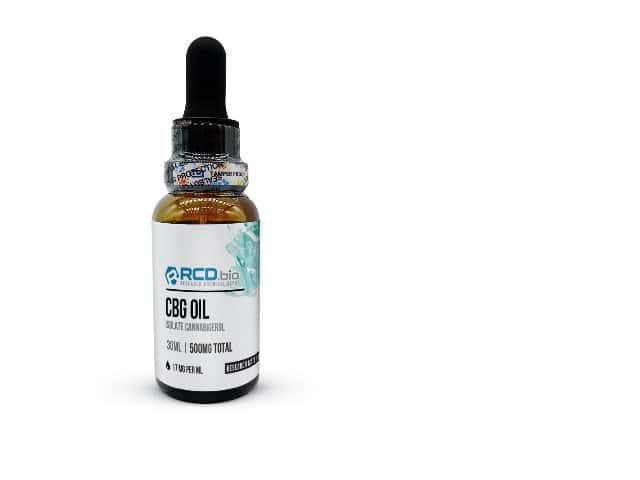
CBG Liquid Isolate Cannabigerol by Research Chemical Depot
Shop Now →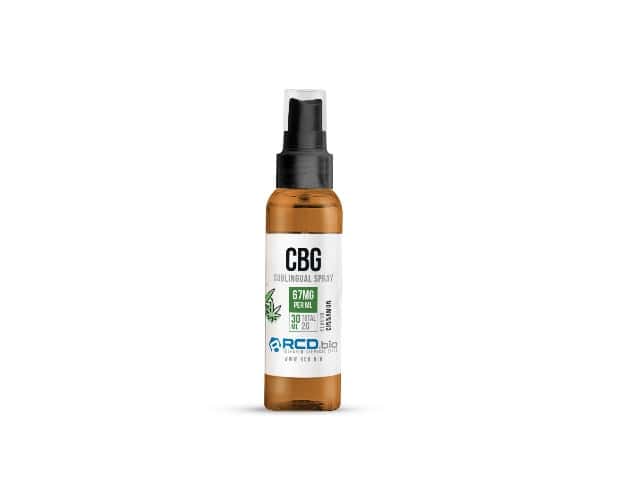
CBG Sublingual Spray by Research Chemical Depot
Shop Now →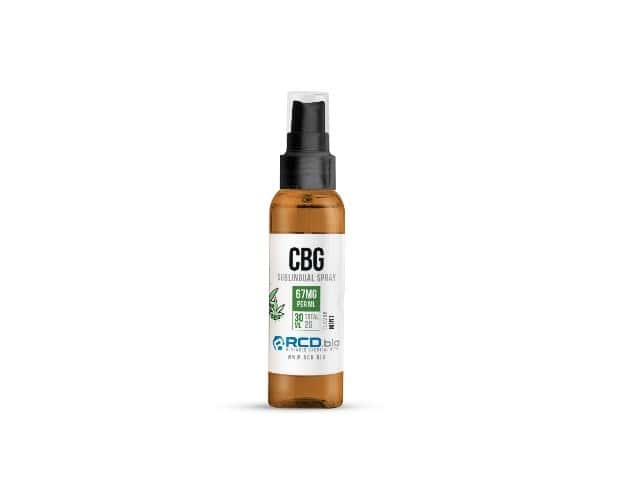
CBG Sublingual Spray Mint Flavor by Research Chemical Depot
Shop Now →Disclosure: These are affiliate links. I earn a small commission if you purchase — at no extra cost to you. I only recommend products I personally use or have thoroughly researched.
Research & Studies
This section includes 3 peer-reviewed studies referenced in our analysis.