
- Supports baseline choline levels and prevents deficiency
- Provides acetylcholine precursor for memory and learning
- Supports cell membrane integrity and liver health
- Affordable choline source for racetam stacking
- Supports fetal brain development during pregnancy
I’m going to be straight with you — choline bitartrate is probably the least sexy supplement I’ve ever written about. There’s no exotic origin story, no cutting-edge research lab, no Silicon Valley biohacker hype. It’s a cheap, unglamorous salt of a nutrient your body literally can’t function without.
And that’s exactly why you should care about it.
Here’s the thing that floored me when I first dug into the research: roughly 90% of Americans aren’t getting enough choline. Nine out of ten. This is an essential nutrient — your brain needs it to make acetylcholine, your liver needs it to not fill up with fat, your cells need it to maintain their membranes — and almost nobody is getting enough from their diet.
Before I understood any of this, I was spending hundreds of dollars on exotic nootropic stacks and wondering why my brain still felt like it was running on dial-up. Turns out, I’d skipped the basics.
The Short Version: Choline L-Bitartrate is the cheapest and most common supplemental form of choline, containing about 41% elemental choline by weight. It’s a solid choice for meeting your baseline choline needs and supporting racetam stacks, but it’s a modest nootropic on its own due to poor blood-brain barrier penetration. If you’re after direct cognitive enhancement, Alpha-GPC or CDP-Choline are better bets — but if you’re on a budget or just want to fill a nutritional gap, bitartrate gets the job done.
What Is Choline L-Bitartrate?
Choline L-Bitartrate is simply choline bound to tartaric acid — a naturally occurring organic acid found in grapes. The tartaric acid part is just the delivery vehicle. What you’re really paying for is the choline itself, and bitartrate gives you about 41 cents of choline for every dollar of powder. That math matters: if you take 2 grams of choline bitartrate, you’re getting roughly 800mg of actual choline.
Choline itself has a surprisingly recent history as a recognized nutrient. It was first isolated from ox bile back in 1862 — the name literally comes from the Greek word for bile, cholē — but it wasn’t until 1998 that the US Institute of Medicine officially classified it as an essential nutrient. That’s only a couple of decades ago. For context, we’ve known about vitamin C since the 1930s. Choline has been called the “forgotten essential nutrient,” and honestly, that label still fits.
Your body can make small amounts of choline on its own, but not nearly enough to cover what it needs. The rest has to come from food — eggs (the single best dietary source), liver, fish, and cruciferous vegetables — or supplements. And since most people aren’t eating liver and egg yolks every day, supplementation makes a lot of sense.
Reality Check: Choline bitartrate isn’t going to make you feel like the guy from Limitless. It’s more like fixing a pothole on a road you drive every day. You won’t notice some dramatic new capability — you’ll just stop losing what you already have.
How Does Choline L-Bitartrate Work?
Think of choline as the raw material your brain needs to build its primary communication chemical. Without enough of it, your neurons are trying to send messages with an empty mailbox.
Here’s what happens when you take choline bitartrate: it gets absorbed in your gut, enters the bloodstream, and eventually reaches your brain — though this last step is where bitartrate falls short compared to other forms. Once choline arrives at your neurons, an enzyme called choline acetyltransferase (ChAT) combines it with acetyl-CoA to produce acetylcholine — the neurotransmitter responsible for memory formation, learning, attention, and muscle control. Research shows that choline uptake peaks about 30 minutes after ingestion, with brain acetylcholine levels rising significantly by 40 minutes and staying elevated for at least 90 minutes.
But acetylcholine production is only one part of the picture. Choline is also a building block for phosphatidylcholine, the most abundant phospholipid in your cell membranes. Every cell in your body needs it. Your liver needs it to package and export triglycerides as VLDL particles — without enough choline, fat literally accumulates in your liver. And choline can be converted to betaine, a methyl donor that helps convert homocysteine to methionine, intersecting with the same folate and B12 pathways your body uses for DNA methylation.
So what’s the practical translation? Choline bitartrate raises your blood choline levels and supports these critical processes. The catch — and this is the honest part — is that choline bitartrate does not cross the blood-brain barrier efficiently. Unlike Alpha-GPC or CDP-Choline, which have dedicated transport mechanisms into the brain, bitartrate relies on slower peripheral-to-central transport. A crossover study comparing different choline forms found that they all raise blood choline similarly, but the brain is pickier about what it lets in.
What Choline L-Bitartrate Actually Does for Your Brain (And What It Doesn’t)
This is where I have to be more honest than most supplement sites want to be. The evidence for choline bitartrate falls into two very different buckets depending on who you are.
If you’re deficient (and you probably are): The evidence is strong and clear. Controlled feeding trials have shown that choline-deficient diets cause non-alcoholic fatty liver disease and measurable organ damage, which resolves when choline is reintroduced. A 2024 prospective cohort study tracking participants over 22 years in the China Health and Nutrition Survey found that adequate dietary choline intake was associated with delayed cognitive decline. For pregnant women, the stakes are even higher — research has shown increased incidence of neural tube defects in women consuming less than 300mg of choline per day compared to those getting over 500mg.
A 2024 study by Mone et al. published in Pharmacological Research found that combining choline bitartrate with vitamin B12 specifically improved cognitive outcomes in elderly hypertensive patients with cognitive frailty. Another placebo-controlled, double-blind study in Scientific Reports demonstrated improved visuomotor performance after choline supplementation.
If you’re a healthy young adult looking for a cognitive boost: The news is less exciting. Lippelt et al. (2016) conducted three double-blind, placebo-controlled experiments giving healthy young participants 2.0–2.5g of choline bitartrate. The result? No significant improvement in memory performance. Bayesian analysis strongly supported the null hypothesis — meaning the data actively pointed toward “this doesn’t work” rather than being inconclusive.
Insider Tip: The distinction between “preventing deficiency” and “enhancing cognition” is everything here. Most nootropic marketing deliberately blurs this line. Choline bitartrate is excellent at the first job and unreliable at the second. That doesn’t make it useless — it makes it a foundation, not a performance enhancer.
How to Take Choline L-Bitartrate Without Wasting Your Money
The adequate intake for choline varies by population — 550mg per day for adult men, 425mg for women, 450mg for pregnant women, and 550mg for lactating women. The tolerable upper limit for all adults is 3,500mg of elemental choline per day from all sources.
For supplementation with choline bitartrate specifically:
- Standard dose: 500–2,000mg of choline bitartrate per day (delivering approximately 200–820mg of elemental choline)
- Racetam stacking dose: 500–1,000mg per racetam dose
- Starting dose: Begin at 500mg and assess for 2–4 weeks before increasing
Timing matters. Take it with food — this improves absorption and significantly reduces the GI discomfort some people experience. Morning or early afternoon is best because acetylcholine is activating. Taking it too late in the day can interfere with sleep. If you’re taking more than 1,000mg daily, split it into two doses — morning and early afternoon — for more stable levels.
On cycling: You don’t need to cycle choline bitartrate. It’s an essential nutrient, not a drug. There’s no evidence of tolerance buildup. Some people cycle it alongside their racetam cycling, which is fine, but unnecessary from a physiological standpoint.
The form comparison you actually need to see:
| Form | Choline by Weight | Brain Penetration | Cost |
|---|---|---|---|
| Choline Bitartrate | ~41% | Low | $ |
| Alpha-GPC | ~40% | High | $$$ |
| CDP-Choline | ~18% | Moderate-High | $$ |
| Phosphatidylcholine | ~13% | Moderate | $$ |
Pro Tip: If you’re on a tight budget, choline bitartrate in bulk powder form is the most economical way to meet your daily choline needs. A bag from a reputable supplier like BulkSupplements or NOW Foods will last months and cost less than a couple of coffees. If you later want stronger nootropic effects, you can upgrade to Alpha-GPC or CDP-Choline — but don’t let the perfect be the enemy of the good. Getting enough choline matters more than getting the fanciest form.
The Side Effects Nobody Warns You About
Let’s start with the most socially awkward one: the fish smell. At higher doses, gut bacteria convert choline to trimethylamine (TMA), and your body excretes it through sweat, breath, and urine. The result is a distinctly fishy body odor. It’s dose-dependent and harmless, but it’s real. If your coworkers start opening windows, lower your dose.
Other common side effects include GI discomfort (nausea, diarrhea, stomach upset), occasional headaches, and increased sweating. These are generally mild and resolve when you reduce the dose or take it with food.
The more serious concern is TMAO. That same TMA produced by your gut bacteria gets oxidized in the liver to trimethylamine N-oxide (TMAO). A landmark study in the New England Journal of Medicine found that elevated TMAO was associated with a 2.54x higher risk of major adverse cardiovascular events. Before you panic: individual TMAO production varies enormously based on your gut microbiome, the form of choline matters (free choline in bitartrate raises TMAO more than phospholipid-bound forms), and the clinical significance at typical supplement doses is still debated. But it’s worth knowing about, especially if you have existing cardiovascular risk factors.
Important: If you have trimethylaminuria (TMAU, or “fish odor syndrome”), cardiovascular disease, or kidney disease, talk to your doctor before supplementing with choline bitartrate. Those with TMAU can’t metabolize TMA properly, those with heart disease should be cautious about TMAO, and impaired kidneys can’t clear TMAO efficiently.
Drug interactions to watch for:
- Methotrexate depletes choline and may increase your supplementation needs
- Anticholinergic medications will counteract choline’s effects — you’d be fighting yourself
- Cholinesterase inhibitors (donepezil, rivastigmine) combined with supplemental choline can create excessive cholinergic activity — only do this under medical supervision
For pregnant and nursing women: Choline supplementation is actually recommended. Most pregnant women are deficient, and most prenatal vitamins contain little to no choline. The adequate intake during pregnancy is 450mg/day, and supplementation is generally considered safe and beneficial for fetal brain development.
Stacking Choline L-Bitartrate
The single most well-known nootropic synergy in the game is racetams + choline. A landmark animal study demonstrated that neither choline nor piracetam alone at standard doses improved memory as well as their combination — and even doubling the dose of either compound alone didn’t match the combined effect. Racetams increase your brain’s demand for acetylcholine; choline provides the raw material to meet that demand. Without supplemental choline, many racetam users report headaches — the classic sign that you’re burning through acetylcholine faster than you can make it.
That said, for racetam stacking specifically, Alpha-GPC or CDP-Choline are preferred over bitartrate because they actually get into the brain efficiently. Choline bitartrate will still help, but you may need higher doses to achieve the same effect.
Synergies that make sense:
- Piracetam (1.6–4.8g) + Choline Bitartrate (500–1,000mg) — the classic beginner stack
- Aniracetam (750–1,500mg) + Choline Bitartrate (500–1,000mg) — same principle, different racetam
- Vitamin B12 + Choline Bitartrate — specifically studied together for cognitive frailty in the elderly
- Fish Oil (DHA/EPA) + Choline — complementary for brain cell membranes; choline provides the phospholipid head group, DHA integrates into the membrane itself
- Folate and B-vitamins + Choline — they share the one-carbon metabolism pathway and reduce each other’s burden
What to avoid combining:
- High-dose choline with cholinesterase inhibitors — risk of excessive cholinergic activity (GI distress, potentially bradycardia)
- High-dose choline with high-dose betaine — both are methyl donors, and excessive methylation is possible
- Choline with anticholinergic medications — they directly counteract each other
My Take
Here’s my honest assessment after years of experimenting with every form of choline on the market: choline bitartrate is the Honda Civic of nootropics. It’s not flashy, it’s not fast, but it’s reliable, affordable, and it gets you where you need to go.
I keep it in my cabinet specifically as a budget-friendly way to make sure I’m hitting my daily choline targets, especially on days when I’m not eating a lot of eggs. Do I feel anything from it? Not really. Not in the way I notice Alpha-GPC or a good dose of CDP-Choline. But I know the research on choline deficiency, and I know that most of us aren’t getting enough.
Choline bitartrate is best for:
- People on a budget who want to cover their nutritional bases
- Racetam users who need a choline source to prevent headaches and support their stack
- Pregnant or nursing women who aren’t getting enough choline from diet alone
- Anyone who wants to address the most common nutritional gap in America
You should probably look elsewhere if:
- You want noticeable, acute cognitive enhancement — try Alpha-GPC or CDP-Choline
- You have cardiovascular risk factors and are concerned about TMAO — phosphatidylcholine-bound forms may be safer
- You’re already eating a choline-rich diet (3+ eggs daily, regular liver consumption) — you may not need supplementation at all
The upgrade path is simple: start with bitartrate if budget is a factor, and if you want more pronounced effects, move up to CDP-Choline (my personal preference for the dual mechanism) or Alpha-GPC. But don’t skip choline entirely just because the bitartrate form isn’t the most potent. Getting enough of this nutrient matters far more than getting the fanciest version of it.
Recommended Choline L-Bitartrate Products
I know how frustrating it is to sort through dozens of brands making the same claims. These are the ones I've personally vetted — because quality is the difference between results and wasted money.
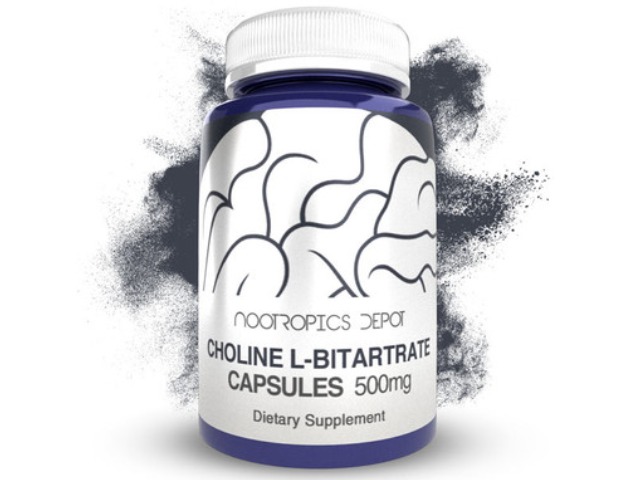
Nootropics Depot Buy Choline L-Bitartrate Capsules 500mg
Shop Now →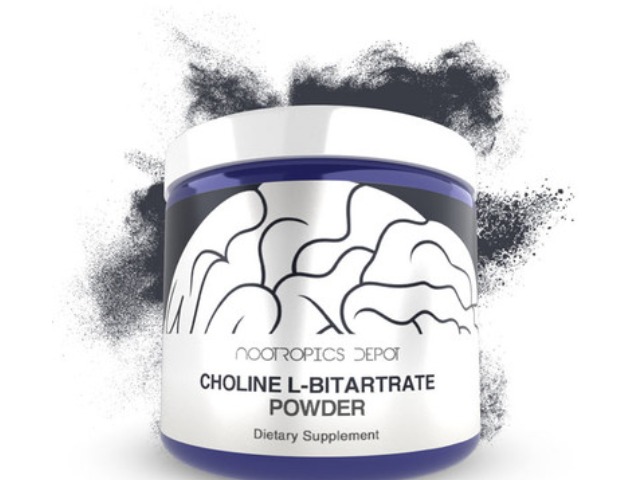
Nootropics Depot Buy Choline L-Bitartrate Powder
Shop Now →Disclosure: These are affiliate links. I earn a small commission if you purchase — at no extra cost to you. I only recommend products I personally use or have thoroughly researched.
Research & Studies
This section includes 3 peer-reviewed studies referenced in our analysis.