
- ADHD Support
- Cognitive Enhancement
- Anxiety & Mood
For years, I thought the only way to sharpen my focus was to hit my brain with a stimulant sledgehammer. More coffee, more energy drinks, anything to force my brain into submission. It worked, sort of—until I was left with a racing heart, a head full of anxiety, and a spectacular crash every afternoon. I was treating the symptom (lack of focus) without understanding the cause.
It turns out, for a lot of us, the problem isn’t a lack of raw processing power. It’s a lack of balance. If that sounds familiar, Fasoracetam might be the tool you’ve been looking for.
The Short Version: Fasoracetam is a non-stimulant nootropic in the racetam family that offers a state of “calm focus.” By balancing the brain’s primary “go” and “stop” neurotransmitter systems (glutamate and GABA), it may improve focus, mood, and anxiety, especially in certain types of ADHD. Unlike stimulants, it works subtly to quiet the noise, not just crank up the volume.
What is Fasoracetam?
Fasoracetam (also known as NS-105) is a synthetic nootropic that’s become a fascinating case study in pharmaceutical redemption. It was first cooked up in the early 1990s by a Japanese drug company, Nippon Shinyaku, as a potential treatment for vascular dementia. They poured over $200 million into it, but after it fizzled out in Phase III trials, they abandoned it.
For decades, it was just another forgotten compound in the dustbin of pharmaceutical history.
Then, in 2013, a company called NeuroFix (part of Aevi Genomic Medicine) bought the data and revived the research. They had a new theory: Fasoracetam wasn’t a dementia drug, but a highly targeted treatment for ADHD in kids with specific genetic glitches in their glutamate system. This pivot put Fasoracetam back on the map, and while it’s still not FDA-approved, it’s gained a cult following as a research chemical for its unique, non-stimulant effects on focus and anxiety.
How Does Fasoracetam Work?
Most racetams are like one-trick ponies—they primarily rev up the acetylcholine system, which is crucial for memory. Fasoracetam is different. It’s a multi-tasker that works on three critical brain systems at once.
Let’s use the “science sandwich” to break it down.
Layer 1 — What it does (conversational): Imagine your brain has a gas pedal (glutamate) and a brake pedal (GABA). Fasoracetam doesn’t stomp on the gas like a stimulant. Instead, it seems to make both the gas and the brake pedals more responsive and efficient, while also ensuring your brain’s GPS system for memory (acetylcholine) has enough fuel.
Layer 2 — The evidence (authoritative): Fasoracetam has a three-pronged mechanism of action:
- Glutamate System Modulation: It fine-tunes a group of glutamate receptors called metabotropic glutamate receptors (mGluRs). When this system is out of whack—as it can be in certain ADHD subtypes—it creates brain-wide static. Fasoracetam helps restore balance to these critical receptors, which are essential for learning, memory, and synaptic plasticity.
- GABA System Upregulation: It increases the number and sensitivity of GABA(B) receptors in the cerebral cortex. GABA is the brain’s primary inhibitory (“brake”) neurotransmitter. More GABA(B) activity means less anxiety, less mental noise, and a greater sense of calm. This is also the mechanism believed to help reduce tolerance to other GABA-acting substances.
- Cholinergic System Enhancement: Like its racetam cousins, Fasoracetam boosts high-affinity choline uptake (HACU) in the cortex and hippocampus. This process sucks up more choline from your bloodstream to create acetylcholine, the key neurotransmitter for learning, memory recall, and attention.
Layer 3 — So what? (practical): In plain English, Fasoracetam helps your brain quiet down, clean up its signaling, and access memory more efficiently. The result for many is a feeling of calm, clear-headed focus—the ability to concentrate without the jittery, forced feeling of a stimulant.
The Real Benefits of Fasoracetam
The evidence for Fasoracetam is a mixed bag, ranging from a solid clinical trial to a heap of anecdotal reports. It’s crucial to be honest about what we know and what we don’t.
- Targeted ADHD Support: The most compelling evidence for Fasoracetam is in a Phase II clinical trial with adolescents who have ADHD and specific mutations in their glutamate gene network. In this group, it significantly improved symptoms. This suggests it’s not a blanket ADHD fix, but a precision tool for a specific neurotype.
- Anxiety and Mood: Through its action on GABA(B) receptors, Fasoracetam may provide a non-sedating anxiolytic effect. User reports on forums like Reddit are filled with descriptions of reduced social anxiety and an improved, more stable mood.
- Cognitive Enhancement: While theoretically supported by its cholinergic activity, the evidence for memory and learning in healthy humans is mostly anecdotal. Animal studies show promise, but we lack robust human trials for general cognitive enhancement. It’s not a magic “smart pill.”
Reality Check: Nootropics aren’t magic pills, and Fasoracetam is a perfect example. Its benefits are subtle and seem to work best for people with a specific kind of underlying imbalance—an overactive, “noisy” glutamate system and corresponding anxiety. If you don’t have that issue, you might not feel much at all.
How to Take Fasoracetam Without Wasting Your Money
As an experimental compound, there are no FDA-approved dosage guidelines. The following protocol is based on clinical data and years of community experience.
- Dosage: The standard range is 10 mg to 50 mg per day. Because of its unique effects on receptor systems, more is not better. High doses can lead to unwanted side effects.
- Timing: Most users split their dose, taking 10-20 mg in the morning and another 10-20 mg in the early afternoon. This provides smooth, stable effects throughout the day. It can be taken with or without food.
- Administration: It’s commonly sold as a powder or in capsules. Some users take the powder sublingually (under the tongue) for a faster onset, but be warned: it has a notoriously bitter, chemical taste that will make your face implode.
- Cycling: To maintain sensitivity to its effects, it’s wise to cycle Fasoracetam. A common approach is taking it for five days on, two days off, or for a few weeks followed by a one-week break.
Pro Tip: If you’re using Fasoracetam powder, buy a reliable milligram scale. They cost about $20 online. “Eyeballing” potent nootropic powders is a rookie mistake that leads to inconsistent results and a higher risk of side effects.
The Side Effects Nobody Warns You About
Fasoracetam is generally well-tolerated at standard doses, but it’s not without risks.
- Common Side Effects: The most frequent issues are mild and temporary: headache, fatigue, and minor digestive upset. The headaches are often a sign of low choline, as Fasoracetam revs up acetylcholine production.
- Serious/Rare Side Effects: This is important. There are reports linking extremely high doses (over 1,000 mg/day) to bradycardia, a dangerously slow heart rate. This is not a compound to experiment with heroically. At very high doses, some users also report increased anxiety or feelings of depersonalization—likely a sign of the glutamate/GABA systems being thrown completely out of balance.
Important: Due to the limited safety data and the potential cardiovascular risk at high doses, you should consult a doctor before using Fasoracetam, especially if you have any pre-existing medical conditions. It should be avoided entirely by pregnant or nursing women.
Stacking Fasoracetam: Building a Smarter Stack
Fasoracetam’s unique mechanism makes it a powerful team player in a well-designed nootropic stack.
- Choline (The Essential Partner): Stacking Fasoracetam with a good choline source like Alpha-GPC or Citicoline is highly recommended. This provides the raw material needed for the increased acetylcholine synthesis, which can enhance cognitive benefits and prevent those pesky choline-depletion headaches.
- Phenibut (The Cautionary Combo): Fasoracetam is famous in biohacking circles for its reported ability to reduce tolerance and withdrawal from Phenibut, another powerful GABA(B) agonist. The theory is that by upregulating GABA(B) receptors, Fasoracetam helps reset the system after it’s been desensitized by Phenibut. This is a common but poorly researched use case that should be approached with extreme caution and professional guidance.
- Other Racetams: Some users report success combining Fasoracetam with other racetams like the anxiolytic Aniracetam or the classic Piracetam for a broader spectrum of effects.
My Take
After years of experimenting with just about every nootropic under the sun, I’ve come to see Fasoracetam as a specialist tool, not a generalist. I don’t recommend it to everyone.
I recommend it for a very specific person: the one who feels their brain is “too loud.” The person who gets wired and anxious from a single cup of coffee but still struggles with procrastination and brain fog. It’s for the person whose focus issues are tangled up with a constant, low-grade hum of anxiety. For that person, Fasoracetam can be a game-changer. It doesn’t feel like you’re “on” something; it feels like the noise has finally been turned down, allowing you to think clearly.
Who should skip it? If you’re looking for a powerful, in-your-face stimulant rush to power through an all-nighter, this isn’t it. You’d be better off looking at something like Modafinil.
In my experience, Fasoracetam’s effects are subtle but profound when used correctly. It’s not about adding horsepower; it’s about refining the engine you already have. If you suspect your focus issues are more about balance than raw power, it’s absolutely worth exploring.
Recommended Fasoracetam Products
I know how frustrating it is to sort through dozens of brands making the same claims. These are the ones I've personally vetted — because quality is the difference between results and wasted money.
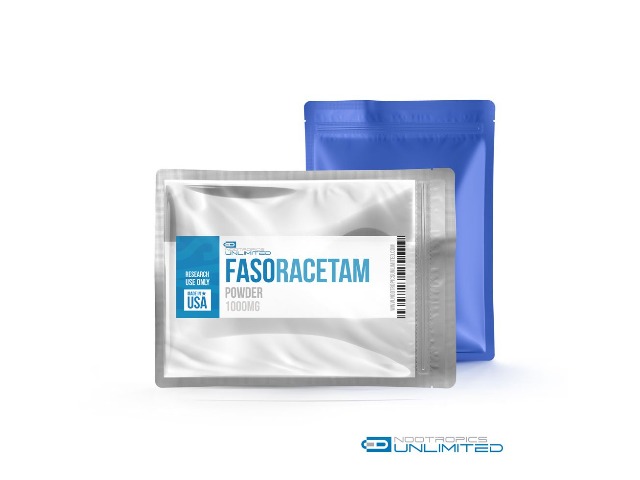
Fasoracetam by Nootropics Unlimited
Shop Now →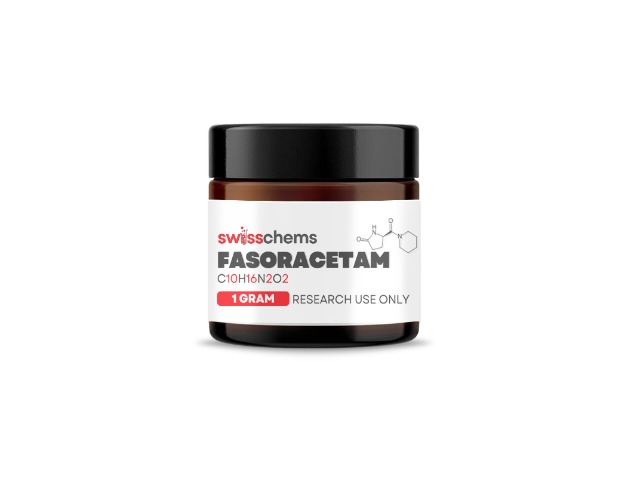
Fasoracetam by Swiss Chems
Shop Now →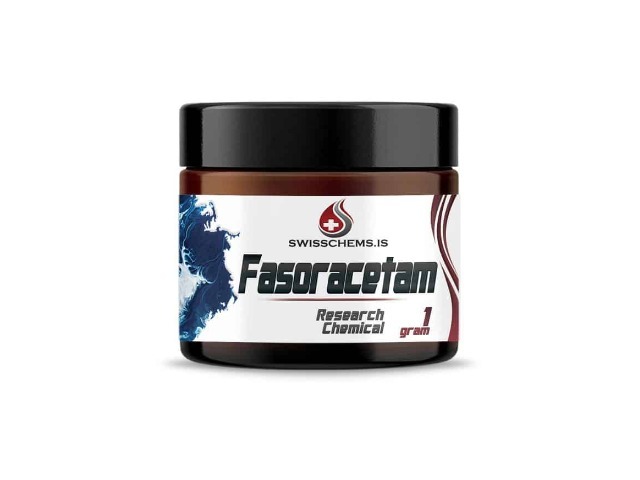
Fasoracetam by SwissChem
Shop Now →Disclosure: These are affiliate links. I earn a small commission if you purchase — at no extra cost to you. I only recommend products I personally use or have thoroughly researched.
Research & Studies
This section includes 7 peer-reviewed studies referenced in our analysis.