I spent years chasing the “perfect nootropic stack” — cycling through racetams, cholinergics, and adaptogens — before stumbling onto something almost embarrassingly simple. A $25 diffuser and a few bottles of essential oils sitting on my nightstand. My first reaction was skepticism. This felt more like a spa day than a biohack. But then I read the 2023 UC Irvine study: older adults who diffused essential oils for two hours each night saw a 226% improvement in verbal memory after six months. Not 2.26%. Two hundred and twenty-six percent.
That was enough to get my attention. And once I dug into the mechanisms — olfactory nerve pathways that bypass the blood-brain barrier, direct modulation of GABA and acetylcholine signaling, measurable changes in white matter on fMRI — I realized essential oils aren’t the fluffy wellness trend I’d assumed. They’re a genuinely underrated tool for brain optimization.
The Short Version: Essential oils reach the brain directly through the olfactory nerve, modulating neurotransmitters involved in memory, anxiety, and focus. A gold-standard 2023 RCT showed nightly diffusion improved memory by 226% and enhanced brain connectivity in older adults. Below, I break down which oils actually work, the clinical evidence behind them, and a practical protocol you can start tonight.
How Essential Oils Actually Reach Your Brain (It’s Not What You Think)
Most supplements you swallow have to survive your gut, pass through the liver, cross the blood-brain barrier, and then — maybe — reach the neurons they’re supposed to help. Essential oils skip almost all of that.
When you inhale an essential oil, volatile aromatic compounds bind to olfactory receptors high in your nasal cavity. These receptors connect directly to the olfactory bulb, which feeds into the limbic system — your brain’s emotional and memory processing center. This includes the amygdala (emotional learning), the hippocampus (memory consolidation), and the hypothalamus (hormonal regulation). The whole trip takes seconds, not hours.
But there’s a second pathway most people miss. These fat-soluble compounds also absorb through lung tissue into your bloodstream, crossing the blood-brain barrier due to their small molecular size and lipophilicity. A 2005 study in the Journal of Chemical Ecology confirmed that 1,8-cineole (the primary compound in rosemary and eucalyptus) reaches measurable blood concentrations within minutes of inhalation.
Insider Tip: Inhalation is the most efficient route for brain effects. Topical application works for localized benefits, but if you’re after cognitive enhancement, a diffuser or direct inhalation beats massage oils every time.
Here’s what happens once these compounds reach your brain:
| Neurotransmitter System | What It Does | Oils That Modulate It |
|---|---|---|
| GABA | Calms neural activity, reduces anxiety | Lavender, lemon balm, bergamot |
| Glutamate/NMDA | Regulates excitatory signaling | Lavender (inhibits overactivation) |
| Serotonin | Mood regulation, emotional balance | Bergamot, clary sage |
| Acetylcholine | Memory, focus, learning | Rosemary, peppermint, sage |
| Cortisol (HPA axis) | Stress response modulation | Bergamot, lavender, lemon balm |
This multi-target mechanism is actually similar to how nootropic stacks work. If you’re already taking L-Theanine for GABA support or Alpha-GPC for cholinergic enhancement, certain essential oils are hitting overlapping pathways through a completely different delivery system.
The Study That Changed Everything (226% Memory Boost)
Let me be upfront: I’m generally suspicious of headline-grabbing numbers. But the 2023 UC Irvine study published in Frontiers in Neuroscience is the real deal — a randomized, controlled trial with solid methodology.
Here’s the setup: 132 healthy adults aged 60-85 were split into two groups. The enrichment group received seven different essential oils — rose, orange, eucalyptus, lemon, peppermint, rosemary, and lavender — and diffused a different one each night for two hours before bed, rotating through all seven weekly. The control group received a sham diffuser with trace amounts of an inert odorant. The study ran for six months.
The results were striking:
- Verbal memory (Rey Auditory Verbal Learning Test) improved 226% in the essential oil group compared to controls (F=6.63, p=0.02, Cohen’s d=1.08)
- fMRI brain imaging showed significantly improved integrity of the left uncinate fasciculus — a white matter tract connecting the frontal lobe to the temporal lobe that’s critical for verbal memory (F=4.39, p=0.043, ηp²=0.101)
- Notably, olfactory function itself didn’t change — meaning the benefits weren’t just about “training your nose”
That Cohen’s d of 1.08 is a large effect size by any standard. For context, most pharmaceutical cognitive enhancers show effect sizes of 0.2-0.5 in similar populations.
Reality Check: This is one study with 132 participants in older adults. We need larger replications across age groups before drawing definitive conclusions. But the effect size, imaging confirmation, and rigorous design make this the strongest evidence we have for essential oils and cognition. It’s not proof — it’s a very promising signal.
What makes this study especially interesting is the multi-oil rotation protocol. The researchers weren’t testing a single compound — they were testing olfactory enrichment through variety. This aligns with neuroscience research showing that novel sensory stimulation drives neuroplasticity more effectively than repetitive exposure. It’s the same principle behind why learning new skills beats repeating familiar ones for brain health.
If you’re already taking Bacopa Monnieri for memory — which also requires months to show full effects — this protocol could be a complementary, non-pharmacological layer targeting the same hippocampal circuits through a different mechanism.
The Top 6 Essential Oils for Your Brain (Ranked by Evidence)
Not all essential oils are created equal when it comes to cognitive effects. Here’s what the research actually supports, ranked by strength of evidence.
1. Lavender — The Most-Studied Brain Oil
Lavender (Lavandula angustifolia) is the workhorse of aromatherapy research, with more clinical data than any other essential oil. Its primary active compounds — linalool and linalyl acetate — modulate GABA-A receptors similarly to benzodiazepines, but without the sedation, dependence, or cognitive impairment.
A 2020 systematic review and meta-analysis in Complementary Therapies in Medicine pooled data across multiple trials and confirmed significant stress reduction from lavender inhalation. A 2022 trial in Frontiers in Pharmacology found that lavender and chamomile inhalation reduced depression, anxiety, and stress scores in older adults, with animal models from the same research group showing increased hippocampal neurogenesis (new brain cell growth) measured by BrdU+ cell counts.
Best for: Anxiety, sleep quality, stress recovery, and as a foundation oil in rotation protocols.
If you’re using Ashwagandha for stress management, lavender inhalation before bed targets the same cortisol-reduction pathway through a different mechanism — they stack well together.
2. Rosemary — The Focus and Memory Oil
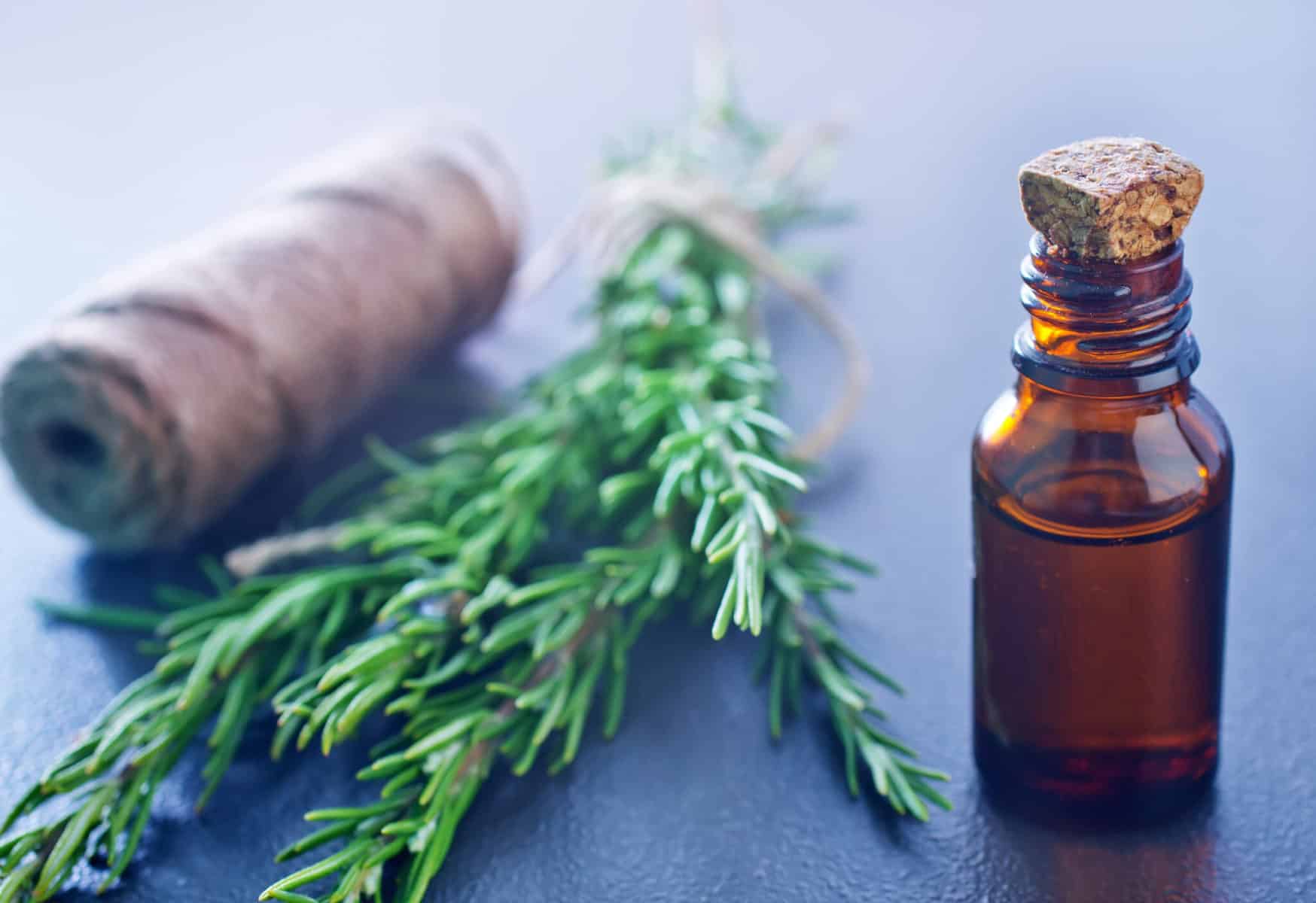
Rosemary (Rosmarinus officinalis) contains 1,8-cineole, a compound that inhibits acetylcholinesterase — the enzyme that breaks down acetylcholine. This is the same mechanism targeted by pharmaceutical Alzheimer’s drugs like donepezil, though at a much milder level.
A 2012 study in Therapeutic Advances in Psychopharmacology found that plasma levels of 1,8-cineole after rosemary inhalation correlated with improved cognitive performance on speed and accuracy tasks. A 2023 review in Current Drug Targets confirmed rosemary’s role in enhancing alertness, reducing mental fatigue, and improving task performance across multiple small cohort studies. EEG data shows rosemary shifts brainwave patterns toward increased beta activity — associated with alert, focused states.
Best for: Daytime focus, study sessions, mental fatigue, work performance.
Pro Tip: Rosemary pairs logically with Alpha-GPC — rosemary slows acetylcholine breakdown while Alpha-GPC increases acetylcholine production. Different mechanisms, same target system.
3. Lemon Balm — The Anxiety Crusher With Real Data
Lemon balm (Melissa officinalis) doesn’t get the attention lavender does, but the numbers are impressive. A 2021 meta-analysis in Phytotherapy Research pooled multiple trials and found:
- Anxiety reduction: SMD = 0.98 (95% CI: -1.63 to -0.33, p = 0.003)
- Depression reduction: SMD = 0.47 (95% CI: -0.73 to -0.21, p = 0.0005)
- No serious adverse events across all included studies
An SMD of 0.98 for anxiety is a large effect — comparable to some pharmaceutical anxiolytics. Lemon balm works through GABA-transaminase inhibition and rosmarinic acid’s antioxidant activity in neural tissue.
Best for: Anxiety (especially social or situational), mild depressive symptoms, and calming an overactive mind.
4. Peppermint — The Alertness Activator
Peppermint (Mentha piperita) is the opposite of lavender in terms of brain effects. Its primary compound, menthol, increases alertness through dopaminergic and noradrenergic activation. EEG studies show peppermint shifts brainwaves toward alpha and beta activity — the signature of engaged, focused attention.
The 2023 review in Current Drug Targets noted peppermint’s role in reducing perceived mental fatigue and improving sustained attention during cognitive tasks. It was also one of the seven oils used in the UC Irvine RCT.
Best for: Afternoon energy dips, pre-workout focus, combating brain fog.
5. Bergamot — The Cortisol Reducer
Bergamot (Citrus bergamia) targets the stress axis more directly than most oils. Earlier mechanistic studies (2015 and prior — flagging these as outdated) showed bergamot inhalation reduced anxiety-related heart rate elevation, lowered salivary cortisol, and improved mood/fatigue scores. The mechanisms involve serotonergic modulation and HPA axis regulation.
Best for: Pre-sleep wind-down, acute stress situations, cortisol management.
If cortisol reduction is your primary goal, bergamot stacks conceptually with Phosphatidylserine, which blunts cortisol response through a different pathway.
6. Eucalyptus — The Underrated Cognitive Oil
Eucalyptus (Eucalyptus globulus) shares rosemary’s primary compound — 1,8-cineole — and appeared in the UC Irvine memory enrichment protocol. It promotes alertness, clears mental fog, and has demonstrated anti-inflammatory effects in neural tissue. It’s less studied independently than lavender or rosemary, but its inclusion in the landmark 2023 RCT gives it credibility as part of a rotation protocol.
Best for: Rotation protocols, respiratory clarity (which supports cognitive function), mental sharpness.
Important: People with epilepsy should avoid rosemary and eucalyptus — 1,8-cineole can lower seizure threshold. Asthmatics should introduce any inhaled oil cautiously and discontinue if respiratory symptoms worsen.
What Most People Get Wrong About Essential Oils
Let me address the myths I see repeated constantly in wellness spaces.
Myth: All essential oils work the same way. They don’t. Lavender and peppermint have essentially opposite effects on brain arousal. Using peppermint before bed or lavender during a study session is working against your goals. Match the oil to the desired brain state.
Myth: Results are instant. The UC Irvine study ran for six months. Some acute effects (stress reduction, alertness shifts) happen within minutes, but the deep structural changes — improved white matter integrity, enhanced memory consolidation — require consistent use over months. This is similar to how Bacopa Monnieri and Lion’s Mane need 8-12 weeks for full cognitive effects.
Myth: Oral ingestion is more powerful than inhalation. This is dangerously wrong. Inhalation delivers aromatic compounds directly to the brain via the olfactory nerve. Oral ingestion sends them through your digestive system, where they’re metabolized by the liver before reaching the brain at much lower concentrations — and some oils are genuinely toxic when swallowed. Never ingest essential oils unless under medical supervision.
Myth: Essential oils can treat Alzheimer’s disease. The UC Irvine study worked with healthy older adults. While the olfactory enrichment model is promising, it has not been tested in people with diagnosed dementia. Some research actually shows negative outcomes when aromatherapy is used with burn patients, post-surgical patients, and those with advanced dementia. This is a tool for cognitive maintenance, not disease treatment.
Myth: They’re universally safe because they’re “natural.” Lavender has weak estrogenic activity and should be used cautiously with hormone-sensitive conditions. Rosemary lowers seizure threshold. High concentrations can trigger contact dermatitis. “Natural” doesn’t mean “without risk.”
The Nightly Diffusion Protocol (Based on the 2023 RCT)
Here’s a practical protocol modeled directly on the UC Irvine study design — adapted for real-world use.
What You Need
- An ultrasonic diffuser with a timer function (2-hour auto-shutoff)
- 7 essential oils: lavender, rosemary, peppermint, lemon, orange, eucalyptus, rose
- A weekly rotation schedule
The Protocol
| Night | Oil | Primary Brain Effect |
|---|---|---|
| Monday | Lavender | GABA modulation, calm |
| Tuesday | Rosemary | Acetylcholine support, memory consolidation |
| Wednesday | Peppermint | Dopamine/norepinephrine, alertness reset |
| Thursday | Lemon | Mood elevation, serotonin |
| Friday | Orange | Anxiolytic, HPA axis calming |
| Saturday | Eucalyptus | Anti-inflammatory, cognitive clarity |
| Sunday | Rose | Emotional regulation, stress recovery |
How to run it:
- Add 3-5 drops of that night’s oil to your diffuser
- Set the timer for 2 hours
- Place within 3-6 feet of your bed
- Start when you begin your wind-down routine (not after you fall asleep)
- Rotate through all seven oils weekly — novelty is key to the neuroplasticity effect
Pro Tip: Track your cognitive function monthly using a free verbal memory test (like those on Cambridge Brain Sciences or similar platforms). The UC Irvine study measured improvement at the 6-month mark, so give it time and measure what matters.
Daytime Focus Stack
For workday cognitive enhancement, use targeted single-oil sessions:
- Morning focus: 30 minutes of rosemary diffusion during deep work
- Afternoon slump: 10-15 minutes of peppermint inhalation (direct from bottle works)
- Pre-meeting calm: 15 minutes of lavender or lemon balm if you’re dealing with anxiety
This pairs well with your existing nootropic routine. If you’re taking L-Theanine for calm focus during the day, adding rosemary diffusion gives you cholinergic stimulation without adding more pills. If Ashwagandha is handling your baseline cortisol, bergamot before bed adds an acute wind-down layer.
Safety — Who Should Be Careful
Essential oils are generally recognized as safe (GRAS) for inhalation at normal diffuser concentrations, with no abuse potential and low adverse event rates in clinical trials. But “generally safe” isn’t “safe for everyone.”
Avoid or use with caution if you have:
- Epilepsy or seizure disorders — Rosemary and eucalyptus (1,8-cineole) can lower seizure threshold
- Pregnancy — Avoid high-dose exposure, especially in the first trimester. Lavender in low diffuser amounts is likely fine, but consult your OB
- Hormone-sensitive conditions — Lavender and tea tree have weak estrogenic/anti-androgenic activity
- Asthma or reactive airway disease — Any inhaled volatile compound can trigger bronchospasm
- Children under 6 — Peppermint and eucalyptus can cause respiratory distress in young children
- Skin sensitivity — Always patch test before topical use; dilute with carrier oil
Interaction watch: Lavender can potentiate sedative medications (benzodiazepines, sleep aids). If you’re taking prescription sedatives or SSRIs, discuss aromatherapy with your prescriber. The serotonergic effects of bergamot are theoretical but worth noting if you’re on serotonin-active medications.
Quality matters more than brand. Look for oils that are:
- GC/MS tested (gas chromatography/mass spectrometry — confirms chemical composition)
- USDA Organic or sourced from reputable growers
- Single-origin and free of synthetic linalool or other adulterants
- Sold in dark glass bottles (UV degrades active compounds)
Avoid brands that make therapeutic claims on the label — this is actually a red flag, not a feature, as it suggests the company doesn’t understand FDA regulations around essential oil marketing.
My Take
I’ll be honest — I came into this topic expecting to write a short piece and move on. Essential oils felt like the “crystals and vibes” corner of wellness. But the UC Irvine RCT genuinely surprised me. A Cohen’s d of 1.08 for a non-pharmacological, zero-side-effect intervention in older adults? That’s a stronger effect size than most of the nootropics I’ve reviewed on this site.
The mechanism makes sense too. We know olfactory decline predicts cognitive decline. We know sensory enrichment drives neuroplasticity. And we know the olfactory nerve provides a direct highway to the hippocampus that bypasses the blood-brain barrier entirely. The pieces fit.
That said, I want to keep the hype in check. This is one well-designed study. We need replication. We need younger cohorts. We need head-to-head comparisons with established nootropics like Bacopa Monnieri and Lion’s Mane.
What I can say: at $25-40 for a diffuser and a set of oils, the risk-to-reward ratio is absurdly favorable. Even if the memory effects are half of what the UC Irvine study showed, you’re still getting a meaningful cognitive boost for less than a month’s supply of most nootropic stacks. And unlike supplements, there’s no liver metabolism, no gut absorption issues, and no tolerance buildup.
If you’re already optimizing with supplements, sleep hygiene, and exercise — which you should be, because foundations always come first — nightly essential oil diffusion is one of the easiest additions you can make. Start the rotation protocol, give it six months, and track your results. Your brain will thank you.