

- Focus & Attention
- Memory Support
- Stress Response Modulation
- Neuroprotection
I spent three years taking phosphatidylserine sporadically — a week here, two weeks there — and wondering why I wasn’t seeing the dramatic cognitive benefits everyone online raved about. Turns out I was treating a long-term structural supplement like a pre-workout shot.
That’s the mistake most people make with PS. They want instant results from a compound that works by literally rebuilding your brain cell membranes. Once I committed to consistent daily dosing for three months, everything changed. My working memory improved noticeably, stress felt more manageable, and I could sustain focus without that wired-but-tired feeling I’d gotten used to.
If you’re looking for a well-researched nootropic that actually supports brain health at the cellular level — not just a stimulant disguised as a brain booster — keep reading.
The Short Version: Phosphatidylserine (PS) is a phospholipid that makes up 15% of your brain’s fat content and plays a critical role in cell membrane function, neurotransmitter activity, and neuroplasticity. Clinical trials show 100-300mg daily improves focus, memory, and stress resilience — but you need 8-12 weeks of consistent use to see results. It’s one of the most evidence-backed cognitive enhancers available, especially for aging brains.
What Is Phosphatidylserine? (And Why Your Brain Needs It)
Phosphatidylserine is a phospholipid — a type of fat molecule that forms the structural foundation of every cell membrane in your body. It’s particularly concentrated in brain tissue, where it makes up roughly 15% of total phospholipid content.
Think of your neurons like houses. The walls (cell membranes) aren’t just barriers — they’re communication hubs where receptors, ion channels, and signaling molecules do their work. PS is a critical component of those walls. When PS levels decline with age, the walls start to deteriorate. Signals get weaker. Communication breaks down. That’s when you start forgetting where you put your keys or losing focus halfway through a conversation.
Your body produces PS naturally, but synthesis declines as you age — and dietary sources (organ meats, mackerel, white beans) don’t provide therapeutic amounts. That’s where supplementation comes in. Most PS supplements are derived from soy or sunflower lecithin, not the bovine brain extracts used in older studies (which were discontinued due to mad cow disease concerns in the 1990s). The good news: plant-derived PS appears to be equally effective.
Reality Check: Phosphatidylserine isn’t a magic bullet that fixes cognitive decline overnight. It’s a foundational supplement that works best when you’re also addressing sleep quality, gut health, chronic inflammation, and nutrient deficiencies. If you’re running on four hours of sleep and living off coffee and takeout, PS won’t override those problems — it’ll just be expensive pee.
How Does Phosphatidylserine Work? (The Mechanisms That Matter)
Here’s where PS gets interesting. It works through multiple interconnected pathways — not just one flashy mechanism you can sum up in a catchy headline.
Cholinergic system enhancement: PS increases acetylcholine release and helps maintain choline availability in aging brains. This happens through restoration of protein kinase C (PKC) activity, which becomes compromised with age. A 1992 study in Psychopharmacology Bulletin found that PS supplementation directly increased acetylcholine levels in participants with cognitive decline — the neurotransmitter most associated with memory formation and learning.
In plain English: PS helps your brain produce and use more of the chemical that makes memory possible. This isn’t theoretical — you can measure it in blood work.
Membrane fluidity and synaptic plasticity: Cell membranes aren’t rigid walls — they’re fluid, dynamic structures that need to flex and adapt constantly. PS maintains membrane fluidity, which is essential for synaptic refinement and dendritic spine density (the physical connections between neurons). Animal studies show PS prevents age-related reductions in dendritic spine density in the hippocampus — the brain region most critical for forming new memories.
Translation: PS literally helps your brain maintain the physical infrastructure it needs to learn new things and form new connections. It’s like keeping the roads in good repair so traffic (information) can flow smoothly.
Anti-inflammatory and antioxidant protection: PS modulates inflammatory cascades in the central nervous system, reducing pro-inflammatory mediators that damage neurons over time. It also stabilizes membrane structures against oxidative damage and supports membrane-bound antioxidant enzymes. This dual action — reducing inflammation while supporting antioxidant defenses — creates a neuroprotective environment that slows cognitive decline.
Cortisol regulation: One of PS’s most unique effects is blunting the cortisol response to physical and psychological stress. A 2004 study in Nutritional Neuroscience found that participants taking PS + phosphatidic acid showed significantly reduced cortisol levels after induced stress compared to placebo. Lower cortisol means less inflammation, better sleep, and improved resilience to chronic stress — all of which compound over time to support cognitive function.
Insider Tip: The cortisol-blunting effect is why many people take PS in the evening, even though it’s not sedating. Lower nighttime cortisol can improve sleep quality indirectly by helping your body shift into parasympathetic (rest-and-digest) mode more easily.
Benefits of Phosphatidylserine (What the Research Actually Shows)
Let’s separate the hype from the evidence. PS has been studied extensively — over 3,000 published papers — but not all benefits have the same level of proof.
Focus & Attention (Moderate-to-Strong Evidence)
A 2008 study in Nutritional Neuroscience examined PS’s effects on cognitive performance and cortical activity after induced stress. Participants taking 300mg PS daily showed significantly improved accuracy on attention tasks and reduced cortical activation (meaning their brains worked more efficiently under pressure). The effect was measurable both subjectively (self-reported focus) and objectively (EEG data).
In practical terms: PS helps you maintain focus when you’re under pressure or mentally fatigued. It’s not a stimulant — you won’t feel wired — but you’ll notice you can push through longer work sessions without hitting the wall.
Memory Support (Strong Evidence, Especially for Aging Brains)
The classic 1993 double-blind, placebo-controlled multicenter trial published in Aging Clinical and Experimental Research studied 494 elderly patients with cognitive decline. Those taking 300mg PS daily for six months showed significant improvements in memory, learning, and daily activities compared to placebo. The effect was most pronounced in participants with mild-to-moderate impairment.
A 2010 trial in Dementia and Geriatric Cognitive Disorders found that PS containing omega-3 fatty acids improved memory abilities in non-demented elderly with memory complaints over 15 weeks. Participants showed improvements in immediate word recall — a sensitive marker of early memory decline.
Important caveat: The evidence is strongest for age-related memory decline, not for enhancing memory in young, healthy adults. If you’re 25 with no cognitive issues, PS probably won’t turn you into a memory champion. If you’re over 50 and starting to notice “senior moments,” the data is compelling.
Stress Response & Cortisol Modulation (Moderate Evidence)
Multiple studies show PS reduces cortisol response to stress. A 2001 study in Nutritional Neuroscience found that 300mg PS influenced mood and heart rate when participants faced an acute stressor, with lower reported stress and reduced physiological arousal.
This isn’t about eliminating stress — it’s about modulating your body’s overreaction to it. Chronic cortisol elevation damages the hippocampus over time, so anything that blunts that response has long-term cognitive protection benefits.
Neuroprotection & Neuroplasticity (Preliminary Evidence)
Animal studies and mechanistic research suggest PS supports synaptic plasticity and protects against neurodegeneration, but human trials are limited. The phospholipid’s role in maintaining membrane integrity and supporting neurotrophic factors (like NGF) creates a favorable environment for neural repair — but this is more about long-term brain health than immediate cognitive enhancement.
| Benefit | Evidence Level | Key Study Example |
|---|---|---|
| Focus & Attention | Moderate-Strong | Baumeister et al. 2008 (EEG + attention tasks) |
| Memory (age-related) | Strong | Cenacchi et al. 1993 (494 elderly participants) |
| Stress/Cortisol | Moderate | Benton et al. 2001 (acute stress response) |
| Neuroprotection | Preliminary | Mostly animal models |
Reality Check: If you’re expecting PS to give you superhuman memory or eliminate all stress, you’re setting yourself up for disappointment. What it does do — consistently, measurably — is support cognitive function over time, especially if you’re dealing with age-related decline or chronic stress. That’s valuable, but it’s not a miracle.
How to Take Phosphatidylserine (Without Wasting Your Money)
Getting the dosage and timing right makes the difference between seeing results and wondering why you spent $40 on a bottle of pills.
Dosage
| Use Case | Dosage | Timing | Notes |
|---|---|---|---|
| General cognitive support | 100mg | Morning with food | Start here if you’re under 40 and healthy |
| Cognitive enhancement/stress | 300mg | 100mg 3x daily with meals | Sweet spot for most people based on clinical trials |
| Therapeutic (age-related decline) | 300-600mg | Split into 2-3 doses | Higher end requires medical guidance |
Start at 100mg daily for 2 weeks. Assess tolerance and response before increasing. Most clinical trials showing cognitive benefits used 300mg daily, typically split into three 100mg doses with meals.
Absorption matters: PS is fat-soluble, so take it with meals containing some dietary fat. Taking it on an empty stomach reduces bioavailability and increases the chance of mild digestive upset.
Consistency is non-negotiable: You need 8-12 weeks of daily use to see meaningful results. PS isn’t like caffeine or modafinil where you feel it immediately. You’re rebuilding cellular membranes, not triggering a dopamine spike.
Forms & Bioavailability
- Soy-derived PS: Most common, well-studied, generally well-tolerated. If you have soy sensitivities, this isn’t for you.
- Sunflower-derived PS: Allergen-free alternative. Slightly more expensive but functionally equivalent.
- PS + Omega-3 complexes: Some formulations combine PS with DHA/EPA (like docosahexaenoic acid). The 2010 Vakhapova study used this combination with good results. Worth considering if you’re also supplementing omega-3s.
| Form | Bioavailability | Cost | Best For |
|---|---|---|---|
| Soy-derived | Standard | $ | Most people |
| Sunflower-derived | Standard | $$ | Soy-sensitive individuals |
| PS + Omega-3 | Enhanced (synergy) | $$$ | Aging brains, serious users |
Cycling
No cycling needed. PS is a structural component your brain uses continuously. Unlike stimulants or GABAergics, there’s no tolerance buildup or receptor downregulation. Think of it more like creatine or magnesium — compounds you take daily for ongoing support.
Pro Tip: If you’re taking PS primarily for cortisol reduction, consider timing your largest dose in the late afternoon (4-6 PM) to blunt the evening cortisol spike that interferes with sleep onset. This won’t sedate you — it just helps your body transition more smoothly into rest mode.
Side Effects & Safety (What Could Go Wrong)
PS has an excellent safety profile. It’s been used in clinical trials for decades with minimal adverse effects. But here’s what you should know.
Common Side Effects (Mild)
- Digestive upset (gas, bloating, stomach discomfort): Occurs in roughly 5-10% of users, usually at doses above 300mg daily. Taking it with food virtually eliminates this.
- Insomnia (rare): A small subset of people report mild sleep disruption when taking PS late in the day. Paradoxical, since PS should theoretically improve sleep via cortisol reduction. If this happens, move all doses to earlier in the day.
Who Should Avoid PS
- People on anticoagulants: PS may have mild blood-thinning properties. If you’re on warfarin, heparin, or other anticoagulants, consult your physician before supplementing.
- Pregnant/nursing women: Insufficient safety data. Avoid unless specifically recommended by a healthcare provider.
Drug Interactions
| Medication/Substance | Interaction Type | Risk Level | Notes |
|---|---|---|---|
| Anticoagulants (warfarin, heparin) | Anticoagulant potentiation | Moderate-High | May increase bleeding risk; monitor INR closely |
| Anticholinergic drugs (Benadryl, Atropine) | Opposing mechanism | Low-Moderate | PS increases acetylcholine; anticholinergics block it; may reduce efficacy |
| Cholinergics (donepezil, rivastigmine) | Synergistic | Low | Theoretical benefit, but consult physician before combining |
| Huperzine A | Cholinergic synergy | Low | May amplify cholinergic effects; watch for overstimulation |
| Alcohol | None significant | Low | No direct interaction, but alcohol damages phospholipid membranes — working against PS |
Important: If you’re taking prescription medications for cognitive decline (like Alzheimer’s medications), do NOT add PS without medical supervision. The interactions aren’t necessarily dangerous, but your doctor needs to know what you’re taking.
Stacking Phosphatidylserine (The Combinations That Actually Work)
PS is one of the most stackable nootropics because it works at the structural level rather than acutely manipulating neurotransmitter systems. Here’s how to combine it strategically based on your goals.
For Focus & Productivity (The Deep Work Stack)
Combination: 300mg PS + 300mg Alpha-GPC + 100mg caffeine + 200mg L-Theanine
Timing: Morning with breakfast
Why it works: PS maintains membrane integrity and acetylcholine availability. Alpha-GPC provides the raw material (choline) for acetylcholine synthesis. Caffeine + L-Theanine delivers clean, focused energy without jitters. This is my go-to stack for writing, coding, or any deep cognitive work.
Synergy mechanism: PS and Alpha-GPC both support cholinergic function through different pathways — PS enhances release and receptor sensitivity, while Alpha-GPC increases substrate availability. The caffeine/theanine combo provides the acute focus component while PS handles the structural support.
For Memory & Learning (The Student Stack)
Combination: 300mg PS + 300mg Bacopa Monnieri + 500mg Lion’s Mane + 200mg Uridine
Timing: Split into morning and afternoon doses (PS + Bacopa AM, Lion’s Mane + Uridine PM)
Why it works: This stack hits multiple memory pathways. PS supports acetylcholine and membrane fluidity. Bacopa enhances dendritic branching. Lion’s Mane stimulates NGF production. Uridine increases phosphatidylcholine synthesis. All four work synergistically for long-term potentiation and neuroplasticity.
Timeline: Expect 8-12 weeks before noticing significant memory improvements. None of these are acute — you’re building infrastructure, not triggering a response.
For Stress Resilience & Mood (The Adaptogen Stack)
Combination: 300mg PS + 400mg Rhodiola Rosea + 600mg Ashwagandha + 400mg Magnesium Glycinate
Timing: PS + Rhodiola morning, Ashwagandha + Magnesium evening
Why it works: PS blunts cortisol response. Rhodiola improves stress resilience and reduces fatigue. Ashwagandha lowers baseline cortisol and anxiety. Magnesium supports GABA function and nervous system regulation. This stack addresses stress at multiple levels — acute response, long-term adaptation, and nervous system support.
Best for: High-stress jobs, chronic anxiety, burnout recovery.
What to AVOID Combining
- PS + excessive cholinergics: Stacking PS with multiple choline sources (Alpha-GPC, CDP-Choline, Huperzine A) can lead to cholinergic overstimulation — symptoms include headache, brain fog, irritability, or muscle tension. Pick one or two, not all four.
- PS + anticholinergic drugs: These work against each other. If you’re taking Benadryl, sleep aids, or certain antidepressants with anticholinergic properties, adding PS won’t help and may reduce medication efficacy.
| Stack Goal | Combination | Dosages | Timing | Expected Timeline |
|---|---|---|---|---|
| Focus & Productivity | PS + Alpha-GPC + Caffeine + L-Theanine | 300mg + 300mg + 100mg + 200mg | Morning | Acute (caffeine) + 8-12 weeks (PS/GPC) |
| Memory & Learning | PS + Bacopa + Lion’s Mane + Uridine | 300mg + 300mg + 500mg + 200mg | Split AM/PM | 8-12 weeks |
| Stress Resilience | PS + Rhodiola + Ashwagandha + Magnesium | 300mg + 400mg + 600mg + 400mg | Split AM/PM | 4-8 weeks |
Insider Tip: If you’re new to stacking, don’t start everything at once. Add one compound every two weeks so you can isolate what’s actually working. I learned this the expensive way after buying six supplements, taking them all simultaneously, and having no idea which one was helping (or causing the mild headache I developed).
My Take (Is Phosphatidylserine Worth It?)
After three years of consistent use, PS is one of the few supplements I won’t go without. But I’m also clear-eyed about what it is and isn’t.
Who PS is best for:
- People over 40 noticing early memory decline — This is where the evidence is strongest. If you’re forgetting names, losing your train of thought mid-conversation, or struggling to learn new information the way you used to, PS should be near the top of your list.
- High-stress professionals — The cortisol-blunting effect is real and valuable if you’re dealing with chronic stress. It won’t eliminate stress, but it’ll help you recover faster and sleep better.
- Long-term brain health optimizers — If you’re thinking in decades, not days, PS is a foundational compound worth taking alongside omega-3s, magnesium, and creatine.
Who should probably try something else:
- People looking for immediate cognitive enhancement — If you want to feel smarter tomorrow, try modafinil, phenylpiracetam, or caffeine + L-theanine. PS takes months to work.
- Young, healthy adults with no cognitive issues — The evidence for cognitive enhancement in this population is weak. You’re better off investing in sleep optimization, exercise, and stress management.
- Budget-conscious beginners — PS costs $20-40/month for quality brands. If you’re just starting out, get your basics dialed in first: magnesium, omega-3s, vitamin D, and sleep. Then come back to PS.
My honest assessment: PS is one of the most well-researched, mechanistically sound nootropics available. The benefits are real but gradual. It’s not sexy. You won’t feel it kick in. But if you commit to 12 weeks of consistent use, you’ll likely notice your memory is sharper, stress is more manageable, and cognitive fatigue takes longer to set in.
The catch is patience. In a world of instant gratification and “limitless pill” marketing, PS requires you to think long-term. That’s exactly why most people quit before they see results — and exactly why the people who stick with it swear by it.
If you’re willing to play the long game with your brain health, PS is one of the best investments you can make.
Recommended Phosphatidylserine Products
I know how frustrating it is to sort through dozens of brands making the same claims. These are the ones I've personally vetted — because quality is the difference between results and wasted money.
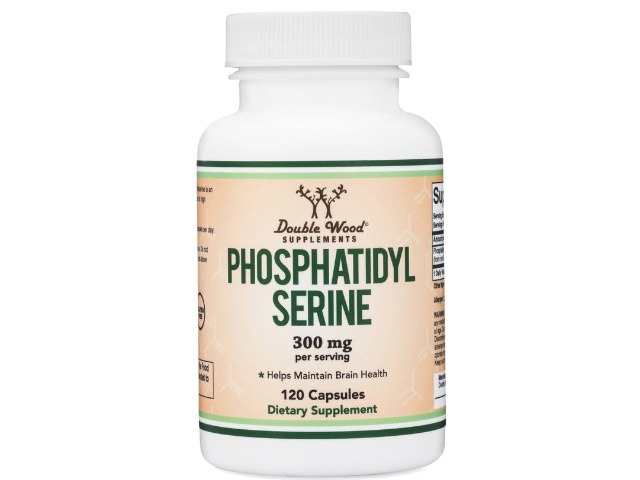
Phosphatidylserine by DoubleWood Supplements
Shop Now →
Phosphatidylserine by Nootropics Depot
Shop Now →
4’-DMA-7,8-DHF Capsules by Nootropics Depot
Shop Now →Disclosure: These are affiliate links. I earn a small commission if you purchase — at no extra cost to you. I only recommend products I personally use or have thoroughly researched.
Research & Studies
This section includes 15 peer-reviewed studies referenced in our analysis.
Effects of phosphatidylserine in Alzheimer's disease.
Effects of phosphatidylserine on the neuroendocrine response to physical stress in humans.
Cognitive decline in the elderly: a double-blind, placebo-controlled multicenter study on efficacy of phosphatidylserine administration.
Dietary fish oil affects monoaminergic neurotransmission and behavior in rats.
Treatment of cognitive dysfunction associated with Alzheimer's disease with cholinergic precursors. Ineffective treatments or inappropriate approaches?
The influence of phosphatidylserine supplementation on mood and heart rate when faced with an acute stressor.
"Brain-specific" nutrients: a memory cure?
Effects of soy lecithin phosphatidic acid and phosphatidylserine complex (PAS) on the endocrine and psychological responses to mental stress.
Influence of phosphatidylserine on cognitive performance and cortical activity after induced stress.
Phosphatidylserine containing omega-3 fatty acids may improve memory abilities in non-demented elderly with memory complaints: a double-blind placebo-controlled trial.
Showing 10 of 15 studies. View all →