
- Neuroprotection
- Mood Support
- Pain Relief
- Nitric Oxide Modulation
- Anxiolytic Effects
- BDNF Enhancement
I’ll be honest — agmatine sulfate snuck up on me. I’d been deep in the weeds researching L-arginine and nitric oxide pathways, mostly for workout performance, when I kept running across this obscure metabolite that seemed to do… everything? NMDA receptor modulation. Mood support. Pain relief. Nitric oxide optimization. Neuroprotection. It read like someone’s wish list, not a real compound.
Then I actually tried it. And then I read the pharmacology. And I realized this might be one of the most underappreciated compounds in the entire nootropics space.
The Short Version: Agmatine sulfate is a naturally occurring neuromodulator — your body already makes it — that acts on multiple brain systems simultaneously. It’s best supported by research for neuropathic pain relief, with strong preclinical evidence for mood support and neuroprotection. Typical doses range from 500–2,670mg daily, it’s well-tolerated with a 5-year safety record, and it works best taken on an empty stomach. Below, I break down the science, practical dosing, and who should actually consider this supplement.
What Is Agmatine Sulfate?
Agmatine is what you get when your body strips a carboxyl group off of L-arginine — a process called decarboxylation. The result is a small molecule (technically a biogenic amine) that was first discovered way back in 1910 by Nobel laureate Albrecht Kossel, who found it while studying herring sperm. Not exactly glamorous origins.
For decades, scientists mostly ignored agmatine. It was filed under “simple metabolite” and forgotten. Then in 1994, everything changed — researchers discovered that agmatine is actually synthesized in mammalian brains, stored in neuronal vesicles, and released like a neurotransmitter. Overnight, it went from biochemical footnote to “wait, this might be a novel neuromodulator.”
Your body produces agmatine naturally, though in relatively small amounts. You also get it from food — particularly fermented foods like wine, beer, aged cheese, fermented fish, and sake (which can contain up to 114 mg per liter). Your gut bacteria contribute additional agmatine as well. The supplemental form, agmatine sulfate, is a stable, water-soluble salt that’s well-absorbed orally and — this is critical — actually crosses the blood-brain barrier.
That last point matters more than it might seem. Plenty of promising compounds fail the practical test because they can’t get from your gut to your brain. Agmatine doesn’t have that problem.
How Does Agmatine Sulfate Work?
Here’s where things get genuinely interesting — and a little unusual. Most nootropics have one primary mechanism. Maybe two. Agmatine has at least four major ones, plus a handful of secondary effects. It’s a pharmacological multitasker in a way that very few single molecules are.
The plain-English version: Agmatine acts like a volume knob on several of your brain’s most important signaling systems. It turns down excessive excitatory activity (protecting neurons from burnout), fine-tunes your stress response, optimizes blood flow to your brain, and supports the growth of new neural connections.
Now the deeper dive.
NMDA Receptor Antagonism. Agmatine blocks NMDA receptor channels in a voltage-dependent manner — similar to how magnesium does it. This reduces excessive glutamatergic excitation, which is a fancy way of saying it prevents your neurons from getting overstimulated to the point of damage. This same mechanism is behind ketamine’s rapid antidepressant effects, which is why agmatine’s antidepressant potential has researchers so excited.
Imidazoline Receptor Activation. Agmatine was actually identified as the endogenous ligand — the molecule your body designed to fit — for imidazoline receptors. These receptors influence noradrenergic signaling and are implicated in neuroprotection and mood regulation. Think of it as agmatine doing the job it was literally built to do.
Nitric Oxide Fine-Tuning. This is where it gets elegant. Agmatine doesn’t just boost or suppress nitric oxide — it does both, selectively. It inhibits the neuronal (nNOS) and inflammatory (iNOS) forms of nitric oxide synthase while enhancing the endothelial form (eNOS) that relaxes blood vessels. The net result: better blood flow with less neuroinflammation.
Alpha-2 Adrenergic Agonism. Agmatine modulates norepinephrine release, contributing to its calming and pain-relieving properties without the sedation you’d get from a stronger alpha-2 agonist like clonidine.
On top of all that, agmatine upregulates BDNF (brain-derived neurotrophic factor) in the hippocampus, reduces inflammatory markers like TNF-α and IL-6, and activates the AMPA/mTOR pathway — the same rapid-plasticity pathway that ketamine uses for its antidepressant effects.
Pro Tip: No single alternative supplement replicates agmatine’s full pharmacological profile. If you’re drawn to it specifically for NMDA modulation, Magnesium L-Threonate works through a related mechanism and pairs well. For NO boosting alone, L-Citrulline is more potent. But nothing else hits all of agmatine’s targets simultaneously.
Benefits of Agmatine Sulfate
Let me be straight about the evidence landscape here, because I think honesty about what we know — and don’t know — is more useful than hype.
Mood Support and Antidepressant Effects
The preclinical evidence is genuinely impressive. Across multiple animal models, agmatine produces robust antidepressant-like effects comparable to conventional antidepressants. Even more striking: it dramatically enhances the potency of other antidepressants — making fluoxetine 2-fold more effective, imipramine 10-fold, bupropion 10-fold, and the NMDA antagonist MK-801 a staggering 100-fold more effective in animal models.
The mechanism mirrors ketamine’s rapid antidepressant pathway — NMDA antagonism combined with downstream AMPA receptor and mTOR activation — which is why some researchers have flagged agmatine as a candidate for rapid-onset antidepressant response.
The caveat: we don’t have large human randomized controlled trials for depression yet. The animal data is strong and consistent, but human mood effects remain in the “very promising but unproven” category.
Neuroprotection and Cognitive Support
In Alzheimer’s disease models, agmatine improved cognitive dysfunction, prevented cell death, reduced amyloid-beta aggregation, modulated oxidative balance, and increased BDNF levels. A 2025 stereological study showed it protected hippocampal neurons against aluminum nanoparticle damage.
Again — entirely preclinical. No human neuroprotection trials. But the mechanisms are solid, and the BDNF upregulation alone makes this interesting for long-term brain health.
Pain Relief (The Strongest Human Evidence)
This is where agmatine has its best clinical data. An open-label dose-escalating study in patients with lumbar disc-associated radiculopathy found that doses of 1,335–3,560 mg/day for up to 21 days showed efficacy for neuropathic pain with good tolerability. A follow-up randomized study using 2,670 mg/day for 14 days showed pain reduction versus placebo.
These are still small studies, and agmatine isn’t FDA-approved for pain management. But this is real human clinical data, not just animal models.
Anxiolytic Effects
A 2025 animal study showed daily agmatine administration reduced anxiety-like behaviors in mice with persistent craniofacial inflammation. Combined with the community reports of reduced anxiety (particularly social anxiety) at standard supplemental doses, this is a plausible benefit — though, like the mood effects, it awaits rigorous human trials.
Reality Check: The gap between agmatine’s preclinical promise and its human evidence base is real. The animal data is some of the strongest I’ve seen for any nootropic compound, but “strong animal data” and “proven in humans” are very different things. If you try agmatine for mood or cognition, go in with realistic expectations — you’re an early adopter, not following a proven protocol.
How to Take Agmatine Sulfate
Dosage
| Goal | Daily Dose | Notes |
|---|---|---|
| General mood/nootropic support | 250–1,000 mg | Start at 250–500 mg; assess over 2 weeks |
| Pain management | 1,335–2,670 mg | Based on clinical trial dosing |
| Pre-workout / nitric oxide | 500–1,000 mg | 30–60 minutes before exercise |
Start at the lower end. This isn’t a compound where more automatically means better. Give yourself at least 1–2 weeks at a steady dose before adjusting.
Timing and Absorption
This is where most people unknowingly sabotage their results. Agmatine competes with arginine for the same intestinal transporters — the cationic amino acid transport system. Practically speaking, this means taking agmatine with a protein-rich meal significantly reduces how much actually gets absorbed.
Take it on an empty stomach. At least 30 minutes before food, or 2 hours after a meal. This one adjustment probably matters more than whether you’re taking 500mg or 750mg.
For mood and cognitive effects, morning or early afternoon dosing works well — some people find it mildly stimulating. Others find it calming. You’ll need to experiment. For pre-workout use, 30–60 minutes before training is the standard timing.
Cycling
The 5-year continuous use case report showed no tolerance development and no adverse effects, which is reassuring. There’s no established scientific requirement to cycle agmatine. That said, some users prefer a cautious approach — 5 days on, 2 off, or 8 weeks on, 2 weeks off. Given the limited long-term data, this isn’t unreasonable.
Insider Tip: The single biggest mistake people make with agmatine is taking it with their protein shake or a meal. I’ve talked to people who tried it for weeks, felt nothing, and gave up — only to realize they were taking it with 30 grams of whey protein every morning. Empty stomach. Always. This alone can be the difference between “felt nothing” and “actually works.”
Form
Agmatine sulfate is the standard commercial form — you won’t find other salt forms on the market. Available as bulk powder (more economical, flexible dosing with a scale) or capsules (convenient, typically 250–500mg each). No meaningful bioavailability difference between the two.
Side Effects and Safety
What to Expect
The most common side effect is mild GI distress — primarily diarrhea, occasionally nausea or indigestion. This tends to appear at higher doses (above 2,670 mg/day) and typically resolves when you either reduce the dose or stop entirely.
At standard nootropic doses of 250–1,000mg, most people report no side effects at all. The 5-year case report of daily use at 2,670mg documented zero adverse effects, which is the longest human safety data we have. A 2024 safety assessment found no mutagenic or genotoxic effects.
Who Should Be Cautious
Important: Agmatine may lower both blood pressure and blood sugar. If you’re on medications for hypertension or diabetes (including insulin, metformin, or sulfonylureas), talk to your doctor before adding agmatine. The effects can be additive and may require medication adjustment.
Avoid entirely if:
- Pregnant or nursing (insufficient safety data)
- Within 2 weeks of scheduled surgery (blood pressure and blood sugar effects)
Drug Interactions Worth Knowing
- Antidepressants (SSRIs, tricyclics, bupropion) — Agmatine may potentiate their effects. This isn’t necessarily dangerous, but it warrants monitoring, especially when starting.
- NMDA-targeting drugs (memantine, ketamine, dextromethorphan) — Additive NMDA antagonism. Use caution.
- Blood pressure medications — Especially alpha-2 agonists like clonidine. Potentiated hypotension has been documented in animal studies.
- L-arginine supplements — They compete for the same transporters. If you take both, separate them by at least 2 hours.
Stacking Agmatine Sulfate
Agmatine plays well with several other compounds, and its multi-target pharmacology means it can complement a range of different goals.
For Mood and Neuroprotection
Agmatine + Magnesium L-Threonate is one of my favorite combinations. Both modulate NMDA receptors through different mechanisms — agmatine as a channel blocker, magnesium as the physiological gatekeeper. The synergy is logical and the safety profiles of both are excellent. Add Curcumin for complementary anti-inflammatory and neuroprotective effects, and you have a solid foundational neuroprotection stack.
For Vascular Health and Workouts
Agmatine + L-Citrulline is the smart play here. Agmatine shifts nitric oxide production toward the beneficial endothelial pathway while citrulline provides raw substrate for NO synthesis. They hit the problem from different angles. Much more effective than stacking agmatine with L-arginine, which is counterproductive since they compete for absorption.
For Glutamate Balance and Brain Health
Agmatine + NAC gives you NMDA modulation plus glutathione support and glutamate regulation. Both compounds help keep excitatory neurotransmission in check without being sedating.
What to Avoid Stacking
Don’t combine agmatine with other strong NMDA antagonists (memantine, high-dose magnesium supplements) without medical guidance — you can overshoot on NMDA blockade. Avoid taking it alongside L-arginine or AAKG at the same time (separate by hours if you use both). And be cautious combining it with strong alpha-2 agonists like clonidine.
My Take
Agmatine sulfate is one of those compounds that I think genuinely deserves more attention than it gets. The pharmacological profile is unique — nothing else on the supplement market simultaneously hits NMDA receptors, imidazoline receptors, nitric oxide pathways, and alpha-2 adrenergic receptors. That’s not marketing fluff. That’s the actual pharmacology.
In my experience, the effects are real but subtle. This isn’t a compound that hits you over the head like caffeine or phenibut. It’s more of a background optimization — a slight but consistent mood lift, a sense of calm clarity, better workout pumps. The kind of thing where after two weeks you realize “huh, I’ve been feeling pretty good lately” rather than having a dramatic single-dose revelation.
Who it’s best for: People dealing with low mood or mild anxiety who want something with a strong safety profile and interesting mechanisms. Fitness enthusiasts looking for a smarter NO booster than straight arginine. Anyone with neuropathic pain who wants to explore adjunct options (talk to your doctor). People interested in long-term neuroprotection as part of a broader stack.
Who should try something else: If you want dramatic, immediately noticeable cognitive enhancement, agmatine probably isn’t your first stop. Look at Citicoline or Lion’s Mane for more noticeable cognitive effects. If your primary goal is pure NO boosting for workouts, L-Citrulline is more potent for that specific purpose.
The bottom line: Agmatine sulfate is inexpensive, well-tolerated with 5 years of documented continuous human use, and has one of the most interesting multi-target mechanisms in the nootropics space. The evidence base is still catching up to the pharmacological promise — but what’s there is genuinely encouraging. Start low, take it on an empty stomach, give it two weeks, and see how you respond.
Recommended Agmatine Sulfate Products
I know how frustrating it is to sort through dozens of brands making the same claims. These are the ones I've personally vetted — because quality is the difference between results and wasted money.
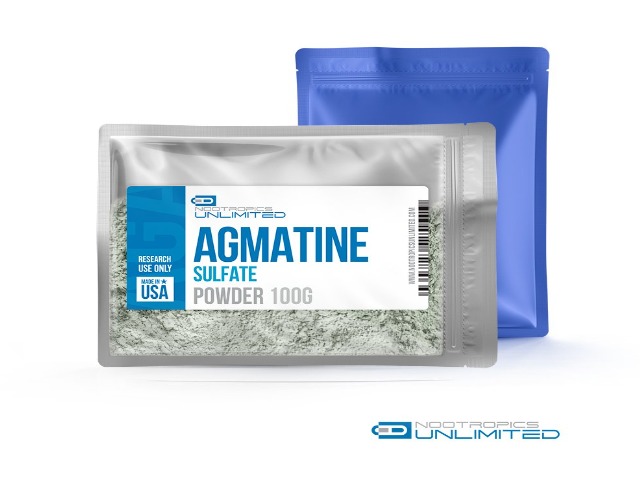
Agmatine Sulfate by Nootropics Unlimited
Shop Now →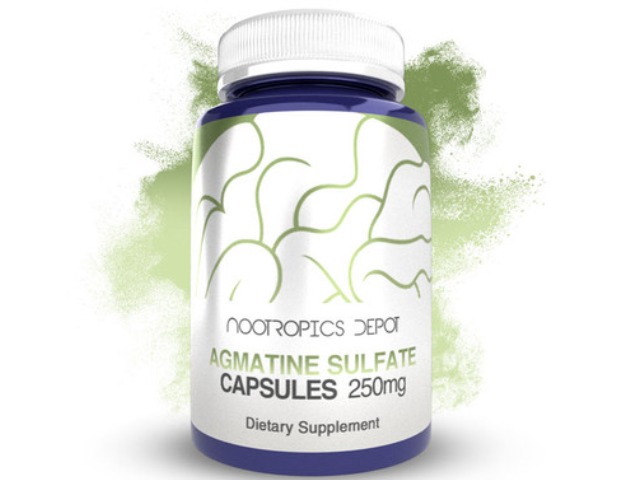
Nootropics Depot Buy Agmatine Sulfate Capsules 250mg
Shop Now →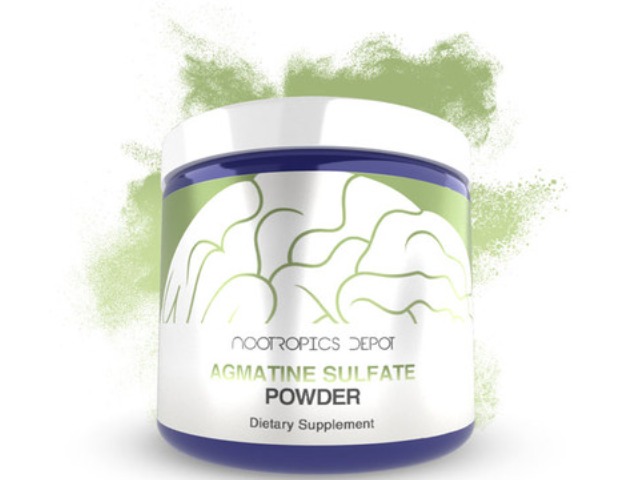
Nootropics Depot Buy Agmatine Sulfate Powder
Shop Now →Disclosure: These are affiliate links. I earn a small commission if you purchase — at no extra cost to you. I only recommend products I personally use or have thoroughly researched.
Research & Studies
This section includes 7 peer-reviewed studies referenced in our analysis.