
- Neuroprotection
- Antioxidant
- Anti-inflammatory
- Sleep Quality
- Memory Support
- Mental Fatigue Reduction
- Gut Health
- Immune Modulation
I’ll be honest — spirulina wasn’t exactly love at first sight for me. The first time I mixed that dark green powder into water, I took one sip and nearly spit it across my kitchen. Pond water. That’s what it tasted like. Expensive pond water.
But here’s the thing that kept me coming back: after about three weeks of consistent use, I noticed something subtle. The afternoon brain fog that had become my daily companion just… wasn’t there anymore. My sleep scores on my Oura ring started creeping up. Nothing dramatic. Nothing that screamed “miracle supplement.” Just a quiet, steady improvement in my baseline — the kind of change that makes you realize how far below normal you’d been operating.
That experience mirrors what the science is starting to confirm. And the science on this ancient organism is getting genuinely interesting.
The Short Version: Arthrospira platensis (spirulina) is a 3.5-billion-year-old cyanobacterium packed with 55-70% protein, phycocyanin (a potent antioxidant pigment), and a broad spectrum of vitamins and minerals. Clinical trials show meaningful benefits for sleep quality, inflammation, and visual memory — particularly in older adults. It’s best understood as a nutritional foundation that removes obstacles to brain function rather than a direct cognitive enhancer. Quality sourcing matters enormously due to contamination risks.
What Is Arthrospira platensis?
Despite being marketed as “blue-green algae,” spirulina is technically a photosynthetic bacterium — a cyanobacterium, to be precise. It’s one of the oldest life forms on the planet, with fossils dating back roughly 3.5 billion years. The stuff has been thriving since before the atmosphere had meaningful oxygen levels. It helped create that oxygen.
Humans figured out its value long before modern science caught up. The Aztecs harvested spirulina from Lake Texcoco in central Mexico, calling it “tecuitlatl” and using it as a staple food. Across the Atlantic, the Kanembu people around Lake Chad have been harvesting it as “dihé” for centuries — drying it into cakes and incorporating it into daily meals. These weren’t health-fad cultures. They were people who needed dense, reliable nutrition and found it in this blue-green organism.
Modern cultivation took off in the 1970s, and NASA even studied spirulina as a potential food source for long-duration space missions. It received GRAS (Generally Recognized as Safe) status from the FDA, and today it’s one of the most widely consumed supplements on the planet.
Here’s what makes it relevant for brain health: spirulina isn’t just protein and vitamins. Its primary bioactive compound — a blue pigment-protein called C-phycocyanin — turns out to be a remarkably potent antioxidant and anti-inflammatory agent. And those two properties happen to address the root causes of most age-related cognitive decline.
How Does Arthrospira platensis Work?
Think of your brain as a city with a power grid, a waste management system, and an immune defense force. Chronic inflammation is like having all three systems failing simultaneously — brownouts, trash piling up, and the immune force attacking its own citizens. Spirulina’s bioactive compounds work across all three systems at once.
The star player is phycocyanin, specifically its chromophore called phycocyanobilin (PCB). Structurally, PCB resembles bilirubin — your body’s own powerful antioxidant. This isn’t a coincidence. It means PCB slots into the same protective pathways your body already uses, and it does so more effectively than zeaxanthin, alpha-tocopherol, or caffeic acid at inhibiting oxidation.
At the molecular level, phycocyanin activates a pathway called Nrf2/ARE — essentially flipping the master switch on your body’s internal antioxidant defense system. This upregulates a suite of protective enzymes: HO-1, SOD, GPx, catalase. Think of it as upgrading your brain’s trash collection service from weekly pickup to daily.
Simultaneously, spirulina suppresses NF-κB, the master inflammatory transcription factor. When NF-κB is overactive — and in most modern humans dealing with poor sleep, processed food, and chronic stress, it is — it floods your brain with pro-inflammatory cytokines like TNF-α, IL-1β, and IL-6. Spirulina dials that down while increasing anti-inflammatory IL-10.
But here’s what got me really interested: spirulina also appears to increase BDNF (brain-derived neurotrophic factor) — the protein that supports neuroplasticity, dendritic spine density, and synaptic function. Research shows fermented spirulina extract enhances BDNF through the ERK → p-CREB signaling cascade. In practical terms, that’s your brain’s ability to build new connections and strengthen existing ones.
The neurotransmitter effects are broad rather than targeted. Spirulina supports dopamine pathways by upregulating tyrosine hydroxylase in the substantia nigra, provides tryptophan as a serotonin precursor, and even shows cholinesterase-inhibiting activity — meaning it helps preserve acetylcholine signaling, the neurotransmitter most directly involved in memory and learning.
In plain English: spirulina doesn’t jack up one neurotransmitter the way a stimulant does. It creates better conditions for all of them to function properly. Less inflammation, less oxidative damage, more neurotrophic support, better neurotransmitter raw materials. It’s infrastructure, not a performance-enhancing drug.
Reality Check: Spirulina is not going to give you the acute focus boost of caffeine or the memory enhancement of a racetam. It works by removing systemic obstacles to optimal brain function — inflammation, oxidative stress, nutrient gaps. The effects are real but cumulative. Think months, not minutes.
Benefits of Arthrospira platensis
Sleep Quality — The Strongest Human Evidence
A 2025 double-blind RCT with 66 adults experiencing mild-to-moderate depression found that just 2g per day of spirulina significantly improved Pittsburgh Sleep Quality Index scores after 8 weeks (4.97 vs. 6.73, p=0.004). Both sleep quality and sleep latency — how long it takes to fall asleep — showed meaningful improvement. This lines up with what I experienced personally and what I hear from readers consistently.
A separate 2021 double-blind RCT in ulcerative colitis patients found 1g per day reduced sleep disturbances (p=0.03) and stress (p=0.04) after 8 weeks. The fact that sleep benefits show up across different populations and conditions suggests this is a robust effect, not a statistical fluke.
Anti-Inflammatory Effects — Broad and Well-Documented
This is where the evidence is deepest. A 2025 triple-blind RCT in 80 patients with relapsing-remitting MS found that just 1g per day for 12 weeks produced large reductions in IL-1β (Cohen’s d=1.00, p<0.001) and IL-6 (Cohen’s d=0.96, p<0.001), with significant improvements in physical function, energy, and health perception. A 2025 meta-analysis of 35 RCTs confirmed significant reductions in TNF-α, IL-6, hs-CRP, blood glucose, and lipids, with GRADE quality rated moderate to high.
For anyone dealing with chronic low-grade inflammation — which, let’s be real, is most of us living modern lifestyles — this alone makes spirulina worth considering.
Memory and Cognitive Function — Promising but Still Early
A well-designed 2022 double-blind RCT gave 3g per day of Spirulina maxima ethanol extract to 80 older adults with mild cognitive impairment for 12 weeks. The results were encouraging: significant improvements in visual learning (p=0.007), visual working memory (p=0.024), and vocabulary scores (p=0.043). No adverse effects were reported.
In Alzheimer’s patients, a 2023 double-blind RCT found 1g per day improved MMSE scores (+0.30 vs. -0.38, p=0.01) while also reducing hs-CRP and insulin resistance. That’s a modest effect size — but in a disease defined by progressive decline, any improvement is notable.
Mental Fatigue — Quick Onset
A 2016 double-blind RCT found that 3g per day improved cognitive performance and reduced subjective mental fatigue both acutely (within 4 hours of the first dose) and chronically (after 8 weeks). That acute effect was surprising to me — spirulina is generally a slow-burn supplement, but there may be a measurable short-term boost as well.
What About Depression and Anxiety?
I want to be transparent here. The 2025 depression RCT showed the spirulina group’s DASS-21 scores consistently improved (19.27 → 14.24 → 11.58) while placebo plateaued — but the between-group difference didn’t reach statistical significance (p=0.656). It’s trending in the right direction, but I can’t call this proven. More and larger trials are needed.
Insider Tip: The strongest evidence points to spirulina as a foundation builder — reducing systemic inflammation and improving sleep quality, which then creates the conditions for better cognitive function. If you’re already optimizing sleep, gut health, and stress management, spirulina amplifies those gains. If you’re ignoring fundamentals, it’s not going to overcome that.
How to Take Arthrospira platensis
Standard dosing for cognitive support: 3g per day, based on the MCI and mental fatigue trials. For general health and anti-inflammatory benefits, 1–2g per day appears effective.
Start low. I cannot stress this enough. Begin with 1g per day for the first week. Your gut microbiome needs time to adjust, and spirulina is a potent prebiotic. Jumping straight to 3g is a recipe for bloating and regret. Ask me how I know.
Timing matters. Morning dosing works best for energy and cognitive benefits — spirulina is rich in B-vitamins, iron, and protein, all of which support daytime alertness. However, the sleep quality RCT dosed before bedtime, so if sleep is your primary goal, evening dosing is worth trying.
Absorption: Empty stomach maximizes absorption — wait about 15 minutes before eating. If you’re prone to GI sensitivity, take it with food and accept a slight reduction in absorption. Consistency matters more than optimization here.
Forms ranked by bioavailability:
- Liquid/fresh extract — Highest bioavailability, fastest absorption, hardest to find
- Powder — Good bioavailability, most cost-effective, but the taste is… an acquired skill
- Tablets/capsules — Most convenient, slightly lower bioavailability due to binders
- Phycocyanin extract — Concentrated bioactive (20–200mg/day), targeted but misses the full nutritional profile
- Ethanol extract — Used in the MCI trial, may concentrate specific brain-active compounds
Duration: Clinical benefits for memory emerged at 12 weeks. Sleep improvements appeared at 8 weeks. Plan for at least 8–12 weeks of consistent daily use before assessing results. There’s no established need to cycle spirulina — clinical trials show safety with continuous use up to 12 months.
Pro Tip: If you can’t stand the powder taste, blend it into a fruit smoothie with banana and berries. The sweetness masks the flavor almost completely. Or just use capsules — the bioavailability difference isn’t worth the daily struggle if it means you stop taking it.
Side Effects & Safety
Common Side Effects
GI upset is the most frequent complaint — nausea, bloating, cramps, and occasionally diarrhea, especially when starting at too-high doses. This usually resolves within the first 1–2 weeks as your gut adjusts. Some people report headache and fatigue initially, which may reflect a temporary shift in gut flora or mild detoxification.
The Contamination Problem — This Is Serious
Here’s where I need to be blunt. Quality sourcing is the single most important variable with spirulina. More important than dose, more important than timing, more important than the form you choose.
Spirulina bioaccumulates heavy metals from its environment. One study found over a third of commercial products exceeded California Prop 65 limits for lead — including nearly half of organic products. “Organic” does not mean “contaminant-free.” A 2011 German study found cyanotoxins in all 13 algae products analyzed. Some products have been found to contain microcystins (hepatotoxins) and even BMAA, a neurotoxin linked to neurodegenerative disease.
Important: Always choose spirulina from controlled cultivation facilities with third-party heavy metal and microcystin testing. Request a Certificate of Analysis (COA). Products verified by USP, ConsumerLab, or NSF International offer the highest confidence. Wild-harvested spirulina or products without transparent testing are not worth the risk at any price.
Who Should NOT Take Spirulina
Phenylketonuria (PKU): This is an absolute contraindication. Spirulina contains 2,600–4,100mg phenylalanine per 100g — far exceeding PKU dietary limits.
Autoimmune conditions: Spirulina stimulates immune function, which can trigger flares in MS, lupus, RA, psoriasis, and type 1 diabetes. Paradoxically, some MS research shows benefits under clinical supervision — but self-medicating is a bad idea here. Talk to your doctor.
Bleeding disorders or anticoagulant use: Spirulina has mild anticoagulant properties. Combined with warfarin, aspirin, or clopidogrel, this can increase bleeding risk. If you’re on blood thinners, vitamin K content also affects INR and requires monitoring.
Immunosuppressant medications: Spirulina can counteract cyclosporine, tacrolimus, and azathioprine. In transplant patients, this could mean organ rejection. Do not combine without explicit medical clearance.
Pregnancy and nursing: Insufficient human data exists. The main risk is contamination exposure. If you choose to use it, select only rigorously tested products and consult your healthcare provider.
Stacking Arthrospira platensis
Spirulina works best as a foundational layer that amplifies other supplements’ effects.
Spirulina + Vitamin C: Take these together. Vitamin C significantly enhances absorption of spirulina’s non-heme iron. This is the simplest and most evidence-based pairing.
Spirulina + Chlorella: These two complement each other well. Spirulina brings more protein, phycocyanin, and vitamins E and K. Chlorella adds higher omega-3s, choline for acetylcholine support, and stronger heavy metal chelation. Together, they cover more nutritional bases than either alone.
Spirulina + Curcumin: Spirulina’s protein matrix actually improves curcumin’s notoriously poor bioavailability, and both compounds target NF-κB through different mechanisms. Genuine synergy here.
Spirulina + Omega-3s (DHA): Complementary anti-inflammatory pathways — spirulina inhibits COX/LOX enzymes while omega-3s promote resolution of inflammation through resolvins. If you’re building an anti-neuroinflammation stack, this is the core.
Spirulina + Bacopa Monnieri: Spirulina provides the antioxidant and anti-inflammatory foundation while Bacopa delivers direct memory-enhancing mechanisms through dendritic branching. Both require 8–12 weeks of consistent use, so they’re philosophically aligned — patience-based brain support.
What to avoid combining: Don’t stack with immunosuppressants, blood thinners (without medical supervision), or thyroid medications taken at the same time (separate by several hours). Skip additional high-dose iron supplements — spirulina already provides meaningful iron.
My Take
After years of experimenting with nootropics — from the flashy racetams to obscure Russian peptides — I’ve come to appreciate the compounds that don’t make you feel different so much as they make everything else work better. Spirulina is the definition of that.
It’s not sexy. Nobody’s posting breathless TikToks about their spirulina experience. But when I look at what actually moved the needle for my baseline brain function over the long term, spirulina is in my top tier of daily supplements. The sleep quality improvement was what first got my attention, and the sustained reduction in that low-grade brain fog kept me on it.
Who this is best for: People dealing with chronic low-grade inflammation (which, honestly, includes most of us), anyone wanting to build a strong nutritional foundation for brain health, older adults concerned about cognitive decline, and people who’ve already optimized the big rocks — sleep, diet, stress — and want to amplify those gains.
Who should try something else: If you’re looking for an acute cognitive boost for a deadline, this isn’t it. If you have PKU or active autoimmune conditions, look elsewhere. And if you’re not willing to spend the money on a quality-tested product, I’d rather you skip spirulina entirely than gamble on a contaminated one.
The one thing I wish I’d known earlier: source quality isn’t a nice-to-have with spirulina — it’s everything. The difference between a well-tested Hawaiian spirulina and a random Amazon product isn’t just efficacy. It could be the difference between neuroprotection and neurotoxin exposure. Do your homework on the brand, request the COA, and don’t cheap out. Your brain is worth the extra cost.
Recommended Spirulina Products
I know how frustrating it is to sort through dozens of brands making the same claims. These are the ones I've personally vetted — because quality is the difference between results and wasted money.
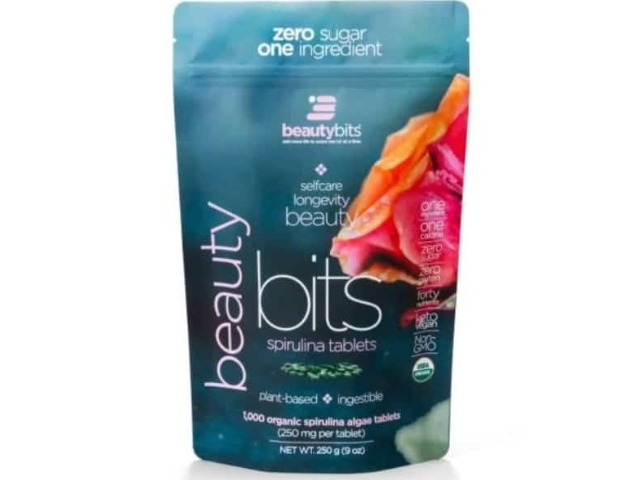
Disclosure: These are affiliate links. I earn a small commission if you purchase — at no extra cost to you. I only recommend products I personally use or have thoroughly researched.