
- Protects neuronal membranes from oxidative damage
- Slows functional decline in mild-to-moderate Alzheimer's disease
- Supports monoamine neurotransmitter synthesis
- Reduces lipid peroxidation in the brain
- Complements omega-3 fatty acids and vitamin C for integrated antioxidant defense
Here’s a confession that still makes me cringe: for the first two years of my supplement journey, I bought the cheapest vitamin E I could find at the pharmacy — a big bottle of synthetic dl-alpha tocopherol — and figured I was covered. I wasn’t. I was taking a form my body could barely use, at a dose that did essentially nothing, and patting myself on the back for “optimizing.”
The thing is, vitamin E is one of those nutrients that’s simultaneously overhyped and underappreciated. Overhyped because no, it’s not going to turn you into a cognitive superhuman. Underappreciated because the right form, at the right dose, is one of the most well-studied neuroprotective compounds we have — with a landmark clinical trial showing it can delay Alzheimer’s progression by over six months.
If you’ve ever been confused by the alphabet soup of vitamin E forms, or wondered whether this old-school antioxidant still deserves a spot in a modern nootropics stack, this guide breaks it all down.
The Short Version: D-alpha tocopherol is the natural, most bioactive form of vitamin E — your brain’s primary fat-soluble antioxidant shield. It’s not a cognitive enhancer you’ll feel working, but strong evidence supports it for slowing decline in Alzheimer’s disease, and it’s a smart foundational addition to any long-term brain health protocol. Take 200–400 IU daily with food, and always choose the natural “d” form over synthetic “dl.”
What Is D-Alpha Tocopherol?
D-alpha tocopherol is the naturally occurring form of vitamin E — a fat-soluble antioxidant your body needs but can’t make on its own. The name “tocopherol” comes from Greek words meaning “to carry birth,” because it was originally discovered in 1922 as a factor necessary for reproduction in rats. Not the sexiest origin story, but the science has come a long way since then.
Here’s what matters: there are eight different forms of vitamin E found in nature (four tocopherols and four tocotrienols), but your body plays favorites. A protein in your liver called alpha-tocopherol transfer protein (α-TTP) specifically selects d-alpha tocopherol and loads it into lipoproteins for delivery throughout your body. The other forms? Largely metabolized and excreted. Your biology is telling you which form it wants.
The richest natural sources include wheat germ oil, sunflower seeds, almonds, and hazelnuts. But here’s the reality — many adults don’t come close to the RDA of 15 mg from diet alone, especially if they’re eating a low-fat diet. That gap is where intelligent supplementation comes in.
One critical distinction before we go further: d-alpha tocopherol (natural) is not the same as dl-alpha tocopherol (synthetic). The synthetic version is a mix of eight stereoisomers, and only one-eighth of it is the form your body actually prefers. Natural d-alpha tocopherol has roughly twice the biological activity of its synthetic counterpart. That little “l” makes a big difference.
How Does D-Alpha Tocopherol Work?
Think of your brain’s cell membranes like a chain-link fence made of delicate polyunsaturated fats. Every second of every day, rogue oxygen molecules — free radicals — are slamming into that fence, trying to set off a chain reaction of damage called lipid peroxidation. D-alpha tocopherol is the security guard embedded directly in the fence, intercepting those radicals before the damage can cascade.
That’s the plain-English version. Here’s what’s happening at the molecular level.
Your brain consumes roughly 20% of your body’s total oxygen despite being only 2% of your body weight. All that metabolic activity generates enormous quantities of reactive oxygen species (ROS). Meanwhile, neuronal membranes are packed with highly oxidizable polyunsaturated fatty acids — especially DHA. It’s a perfect storm for oxidative damage.
Alpha-tocopherol sits within cell membranes and donates a hydrogen atom to lipid peroxyl radicals, neutralizing them and breaking the chain reaction. Once it’s done its job and becomes oxidized itself, vitamin C regenerates it back to its active form at the membrane-water interface — a beautiful recycling system.
But the neuroprotective story goes deeper than antioxidant defense:
- Neurotransmitter support: Chronic alpha-tocopherol supplementation has been shown to increase serotonin, dopamine, and noradrenaline levels in the hippocampus and striatum by upregulating the enzymes tryptophan hydroxylase and tyrosine hydroxylase (Ramis et al., 2016, Rejuvenation Research).
- Mitochondrial protection: It reduces mitochondrial ROS production and stabilizes mitochondrial membrane potential — critical because mitochondrial dysfunction is a hallmark of neurodegeneration.
- Anti-inflammatory signaling: Alpha-tocopherol inhibits protein kinase C (PKC) and modulates the NF-κB pathway, dialing down inflammatory gene expression.
- Glutathione maintenance: It helps preserve levels of glutathione and superoxide dismutase (SOD) activity in the hippocampus — your brain’s internal antioxidant defense system.
So what does all that actually mean for you? Alpha-tocopherol isn’t boosting your cognitive performance like a stimulant. It’s maintaining the structural and chemical integrity of your neurons over time. It’s preventive maintenance, not a turbo boost.
Benefits of D-Alpha Tocopherol
Let me be straight with you about the evidence — because this is where vitamin E gets complicated.
The Strong Case: Slowing Alzheimer’s Progression
The most compelling evidence comes from the TEAM-AD VA trial, published in JAMA in 2014. This was a large, well-designed study — 613 patients with mild-to-moderate Alzheimer’s disease already taking a cholinesterase inhibitor. Half received 2,000 IU/day of alpha-tocopherol, and the results were striking:
- Functional decline slowed by 19% per year compared to placebo
- Clinical progression was delayed by approximately 6.2 months over the study period
- Caregiver burden decreased significantly
An earlier trial by Sano et al. (1997) in 341 moderate AD patients found that 2,000 IU/day significantly delayed nursing home admission. These aren’t small, preliminary results — this is robust clinical evidence.
Reality Check: Before you get too excited, here’s the critical caveat. The evidence strongly supports vitamin E for slowing decline in people who already have Alzheimer’s disease. It does not support taking vitamin E to prevent cognitive decline if you’re cognitively healthy. A trial in ~7,000 healthy women found 600 IU every other day for over four years provided zero cognitive benefit. The distinction matters.
The Moderate Case: Neurotransmitter and Brain Health Support
Animal studies paint a promising picture that hasn’t fully translated to clinical trials yet. Alpha-tocopherol has been shown to increase monoaminergic neurotransmitter levels in a dose- and time-dependent manner in aged rats, with corresponding improvements in both cognitive and motor abilities. It’s also been shown to improve synaptic plasticity and Purkinje neuron integrity in deficient animals.
These are encouraging signals, but we should be honest — animal models don’t always predict human outcomes. The preclinical data supports the mechanism, but the clinical evidence for cognitive enhancement in healthy people simply isn’t there.
Where It Genuinely Shines
The real value of d-alpha tocopherol for most people isn’t dramatic cognitive enhancement — it’s protecting what you’ve got. Your brain is under constant oxidative assault, and alpha-tocopherol is the primary lipid-soluble defense your membranes have. That’s not flashy, but it’s fundamental.
How to Take D-Alpha Tocopherol
Dosage
- General neuroprotection: 200–400 IU (134–268 mg) daily
- Clinical Alzheimer’s protocols: 2,000 IU daily — this is a medical dose, not a self-supplementation target
- RDA (minimum): 15 mg (22.4 IU) — what you need to avoid deficiency
- Upper Limit: 1,500 IU of natural form per day
Start at 200 IU daily and assess over 8–12 weeks. There’s no need to megadose — more isn’t always better with vitamin E, and there are real reasons to stay moderate (more on that in the safety section).
Timing and Absorption
Take it with a meal that contains fat. This isn’t optional — vitamin E is fat-soluble, and taking it on an empty stomach dramatically reduces absorption. A handful of almonds, avocado toast, or even just a meal with olive oil dressing will do the job.
Morning or evening doesn’t matter much. Consistency matters more than timing.
Pro Tip: No loading dose is needed. Tissue levels build gradually over weeks, and benefits (especially neuroprotective ones) accumulate over months. This is a marathon supplement, not a sprint.
Forms: This Is Where People Get Tripped Up
| Form | What to Know |
|---|---|
| d-alpha tocopherol | The gold standard. Natural, highest bioavailability. |
| d-alpha tocopheryl acetate | Stable ester form common in softgels. Converted to active form in your gut. Solid choice. |
| d-alpha tocopheryl succinate | Another stable ester. Good for dry capsule formulations. |
| dl-alpha tocopherol | Synthetic. ~50% the biological activity of natural. Avoid. |
| Mixed tocopherols | Contains alpha, beta, gamma, and delta forms. Arguably the best choice — see below. |
Here’s an important nuance: supplementing with high-dose alpha-tocopherol alone can actually deplete your body’s gamma-tocopherol levels. Gamma-tocopherol has distinct anti-inflammatory properties that alpha doesn’t share — particularly its ability to trap reactive nitrogen species. A mixed tocopherols formula sidesteps this problem entirely.
Cycling
None needed. Vitamin E is an essential nutrient. Take it daily, consistently, indefinitely.
Side Effects and Safety
At standard doses (100–400 IU), d-alpha tocopherol is one of the most well-tolerated supplements available. Occasional mild GI discomfort is about the worst most people experience. But higher doses introduce real concerns you need to know about.
Important: High-dose vitamin E (>400 IU/day) has anticoagulant properties and can increase the risk of hemorrhagic stroke. A meta-analysis also suggested a possible slight increase in all-cause mortality at high doses, though this remains debated. Do not megadose without medical supervision.
The Prostate Cancer Question
The SELECT trial — a massive study of over 35,000 men — found a 17% increase in prostate cancer risk with 400 IU/day of synthetic vitamin E. However, the earlier ATBC trial found that just 50 mg/day reduced prostate cancer by 32%. The dose, form, and context all appear to matter. This is one more reason to stick with moderate doses of the natural form.
Drug Interactions
- Warfarin and anticoagulants: Enhanced bleeding risk. Monitor INR closely.
- Antiplatelet drugs (aspirin, clopidogrel): Additive bleeding risk.
- Orlistat and mineral oil: Significantly reduce vitamin E absorption.
- Chemotherapy: May theoretically reduce efficacy of oxidative cancer therapies — discuss with your oncologist.
Who Should Be Extra Cautious
- Anyone on blood thinners or with bleeding disorders
- People with vitamin K deficiency (amplifies bleeding risk dramatically)
- Those scheduled for surgery — discontinue high-dose supplementation 2–4 weeks beforehand
- Pregnant women should stay at RDA levels (15 mg); high-dose supplementation is not recommended
Stacking D-Alpha Tocopherol
This is where vitamin E really earns its place — not as a star player, but as the teammate that makes everyone else better.
The Antioxidant Recycling Trio
D-alpha tocopherol + Vitamin C + Selenium — this is the classic synergy, and the biochemistry is elegant. Vitamin E neutralizes lipid radicals in the membrane. Vitamin C regenerates the spent vitamin E at the membrane-water interface. Selenium powers the glutathione peroxidase system that handles the lipid hydroperoxides vitamin E prevents from forming. They’re a closed-loop defense system.
A study of 15,000 women found that combined vitamin E + C users over 20 years had significantly better cognition than those using either alone.
Other Strong Pairings
- CoQ10 (Ubiquinol): Another lipid-soluble membrane antioxidant. CoQ10 can help regenerate alpha-tocopherol, and together they protect complementary sites in mitochondrial membranes.
- Omega-3 fatty acids: Vitamin E protects the highly oxidizable DHA and EPA in neuronal membranes. If you’re taking fish oil, you arguably need more vitamin E.
- Alpha-lipoic acid: Unique because it’s both fat- and water-soluble, so it can regenerate vitamin E, vitamin C, and glutathione. A true force multiplier.
- Curcumin: Complementary anti-inflammatory and antioxidant pathways. Works through different mechanisms than vitamin E, so they don’t compete.
What to Avoid
- High-dose iron: Iron is pro-oxidant and can counteract vitamin E’s effects. If you take both, separate them by several hours.
- Orlistat or fat blockers: They’ll tank your vitamin E absorption.
- Isolated high-dose alpha-tocopherol without gamma: As mentioned above, this can deplete gamma-tocopherol. Go with mixed tocopherols.
Insider Tip: My preferred foundation stack for long-term neuroprotection is mixed tocopherols (400 IU) + vitamin C (500–1,000 mg) + omega-3s (EPA/DHA) + selenium (200 mcg). It’s not glamorous and you won’t feel it kick in after 30 minutes. But the biochemistry of these four working together is about as well-supported as antioxidant science gets.
My Take
I’ll be honest — d-alpha tocopherol is nobody’s idea of an exciting nootropic. You’re not going to take it and suddenly crank out a 4,000-word report in a flow state. It doesn’t have the immediate “wow” factor of something like modafinil or even lion’s mane.
But here’s what I’ve learned after years in this space: the supplements that matter most for long-term brain health are often the least exciting ones. Vitamin E is the foundation that other compounds build on. Your neuronal membranes are made of oxidizable fats. Alpha-tocopherol is the primary defense those membranes have. Without it, everything else you’re doing — the racetams, the adaptogens, the fancy peptides — is building on compromised infrastructure.
Who should take this? If you’re over 40, if you eat a diet that’s not bursting with nuts and seeds, if you’re taking omega-3s (which increase your vitamin E needs), or if you have any family history of neurodegeneration — d-alpha tocopherol with mixed tocopherols belongs in your stack. Period.
Who should probably skip it? If you’re a healthy 25-year-old eating a varied diet rich in nuts, seeds, and healthy oils, your diet may have you covered. And if you’re looking for something to sharpen focus or boost working memory right now, this isn’t it. Look into citicoline or bacopa instead.
My recommendation: grab a quality mixed tocopherols supplement (200–400 IU of d-alpha with gamma and other forms included), take it with your fattiest meal of the day, and forget about it. This isn’t something you think about — it’s something you just do, like wearing a seatbelt. You won’t feel it protecting you. That’s exactly the point.
Recommended Vitamin E Products
I know how frustrating it is to sort through dozens of brands making the same claims. These are the ones I've personally vetted — because quality is the difference between results and wasted money.
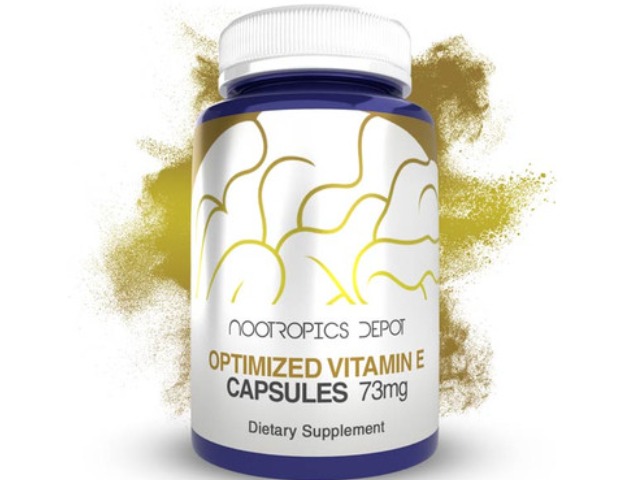
Disclosure: These are affiliate links. I earn a small commission if you purchase — at no extra cost to you. I only recommend products I personally use or have thoroughly researched.