
- Stimulates natural growth hormone release
- Improves deep sleep architecture
- Supports body composition and recovery
- May protect cardiac and organ tissue
- Increases appetite in wasting conditions
I’ll be honest — the first time I looked at growth hormone peptides, I felt like I’d wandered into a chemistry exam I hadn’t studied for. GHRP-2, GHRP-6, CJC-1295, Mod GRF, ipamorelin… the alphabet soup was overwhelming. And the online “bro science” didn’t help. Half the forums said these peptides would turn you into a superhuman. The other half said they were useless.
After years of digging through actual research, talking to clinicians who use these in practice, and hearing from hundreds of readers who’ve tried them, here’s what I can tell you: GHRP-2 is one of the more interesting peptides in this space — not because it’s magic, but because it has real clinical data behind it and a mechanism that actually makes sense.
The Short Version: GHRP-2 (pralmorelin) is a synthetic peptide that triggers your pituitary gland to release growth hormone in natural pulses. It’s the only growth hormone secretagogue ever approved for clinical use (in Japan, as a diagnostic tool), and research supports benefits for sleep quality, body composition, recovery, and appetite stimulation. It’s administered by subcutaneous injection, typically 100-300 mcg, 1-3 times daily. It’s not a miracle compound — but for the right person, it’s a genuinely useful tool.
What Is GHRP-2?
GHRP-2 — short for Growth Hormone Releasing Peptide-2, pharmaceutical name pralmorelin — is a synthetic six-amino-acid peptide that tells your pituitary gland to release growth hormone. Think of it as a very specific key that fits a very specific lock on your brain’s GH release system.
The story starts in 1976, when Dr. Cyril Bowers at Tulane University discovered that certain small peptides could trigger growth hormone release from pituitary cells. Through the 1980s, his team refined these compounds, eventually developing GHRP-6 as the first practical version. GHRP-2 came next in the early 1990s — engineered to be more potent with fewer side effects than its predecessor.
Here’s what sets GHRP-2 apart from most research peptides: it actually made it through clinical development. Kaken Pharmaceutical licensed it in Japan, and in 2004 it became the first growth hormone secretagogue approved for clinical use — specifically as a diagnostic tool for growth hormone deficiency. Wyeth pursued Phase II trials in the US, though they eventually discontinued development. That approval history, even if limited to diagnostics, means GHRP-2 has a safety and efficacy profile that’s been scrutinized more rigorously than most peptides people experiment with.
Reality Check: GHRP-2 is sold as a “research chemical” in most countries. It’s not FDA-approved for therapeutic use, and it’s banned by WADA in competitive sports. If you’re considering it, go in with eyes open about what it is and isn’t.
How Does GHRP-2 Work?
Here’s the plain-English version: your body releases growth hormone in pulses throughout the day, with the biggest surges happening during deep sleep. GHRP-2 amplifies those pulses by mimicking ghrelin — the “hunger hormone” your stomach produces — and hitting the same receptor on your pituitary gland.
Now for what’s actually happening under the hood.
GHRP-2 is a synthetic agonist of the ghrelin receptor (GHS-R1a). When it binds this receptor on pituitary somatotroph cells, it triggers calcium influx and activates protein kinase C and cAMP signaling pathways — the biochemical cascade that tells those cells to dump growth hormone into your bloodstream.
But it doesn’t stop at the pituitary. GHRP-2 works a dual-site action — it also acts on the hypothalamus to suppress somatostatin, your body’s natural GH brake pedal. So you’re simultaneously stepping on the gas and releasing the brake. That’s why GHRP-2 produces a more robust GH pulse than you’d get from just stimulating the pituitary alone.
There’s a third piece that doesn’t get enough attention: GHRP-2 also binds CD36 receptors on cardiac, vascular, and other tissue cells. This activates prosurvival signaling pathways (PI-3K/AKT1), which explains the cytoprotective effects researchers keep finding in organ damage models. It’s a mechanism that’s completely independent of growth hormone.
Translation: GHRP-2 isn’t just “take peptide, get more GH.” It’s working through at least three distinct pathways — direct pituitary stimulation, hypothalamic modulation, and tissue-protective signaling — which is why its effects extend beyond what you’d expect from simply elevating growth hormone.
One effect worth highlighting: GHRP-2 increases Stage 3 and Stage 4 deep sleep by approximately 50% each, and REM sleep by about 20%. If you understand how critical deep sleep is for memory consolidation, tissue repair, immune function, and metabolic health, you start to see why improved sleep architecture might be the single most valuable thing this peptide does.
What GHRP-2 Actually Does — Benefits Backed by Evidence
Let me be straight about what the science supports and where the hype outpaces the data.
Growth Hormone Release — Strong Evidence
This is GHRP-2’s core function, and the evidence is rock solid. It reliably stimulates GH secretion in both healthy subjects and those with GH deficiency. That’s why Japan approved it as a diagnostic tool — a peak GH cutoff of 15.0 µg/L after GHRP-2 administration reliably distinguishes GHD patients from healthy controls. Studies in adolescents show median peak GH levels around 89-90 ng/mL, confirming potent stimulatory effects.
When combined with a GHRH analog like CJC-1295 or Mod GRF 1-29, the effect is synergistic — research shows a 16-fold increase in 24-hour GH levels over baseline. That’s not additive. That’s multiplicative.
Sleep Quality — Moderate but Consistent Evidence
The deep sleep data is genuinely compelling. A 50% increase in slow-wave sleep isn’t subtle — that’s the kind of change people notice. Most users report improved sleep within the first few days of use, and this is probably the single most commonly reported benefit across the community.
Insider Tip: Bedtime dosing is the sweet spot for most people. It aligns with your body’s natural nocturnal GH surge and capitalizes on those sleep architecture improvements. Take it on a completely empty stomach 30-60 minutes before bed.
Body Composition and Recovery — Moderate Evidence
The GHS class in general has demonstrated improvements in lean mass, decreased fat mass, and increased exercise tolerance — particularly in wasting states and older populations. A safety and efficacy review published in Sexual Medicine Reviews notes that GH secretagogues “might improve growth velocity in children, stimulate appetite, improve lean mass in wasting states and in obese individuals, decrease bone turnover, increase fat-free mass, and improve sleep.”
The caveat: most of this data comes from the broader GHS class, not GHRP-2-specific long-term trials. The effects are real, but expect gradual changes over 4-8 weeks — not overnight transformation.
Cardio and Organ Protection — Promising Animal Data
This is where GHRP-2 gets interesting beyond the typical “more growth hormone” story. Animal studies show it reduces cardiac fibrosis, lowers myocardial collagen deposition, and protects against liver ischemia/reperfusion injury and acute tubular necrosis in the kidneys. These effects appear to be mediated through CD36 receptors, not the GH pathway — meaning they’d occur even without the growth hormone boost.
Promising? Absolutely. But this is animal data, and we don’t have human therapeutic trials confirming these benefits translate. File it under “mechanistically exciting, awaiting human confirmation.”
Appetite Stimulation — Strong Evidence
Controlled studies show GHRP-2 increases food intake by about 36% in healthy men. This is a direct pharmacological effect via the ghrelin pathway. For people with wasting conditions or anorexia, this is a feature. For people trying to lose weight, it’s something to plan around.
Pro Tip: GHRP-2’s appetite stimulation is notably milder than GHRP-6. If you’ve heard horror stories about GHRP-6 hunger, know that GHRP-2 is a significant step down in that department — most users describe it as “increased appetite” rather than “ravenous.”
How to Take GHRP-2 Without Wasting Your Money
Getting the protocol right matters with this peptide. Here’s what you need to know.
Dosage: 100-300 mcg per injection, subcutaneously. Start at 100 mcg to assess tolerance before working up.
| Protocol | Dose | Frequency | Best For |
|---|---|---|---|
| Conservative | 100 mcg | 1-2x daily | First-time users, assessing tolerance |
| Standard | 150-200 mcg | 2-3x daily | Most users, general benefits |
| Aggressive | 300 mcg | 2-3x daily | Experienced users, specific goals |
Timing is everything. Take GHRP-2 on a completely empty stomach — elevated blood sugar and fatty acids blunt the GH response significantly. Wait at least 30 minutes after injection before eating. The best windows are upon waking, 30 minutes post-workout, and before bed.
Cycling is not optional. A study found that 5 consecutive days of daily GHRP-2 injections caused response attenuation and failed to stimulate IGF-1 in healthy young men. The standard approach is 5 days on, 2 days off, for 8-12 week cycles. This preserves receptor sensitivity and keeps the GH pulses robust.
Reconstitution: GHRP-2 comes as a lyophilized (freeze-dried) white powder. Reconstitute with bacteriostatic water, store refrigerated at 2-8°C, and use within 3-4 weeks. Use 30-gauge insulin needles and rotate injection sites between abdomen, thighs, and upper arms.
Important: An intranasal route has been demonstrated effective at 5-20 mcg/kg in clinical studies, and GHRP-2 is described as “orally active” in pharmaceutical literature — but subcutaneous injection remains the most reliable and well-studied method for consistent results.
The Side Effects Nobody Warns You About
GHRP-2 is generally well-tolerated, but let’s talk about what to actually expect.
What you’ll probably notice:
- Increased hunger — this is pharmacological, not a “side effect” per se. It’s what the ghrelin pathway does. Plan meals accordingly.
- Mild water retention — especially in the first couple weeks. Usually subsides.
- Warmth or flushing at the injection site — transient and harmless.
- Drowsiness — particularly with bedtime dosing. Actually a feature, not a bug, if you’re using it for sleep.
What you should monitor:
- Cortisol elevation — GHRP-2 stimulates ACTH and cortisol at a magnitude similar to CRH. This is mild and dose-dependent, but worth knowing about if you’re already dealing with HPA axis issues.
- Prolactin bump — temporary, less pronounced than with GHRP-6, and returns to baseline within about an hour. Still, be aware.
- Insulin sensitivity — GH elevation can decrease insulin sensitivity over time. If you have diabetes or significant insulin resistance, this peptide is not for you.
Red lines — who should avoid GHRP-2:
- Active cancer or history of malignancy — any GH-elevating compound carries theoretical risk of promoting tumor growth
- Diabetes or significant insulin resistance
- Pituitary tumors or hypothalamic disorders
- Pregnancy or nursing
- Anyone taking somatostatin analogs (like octreotide) — they directly block GHRP-2’s mechanism
Important: If you’re on insulin or oral hypoglycemics, talk to your doctor before considering GHRP-2. It can counteract blood sugar-lowering medications. The same goes for corticosteroids — the additive cortisol stimulation may be significant.
Stacking GHRP-2 for Maximum Effect
The single most impactful thing you can do with GHRP-2 is pair it with a GHRH analog. This isn’t speculation — it’s well-documented synergy.
The Gold Standard Stack: GHRP-2 + GHRH Analog
GHRP-2 increases GH pulse frequency. GHRH analogs like CJC-1295 or Mod GRF 1-29 increase pulse amplitude. Together, they produce that 16-fold increase in 24-hour GH levels — dramatically more than either compound alone.
Typical protocol: 100-150 mcg GHRP-2 + 100 mcg Mod GRF 1-29, taken together 2-3 times daily.
Other Synergies Worth Considering
- Ipamorelin — if GHRP-2’s appetite or cortisol effects bother you, ipamorelin is a cleaner alternative with a more selective profile. Slightly less potent, but fewer secondary hormonal effects.
- BPC-157 — complementary recovery peptide working through entirely different mechanisms. Popular combination for injury recovery protocols.
- Melatonin — supports the sleep benefits synergistically. Low-dose melatonin (0.3-1mg) alongside bedtime GHRP-2 is a common approach.
- MK-677 — an oral GHS option that some people alternate with GHRP-2 during off-cycle periods. Since it hits the same receptor, using both simultaneously has diminishing returns.
What to Avoid
Don’t combine GHRP-2 with exogenous growth hormone (somatropin) — it’s redundant and risks pushing GH into supraphysiological territory. And don’t eat a carb-heavy or fatty meal anywhere near your injection window. A spike in blood sugar will tank your GH response and waste the dose.
My Take
Here’s where I’ll be direct: GHRP-2 sits in a genuinely useful middle ground among growth hormone peptides. It’s more potent than ipamorelin, less side-effect-heavy than GHRP-6, and it has something almost no other research peptide can claim — an actual clinical approval history, even if limited to diagnostics in Japan.
The sleep improvements are the real story here, in my opinion. Most people come to GHRP-2 looking for body composition benefits or anti-aging effects, and those are legitimate. But the deep sleep enhancement — a 50% increase in slow-wave sleep — is the kind of foundational improvement that ripples through everything else. Better sleep means better recovery, better cognitive function, better hormone balance, better stress resilience. It’s the rising tide that lifts all boats.
That said, this isn’t a “take it and forget it” compound. You’re dealing with subcutaneous injections, precise timing around meals, cycling protocols, and the need for a quality source with third-party testing. It’s an investment of effort, not just money.
Who GHRP-2 is best for: People who’ve already dialed in their foundations — sleep hygiene, nutrition, stress management, exercise — and want to push the needle further on recovery, sleep quality, and body composition. It’s particularly well-suited for people over 30 who are noticing the early effects of declining GH output.
Who should look elsewhere: If you’re not willing to inject, try MK-677 as an oral alternative. If appetite stimulation is a dealbreaker, ipamorelin has a cleaner profile. And if you haven’t addressed the basics yet — gut health, sleep, stress, nutrition — no peptide is going to compensate for a broken foundation. Start there.
The bottom line: GHRP-2 is one of the more evidence-supported peptides in the GHS space. It’s not a shortcut. It’s not a miracle. But combined with a GHRH analog and used intelligently within a broader health strategy, it’s a tool that delivers on what the research suggests it should.
Recommended GHRP-2 Products
I know how frustrating it is to sort through dozens of brands making the same claims. These are the ones I've personally vetted — because quality is the difference between results and wasted money.
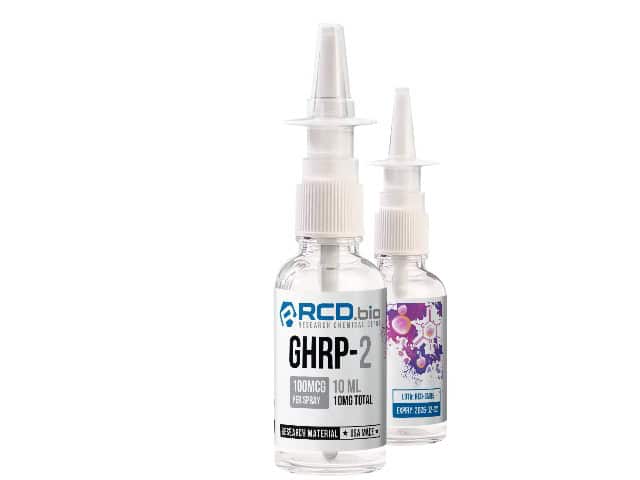
Disclosure: These are affiliate links. I earn a small commission if you purchase — at no extra cost to you. I only recommend products I personally use or have thoroughly researched.
Research & Studies
This section includes 4 peer-reviewed studies referenced in our analysis.