
- Potent growth hormone release
- Appetite stimulation
- Cardioprotection
- Neuroprotection and brain IGF-1 increase
- Wound healing and anti-scarring
- Enhanced recovery and sleep quality
I’m going to be honest with you — the first time I looked into growth hormone peptides, I felt like I’d wandered into a chemistry lecture I hadn’t signed up for. GHRP-6, GHRP-2, CJC-1295, ipamorelin… the alphabet soup alone was enough to make my head spin. And then I actually tried GHRP-6 and realized the real challenge wasn’t understanding the science. It was dealing with the most intense, all-consuming hunger I’d ever experienced in my life.
That hunger is actually the defining feature of this peptide — and depending on your goals, it’s either the best thing about it or the reason you should look elsewhere. Let me break down everything you need to know.
The Short Version: GHRP-6 is a synthetic peptide that triggers your pituitary gland to release growth hormone. It’s the most potent appetite stimulator in the GH secretagogue family, with strong evidence for GH release and promising (but mostly preclinical) data for heart protection, brain health, and wound healing. Best suited for people who want GH benefits AND need help eating more — bodybuilders in a bulk phase, people with wasting conditions, or anyone struggling with poor appetite. If you don’t want ravenous hunger, ipamorelin is a cleaner alternative.
What Is GHRP-6?
GHRP-6 — Growth Hormone-Releasing Peptide 6 — is a synthetic chain of six amino acids designed to make your pituitary gland release growth hormone on demand. It was developed by endocrinologist Cyril Y. Bowers at Tulane University, who first stumbled onto its GH-releasing properties back in 1977 while experimenting with modified enkephalin molecules. By 1982, GHRP-6 became the first synthetic peptide shown to reliably trigger dose-dependent GH release both in cell cultures and in living subjects.
That discovery kicked off an entire class of compounds. GHRP-2, hexarelin, ipamorelin, and eventually oral options like MK-677 all trace their lineage back to Bowers’ work with GHRP-6.
Here’s the important context: GHRP-6 is not FDA-approved for human use. The FDA has restricted its compounding, WADA has banned it in competitive sports, and it’s sold strictly as a “research chemical” in the U.S. That doesn’t mean it’s dangerous — it means the regulatory framework hasn’t caught up with the science. But it does mean you need to approach this with eyes wide open, do your homework on sourcing, and understand that long-term human safety data simply doesn’t exist yet.
Reality Check: Before you dive into peptide protocols, make sure the basics are handled. Sleep, nutrition, stress management, gut health — these are the foundation. GHRP-6 can amplify what a healthy system is already doing. It can’t fix a cracked foundation. I learned this the hard way after spending a small fortune on supplements before addressing my own gut issues.
How Does GHRP-6 Work?
Think of your growth hormone system like a two-key ignition. Your body has two separate “keys” that start the GH engine — and GHRP-6 turns one of them.
Key #1 is the GHRH pathway — this is your body’s natural growth hormone-releasing hormone working through a signaling system called cAMP. Compounds like CJC-1295 and sermorelin turn this key.
Key #2 is the ghrelin receptor (GHS-R1a) pathway — this works through a completely different signaling cascade involving calcium and protein kinase C. GHRP-6 turns this key.
Here’s why that matters: because these are two independent pathways, using both keys together produces a GH response roughly 2.7 times greater than either one alone. It’s genuinely synergistic — not just additive. This is why most serious peptide protocols combine a GHRP with a GHRH analog.
On the technical side, GHRP-6 binds the same receptor as ghrelin — your body’s “hunger hormone.” That’s why the appetite stimulation is so profound. It’s not a side effect in the traditional sense. It’s a direct, predictable consequence of activating the exact receptor that tells your brain “you are starving, eat now.”
GHRP-6 also binds a second receptor called CD36, found on heart, blood vessel, and immune cells. This binding appears to be responsible for many of its more interesting properties — cardioprotection, wound healing, anti-scarring effects — and these happen independently of growth hormone release. That’s a critical distinction. Some of GHRP-6’s most promising benefits don’t come from the GH pulse at all.
The downstream effects include an acute GH spike peaking about 30 minutes after injection, increased IGF-1 production in both the body and brain, activation of neuroprotective survival pathways (PI3K/Akt), and — at higher doses — modest bumps in cortisol, ACTH, and prolactin.
Pro Tip: GHRP-6 requires your body’s own GHRH to work at full capacity. Studies show that patients with hypothalamic-pituitary disconnection have blocked GHRP-6 responses. Translation: this peptide amplifies your natural GH machinery. It doesn’t replace it.
What GHRP-6 Actually Does — The Evidence
Let me be upfront about the evidence landscape here. GHRP-6’s ability to release growth hormone in humans is rock-solid — dozens of studies confirm it. But most of the really exciting benefits (cardioprotection, neuroprotection, wound healing) come from animal studies. That’s not a reason to dismiss them, but it’s a reason to calibrate your expectations honestly.
Growth Hormone Release — Strong Human Evidence
This is GHRP-6’s bread and butter, and the science is unambiguous. It reliably triggers potent GH pulses across all ages and sexes. A pharmacokinetic study in healthy male volunteers confirmed safety at escalating IV doses. When combined with a GHRH analog, GH peaks hit approximately 6.2 times higher than GHRH alone. This is as well-established as peptide science gets.
Cardioprotection — Impressive Animal Data
This is where things get genuinely exciting. In a porcine (pig) model of heart attack, GHRP-6 reduced infarct mass by 78% and infarct thickness by 50% compared to saline. It preserved antioxidant defense systems and lowered cardiac damage biomarkers. Separate research showed it prevented doxorubicin-induced heart damage — relevant because doxorubicin is a chemotherapy drug notorious for destroying heart tissue.
The kicker? These cardioprotective effects appear to work through the CD36 receptor, completely independent of growth hormone. This isn’t just “more GH = healthier heart.” It’s a direct tissue-protective mechanism.
Neuroprotection — Preliminary but Promising
A 2002 study by Frago et al. found that one week of GHRP-6 treatment in rats significantly increased IGF-1 levels in the hypothalamus, cerebellum, and hippocampus — brain regions critical for hormone regulation, motor coordination, and memory. It also activated neuroprotective PI3K/Akt pathways and boosted the anti-apoptotic protein Bcl-2 without increasing the pro-apoptotic protein Bax. In plain English: it helped brain cells survive and resist damage.
Even more compelling, a Phase I/II human clinical trial tested an EGF + GHRP-6 combination for acute ischemic stroke. Thirty-six patients participated, and the combination was safe with functional benefits supporting progression to Phase III trials. In preclinical models, this combination matched the neuroprotective performance of therapeutic hypothermia — the current gold standard.
Wound Healing — Moderate Animal Evidence
Topical GHRP-6 accelerated wound closure starting within 24 hours and reduced inflammatory infiltrate in rats. In a rabbit model, it prevented hypertrophic scarring in over 90% of treated wounds and reduced fibrotic material by roughly 75%. One important caveat: it prevented new scars but couldn’t reverse existing mature scars.
Appetite Stimulation — Strong Evidence
GHRP-6 is the most potent appetite stimulator among all GHRPs. This is well-documented clinically and could genuinely help people with cachexia, wasting conditions, or chronic appetite suppression.
Reality Check: The muscle growth and anti-aging claims you’ll see on peptide forums are largely extrapolated from the GH and IGF-1 elevation data. No direct human body composition trials exist for GHRP-6. GH does promote lipolysis and can support lean mass, but the leap from “increases GH levels” to “builds muscle and reverses aging” skips several important steps in the evidence chain.
How to Take GHRP-6 Without Wasting Your Money
Getting GHRP-6 right comes down to timing, dosing, and — crucially — what you eat and when.
Dosing Protocol
Start conservative and titrate up:
- Weeks 1–2: 100 mcg per injection, 3 times daily (300 mcg/day total)
- Weeks 3–4: 200 mcg per injection, 3 times daily (600 mcg/day total)
- Weeks 5–12: 300 mcg per injection, 3 times daily (900 mcg/day total)
Subcutaneous injection into the abdomen, thighs, or upper arms. Rotate sites to avoid lipohypertrophy.
Timing — This Is Where Most People Mess Up
Administer on a completely empty stomach. Carbohydrates and fats significantly blunt the GH response — this isn’t a minor detail, it can slash your GH pulse dramatically. Wait at least 30 minutes after injection before eating, since the GH peak occurs around that mark.
Most people inject upon waking, mid-afternoon (between meals), and before bed. The pre-bed dose is strategic — it rides your natural nocturnal GH pulse for a compounding effect. Many users report their best sleep improvements from the nighttime dose alone.
Cycling
Run 8–12 weeks on, then take at least 4 weeks off. Extended continuous use may lead to receptor desensitization. Some protocols use 5 days on / 2 days off to maintain sensitivity, though the evidence for this specific pattern is anecdotal.
Reconstitution
GHRP-6 comes as a lyophilized (freeze-dried) powder, typically in 5mg or 10mg vials. Reconstitute with bacteriostatic water, store refrigerated, and use within 3–4 weeks. Don’t freeze the reconstituted solution.
Insider Tip: Doses at or below 100 mcg per injection produce a clean GH pulse with minimal increases in cortisol or prolactin. Once you go above 100 mcg, those secondary hormones start climbing. If you’re sensitive to cortisol effects or worried about prolactin, consider keeping your individual doses lower and adding a GHRH analog for synergistic GH amplification instead of just cranking up the GHRP-6 dose.
The Side Effects Nobody Warns You About
Let me start with the elephant in the room.
The Hunger
I’m not talking about “oh, I could go for a snack” hunger. GHRP-6 hunger is more like “I’m staring at dry pasta and wondering if I really need to cook it first” hunger. It hits within 15–30 minutes of injection and can last 1–3 hours. Some users describe it as borderline agonizing. This is a direct ghrelin receptor effect and it’s significantly stronger than other GHRPs.
The good news: it tends to diminish somewhat after several weeks of consistent use. The bad news: if you’re trying to cut weight, GHRP-6 is almost certainly the wrong tool.
Common Side Effects
- Water retention and bloating — par for the course with GH-related compounds
- Injection site reactions — redness, soreness, mild swelling
- Headaches — especially in the first week or two
- Flushing — facial warmth post-injection
- Tingling or numbness — transient, in the extremities
Dose-Dependent Concerns
Above 100 mcg per injection, watch for elevated cortisol, elevated prolactin (rarely enough to cause issues, but possible), and transient blood sugar fluctuations.
Serious Considerations
- Carpal tunnel syndrome and joint pain with chronic GH elevation
- A theoretical cancer concern — ghrelin, GHS-R1a, and CD36 pathways have been implicated in some cancer cell progression research. No direct evidence that GHRP-6 promotes cancer in humans, but anyone with active malignancy should avoid it
- Long-term human safety data doesn’t exist
Important: Avoid GHRP-6 if you have active cancer, are pregnant or nursing, have poorly controlled diabetes, or have conditions worsened by fluid retention like heart failure. It’s also WADA-banned, so competitive athletes should steer well clear.
Stacking GHRP-6 for Maximum Results
The Gold Standard: GHRP-6 + CJC-1295 (no DAC)
This is the most well-supported peptide combination in the space, and the science behind it is elegant. GHRP-6 activates the calcium/PKC pathway. CJC-1295 (also called Mod GRF 1-29) activates the cAMP/PKA pathway. Two completely independent signaling cascades converging on the same outcome — a synergistic GH release roughly 2.8 times greater than either alone.
Typical protocol: 100 mcg GHRP-6 + 100 mcg CJC-1295 (no DAC), injected together 2–3 times daily. Same timing rules apply — empty stomach, wait 30 minutes to eat.
Other Effective Combinations
- GHRP-6 + Ipamorelin: Ipamorelin adds clean GH release without cortisol or prolactin increases, which can help offset GHRP-6’s hormonal side effects at higher doses
- GHRP-6 + BPC-157: Different mechanisms entirely — GH secretagogue meets gut-healing and tissue-repair peptide. A solid recovery-focused stack
- GHRP-6 + EGF: Clinically studied for stroke neuroprotection and wound healing — not a DIY stack, but worth noting for the science
What to Avoid
Don’t combine with somatostatin or its analogues (like octreotide) — they directly block GH release, defeating the purpose entirely. Be cautious stacking multiple GHRPs without understanding cumulative cortisol and prolactin effects. And don’t eat carbs or fats anywhere near your injection window. Seriously — a single high-carb snack can functionally cancel your GH pulse.
My Take
Here’s my honest assessment: GHRP-6 is a well-researched peptide with genuinely interesting properties that go beyond simple GH release. The cardioprotection data in animal models is remarkable. The neuroprotection research, especially the EGF combination for stroke, is the kind of thing that could change clinical practice if it holds up in larger trials. And its ability to reliably trigger GH release in humans is beyond question.
But for most people reading this — people looking for cognitive enhancement, better recovery, or anti-aging benefits — GHRP-6 probably isn’t the first GH peptide I’d recommend. The appetite stimulation is just too aggressive for most use cases. If you’re not specifically trying to gain weight or you don’t have a medical reason to increase appetite, the hunger will be a constant battle.
For clean GH release without the appetite chaos, ipamorelin is the better starting point. For a middle ground, GHRP-2 gives you similar GH potency with less hunger. For oral convenience, MK-677 is worth considering, though it comes with its own appetite effects.
Where GHRP-6 truly shines is for hardgainers, people in a deliberate bulk phase, or anyone dealing with appetite suppression from illness or medication. In those contexts, the hunger isn’t a bug — it’s the entire feature. Pair it with CJC-1295 (no DAC) for synergistic GH release, keep your individual doses at or below 100 mcg to minimize cortisol and prolactin creep, and respect the cycling protocols.
One last thing: source carefully. This is an injectable peptide, and purity matters enormously. Demand a certificate of analysis with HPLC purity testing showing at least 98%, and mass spectrometry verification. If a vendor can’t provide those, walk away.
Recommended GHRP-6 Products
I know how frustrating it is to sort through dozens of brands making the same claims. These are the ones I've personally vetted — because quality is the difference between results and wasted money.
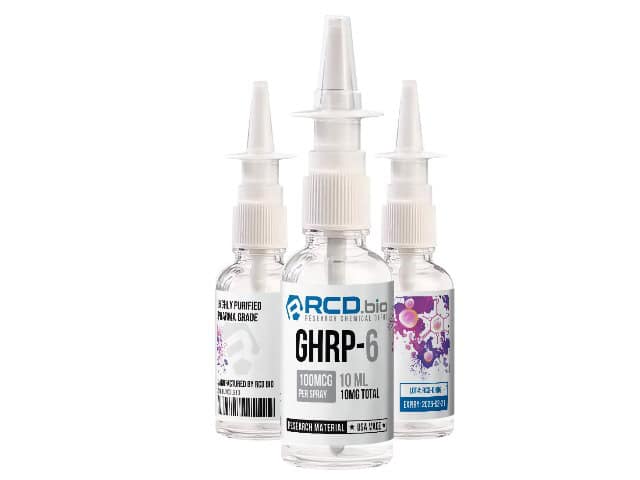
Disclosure: These are affiliate links. I earn a small commission if you purchase — at no extra cost to you. I only recommend products I personally use or have thoroughly researched.
Research & Studies
This section includes 4 peer-reviewed studies referenced in our analysis.