
- Enhanced focus and attention
- Improved sleep quality
- Increased energy and vitality
- Better mood regulation
- Enhanced cognitive function
I used to think growth hormone was just for bodybuilders and aging executives chasing fountain-of-youth fantasies. Then I started researching the connection between growth factors and brain health — and realized I’d been completely wrong about what this system actually does.
Growth hormone isn’t just about muscle mass or wrinkles. It’s a master regulator of cellular repair, energy metabolism, and — here’s the part that changed my perspective — neurotransmitter function and cognitive performance. When your growth hormone system is working properly, your brain has the resources it needs to build new connections, maintain healthy energy production, and regulate mood.
That’s where Sermorelin comes in. Instead of directly replacing growth hormone (which shuts down your natural production), Sermorelin stimulates your pituitary gland to produce more of it naturally — preserving your body’s feedback loops while giving your brain the growth factors it needs to function optimally.
The Short Version: Sermorelin is a synthetic peptide that mimics growth hormone-releasing hormone (GHRH), triggering your body to produce more growth hormone and IGF-1. Research shows it enhances GABA neurotransmitter function, supports mitochondrial energy production, and promotes neurogenesis. Typical dosing is 100-300 mcg via subcutaneous injection in the evening. Below, I break down the science, practical protocols, and who actually benefits from this approach.
What Is Sermorelin? (And Why It’s Different from Growth Hormone)
Sermorelin Acetate is a bioidentical synthetic analog of growth hormone-releasing hormone (GHRH) — specifically, it’s the first 29 amino acids of the full 44-amino-acid GHRH molecule. This shorter sequence retains full biological activity while being more stable and easier to manufacture.
Here’s how it works: Your hypothalamus naturally produces GHRH to signal your pituitary gland to release growth hormone. As we age, this signaling diminishes. Sermorelin steps in as a direct substitute for GHRH, binding to the same receptors on pituitary cells and triggering growth hormone release in a pulsatile pattern that mimics your body’s natural rhythm.
The critical distinction here is that Sermorelin doesn’t replace growth hormone — it stimulates your body to produce its own. This preserves the negative feedback loops that prevent excessive growth hormone levels. When you inject growth hormone directly, your pituitary stops producing it naturally. With Sermorelin, your regulatory mechanisms stay intact.
Originally developed in the 1980s for diagnosing and treating growth hormone deficiency in children, Sermorelin has gained attention in longevity and cognitive optimization circles for its effects on brain function, sleep quality, and metabolic health. The FDA approved it for diagnostic use and pediatric growth hormone deficiency, though many adults use it off-label for anti-aging and performance purposes.
Reality Check: Sermorelin isn’t a nootropic you pop like a capsule of Alpha-GPC. It requires subcutaneous injections, medical supervision for sourcing, and consistent use over weeks to months. This is a serious intervention — effective, but not casual.
How Does Sermorelin Work? (The Growth Hormone → IGF-1 → Brain Connection)
When Sermorelin binds to growth hormone-releasing hormone receptors (GHRHR) on your pituitary cells, it triggers a cascade that ultimately benefits your brain in several interconnected ways.
First, the pituitary releases growth hormone in pulses — typically peaking during deep sleep and throughout the day in response to Sermorelin stimulation. Growth hormone itself has some direct effects on the brain, but the real cognitive magic happens when growth hormone reaches the liver and other tissues, triggering the production of insulin-like growth factor 1 (IGF-1).
IGF-1 is the key player for brain health. Unlike growth hormone, which has limited blood-brain barrier penetration, IGF-1 crosses readily and binds to IGF-1 receptors throughout the brain — particularly in areas critical for learning, memory, and mood regulation like the hippocampus and prefrontal cortex.
The Four Mechanisms That Matter for Cognition
1. GABAergic Modulation
This is one of the most fascinating findings. A 2013 study in JAMA Neurology found that 20 weeks of GHRH (sermorelin) treatment significantly increased GABA neurotransmitter levels in the brain. GABA is your primary inhibitory neurotransmitter — it regulates neural excitability, reduces anxiety, and supports the kind of calm focus that allows for deep cognitive work.
The researchers measured GABA concentrations using MR spectroscopy and found meaningful improvements in participants with mild cognitive impairment. Higher GABA correlated with better mood scores and cognitive performance. This isn’t just a theoretical benefit — it’s a measurable change in brain chemistry linked to real-world function.
Translation: Sermorelin helps balance your brain’s excitatory and inhibitory signals, supporting clearer thinking and better emotional regulation.
2. Mitochondrial Biogenesis
Growth hormone and IGF-1 promote the creation of new mitochondria — the energy-producing organelles in your cells. This matters enormously for brain function because neurons are metabolically expensive. Your brain is only 2% of your body weight but consumes roughly 20% of your energy budget.
When mitochondrial function declines, so does cognitive performance. You get brain fog, fatigue, difficulty concentrating. The GH/IGF-1 axis stimulated by Sermorelin enhances cellular energy metabolism, improves ATP production, and supports the maintenance of healthy mitochondrial populations in brain tissue.
This isn’t an instant effect — it’s about building cellular infrastructure over time. Think of it like upgrading your power grid rather than chugging an energy drink.
3. Neurogenesis Promotion
IGF-1 is a potent promoter of neurogenesis — the growth of new neurons — particularly in the hippocampus, the brain region most associated with memory formation and learning. IGF-1 crosses the blood-brain barrier and binds to receptors in neurogenic niches, supporting the proliferation, survival, and maturation of new neurons.
Animal studies consistently show that increased IGF-1 levels correlate with enhanced neurogenesis and improved performance on memory tasks. While direct human evidence is harder to come by (you can’t easily measure neurogenesis in living humans), the mechanism is well-established and likely translates.
This is one reason why the cognitive benefits of Sermorelin tend to be cumulative — you’re not just tweaking neurotransmitter levels; you’re literally supporting the growth and maintenance of brain tissue.
4. Synaptic Plasticity Enhancement
Synaptic plasticity — the ability of neural connections to strengthen, weaken, and reorganize — is the cellular foundation of learning and memory. IGF-1 influences the molecular mechanisms underlying long-term potentiation (LTP) and long-term depression (LTD), the processes by which synaptic strength changes in response to experience.
Research shows that GH and IGF-1 receptors are present at synapses and that these growth factors enhance synaptic transmission, support dendritic spine density, and improve the brain’s capacity to encode new information.
In practical terms: Sermorelin doesn’t just give you more energy or better mood — it supports the brain’s ability to learn, adapt, and form lasting memories.
Insider Tip: The cognitive benefits of Sermorelin are most noticeable when stacked with foundational sleep optimization. Growth hormone is naturally released during deep sleep, and Sermorelin amplifies this process. If you’re only getting 5-6 hours of fragmented sleep, you’re leaving significant benefits on the table.
Benefits of Sermorelin (What the Research Actually Shows)
Let’s separate what’s well-supported from what’s speculative hype.
Focus & Attention (Moderate Evidence)
The strongest cognitive claim for Sermorelin centers on sustained attention and mental clarity. This isn’t the jittery, forced focus you get from stimulants — it’s a baseline improvement in your ability to maintain attention without mental fatigue.
The mechanism makes sense: enhanced GABA function reduces background neural noise, improved mitochondrial energy production supports sustained neural activity, and better sleep quality (a consistent finding with Sermorelin) indirectly improves daytime focus.
A 2013 trial in adults with mild cognitive impairment found that those treated with GHRH showed improvements in executive function tasks compared to placebo, correlating with increased brain GABA levels. While the sample size was modest (137 participants), the study was well-designed and the results were statistically significant.
Evidence level: Moderate. Human RCT data exists, but it’s limited to specific populations (older adults, MCI). We need more studies in healthy younger adults to confirm generalizability.
Memory & Learning (Preliminary Evidence)
The neurogenesis and synaptic plasticity effects suggest memory benefits, but direct human evidence is thin. Most of what we know comes from animal models showing that increased IGF-1 enhances hippocampal-dependent learning and memory consolidation.
One human study (mentioned above) showed improvements in cognitive function scores that included memory components, but it didn’t isolate memory as a primary outcome. This is a “mechanistically plausible, but needs more research” situation.
If you’re using Sermorelin primarily for memory enhancement, you’d likely see better and faster results with compounds like Bacopa Monnieri or Lion’s Mane, which have stronger direct evidence for memory improvements.
Mood & Stress Resilience (Moderate Evidence)
The GABA-enhancing effects translate to real improvements in mood and anxiety reduction. The same 2013 JAMA Neurology study found that participants reported better mood scores alongside increased brain GABA levels.
IGF-1 has also been independently linked to mood regulation and stress resilience. Lower IGF-1 levels correlate with higher rates of depression and anxiety, and animal studies show that restoring IGF-1 levels can reverse depressive-like behaviors.
Again, this isn’t immediate. You’re not going to inject Sermorelin and feel a mood lift an hour later like you might with L-Theanine. This is about building neurochemical resilience over weeks.
Sleep Quality (Strong Evidence)
This is one of the most consistent and noticeable benefits. Growth hormone is naturally released during deep (slow-wave) sleep, and Sermorelin enhances this process. Users frequently report falling asleep faster, staying asleep longer, and waking more refreshed.
A study in older adults found that GHRH administration increased slow-wave sleep duration and improved sleep architecture. Better sleep, in turn, supports everything else — cognitive function, mood, metabolic health.
If I had to pick one “universally experienced” benefit of Sermorelin, improved sleep quality would be it.
Reality Check: Sermorelin is not a magic bullet for cognitive enhancement. The effects are real but gradual. If you’re looking for acute, same-day performance boosts, you’re better off with traditional nootropics like caffeine + L-theanine or racetams. Sermorelin is a foundational intervention that builds long-term resilience and capacity.
How to Take Sermorelin (Without Wasting Your Money)
Sermorelin requires subcutaneous injection — there’s no oral form because it’s a peptide that gets destroyed by stomach acid. Here’s how to do it right.
Dosage
| Use Case | Dosage | Timing | Notes |
|---|---|---|---|
| General health / longevity | 100-200 mcg | Evening, before bed | Start here for most people |
| Cognitive optimization | 200-300 mcg | Evening, before bed | Higher end for performance focus |
| Therapeutic (medical supervision) | 300+ mcg | Split dose or single evening | Requires physician oversight |
Start at the low end (100 mcg) and assess for 4-6 weeks before increasing. More is not always better — your pituitary has a ceiling for how much growth hormone it can produce, and exceeding that doesn’t add benefit.
Timing
Take Sermorelin in the evening, ideally 30-60 minutes before bed on an empty stomach (at least 2-3 hours after your last meal). This timing aligns with your body’s natural growth hormone release during sleep and maximizes the effectiveness of the peptide.
Some users experiment with morning doses or split dosing, but evening administration is the most well-supported protocol.
Injection Technique
- Subcutaneous injection sites: Abdomen (most common), thigh, or upper arm. Rotate sites to prevent tissue irritation.
- Needle size: Typically 29-31 gauge, ½ inch insulin syringes.
- Reconstitution: Sermorelin comes as a lyophilized powder that must be reconstituted with bacteriostatic water. Follow your provider’s instructions carefully — improper mixing can degrade the peptide.
- Storage: Reconstituted Sermorelin must be refrigerated and used within 30 days. The powder can be stored frozen for longer-term stability.
Cycling
Unlike some peptides, Sermorelin doesn’t require strict cycling because it stimulates natural production rather than replacing it. Most users run it continuously for 3-6 months, then take a break to assess baseline function.
If you notice diminishing returns or want to save money, a 5-days-on / 2-days-off protocol can help maintain receptor sensitivity.
Pro Tip: Consistency is everything with Sermorelin. Taking it sporadically won’t give you meaningful results. Commit to nightly injections for at least 8-12 weeks before deciding whether it’s working for you. This is not a compound you “feel” immediately — the benefits accumulate.
Side Effects & Safety (What Could Go Wrong)
Sermorelin is generally well-tolerated, especially compared to direct growth hormone replacement. But it’s not without potential side effects.
Common Side Effects
- Injection site reactions: Redness, swelling, or irritation at the injection site. Usually mild and resolves quickly. Rotating sites helps prevent this.
- Flushing or warmth: Some users experience a temporary flushing sensation shortly after injection. This typically subsides within 20-30 minutes.
- Headache or dizziness: Mild and transient in most cases, often diminishing after the first few weeks.
- Transient hyperactivity or restlessness: Occasionally reported, especially if dosed too close to bedtime or at higher doses.
Less Common Side Effects
- Nausea or altered taste: Rare, but some users report mild GI disturbance or a metallic taste.
- Water retention: Mild edema can occur due to growth hormone’s effects on fluid balance.
- Joint discomfort: Rare with Sermorelin (more common with direct GH), but possible.
Who Should Avoid Sermorelin
- Pregnancy and breastfeeding: Not enough safety data. Avoid.
- Active cancer: Growth factors can theoretically promote tumor growth. Do not use if you have active malignancy.
- Diabetics: GH and IGF-1 affect glucose metabolism. Monitor blood sugar closely and work with your physician.
- Pituitary tumors or disorders: Could exacerbate underlying pituitary dysfunction.
Drug Interactions
| Medication/Substance | Interaction Type | Risk Level | Notes |
|---|---|---|---|
| Insulin / Diabetes medications | Glucose metabolism | Moderate | GH/IGF-1 can alter insulin sensitivity; monitor blood sugar |
| Thyroid hormones (levothyroxine) | Metabolic modulation | Low-Moderate | GH may increase thyroid hormone clearance; adjust dosing if needed |
| Corticosteroids | Growth-suppressing | Moderate | Steroids can blunt GH response; reduced efficacy |
| Estrogen / HRT | IGF-1 binding | Low | Estrogen affects IGF-1 bioavailability; women on HRT may need dose adjustment |
Important: Sermorelin should only be sourced through a licensed physician or compounding pharmacy. The peptide market is flooded with underdosed or contaminated products. This is not a supplement you buy on Amazon — it’s a prescription medication. Work with a knowledgeable provider who can monitor your response and adjust dosing appropriately.
Stacking Sermorelin (The Combinations That Actually Work)
Sermorelin works best as part of a comprehensive optimization strategy. Here are goal-specific combinations that make sense mechanistically and practically.
For Sleep Quality & Recovery
The Stack:
- 300 mcg Sermorelin (evening, before bed)
- 200-400 mg Magnesium Glycinate (evening, with dinner or before bed)
- 500 mg Glycine (before bed)
Why it works: Sermorelin enhances deep sleep architecture. Magnesium supports relaxation and GABA function. Glycine acts as an inhibitory neurotransmitter and has been shown to improve subjective sleep quality and reduce sleep latency. Together, this stack supports restorative sleep from multiple angles.
For Cognitive Performance & Neuroprotection
The Stack:
- 200 mcg Sermorelin (evening)
- 500 mg Lion’s Mane (morning)
- 300 mg Alpha-GPC (morning)
- 300 mg Uridine Monophosphate (evening)
Why it works: Sermorelin provides the foundational growth factor support (IGF-1, neurogenesis). Lion’s Mane stimulates NGF production, complementing IGF-1’s neurotrophic effects. Alpha-GPC supports cholinergic function and synaptic health. Uridine enhances phospholipid synthesis for membrane repair. This is a comprehensive neuroplasticity and cognitive longevity stack.
For Mood, Stress Resilience & Mental Clarity
The Stack:
- 200 mcg Sermorelin (evening)
- 500 mg Rhodiola Rosea (morning)
- 200 mg L-Theanine (morning + afternoon)
- 1000 mg Omega-3 (EPA/DHA) (with meals)
Why it works: Sermorelin enhances GABA and supports baseline neurochemical balance. Rhodiola is an adaptogen that modulates cortisol and supports stress resilience. L-Theanine promotes alpha-wave activity and calm focus. Omega-3s reduce inflammation and support synaptic membrane health. This combination addresses mood and stress from hormonal, neurotransmitter, and inflammatory angles.
Synergy Table
| Combination | Goal | Mechanism | Notes |
|---|---|---|---|
| Sermorelin + Magnesium | Sleep quality | Enhanced GABA + muscle relaxation | Take both before bed |
| Sermorelin + Lion’s Mane | Neurogenesis | IGF-1 + NGF dual growth factor support | Long-term neuroprotection |
| Sermorelin + Alpha-GPC | Cognitive performance | Growth factors + cholinergic support | Morning dosing for Alpha-GPC |
| Sermorelin + Omega-3 | Neuroprotection | Reduced inflammation + growth signaling | Daily consistency matters |
What to AVOID Combining
- Sermorelin + Direct Growth Hormone: Redundant and potentially dangerous. Never combine peptides that stimulate GH with exogenous GH — you’ll override natural feedback loops.
- Sermorelin + High-dose Stimulants: The mild hyperactivity some users experience with Sermorelin can be amplified by aggressive stimulant use. If you’re sensitive, keep your caffeine intake moderate.
- Sermorelin + Corticosteroids: Steroids suppress growth hormone release and can blunt Sermorelin’s effectiveness.
Insider Tip: Don’t try to stack Sermorelin with every other peptide you can find. More peptides ≠ better results. Focus on one or two complementary interventions, dial in your protocol, and run it for 12 weeks minimum before adding complexity.
My Take
I’ll be honest — Sermorelin is not for everyone, and it’s not where I’d start if you’re new to cognitive optimization.
If you’re still figuring out basic sleep hygiene, eating inflammatory garbage, and stressed to the point of burnout, injecting growth hormone-releasing peptides isn’t going to fix your problems. You’ll get far more mileage from addressing gut health, stabilizing blood sugar, optimizing magnesium status, and sorting out your sleep environment.
That said, for people who have their foundations dialed in and are looking for a meaningful next-level intervention — Sermorelin is impressive.
The improvements in sleep quality alone justified the cost and effort for me. I fall asleep faster, wake up less frequently, and feel significantly more rested. That translates directly into better daytime focus and mood. The cognitive effects are subtler but real — I notice clearer thinking, better sustained attention during long work sessions, and less mental fatigue at the end of the day.
The GABA-enhancing mechanism is fascinating and aligns with my experience. I don’t feel sedated or dulled; I feel calm and clear — like the background anxiety hum that usually accompanies deep focus is turned down. That’s valuable.
Who Should Try Sermorelin
- People over 35 who have noticed declines in sleep quality, recovery, or cognitive sharpness and have ruled out other causes (thyroid, nutrient deficiencies, chronic stress).
- High performers who have optimized the basics and want to enhance neuroplasticity, recovery, and long-term brain health.
- Anyone struggling with sleep despite good sleep hygiene — the deep sleep enhancement is one of the most consistent effects.
- People interested in longevity optimization who want to support growth factor signaling without the risks of direct GH replacement.
Who Should Try Something Else
- People new to nootropics — start with foundational compounds like Bacopa Monnieri, Lion’s Mane, or Alpha-GPC. Get familiar with how your brain responds to interventions before jumping to peptides.
- Anyone looking for acute, same-day cognitive effects — this is not that. Try caffeine + L-theanine, Phenylpiracetam, or Modafinil if you need immediate performance.
- People unwilling to commit to injections — there’s no oral version. If needles are a dealbreaker, focus on other interventions.
- People on a tight budget — Sermorelin is not cheap. You can achieve significant cognitive benefits with less expensive options first.
The bottom line: Sermorelin is a serious, effective tool for optimizing growth hormone signaling, sleep quality, and long-term brain health. It’s not casual, it’s not instant, and it’s not necessary for most people. But if you’re at a point where foundational interventions aren’t enough and you’re willing to commit to a disciplined protocol — this is one of the best long-term investments you can make in your cognitive resilience.
Recommended Sermorelin Products
I know how frustrating it is to sort through dozens of brands making the same claims. These are the ones I've personally vetted — because quality is the difference between results and wasted money.
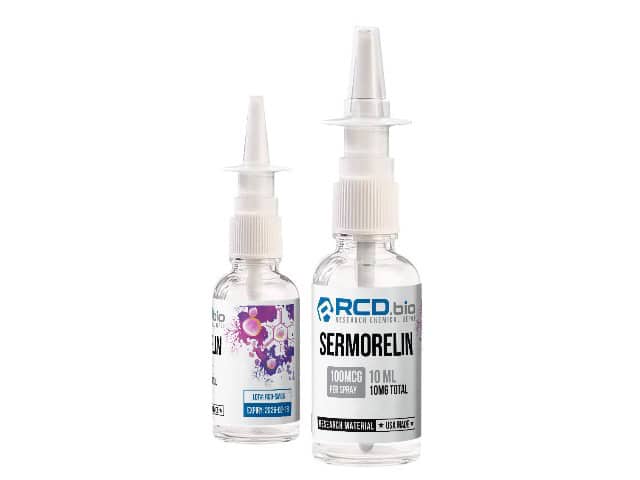
Sermorelin Nasal Spray by Research Chemical Depot
Shop Now →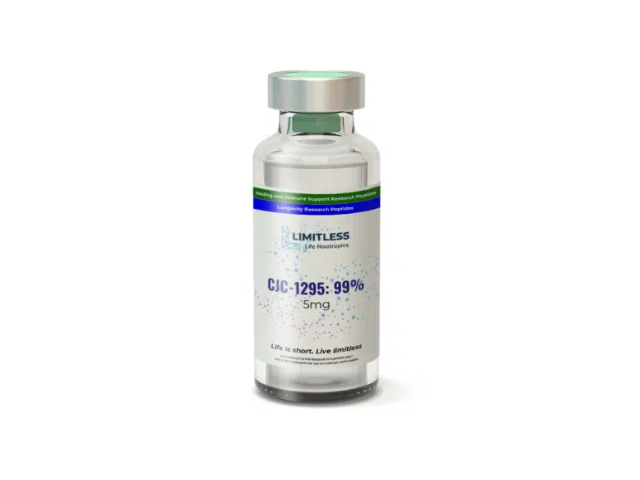
CJC-1295 No DAC 10mg (Mod GRF 1-29) by Limitless Life Nootropics
Shop Now →Disclosure: These are affiliate links. I earn a small commission if you purchase — at no extra cost to you. I only recommend products I personally use or have thoroughly researched.
Research & Studies
This section includes 3 peer-reviewed studies referenced in our analysis.