
- Targeted fat metabolism and lipolysis
- Favorable metabolic safety profile
- Potential cartilage and joint support
I’ll be honest — when I first heard about HGH Fragment 176-191, it sounded almost too clean. A peptide that gives you the fat-burning benefits of growth hormone without the blood sugar issues, the organ growth, or the price tag of full HGH? My “too good to be true” alarm was going off hard.
After digging into the research for months, the reality is more nuanced. The science behind the concept is genuinely sound — but the actual clinical evidence took a detour that most supplement companies would rather you didn’t know about. The largest human trial on its closest analog was a $30 million failure.
That doesn’t mean it’s useless. It means you need the full picture before you spend your money.
The Short Version: HGH Fragment 176-191 is a 16-amino-acid peptide cut from the fat-burning tail of human growth hormone. Animal research strongly supports its lipolytic effects, and it appears metabolically safe — no insulin resistance, no IGF-1 spikes. However, the fragment itself has never been tested in humans, and its modified cousin AOD-9604 failed its Phase 2b clinical trial. It may work as a modest fat-loss accelerator alongside diet and exercise, but it’s not a magic bullet.
What Is HGH Fragment 176-191?
HGH Fragment 176-191 is exactly what it sounds like — a fragment. Specifically, it’s the last 16 amino acids (positions 176 through 191) snipped from the C-terminal end of human growth hormone. Researchers at Monash University in Melbourne identified this specific stretch as the region responsible for hGH’s ability to break down stored fat.
The idea was elegant: why inject the entire 191-amino-acid growth hormone molecule — with all its side effects — when you only need the fat-loss portion? Strip away the parts that cause insulin resistance, organ growth, and cell proliferation. Keep the part that tells your fat cells to release their contents.
This research led to the development of AOD-9604, a closely related modified version created by Metabolic Pharmaceuticals in the 1990s. AOD-9604 differs slightly — it starts at amino acid 177 instead of 176 and includes a structural modification designed to improve oral bioavailability. It’s the version that actually went through human clinical trials.
Here’s the part that matters: these two peptides — Fragment 176-191 and AOD-9604 — get treated as interchangeable online. They’re not identical, but virtually everything we know about how the fragment works in humans comes from AOD-9604 data. Keep that distinction in mind as we go.
Reality Check: Fragment 176-191 is a research peptide, not an FDA-approved treatment. It has never been directly tested in published human clinical trials. If someone tells you otherwise, they’re either confused or selling you something.
How Does HGH Fragment 176-191 Work?
Think of your fat cells like tiny storage units packed with triglycerides — concentrated energy your body saved for later. Fragment 176-191 essentially hands those storage units an eviction notice.
Here’s the mechanism: the peptide binds to receptors on the surface of fat cells (adipocytes) and triggers a signaling cascade through the adenylate cyclase system. This ramps up intracellular cyclic AMP (cAMP), which activates protein kinase A, which in turn fires up hormone-sensitive lipase and adipose triglyceride lipase — the enzymes that physically break triglycerides apart into free fatty acids and glycerol. Those freed fatty acids then become available for your body to burn as fuel.
But it doesn’t stop there. Animal research suggests the fragment also downregulates lipogenic enzymes — particularly acetyl-CoA carboxylase — meaning it simultaneously puts the brakes on new fat creation. It’s hitting both sides of the equation: more fat breakdown, less fat storage.
The critical distinction from full-length growth hormone is what the fragment doesn’t do. It doesn’t increase IGF-1 levels. It doesn’t impair glucose metabolism. It doesn’t promote muscle growth, bone growth, or cell proliferation. In practical terms, you’re getting a fat-loss signal without the systemic growth signal — which is both the appeal and the limitation. You won’t build muscle with this. You won’t recover faster. You’re getting one specific tool for one specific job.
Insider Tip: The fragment works through cAMP-mediated lipolysis, which is why fasted administration is so critical. Eating — especially carbohydrates — spikes insulin, and insulin is powerfully anti-lipolytic. It essentially slams the door shut on the exact process the fragment is trying to open.
Benefits of HGH Fragment 176-191
Fat Loss and Lipolysis
This is the primary — and really the only well-supported — application. In obese mice, both full-length hGH and its C-terminal fragment significantly reduced body weight gain, increased fat oxidation, and elevated plasma glycerol levels (a direct marker of fat being broken down). A study published in Endocrinology by Ng and colleagues demonstrated that AOD-9604 increased lipolytic activity while simultaneously decreasing lipogenic activity in adipose tissue from both rodents and humans.
The human data is where it gets complicated. A small 12-week randomized trial found that subjects receiving 1 mg/day of oral AOD-9604 lost an average of 2.6 kg versus 0.8 kg for placebo — a modest but real difference. The lowest dose tested actually worked best, which is unusual and worth noting.
But then came the big one. The Phase 2b OPTIONS Study enrolled 536 subjects over 24 weeks — a properly powered clinical trial. The result? AOD-9604 failed to achieve statistical significance for weight loss compared to placebo. Development was terminated in 2007.
That’s not the story most peptide vendors tell you.
Metabolic Safety
If there’s a genuine bright spot in the clinical data, it’s here. A 2013 review of six clinical trials found that AOD-9604 did not cause changes in glucose levels, glucose tolerance, insulin sensitivity, or IGF-1 levels compared to placebo. That’s a meaningful safety advantage over full-length HGH, which frequently causes insulin resistance and can push people toward metabolic syndrome.
Cartilage and Joint Support
A 2015 rabbit study found that AOD-9604 enhanced cartilage regeneration in a collagenase-induced knee osteoarthritis model, particularly when combined with hyaluronic acid. This is interesting but extremely preliminary — no human data exists, and a single animal study doesn’t get you very far.
What About Cognitive Benefits?
I’ll shoot straight with you: there’s no credible evidence that Fragment 176-191 does anything for your brain. Full-length growth hormone replacement shows cognitive benefits in GH-deficient adults, but those effects are mediated through IGF-1 — and the fragment specifically doesn’t raise IGF-1. Any website claiming this peptide sharpens focus or improves memory is making it up.
Reality Check: The largest and most rigorous human trial conducted on the closest analog to this peptide failed to show statistically significant fat loss. That doesn’t mean the compound is inert — the smaller trial showed real results — but it does mean the effect size is likely modest and unpredictable. Manage your expectations accordingly.
How to Take HGH Fragment 176-191
Dosage
No dosage has been established through rigorous human trials for the unmodified fragment. These ranges come from AOD-9604 clinical data and research community protocols:
- Starting dose: 200–250 mcg/day
- Standard range: 250–500 mcg/day
- Higher-end protocols: 500–1,000 mcg/day, split into two injections
If you’re trying this for the first time, start at the lower end and assess for 2–3 weeks before adjusting.
Administration
The fragment comes as a lyophilized (freeze-dried) powder that you reconstitute with bacteriostatic water. Administration is via subcutaneous injection — typically into the abdominal area using an insulin syringe.
Timing matters. Take your dose in a fasted state — at least one hour before eating in the morning. If you’re splitting into two doses, the second injection goes 2–3 hours after your last meal in the evening. As I mentioned above, insulin blunts the lipolytic pathway this peptide activates. Eating around your dose is like pressing the gas and brake pedals simultaneously.
Cycling
Common protocols run 8–12 weeks followed by a washout period. Some users prefer a 4-weeks-on, 1-week-off rhythm. No clinically validated cycling protocol exists, so these are based on community experience and general peptide cycling principles.
Forms
Injectable is the standard and most bioavailable form. Nasal sprays exist from some vendors but lack bioavailability data. Oral Fragment 176-191 is likely a poor choice — as a peptide, it gets chewed up by digestive enzymes. AOD-9604 was specifically modified for oral delivery; the unmodified fragment wasn’t.
Pro Tip: Store your reconstituted peptide in the refrigerator and use it within 2–4 weeks. Lyophilized powder is stable for months refrigerated. Never freeze reconstituted peptide — it destroys the structure.
Side Effects and Safety
The safety data is actually one of the stronger aspects of this peptide’s profile, drawn from AOD-9604 trials involving over 500 participants. The incidence of side effects in treatment groups was similar to placebo.
Commonly reported:
- Injection site reactions — redness, mild pain, irritation
- Headaches
- Mild nausea
- Drowsiness or slight lethargy
- Increased hunger in some users
Less common or uncertain:
- Elevated heart rate
- Water retention
- Muscle or joint discomfort
What it does NOT appear to cause: Changes in blood sugar, insulin resistance, IGF-1 elevation, or hypertension. This is the key safety differentiator from full-length HGH.
Important: Avoid this peptide if you’re pregnant, breastfeeding, under 18, or have active cancer. Anyone on diabetes medications should monitor blood sugar closely, though interactions appear unlikely. And if you’re a competitive athlete — Fragment 176-191 is on WADA’s prohibited list.
Stacking HGH Fragment 176-191
CJC-1295 + Ipamorelin
This is the most popular combination in the research peptide community, and the logic is sound. Fragment 176-191 works directly on fat cells, while CJC-1295 and Ipamorelin stimulate your body’s own growth hormone release through the hypothalamic-pituitary axis. You get direct lipolysis from the fragment plus the broader GH benefits — improved sleep, recovery, and lean body composition — from the secretagogues. They hit different pathways, so the mechanisms are complementary rather than redundant.
L-Carnitine
Here’s the theory: Fragment 176-191 liberates fatty acids from fat cells, but those fatty acids still need to be transported into your mitochondria for actual burning. L-Carnitine is the shuttle that handles that transport. No direct studies exist on the combination, but the biochemical logic tracks.
Fasted Exercise
Not a supplement, but arguably the most important “stack.” The fragment mobilizes fatty acids; aerobic exercise burns them. Users consistently report the best results when combining morning dosing with fasted cardio.
What to Avoid
Don’t eat or spike insulin around your dose — I’ve said it three times now because it’s that important. Combining with full-length HGH is redundant and defeats the purpose of using the fragment. High-dose corticosteroids may counteract the lipolytic effects.
My Take
Look — I respect the science behind Fragment 176-191. The concept of isolating the fat-burning region of growth hormone is clever, and the animal data is legitimately compelling. The safety profile is clean. If this were a story about potential, I’d be more enthusiastic.
But I can’t ignore the elephant in the room: the biggest and most expensive human trial on this peptide’s closest relative was a failure. That doesn’t get erased by a smaller positive trial or by thousands of Reddit anecdotes.
Here’s who I think might benefit: if you’re already lean (sub-15% body fat), eating in a caloric deficit, training consistently, and looking for a modest edge against stubborn fat — particularly abdominal fat — Fragment 176-191 could be a useful accelerator. Think of it as squeezing out an extra 10–15%, not transforming your body composition overnight.
Who should skip it? Anyone who isn’t already nailing the basics — diet, sleep, exercise, stress management. If you’re not in a caloric deficit, no peptide is going to override thermodynamics. And if you’re looking for dramatic weight loss, the GLP-1 agonists like semaglutide and tirzepatide have dramatically stronger clinical evidence and are FDA-approved.
The daily injection protocol and the cost ($40–120 per vial, multiple vials per cycle) also factor in. For many people, the inconvenience and expense simply won’t justify the modest, inconsistent results that the evidence actually supports.
If you do try it, commit to at least 8 weeks with strict fasted dosing, pair it with exercise, and be brutally honest with yourself about whether the results justify continuing. And make sure you’re sourcing from vendors with independent third-party COAs showing ≥98% purity — the peptide market is full of underdosed and contaminated product.
Your foundation still comes first. Always has.
Recommended HGH Fragment 176-191 Products
I know how frustrating it is to sort through dozens of brands making the same claims. These are the ones I've personally vetted — because quality is the difference between results and wasted money.
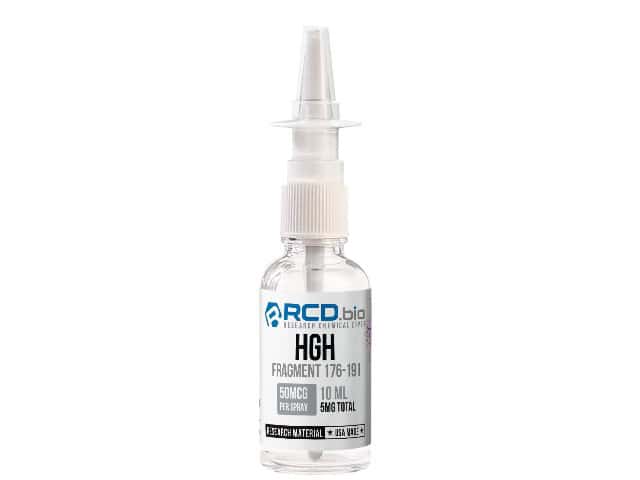
Disclosure: These are affiliate links. I earn a small commission if you purchase — at no extra cost to you. I only recommend products I personally use or have thoroughly researched.
Research & Studies
This section includes 7 peer-reviewed studies referenced in our analysis.