
- Reduces anxiety and stress
- Enhances memory and attention
- Supports sleep quality
- Neuroprotective against cognitive decline
- Promotes calm focus without heavy sedation
I used to think anxiety and sharp thinking were on opposite ends of a seesaw — push one down, the other goes up. Every calming supplement I tried turned my brain into pudding. Every focus enhancer made me feel like I’d mainlined espresso and paranoia.
Then I started digging into lemon balm. And honestly? It kind of broke my mental model of how herbal nootropics are supposed to work.
Here’s a plant that’s been used for over 2,000 years, that Paracelsus literally called the “elixir of life,” and modern science is backing up what monks and herbalists figured out centuries ago — except now we know why it works. And the “why” is genuinely fascinating.
The Short Version: Lemon balm (Melissa officinalis) is one of the rare nootropics that calms anxiety and sharpens cognition simultaneously. It works by boosting GABA levels and protecting acetylcholine — your brain’s primary “calm down” and “pay attention” chemicals, respectively. The sweet spot for most people is 300mg of a standardized extract like Cyracos or Bluenesse. It’s well-tolerated, well-studied, and works within an hour. If you have thyroid issues, though, read the safety section first.
What Is Lemon Balm?
Lemon balm is a perennial herb in the Lamiaceae (mint) family, native to southern Europe, the Mediterranean, and Central Asia. The name “Melissa” comes from the Greek word for honeybee — the plant has been a favorite of beekeepers for millennia. Crush a leaf between your fingers and you’ll get that unmistakable bright, lemony scent.
This isn’t some recently discovered biohacking compound. We’re talking about a plant with a deep historical résumé. Dioscorides and Pliny wrote about it. Charlemagne ordered it grown in every monastery garden. Carmelite nuns were making lemon balm tinctures — “Carmelite water” — in the 14th century for nervous headaches. Paracelsus, the Swiss physician who basically invented toxicology, was so impressed he called it the elixir of life.
The modern science caught up starting around 2002, when researchers at Northumbria University began publishing controlled trials showing measurable effects on mood and cognition. Since then, the evidence has only gotten stronger.
The key bioactive compounds driving these effects are rosmarinic acid (the star of the show), citral, oleanolic acid, ursolic acid, and a range of flavonoids and terpenes. Rosmarinic acid in particular is what you want to see standardized on the label — it’s the compound with the most clinical evidence behind it.
How Does Lemon Balm Actually Work in Your Brain?
Here’s where lemon balm gets interesting. Most calming herbs work through one pathway — they boost GABA and make you sleepy. Lemon balm does that and something else entirely. It operates through four distinct neurological mechanisms, which is why the effects feel so different from popping a valerian capsule.
It Keeps Your “Calm Chemical” Around Longer
Your brain produces GABA — the neurotransmitter responsible for putting the brakes on neural excitation. Think of GABA as the voice in your head saying “okay, we can relax now.” An enzyme called GABA transaminase (GABA-T) breaks GABA down after it’s done its job.
Rosmarinic acid, ursolic acid, and oleanolic acid in lemon balm inhibit GABA-T. Translation: your brain’s calm-down signal sticks around longer instead of getting cleared away. The extract also binds to GABA-A receptors, amplifying the effect. A 2009 study in Phytotherapy Research confirmed this mechanism in detail (Awad et al., 2009).
This is the primary reason lemon balm reduces anxiety — but it’s doing it more gently than something like a benzodiazepine. It’s not forcing GABA activity. It’s just letting your brain’s natural calming system work better.
It Protects Your “Focus Chemical” Too
Here’s the part that makes lemon balm unusual among calming herbs. It also inhibits acetylcholinesterase (AChE) — the enzyme that breaks down acetylcholine, your brain’s primary neurotransmitter for attention, learning, and memory formation.
By slowing acetylcholine breakdown, lemon balm keeps more of it available in the synaptic cleft. Kennedy et al. demonstrated this in a landmark 2003 study in Neuropsychopharmacology, showing the extract also has binding affinity for both nicotinic and muscarinic receptors (particularly M1). This dual cholinergic action is the mechanism behind the cognitive benefits — and it’s the same general approach that Alzheimer’s drugs like donepezil use, just in a much milder, herbal form.
The Neuroprotection Nobody Talks About
Rosmarinic acid can cross the blood-brain barrier — which immediately makes it more interesting than compounds that can’t. Once in the brain, it inhibits the formation of amyloid-β fibrils and prevents the clumping of amyloid-β protein. These are the sticky plaques associated with Alzheimer’s disease.
A 2020 study in Scientific Reports (Noguchi-Shinohara et al.) showed that the extract also modulates beta-secretase activity — one of the enzymes involved in producing amyloid-β in the first place. This isn’t a cure for Alzheimer’s, but it’s a genuinely promising angle for long-term brain protection.
Reality Check: Lemon balm is not a replacement for Alzheimer’s medication or medical treatment. The neuroprotective research is promising but still early-stage. Think of it as a potential long-term investment in brain health, not a treatment for existing cognitive decline.
The Benefits — And How Honest the Evidence Actually Is
Anxiety Reduction — Strong Evidence
This is lemon balm’s headliner benefit, and the science here is solid. A 2021 systematic review and meta-analysis by Shakeri et al. in Phytotherapy Research pooled data from multiple clinical trials and found that lemon balm significantly reduced mean anxiety and depression scores compared to placebo.
A 2023 randomized controlled trial published in Frontiers in Pharmacology tested a standardized extract in healthy adults experiencing emotional distress. The results showed significant calming effects on anxiety, stress, and sleep quality. And a comprehensive 2024 review in Nutrients concluded that lemon balm “holds promise as a calming agent exhibiting both anxiolytic and anti-depressant properties.”
One particularly interesting study gave young adults 300mg of lemon balm in iced tea. Within one hour, they showed significantly lower state anxiety scores and higher working memory performance compared to placebo. Calm and sharp. At the same time.
Cognitive Enhancement — Moderate Evidence
The Northumbria University studies are the backbone here. Kennedy and Scholey (2003) found that a 600mg dose improved Accuracy of Attention, while 300mg improved alertness, memory, and mood. Here’s the twist: the 600mg dose actually reduced self-rated alertness — people felt calmer but less “switched on.” The lower dose hit the cognitive sweet spot.
The Bluenesse extract (standardized to 6% rosmarinic acid) showed significant improvements in working memory, alertness, math performance, and word recall at both 1 and 3 hours after supplementation.
In a separate trial, Kennedy et al. (2002) found that 600mg eliminated the negative mood effects of a laboratory stress protocol while improving mathematical processing speed. Stress-proofing your cognition is a legitimate superpower.
| Benefit | Evidence Level | Key Studies |
|---|---|---|
| Anxiety reduction | Strong — Multiple RCTs + meta-analysis | Shakeri et al. 2021, Frontiers 2023 |
| Acute cognitive enhancement | Moderate — Several crossover RCTs | Kennedy & Scholey 2002, 2003 |
| Sleep quality | Moderate (especially with valerian) | Multiple trials |
| Alzheimer’s management | Preliminary-Moderate | Akhondzadeh 2003, Noguchi-Shinohara 2023 |
| Neuroprotection | Preliminary — mostly preclinical | Noguchi-Shinohara 2020 |
Alzheimer’s Disease — Promising Preliminary Evidence
The Akhondzadeh et al. (2003) trial is a standout: a 4-month RCT in 42 patients with mild-to-moderate Alzheimer’s found that lemon balm extract produced significantly better cognitive outcomes than placebo on both the ADAS-cog and CDR scales. It also reduced agitation.
More recently, Noguchi-Shinohara et al. (2023) ran a large trial with 323 older adults, giving them 500mg rosmarinic acid daily for 96 weeks. The results suggest the extract may help prevent cognitive decline, particularly in older adults without hypertension. Ninety-six weeks. That’s nearly two years of data. For a herbal extract, that’s remarkable study design.
Sleep Quality — Moderate Evidence
Lemon balm combined with valerian (320mg + 640mg respectively) for 28 days significantly improved sleep quality in multiple studies. As a standalone sleep aid, the results are more mixed — it seems to help, but the effect isn’t as dramatic without the valerian pairing. One study in menopausal women found lemon balm improved sleep quality comparably to citalopram, which is noteworthy.
How to Take Lemon Balm Without Wasting Your Money
Choosing the Right Form
Not all lemon balm supplements are created equal. The rosmarinic acid content matters enormously.
| Form | Dosage | Rosmarinic Acid | Best For |
|---|---|---|---|
| Cyracos extract | 300–600mg/day | >7% + >14% hydroxycinnamic acid | Anxiety, general calm |
| Bluenesse extract | 300–600mg/day | 6% standardized | Cognitive performance |
| Generic capsule | 300–600mg/day | Varies (often unstandardized) | Budget option, less reliable |
| Dried leaf tea | 1.5–4.5g per cup, up to 4x daily | Low/variable | Traditional use, ritual |
| Tincture (1:5) | 2–6mL, 3x daily | Moderate | Fast absorption |
Insider Tip: The Cyracos and Bluenesse extracts are the only ones with serious clinical backing behind them. If you’re buying generic lemon balm and wondering why it doesn’t seem to do much, the standardization (or lack of it) is almost certainly the reason. Look for a minimum of 2% rosmarinic acid — but 6-7%+ is what the clinical trials actually used.
Dosing Strategy
- Start at 300mg of a standardized extract. This is the dose that consistently shows the best balance of calm focus without drowsiness
- Move to 600mg if you need stronger anxiolytic effects or are using it primarily for stress/sleep
- 900mg+ is mainly for severe anxiety or sleep — expect significant sedation at this level
Timing
- For anxiety: 30–60 minutes before a stressful event, or as a daily supplement
- For cognition: Morning or early afternoon. Effects are measurable within 1 hour and peak at 1–3 hours
- For sleep: 30–60 minutes before bed, ideally paired with valerian
- With food: Taking with a meal containing some fat may improve absorption, since rosmarinic acid undergoes first-pass metabolism
Cycling
There’s no strong evidence that tolerance develops with lemon balm, which is one of its advantages. Some practitioners recommend 5 days on / 2 days off as a precaution. No loading dose needed — it works acutely from day one.
The Side Effects You Should Actually Know About
Lemon balm has a genuinely excellent safety profile. It’s classified as Class 1 by the American Herbal Products Association and is on the FDA’s GRAS (Generally Recognized as Safe) list.
Common Side Effects (mild and infrequent)
- Drowsiness — especially at 600mg+. This is the most common complaint
- Digestive upset — nausea, bloating, abdominal discomfort (uncommon)
- Headache — rare
- Increased appetite — occasionally reported
Drug Interactions to Watch
| Medication | Risk |
|---|---|
| Thyroid hormones (levothyroxine) | May reduce effectiveness |
| Sedatives / benzodiazepines | Additive sedation |
| Glaucoma medications | May increase intraocular pressure |
| Alcohol | Enhanced sedative effects |
Important: If you have hypothyroidism or Hashimoto’s, lemon balm may reduce thyroid hormone levels and interfere with thyroid replacement therapy. This is a clinically significant interaction — not a theoretical concern. Talk to your doctor before using lemon balm if you have any thyroid condition.
Other Precautions
- Surgery: Discontinue at least 2 weeks before scheduled procedures due to sedative properties and potential interaction with anesthesia
- Pregnancy/nursing: Insufficient safety data. Avoid use
- Lamiaceae allergy: If you’re allergic to mint, basil, or oregano, proceed cautiously
Stacking Lemon Balm — What Works and What Doesn’t
The Classic Pairings
Lemon Balm + Valerian Root — The time-tested sleep stack. Both modulate GABA through different mechanisms (GABA-T inhibition vs. GABA-A receptor activation and GABA reuptake inhibition). Multiple studies have validated 320mg lemon balm + 640mg valerian for sleep quality.
Lemon Balm + L-Theanine — My favorite calm-focus stack. L-theanine promotes alpha brain waves and modulates GABA through a different pathway than lemon balm. Together, they create a layered sense of relaxed alertness that’s hard to replicate with either one alone. This combination shows up in a lot of commercial focus formulations for good reason.
Lemon Balm + Passionflower — Complementary GABAergic mechanisms for anxiety and sleep. Useful when lemon balm alone isn’t quite enough for nighttime anxiety.
Worth Exploring
- Lemon Balm + Bacopa Monnieri — Both enhance cholinergic function through different mechanisms. Bacopa needs 8-12 weeks to kick in; lemon balm works acutely. Good for a comprehensive memory stack
- Lemon Balm + Magnesium Glycinate — Magnesium supports GABAergic activity independently. Excellent pairing for relaxation and sleep
- Lemon Balm + Ashwagandha — Lemon balm handles acute anxiety (fast-acting, GABAergic) while ashwagandha addresses chronic stress over weeks (HPA axis modulation). Different timescales, same goal
What to Avoid Combining
- Lemon balm + benzodiazepines or prescription sedatives — without medical supervision. Risk of excessive sedation and respiratory depression
- Lemon balm + thyroid medications — may undermine their effectiveness
- Lemon balm + heavy alcohol — compounded sedation. A glass of wine is probably fine; several drinks is asking for trouble
My Take
Lemon balm is one of those substances I keep coming back to because it consistently does what it promises — and it doesn’t try to be something it’s not.
It’s not going to give you a “limitless” experience. It’s not going to replace your morning coffee or make you feel like you took an amphetamine. What it will do is take the edge off anxiety without turning your brain into mush, and gently sharpen your focus while it’s at it. That dual action is genuinely rare in the nootropic world.
In my experience, the 300mg dose of a quality standardized extract is the sweet spot for daily use. I notice a clear reduction in mental chatter and an easier time staying on task — particularly during days when stress would normally scatter my attention. At 600mg, the calming effect becomes more pronounced, which is great before bed or before a high-stress situation, but I wouldn’t call it a productivity dose.
Who this is best for:
- People dealing with anxiety who want something gentler than pharmaceuticals
- Anyone who finds that other calming supplements make them too drowsy to function
- Students or professionals who need to stay calm and focused under pressure
- People interested in long-term neuroprotection (the rosmarinic acid / amyloid research is compelling)
Who should look elsewhere:
- If you have thyroid issues — seriously, this one matters
- If you’re looking for a dramatic, feel-it-immediately stimulant effect
- If you’re already on benzodiazepines or heavy sedatives (talk to your doctor first)
The fact that this herb has over 2,000 years of traditional use and a growing body of modern clinical evidence — including a 96-week neuroprotection trial — puts it in a pretty small category. It’s safe, it’s effective, it’s affordable, and it plays well with other nootropics.
Pro Tip: If you’ve tried generic lemon balm supplements and felt underwhelmed, give Cyracos or Bluenesse a shot before writing it off. The difference between a standardized, clinically-backed extract and a random capsule of dried leaf is night and day. Standardization matters more with lemon balm than with almost any other herbal nootropic I’ve used.
Start with 300mg of a quality extract. Give it a week. Pay attention to how you feel during stressful moments — that’s where you’ll notice the difference first. And if you’re stacking it with L-theanine for calm focus, you might just find your new favorite daily combo.
Recommended Lemon Balm Products
I know how frustrating it is to sort through dozens of brands making the same claims. These are the ones I've personally vetted — because quality is the difference between results and wasted money.
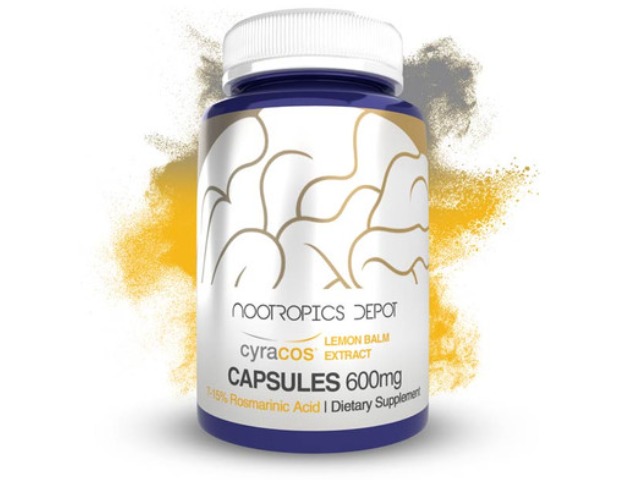
Cyracos Lemon Balm Extract Capsules | Melissa Officinalis by Nootropics Depot
Shop Now →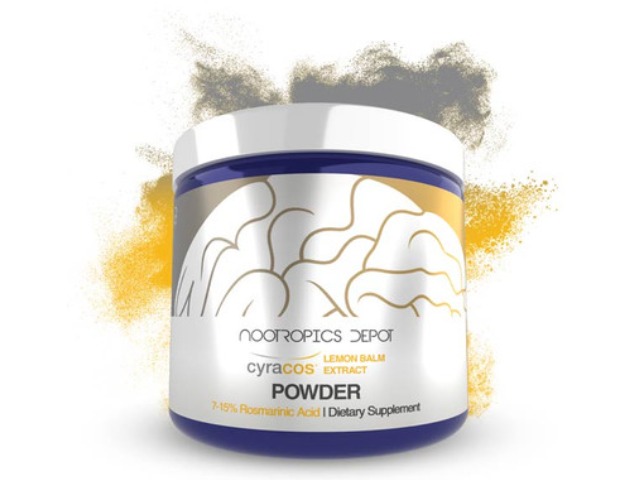
Cyracos Lemon Balm Extract Powder | Melissa Officinalis by Nootropics Depot
Shop Now →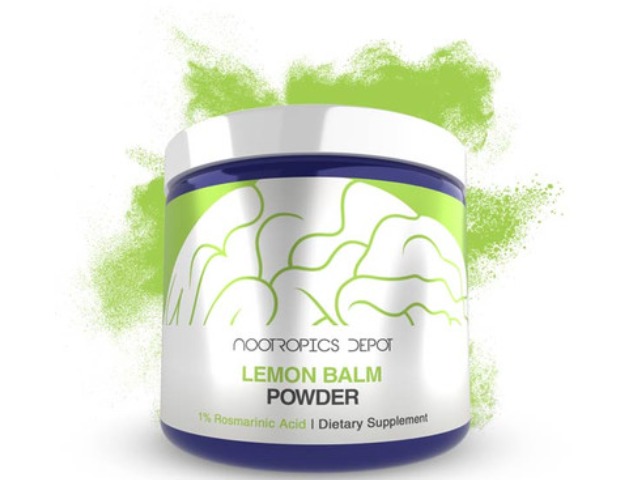
Nootropics Depot Buy Lemon Balm Extract Powder | Melissa Officinalis ...
Shop Now →Disclosure: These are affiliate links. I earn a small commission if you purchase — at no extra cost to you. I only recommend products I personally use or have thoroughly researched.