
- May enhance alertness and cognitive performance
- Supports healthy inflammatory response via IL-1β modulation
- May improve memory consolidation and attention
- Acetylcholinesterase inhibition supports cholinergic function
- Promotes wakefulness and mental clarity through TRPM8 activation
I’ll be honest — when I first started looking into menthol as a nootropic, I almost didn’t take it seriously. Menthol? The stuff in cough drops and toothpaste? Surely this was the supplement equivalent of recommending someone chew gum to get smarter.
Then I read a 2023 study where researchers literally cured cognitive decline in Alzheimer’s model mice by having them sniff menthol for six months. Not a designer peptide. Not a $200-a-bottle research chemical. Menthol. The mechanism — reducing a key inflammatory protein called IL-1β through the olfactory system — was so elegant that it changed how I think about the connection between smell, immunity, and brain function.
That rabbit hole led me to discover that this humble mint compound hits an almost absurd number of neurological targets simultaneously. We’re talking cholinergic, GABAergic, dopaminergic, and immunomodulatory pathways — all from a single molecule that’s FDA GRAS and costs less than your morning coffee.
The Short Version: Menthol is a naturally occurring terpene from peppermint with surprisingly robust nootropic potential. It inhibits acetylcholinesterase (like some Alzheimer’s drugs), modulates GABA receptors, activates TRPM8 cold-sensing channels that boost alertness, and — most remarkably — may prevent cognitive decline through immune system regulation. Small human RCTs show improvements in attention and memory. Best taken as enteric-coated peppermint oil capsules (180–360mg) or simply inhaled for acute cognitive enhancement.
What Is Menthol?
Menthol is a cyclic terpene alcohol found primarily in peppermint (Mentha piperita) and other mint species. It’s the compound responsible for that characteristic cooling sensation when you eat a mint or breathe in peppermint oil. Humans have been using mint medicinally for thousands of years — dried peppermint leaves have been found in Egyptian pyramids dating back to 1000 BCE, and traditional Chinese and Japanese medicine systems have used mint preparations for cognition and digestion for centuries.
What makes menthol interesting as a nootropic is its multi-target pharmacology. Most nootropic compounds work through one or two mechanisms. Menthol simultaneously interacts with at least six distinct neurological systems. It crosses the blood-brain barrier readily, it’s rapidly absorbed through both the gut and the nasal mucosa, and it has an excellent safety profile backed by decades of widespread use.
The naturally occurring form — L-menthol — is the most biologically active isomer and the one used in research. It’s the dominant component of peppermint essential oil, typically making up 30–50% of the oil’s composition. When we talk about menthol’s nootropic effects, we’re really talking about what happens when this one molecule reaches your brain and starts pulling multiple levers at once.
How Does Menthol Work?
Think of menthol as a neurological Swiss Army knife. Instead of doing one thing really well, it does six things moderately well — and the combined effect is greater than any single mechanism alone.
The Cholinergic Pathway — Your Brain’s “Focus” System
Menthol inhibits acetylcholinesterase (AChE), the enzyme that breaks down acetylcholine in your brain. Acetylcholine is the neurotransmitter most directly associated with attention, learning, and memory formation. This is the same mechanism targeted by prescription Alzheimer’s drugs like donepezil — menthol just does it more gently.
A study by Walstab et al. demonstrated that menthol also acts as a positive allosteric modulator of nicotinic acetylcholine receptors (nAChRs), meaning it doesn’t just preserve acetylcholine — it makes the receptors more sensitive to it. In practical terms: sharper focus, better working memory, and improved information encoding.
The TRPM8 Channel — Your Brain’s “Wake-Up” Switch
That cooling sensation you feel from mint? That’s TRPM8 — a cold-sensing ion channel expressed in sensory neurons and, crucially, in multiple brain regions. When menthol activates TRPM8, it triggers a cascade of alertness signals including increased norepinephrine release. This is why inhaling peppermint feels instantly clarifying. It’s not placebo — it’s a specific receptor activation that promotes wakefulness.
The Immune Connection — The Game-Changer
Here’s where it gets genuinely fascinating. In 2023, Casarrubea et al. published a study in Frontiers in Immunology showing that six months of brief menthol inhalation prevented cognitive decline in an Alzheimer’s mouse model. The mechanism? Menthol inhalation reduced levels of interleukin-1β (IL-1β), a pro-inflammatory cytokine heavily implicated in neurodegeneration.
What’s remarkable is the pathway: menthol stimulates olfactory neurons → triggers regulatory T cell responses → suppresses IL-1β → prevents neuroinflammation → preserves cognitive function. When researchers artificially blocked IL-1β in non-menthol-treated mice, they got the same cognitive protection. This strongly suggests IL-1β is the critical mediator.
Translation: smelling menthol may protect your brain by calming your immune system down. That’s a connection between nose, immunity, and cognition that almost nobody was expecting.
Additional Mechanisms
- GABAergic modulation: Menthol positively modulates GABA-A receptors, producing mild anxiolytic effects without heavy sedation — more “calm focus” than “drowsy relaxation”
- Dopaminergic activity: Evidence suggests menthol influences dopamine signaling, potentially contributing to its mood-brightening and motivation-supporting effects
- Antioxidant activity: Menthol scavenges free radicals and may protect neurons from oxidative stress, though this is likely a secondary benefit rather than a primary nootropic mechanism
Reality Check: Menthol isn’t going to replace your racetam stack or give you superhuman focus. Its strength is in the breadth of its mechanisms, not the depth of any single one. Think of it as a gentle, multi-system optimizer — especially valuable if neuroinflammation is part of your cognitive picture.
What Menthol Actually Does to Your Brain
Attention and Alertness
The most immediately noticeable effect. A 2018 randomized controlled trial by Kennedy et al. (n=24) found that peppermint essential oil containing menthol significantly improved attention and alertness during cognitive testing compared to placebo. Effects were measurable within 1–3 hours of ingestion. A 2025 RCT by Netzler et al. (n=25) confirmed improved cognitive performance and reduced mental fatigue following peppermint aroma exposure.
These are small studies, and they need replication at larger scale. But they’re consistent with the known pharmacology.
Memory and Learning
Menthol’s AChE inhibition and nAChR modulation predict memory-enhancing effects, and the evidence — while still early — supports this. The cholinergic enhancement should theoretically improve both encoding (getting information into memory) and consolidation (making it stick). Animal studies consistently show improved spatial memory and learning task performance.
Neuroprotection
The 2023 IL-1β study is the headliner here, but there’s also evidence for direct neuroprotective effects through antioxidant activity and modulation of inflammatory cascades. For anyone dealing with chronic low-grade neuroinflammation — which, let’s be real, includes most people eating a standard Western diet and dealing with modern stress levels — this is potentially significant.
| Benefit | Evidence Level | Key Finding |
|---|---|---|
| Alertness & Attention | Moderate (small RCTs) | Kennedy 2018: significant improvement in attention tasks |
| Memory Enhancement | Preliminary (animal + mechanistic) | AChE inhibition confirmed; human memory trials needed |
| Neuroprotection | Strong (animal model) | Casarrubea 2023: prevented cognitive decline via IL-1β |
| Anti-Neuroinflammation | Strong (mechanistic) | IL-1β reduction through olfactory-immune pathway |
| Anxiolytic Effects | Preliminary | GABA-A modulation demonstrated in vitro |
Insider Tip: If you want the alertness benefits immediately, inhale peppermint essential oil. If you want the sustained cholinergic and anti-inflammatory benefits, take enteric-coated peppermint oil capsules daily. Ideally, do both.
How to Take Menthol Without Wasting Your Money
Menthol delivery matters more than you’d think. The form you choose determines which benefits you’re primarily accessing.
Enteric-Coated Peppermint Oil Capsules (Best for Sustained Nootropic Effects)
This is the gold standard for daily supplementation. Enteric coating prevents the oil from dissolving in your stomach (which causes heartburn) and allows it to absorb in the small intestine for better systemic bioavailability.
- Dosage: 180–360mg of peppermint oil per capsule, standardized to contain at least 30% menthol
- Timing: 1–3 times daily, 30–60 minutes before meals
- Starting protocol: Begin with one 180mg capsule daily for the first week, then increase to twice daily if well-tolerated
- Assessment period: Allow 2–4 weeks for sustained cognitive benefits to become apparent
Peppermint Tea (Good for Moderate, Consistent Intake)
Simple, safe, and surprisingly effective. One cup of properly brewed peppermint tea contains roughly 15–30mg of menthol.
- Dosage: 1–3 cups daily
- Preparation: Use 1–2 teaspoons of dried peppermint leaf per cup, steep in hot (not boiling) water for 7–10 minutes with a lid to prevent volatile compounds from escaping
- Best for: Gentle daily maintenance, mild cognitive support, the ritual of it
Inhalation (Best for Acute Alertness)
For immediate cognitive effects, inhalation is fastest. Menthol reaches the brain within seconds via the olfactory bulb.
- Method: 1–2 drops of peppermint essential oil on a tissue, or use a personal inhaler
- Duration: 5–15 minutes of periodic inhalation
- Timing: Before cognitive tasks, during afternoon energy dips, or during study sessions
- Frequency: As needed; no tolerance buildup reported with intermittent use
| Form | Onset | Duration | Primary Benefits | Cost |
|---|---|---|---|---|
| Enteric-Coated Capsules | 1–2 hours | 4–6 hours | Systemic AChE inhibition, anti-inflammatory | $$ |
| Peppermint Tea | 30–60 min | 2–3 hours | Gentle cholinergic support, relaxation | $ |
| Inhalation | Seconds | 30–60 min | Acute alertness, TRPM8 activation, immune modulation | $ |
Pro Tip: Keep a small bottle of peppermint essential oil at your desk. When your afternoon focus drops, a 30-second sniff is one of the fastest, cheapest cognitive resets available. No exaggeration — I use this more than any pill in my cabinet.
The Side Effects Nobody Warns You About
Menthol has an excellent safety profile — it’s FDA GRAS (Generally Recognized as Safe), and humans have been consuming it in large quantities for millennia. That said, there are a few things worth knowing.
Common and generally mild:
- Heartburn or acid reflux (almost exclusively from non-enteric-coated capsules — this is easily avoided)
- Cooling sensation in the mouth and throat (more feature than bug, but some people find it intense)
- Mild GI discomfort at higher doses in sensitive individuals
Less common:
- Headache or dizziness at very high doses
- Skin irritation from concentrated topical application
- Allergic reactions in individuals sensitive to mint (rare but real)
Who should be cautious:
- People with GERD or hiatal hernia — menthol relaxes the lower esophageal sphincter, which can worsen reflux. Use enteric-coated capsules or stick to inhalation
- People taking cyclosporine or other CYP3A4 substrates — peppermint oil may inhibit this liver enzyme, potentially altering drug metabolism
- People on antacids or proton pump inhibitors — these can dissolve enteric coatings prematurely, defeating the purpose
- Pregnant or nursing women — insufficient safety data at supplemental doses, though culinary amounts are considered safe
Important: If you’re taking any prescription medications, check with your pharmacist about potential interactions before starting peppermint oil supplementation. The CYP3A4 inhibition is mild but real, and it’s better to be cautious than to accidentally alter your medication levels.
Drug interactions to watch:
- Cyclosporine (increased levels possible)
- Felodipine and similar calcium channel blockers
- Certain statins metabolized via CYP3A4
- Iron supplements (menthol may reduce absorption — separate by 2+ hours)
Stacking Menthol for Maximum Effect
Menthol’s multi-target pharmacology makes it a surprisingly versatile stacking partner. Its cholinergic support complements racetams, its anti-inflammatory effects pair well with other neuroprotectives, and its alertness-promoting properties balance sedating compounds.
Menthol + Bacopa Monnieri — The “Memory Foundation” Stack Bacopa enhances memory consolidation through different mechanisms (dendritic branching, serotonergic modulation), while menthol supports memory encoding via cholinergic enhancement. Together, they cover both sides of the memory equation. Bacopa can cause drowsiness in some people — menthol’s alertness properties nicely offset this.
- Dosage: 180mg peppermint oil + 300mg Bacopa (standardized to 50% bacosides)
Menthol + Lion’s Mane — The “Neuroprotection” Stack Lion’s Mane stimulates NGF production for long-term neuronal health, while menthol provides acute neuroprotection via IL-1β reduction and antioxidant activity. Different protective mechanisms, complementary timescales.
- Dosage: 180–360mg peppermint oil + 500–1000mg Lion’s Mane extract
Menthol + L-Theanine — The “Calm Focus” Stack L-Theanine’s alpha-wave promotion and anxiolytic effects combine beautifully with menthol’s alertness without jitteriness. This stack is ideal for sustained, relaxed concentration.
- Dosage: 180mg peppermint oil + 200mg L-Theanine
Menthol + Alpha-GPC — The “Cholinergic Powerhouse” Stack Alpha-GPC provides the raw choline substrate, menthol inhibits its breakdown. More acetylcholine made, less acetylcholine destroyed. Simple, effective synergy.
- Dosage: 180mg peppermint oil + 300mg Alpha-GPC
Avoid combining with:
- High-dose GABA supplements — menthol’s own GABAergic activity could create excessive sedation in sensitive individuals
- Large amounts of other CYP3A4 inhibitors (grapefruit juice, certain other supplements) — cumulative enzyme inhibition could become clinically relevant
My Take
Here’s what surprised me most about menthol: the gap between how seriously the research community takes it and how little the nootropics community talks about it. This isn’t some obscure research peptide with two animal studies and a lot of hype. There’s a genuine, novel mechanism connecting olfaction, immune regulation, and cognitive protection — and it was published in a legitimate immunology journal.
In my own experience, peppermint oil inhalation is one of my most-used daily tools. Not because it produces some dramatic cognitive shift, but because it consistently delivers a reliable 15–20% boost in alertness and clarity when I need it — for essentially zero cost and zero side effects. The enteric-coated capsules I take more for the long-game anti-inflammatory benefits, which are harder to “feel” day-to-day but make scientific sense given what we know about neuroinflammation and cognitive aging.
Who this is BEST for:
- Anyone dealing with brain fog potentially linked to chronic inflammation
- Students or professionals who need affordable, reliable cognitive support
- People already taking racetams or cholinergics who want gentle enhancement without adding complexity
- Anyone looking for a “first nootropic” — it’s safe, cheap, accessible, and actually has evidence behind it
Who should probably try something else:
- If you’re looking for a dramatic, immediately noticeable cognitive enhancement, menthol isn’t your compound — look at modafinil or phenylpiracetam instead
- If you have significant GERD, even enteric-coated capsules might be uncomfortable
- If you’re already on a complex supplement stack, menthol adds breadth but probably not enough depth in any single mechanism to justify another pill
The 2023 Alzheimer’s prevention data is what genuinely excites me long-term. We need human trials — badly — but the mechanism is clean, the safety profile is pristine, and the cost of being wrong is basically zero. A cup of peppermint tea and a few deep breaths of mint oil daily? That’s not even really “supplementation.” That’s just a pleasant habit that might be quietly protecting your brain.
Start with the tea. Add an inhaler at your desk. If you want to get serious, grab some enteric-coated peppermint oil capsules. And pay attention to how you feel after two weeks — not in a dramatic “limitless” way, but in a subtle “my brain just works a little better today” way. That’s the menthol experience, and honestly? I’ll take reliable and subtle over dramatic and unpredictable every single time.
Recommended Menthol Products
I know how frustrating it is to sort through dozens of brands making the same claims. These are the ones I've personally vetted — because quality is the difference between results and wasted money.
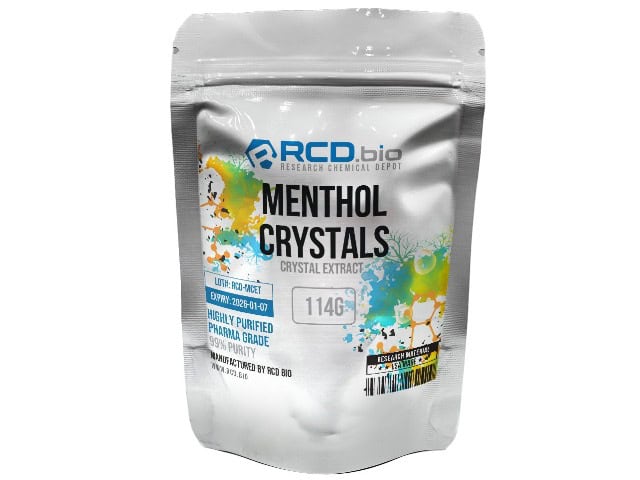
Disclosure: These are affiliate links. I earn a small commission if you purchase — at no extra cost to you. I only recommend products I personally use or have thoroughly researched.
Research & Studies
This section includes 4 peer-reviewed studies referenced in our analysis.