

- May support healthy stress response and relaxation
- May help maintain healthy blood pressure levels
- May support sleep quality and reduce sleep latency
- May acutely elevate growth hormone levels
Here’s the uncomfortable truth about one of the most popular calming supplements on the market: scientists still aren’t sure it actually reaches your brain.
I know — not exactly the ringing endorsement you were hoping for. But stick with me, because the GABA story is more nuanced than the supplement industry wants you to believe, and understanding it will save you money and set you up for better results.
GABA (gamma-aminobutyric acid) is your brain’s main “chill out” signal — the neurotransmitter responsible for pumping the brakes on overexcited neurons. Without enough of it, you get anxiety, insomnia, racing thoughts, the whole stress cascade. So it makes intuitive sense that taking more GABA would help. The reality? It’s complicated. And after years of experimenting with GABAergic compounds, I’ve learned that the direct approach isn’t always the smartest one.
The Short Version: GABA is the brain’s primary inhibitory neurotransmitter, essential for calming neural activity. As a supplement, it has a solid safety profile and modest evidence for blood pressure reduction and stress support, but its ability to cross the blood-brain barrier is questionable. PharmaGABA (the fermented form) has the most clinical backing. For many people, indirect approaches like L-Theanine or magnesium may be more reliable for supporting GABAergic function.
What Is Gamma-Aminobutyric Acid?
GABA is a non-proteinogenic amino acid — meaning your body makes it, but it doesn’t build proteins with it. Instead, it serves as the primary inhibitory neurotransmitter in your central nervous system. Every time your brain needs to slow down, regulate anxiety, initiate sleep, or prevent neurons from firing too rapidly, GABA is doing the heavy lifting.
Your brain produces GABA from glutamic acid (the excitatory neurotransmitter glutamate) using an enzyme called glutamic acid decarboxylase, or GAD. Think of it as a seesaw: glutamate on one side revving things up, GABA on the other side calming things down. When that seesaw tips too far toward excitation, you get anxiety, insomnia, sensory overload, and eventually neurotoxicity.
The compound was discovered in the brain back in 1950 by Eugene Roberts and Sam Frankel, though it took nearly a decade before researchers figured out that GABA was actually inhibiting neural firing rather than just sitting around. You can find GABA naturally in fermented foods like kimchi, miso, and tempeh, as well as in tea and sprouted grains. Your gut bacteria also produce it — which, as we’ll see, turns out to be more relevant than anyone initially thought.
As a supplement, GABA has been available for decades and comes in two main forms: synthetic GABA (cheap, widely available) and PharmaGABA (produced through Lactobacillus fermentation, with FDA GRAS status and more clinical research behind it). Both are chemically identical molecules, but the fermented version has shown slightly better results in some EEG studies measuring brain wave changes.
How Does Gamma-Aminobutyric Acid Work?
Here’s where things get interesting — and where most supplement marketing falls apart.
GABA operates through two receptor systems. GABA-A receptors are fast-acting ion channels. When GABA binds to them, they open a gate that floods the neuron with chloride ions, making the cell more negatively charged and less likely to fire. This is the same system that benzodiazepines, barbiturates, and alcohol act on — which gives you a sense of how powerful the GABAergic system really is. GABA-B receptors work more slowly through a different mechanism (G-protein signaling), producing longer-lasting calming effects by modulating potassium and calcium channels.
Now, the elephant in the room: the blood-brain barrier problem.
Your brain is wrapped in a highly selective membrane that keeps most circulating molecules out. And GABA — being a large, water-soluble, charged amino acid — has a notoriously hard time getting through it. Early studies in the 1950s through 1980s confirmed this impermeability, though a handful of later studies found that small amounts might sneak across. A 2020 systematic review in Frontiers in Neuroscience by Hepsomali et al. examined 14 placebo-controlled human trials and acknowledged that while animal studies provide some evidence of limited BBB crossing, there’s a real lack of human data to confirm it.
So if GABA can’t easily reach your brain, why do some people swear it works?
The leading theory points to the gut-brain axis. Your enteric nervous system — sometimes called the “second brain” — is loaded with GABA receptors. When you take oral GABA, it may activate peripheral GABA receptors on vagal afferent neurons in the gut, which then send calming signals up to the brain via the vagus nerve. It’s an indirect route, but it’s a plausible one. Your gut bacteria also use GABA for signaling, adding another layer to this peripheral mechanism.
There’s also an intriguing growth hormone connection. A study by Powers et al. published in Medicine & Science in Sports & Exercise found that 3 grams of GABA elevated resting growth hormone concentrations by roughly 400% at peak levels in resistance-trained men. This likely happens through a dual mechanism — one centrally mediated, one directly at the pituitary gland. However, chronic GABA use appeared to blunt this response over time, suggesting tolerance develops.
Benefits of Gamma-Aminobutyric Acid
I’m going to be straight with you here, because I think honesty about evidence quality is more valuable than hype.
Blood Pressure Support (Moderate Evidence)
This is where GABA has its most consistent data. Multiple small clinical trials show meaningful blood pressure reductions in people with high-normal or mildly elevated levels. A 12-week study using GABA-rich fermented milk found reductions of approximately 17/7 mmHg. An 8-week crossover trial with just 80 mg per day saw drops of about 10/5 mmHg. GABA-rich Chlorella (20 mg GABA twice daily for 12 weeks) significantly reduced systolic blood pressure versus placebo.
The catch: these effects appear limited to people whose blood pressure is already somewhat elevated. If your numbers are normal, you probably won’t see much change.
Stress Reduction (Limited Evidence)
Several small trials show reductions in stress biomarkers — salivary cortisol, chromogranin A, and salivary IgA — after GABA supplementation. Some EEG studies have found increased alpha wave activity (the brain wave pattern associated with calm alertness) after taking GABA, particularly the PharmaGABA form. However, sample sizes are consistently small and methodologies vary enough that it’s hard to draw firm conclusions.
Sleep Support (Very Limited Evidence)
A few small studies suggest GABA may reduce sleep latency — the time it takes to fall asleep. A rodent study by Kim et al. in Pharmaceutical Biology found that combining GABA with L-theanine decreased sleep latency by 14.9–20.7% and increased sleep duration by 26.8–87.3% compared to either alone. But the human evidence is inconsistent, and most positive studies used GABA in combination with other ingredients, making it hard to isolate GABA’s contribution.
Growth Hormone Elevation (Moderate Evidence, Unclear Significance)
The acute spike in growth hormone from a 3-gram dose is well-documented but raises the question: does a temporary GH bump actually translate to meaningful body composition changes? Nobody knows yet. And the tolerance effect with chronic dosing complicates things further.
Reality Check: The 2020 systematic review that examined all available placebo-controlled human trials concluded there is “limited evidence for stress and very limited evidence for sleep benefits of oral GABA intake.” That doesn’t mean GABA doesn’t work — it means the science isn’t where the marketing claims are. If you try it and it helps, that’s valid. Just go in with calibrated expectations.
What the Research Did NOT Support
A well-designed randomized controlled trial by de Bie et al., published in The American Journal of Clinical Nutrition in 2023, tested 500 mg of GABA three times daily for 95 days in 52 prediabetic participants. The result: no improvement in postprandial glucose response. So despite some preliminary interest in GABA for blood sugar management, the best evidence we have says it doesn’t help there.
How to Take Gamma-Aminobutyric Acid
Dosage
- General relaxation and calming: 250–750 mg daily, split into 1–3 doses
- Stress support: 100–200 mg per dose, two to three times daily
- Sleep support: 100–300 mg, taken 30–60 minutes before bed
- Growth hormone: 3,000–5,000 mg (this is the dose used in acute research, not a daily recommendation)
Start at the lower end — 100–250 mg — and give it at least a week before increasing. Some people feel effects immediately; others need a couple of weeks of consistent dosing.
Timing and Absorption
GABA absorbs rapidly, with peak blood levels hitting around 30–60 minutes after ingestion and a half-life of roughly 5 hours. Take it on an empty stomach for best absorption — ideally 30 minutes before eating. For sleep, dose 30–60 minutes before you want to be in bed. For stress, take it 30–60 minutes before an anticipated stressful situation.
Forms
PharmaGABA is the gold standard. It’s produced via natural Lactobacillus hilgardii fermentation, has FDA GRAS status, and is the form used in most clinical trials. It costs more, but you’re getting a better-studied product.
Synthetic GABA is the same molecule produced through chemical synthesis. It’s significantly cheaper and widely available from brands like NOW Foods. For most people on a budget, this is perfectly fine.
Liposomal GABA formulations claim enhanced absorption, but clinical evidence supporting this is essentially nonexistent right now.
Pro Tip: If you’ve tried GABA before and felt nothing, try switching to PharmaGABA and taking it on a truly empty stomach. The form and absorption conditions matter more than most people realize. Also, if you get a distinctive tingling or flushing sensation at higher doses (500+ mg), that’s normal — it’s a peripheral nerve response and it’s harmless.
Cycling
There’s no established cycling protocol, but given that the acute growth hormone response appears to blunt with chronic use, taking periodic breaks (5 days on, 2 days off, or 3 weeks on, 1 week off) could theoretically help maintain responsiveness. Long-term safety data extends to 12 weeks at moderate doses, which is reassuring but not exactly comprehensive.
Side Effects & Safety
GABA has one of the cleanest safety profiles in the supplement world. A United States Pharmacopeia safety review by Oketch-Rabah et al. found no serious adverse events at intakes up to 18 grams per day for 4 days, or 120 mg per day for 12 weeks. Chronic animal studies at up to 1 g per kg of body weight per day showed no toxicity.
Common side effects at typical doses include:
- Tingling or flushing, especially above 300 mg (this is the most commonly reported effect and is benign)
- Mild, transient drowsiness
- A modest drop in blood pressure (generally under 10%)
- Brief sensation of shortness of breath that resolves quickly
- Occasional stomach discomfort or headache
Who should be cautious:
- If you have low blood pressure or take antihypertensive medications, GABA can push your numbers too low
- If you’re on benzodiazepines, barbiturates, or other sedatives, there’s a risk of additive CNS depression
- If you’re scheduled for surgery, stop GABA at least two weeks beforehand due to blood pressure effects
Important: There is insufficient safety data for GABA supplementation during pregnancy and nursing. Because GABA can affect neurotransmitter systems and has been shown to increase growth hormone and prolactin levels, the USP review advises caution. Talk to your doctor before supplementing.
Drug interactions to watch: Antihypertensive medications (additive blood pressure lowering), benzodiazepines and other sedatives (additive sedation), alcohol (potentiated sedative effects), and antiepileptic or GABAergic medications.
Stacking Gamma-Aminobutyric Acid
Synergistic Combinations
GABA + L-Theanine — The Calm Stack. This is the best-studied combination. The rodent research by Kim et al. showed the pair outperformed either compound alone for both sleep latency and sleep duration by a significant margin. L-Theanine also increases endogenous GABA production, so you’re hitting the system from two angles. A practical dose: 200–300 mg GABA + 100–200 mg L-Theanine.
GABA + Magnesium — The Relaxation Foundation. Magnesium is a natural GABA receptor modulator. If you’re among the roughly 50% of Americans not getting enough magnesium, addressing that deficiency may do more for your GABAergic system than GABA supplementation itself. Magnesium glycinate (200–400 mg elemental) or magnesium L-threonate (1,000–2,000 mg) pair well with GABA for nighttime relaxation.
GABA + Glycine — The Sleep Duo. Glycine is another inhibitory amino acid that acts on its own receptor system. At 3 grams before bed, glycine has its own evidence base for sleep quality. Combining it with GABA gives you two complementary calming pathways.
GABA + 5-HTP — The Mood and Sleep Stack. This targets both GABAergic and serotonergic systems. Use caution if you’re on any serotonergic medications.
What NOT to Combine
- GABA + Alcohol. Seriously, don’t. Both dampen the CNS and the combined sedation can be dangerous.
- GABA + Phenibut. Phenibut is a synthetic GABA analog that does cross the blood-brain barrier. Combining the two can overstimulate GABA pathways and Phenibut itself carries real dependence risks.
- GABA + Prescription sedatives or benzodiazepines without medical supervision.
- GABA + Blood pressure medications without monitoring — the additive effect can cause hypotension.
Insider Tip: If you’re new to GABAergic support, start with magnesium glycinate and L-theanine for two weeks before adding GABA. You might find those two alone give you what you’re looking for — and they have stronger evidence bases. Think of GABA supplementation as the third layer, not the first.
My Take
Here’s where I’ll be blunt: GABA is one of the most important molecules in your brain, but as a supplement, it’s not the slam dunk that its marketing suggests.
The blood-brain barrier issue is real and unresolved. The best systematic review we have says the evidence for stress and sleep benefits is “limited” to “very limited.” That’s not nothing — but it’s not the ringing endorsement you’d want before spending your money.
That said, GABA has a few things going for it. The safety profile is genuinely excellent. The blood pressure data is surprisingly consistent for a supplement. And enough people report subjective benefits — calming effects, easier sleep onset, reduced mental chatter — that there’s likely something real happening, probably through peripheral pathways and the gut-brain axis.
Who should try GABA: If you’ve already got your foundations dialed in — sleep hygiene, stress management, nutrition, exercise — and you’re specifically looking for an affordable, safe compound to take the edge off occasional stress or support sleep onset, GABA is worth experimenting with. Go with PharmaGABA, take it on an empty stomach, and give it at least two to three weeks of consistent use before judging.
Who should try something else first: If you haven’t addressed magnesium status, haven’t tried L-theanine, or are dealing with significant anxiety, those are better starting points with stronger evidence. L-Theanine in particular crosses the BBB readily, promotes calm focus without drowsiness, and has a more robust research base. For sleep specifically, glycine at 3 grams before bed has more convincing human data.
The supplements I reach for most when I want GABAergic support? Magnesium L-threonate and L-theanine. They address the underlying system more reliably than trying to push GABA through a barrier that doesn’t want to let it in. Sometimes the indirect route is the smarter one.
Recommended GABA Products
I know how frustrating it is to sort through dozens of brands making the same claims. These are the ones I've personally vetted — because quality is the difference between results and wasted money.
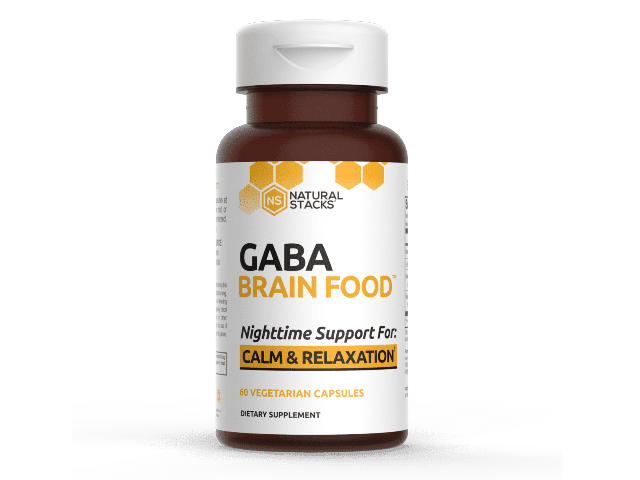
GABA Brain Food
Shop Now →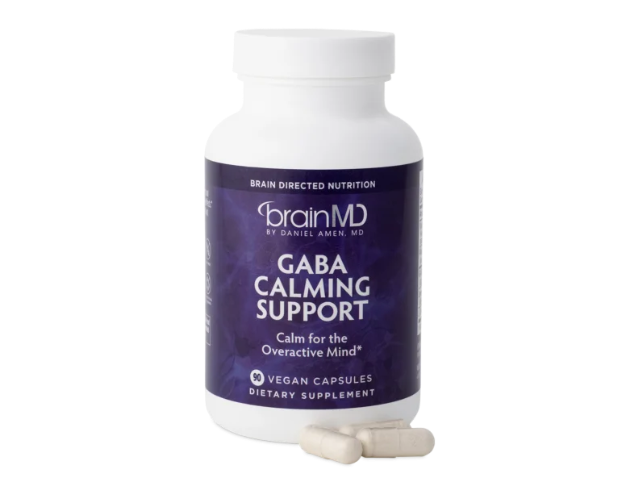
GABA Calming Support by BrainMD
Shop Now →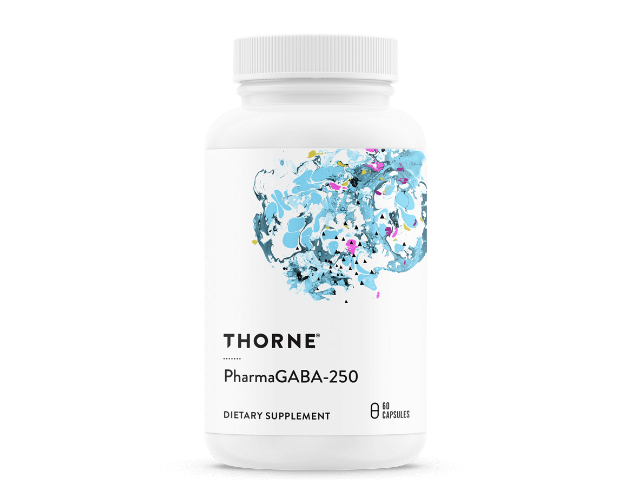
GABA Supplement by Thorne Research
Shop Now →Disclosure: These are affiliate links. I earn a small commission if you purchase — at no extra cost to you. I only recommend products I personally use or have thoroughly researched.