
- May support healthy mood and motivation
- Potential cognitive enhancement properties
- Modulates dopamine receptor sensitivity
- Anti-opiate activity
- May support stress resilience
I’ll be honest — when I first came across MIF-1, I almost dismissed it entirely. A peptide discovered in the 1960s that barely anyone talks about? With clinical trial data older than I am? My gut reaction was “if this actually worked, we’d all know about it by now.”
I was wrong. Dead wrong.
MIF-1 is one of those compounds that fell through the cracks of pharmaceutical history — not because the science was bad, but because small peptides couldn’t be patented profitably. The clinical data, while limited, is genuinely remarkable: in one double-blind trial, 8 out of 9 depressed patients showed marked improvement after just five days of low-dose injections. That’s the kind of result that would make headlines if it happened today.
The Short Version: MIF-1 (Pro-Leu-Gly-NH2) is a naturally occurring brain peptide — a fragment of oxytocin — that enhances dopamine receptor sensitivity through a unique allosteric mechanism. Small clinical trials showed rapid antidepressant effects, and it’s gaining traction in biohacking circles for mood, motivation, and anhedonia. The evidence is promising but limited, and it requires subcutaneous injection for reliable effects.
What Is MIF-1 Peptide?
MIF-1 stands for Melanocyte-Stimulating Hormone Release-Inhibiting Factor-1 — a mouthful that tells you almost nothing about why people actually care about this peptide. Here’s what matters: MIF-1 is a tiny three-amino-acid peptide (Pro-Leu-Gly-NH2) that your brain already makes naturally.
It was discovered in 1968 by R.M.G. Nair, Andrew V. Schally, and Abba J. Kastin, who isolated it from approximately 5,000 bovine hypothalami. That’s a lot of cow brains. But what they found was historic — MIF-1 was the first hypothalamic peptide shown to act “up” on the brain itself, not just “down” on the pituitary gland. It completely overturned the prevailing scientific dogma of the time.
Your body produces MIF-1 when an enzyme called IRAP (insulin-regulated aminopeptidase) clips the tail end off of oxytocin. That’s right — the “love hormone” gets broken down into a dopamine-enhancing fragment. Biology is wild.
Reality Check: MIF-1 is sometimes marketed as a “synthetic nootropic,” but that’s misleading. It’s an endogenous neuropeptide — your brain already makes it. The synthetic versions used in research and by biohackers are identical to the natural molecule. That said, the clinical evidence, while compelling, comes from small trials conducted decades ago. No large-scale modern studies exist.
How Does MIF-1 Peptide Work?
Most compounds that affect dopamine work like a sledgehammer — they either flood your system with more dopamine, directly activate dopamine receptors, or block them entirely. MIF-1 does something far more elegant.
Think of a dopamine D2 receptor like a radio. A direct agonist turns the volume knob to maximum. An antagonist rips the knob off. MIF-1? It fine-tunes the antenna so the radio picks up the signal more clearly. The technical term is positive allosteric modulation — it binds to a separate site on the D2 and D4 receptors and makes them more responsive to the dopamine that’s already there.
Here’s where it gets interesting. MIF-1 increases the population of high-affinity D2 receptor states — the functional, G-protein-coupled form that actually does useful work. It requires the G-protein to be coupled to the receptor; without that partnership, MIF-1’s effects don’t manifest. This is a fundamentally different mechanism than anything else in the nootropic space.
The downstream effects cascade through the MAPK/ERK signaling pathway. Research on PAOPA — a peptidomimetic analog 100-1,000x more potent than MIF-1 — showed increased phospho-ERK1 (+51%), phospho-ERK2 (+36%), and enhanced D2 receptor internalization (+33%). These are the molecular signatures of improved dopaminergic signaling.
In practical terms: MIF-1 doesn’t give you more dopamine. It makes your existing dopamine work better. That distinction matters enormously for understanding why it helps with conditions like depression and anhedonia without the crash, tolerance, or addiction risk of direct dopamine agonists.
The Anti-Opiate Connection
MIF-1 was also the first endogenous peptide shown to have anti-opiate properties — a finding that correctly predicted the later discovery of other endogenous antiopiate systems. In both animal models and a double-blind human study, MIF-1 antagonized morphine analgesia through a mechanism completely distinct from naloxone. It doesn’t compete at the opioid receptor directly; it works through a separate pathway entirely.
GABA-A Modulation
MIF-1 also augments GABA-stimulated benzodiazepine receptor binding and muscimol-stimulated chloride uptake — without altering GABA binding directly. It appears to act at a distinct peptide modulatory site on the GABA-A complex.
Pro Tip: The multi-target mechanism is actually a feature, not a bug. By modulating dopamine sensitivity, opposing excessive opioid signaling, and supporting GABAergic function simultaneously, MIF-1 addresses multiple aspects of mood and motivation without hammering any single system. This is why the side effect profile is so mild relative to its effects.
Benefits of MIF-1 Peptide
Mood and Depression Support
This is where MIF-1’s evidence is strongest — and most frustrating, because the trials were small and nobody has replicated them with modern methodology.
The headline study: Ehrensing & Kastin (1994) ran a double-blind crossover trial in 20 patients with DSM-III-R major depression. Just 10 mg of MIF-1 subcutaneously daily for 5 days produced marked improvement (Hamilton Depression Scale ≤7) in 8 out of 9 patients versus only 2 of 11 on placebo (P < 0.01). Effects appeared within days, not weeks.
A separate 28-day double-blind study compared MIF-1 (60 mg/day oral) head-to-head with imipramine (75 mg/day) in 20 hospitalized patients. MIF-1 was at least as effective as the tricyclic antidepressant, with faster onset of action.
| Study | Design | Dose | Key Finding |
|---|---|---|---|
| Ehrensing & Kastin, 1994 | Double-blind crossover, n=20 | 10 mg SC × 5 days | 8/9 marked improvement vs. 2/11 placebo |
| Ehrensing & Kastin, 1978 | Dose-response, n=18 | 75 mg vs. 750 mg oral | Lower dose significantly more effective |
| Ehrensing et al., 1983 | Double-blind vs. imipramine, n=20 | 60 mg oral × 28 days | Comparable to imipramine, faster onset |
Cognitive Enhancement
The cognitive evidence is preliminary — all from animal studies — but intriguing:
- Enhanced passive avoidance retention and attenuated drug-induced and electroconvulsive amnesia
- Faster maze learning with fewer errors
- Improved brightness discrimination in visual tasks (likely via increased attention)
- Accelerated neurodevelopment in neonatal mice across neuromotor, somatic, and EEG parameters, with learning benefits lasting into early adulthood
No human cognitive trials exist. This is squarely in the “promising but unproven” category.
Anti-Opiate Effects
MIF-1 antagonized morphine analgesia in a controlled human study — a finding with potential implications for opioid tolerance and dependence management. This hasn’t been developed clinically, but it’s a uniquely interesting property.
Important: If you’re taking opioid pain medications for a legitimate medical condition, MIF-1’s anti-opiate effects could reduce their effectiveness. This is not theoretical — it was demonstrated in a double-blind human study. Discuss with your prescribing physician before experimenting.
Parkinson’s Disease
The results here are mixed. Animal studies showed MIF-1 greatly potentiated L-DOPA’s effects, but a human trial of acute IV MIF-1 (200 mg) in 8 Parkinson’s patients already on optimal L-DOPA failed to show improvement. The acute, high-dose design may have been the problem — recall the inverted U-shaped dose-response.
| Benefit | Evidence Level | Key Notes |
|---|---|---|
| Depression/Mood | Moderate (small human RCTs) | Most compelling evidence; rapid onset |
| Anhedonia relief | Preliminary (user reports) | Consistent anecdotal pattern |
| Cognitive enhancement | Preliminary (animal only) | No human data |
| Anti-opiate | Demonstrated (human study) | Clinically unexplored |
| Parkinson’s support | Mixed | Positive in animals, negative in one human trial |
How to Take MIF-1 Peptide
Here’s where MIF-1 gets counterintuitive — and where most people would mess up without guidance.
The Inverted U-Shaped Dose-Response
This is the single most important thing to understand about MIF-1 dosing: more is not better. In the 1978 dose-response study, 75 mg/day oral produced improvement in 5 out of 8 patients. Increasing the dose tenfold to 750 mg/day? Only 1 out of 10 improved. The higher dose was essentially inactive.
This isn’t unusual for allosteric modulators, but it catches people off guard. If you’re not getting results, the answer might be less, not more.
Recommended Protocols
Subcutaneous injection (preferred):
- Dose: 8-10 mg daily
- Duration: 5-7 consecutive days per cycle
- Rest period: 1-2 weeks off between cycles
- Reconstitution: Use bacteriostatic water; standard peptide preparation
Oral (significantly less effective):
- Dose: 60-75 mg daily
- Note: Poor oral bioavailability limits effectiveness; subcutaneous is strongly preferred
| Route | Dose | Cycle | Rest Period | Effectiveness |
|---|---|---|---|---|
| Subcutaneous | 8-10 mg/day | 5-7 days | 1-2 weeks | Preferred |
| Oral | 60-75 mg/day | Up to 28 days | Variable | Significantly lower |
Timing and Practical Notes
- Administer in the morning — dopaminergic effects may interfere with sleep if taken late
- Effects typically become noticeable by days 3-5 of a cycle
- Benefits may persist beyond the active dosing period
- Multiple cycles may be needed for full effect; some users report stronger response by the second or third cycle
- MIF-1 is unusually stable in blood plasma — 50% degradation takes approximately 5 days at body temperature — but still poorly absorbed orally
Insider Tip: Start with the lower end of the dosing range (8 mg subcutaneous). Some researchers have suggested that an even lower dose (~0.1 mg/kg, roughly 7 mg for a 70 kg person) might be more effective as an antidepressant. With MIF-1, restraint is your friend. If you’re not feeling effects after one full cycle, try reducing the dose slightly before increasing it.
Side Effects and Safety
What the Clinical Data Shows
Here’s the good news: across every published clinical trial — and there were several spanning the 1970s through the 1990s — no severe adverse events were reported. No hematological abnormalities. No metabolic disruption. No movement disorders (which you might worry about with something that modulates dopamine).
The more potent peptidomimetic derivative PAOPA has also shown a clean safety profile in preclinical evaluation.
Known and Theoretical Concerns
- Anti-opiate interaction: Demonstrated in humans. Will reduce effectiveness of opioid pain medications
- Antipsychotic interference: Haloperidol and sulpiride block MIF-1’s effects; conversely, MIF-1 may attenuate neuroleptic side effects like tardive dyskinesia
- Overdosing renders it inactive, not toxic: At high doses, MIF-1 simply stops working. This is actually a built-in safety feature of the inverted U dose-response
- No pregnancy/nursing data: Avoid entirely
Drug Interactions
- Opioid medications (prescription painkillers, kratom): MIF-1 antagonizes opioid analgesia
- Antipsychotics: Bidirectional interference with effects
- L-DOPA: Theoretical potentiation (shown in animals)
- Melatonin: MIF-1 potentiates melatonin activity — could be beneficial or require dose adjustment
Regulatory Status
MIF-1 is not FDA-approved for any indication. It is available as a research peptide only. All use is off-label and self-directed.
Stacking MIF-1 Peptide
Let me be upfront: there are no clinical studies examining MIF-1 combinations. Everything in this section is theoretical, based on complementary mechanisms, or drawn from community reports.
Potentially Complementary Combinations
- Semax: Different dopaminergic mechanism (BDNF upregulation, enhanced dopamine release) could complement MIF-1’s receptor sensitization. Different peptide, different pathway, potentially additive cognitive and mood benefits
- Selank: Anxiolytic peptide targeting serotonin and GABA systems. Could address anxiety while MIF-1 targets motivation and drive
- Melatonin: MIF-1 directly potentiates melatonin activity — a lower melatonin dose may be effective if combined
- Racetams: AMPA receptor modulation offers a mechanistically distinct cognitive enhancement pathway
What to Avoid
- Opioid agonists (including kratom): MIF-1 directly antagonizes opioid effects — this isn’t a theoretical concern, it’s demonstrated
- Antipsychotic medications: Bidirectional interference undermines both compounds
- High-dose dopamine agonists or stimulants: While MIF-1 enhances dopamine sensitivity rather than dopamine levels, combining with strong dopaminergic compounds warrants caution
My Take
MIF-1 is one of the most fascinating peptides I’ve come across — and one of the most frustrating. The clinical data for depression, while limited to small trials, is genuinely compelling. An 89% response rate in five days? Comparable efficacy to a tricyclic antidepressant with a fraction of the side effects? That’s not nothing.
But here’s the thing — those trials happened 30-40 years ago, and nobody’s done the large-scale follow-up that would settle the question definitively. That’s the pharmaceutical patent problem in a nutshell: you can’t patent a naturally occurring tripeptide, so nobody funds the $50 million Phase III trial.
Who this is best for: If you’re dealing with persistent anhedonia — that flat, “nothing brings me joy” feeling — MIF-1 is worth serious consideration. The dopamine D2 receptor sensitization mechanism directly addresses the neurological underpinning of anhedonia in a way that SSRIs simply don’t. Users consistently report restored ability to enjoy interests and hobbies, often noticing the shift around day 3-4 of their first cycle.
Who should try something else first: If you haven’t addressed your foundations — sleep, gut health, stress management, basic nutrition — start there. If you’re looking for an acute cognitive boost for a work deadline, MIF-1 isn’t that compound. Its effects build over a multi-day cycle and are more about restoring baseline function than pushing past it. Semax or racetams are better starting points for pure nootropic effects.
The honest assessment: I think MIF-1 is underrated and under-researched. The mechanism is elegant, the safety profile is clean, and the clinical signal for depression is real — even if the trials were small. The subcutaneous injection requirement limits its audience, and the inverted U dose-response means you have to be thoughtful about dosing rather than just “taking more.”
If you’re comfortable with peptide injections and you’ve been chasing anhedonia or treatment-resistant low mood, this is one of the more interesting tools in the peptide toolbox. Just go in with calibrated expectations, start at the lower end of the dosing range, and give it at least one full cycle before making judgments.
Recommended MIF-1 Peptide Products
I know how frustrating it is to sort through dozens of brands making the same claims. These are the ones I've personally vetted — because quality is the difference between results and wasted money.
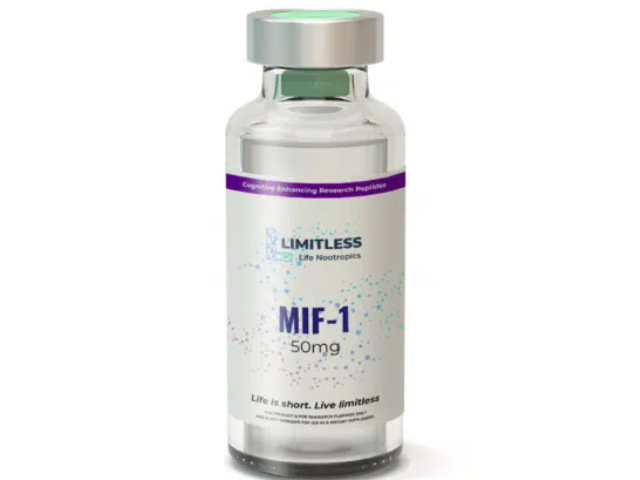
MIF-1 Peptide 30mg by Limitless Life Nootropics
Shop Now →MIF-1 Peptide 50mg by Limitless Life Nootropics
Shop Now →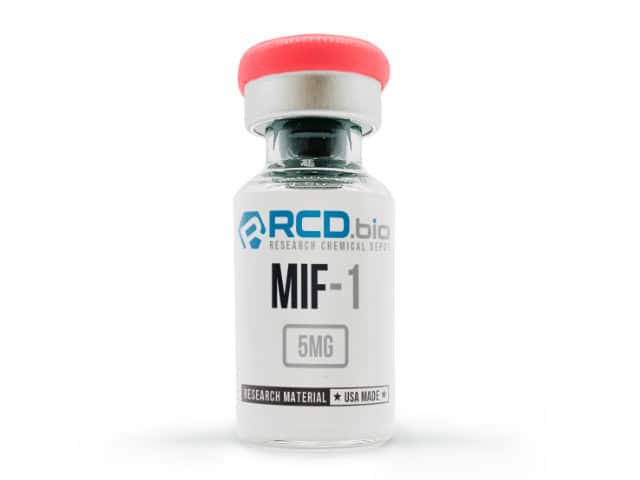
MIF-1 Peptide by Research Chemical Depot
Shop Now →Disclosure: These are affiliate links. I earn a small commission if you purchase — at no extra cost to you. I only recommend products I personally use or have thoroughly researched.
Research & Studies
This section includes 3 peer-reviewed studies referenced in our analysis.