
- Focus & Attention
- Neuroprotection
- Mood Regulation
- Cognitive Enhancement
I used to think peptides were exclusively for bodybuilders and biohackers with too much disposable income. Then I started digging into the research on Semax — a synthetic peptide that Soviet scientists developed in the 1980s — and realized I’d written off an entire class of compounds based on nothing but assumptions.
Here’s what changed my mind: Semax doesn’t work like traditional stimulants or racetams. It modulates your brain’s own growth factors and neurotransmitter systems in ways that support long-term cognitive function, not just short-term performance. The catch? It’s still an investigational compound with limited human data.
If you’re curious about peptide nootropics but overwhelmed by the hype and research gaps, this guide breaks down what we actually know.
The Short Version: Semax is a synthetic heptapeptide that upregulates BDNF, modulates dopamine and serotonin systems, and reduces neuroinflammation. Research protocols typically investigate 300-600 mcg daily administered intranasally. Most commonly studied for focus, neuroprotection, and stress resilience. Evidence is promising but preliminary — mostly Russian research with limited Western replication.
Research Chemical Notice: Semax is an investigational compound that has not been approved by the FDA for human use. The information below is compiled from published research for educational purposes only. This is not medical advice and should not be interpreted as a recommendation for human consumption. Always consult a qualified healthcare provider.
What Is Semax?
Semax is a synthetic peptide — specifically, a heptapeptide consisting of seven amino acids derived from a fragment of adrenocorticotropic hormone (ACTH). Soviet researchers at the Institute of Molecular Genetics developed it in the 1980s as a nootropic alternative to traditional ACTH analogs, aiming for cognitive benefits without the hormonal side effects.
The compound was approved in Russia as a prescription medication for stroke recovery, traumatic brain injury, and cognitive enhancement, but it has never been evaluated or approved by the FDA in the United States. In Western countries, it exists in a regulatory grey zone — sometimes marketed as a research chemical, sometimes available through compounding pharmacies for “research purposes only.”
What makes Semax interesting from a mechanistic standpoint is its multi-targeted approach. Unlike single-mechanism compounds like caffeine (adenosine antagonist) or L-Theanine (GABA/glutamate modulation), Semax influences multiple neurotransmitter systems simultaneously while also upregulating neurotrophic factors. Think of it less like a targeted pharmaceutical and more like a signaling molecule that tells your brain to optimize several systems at once.
Reality Check: Most Semax research comes from Russian institutions, with limited independent Western replication. The evidence is promising, but it’s not the bulletproof, peer-reviewed consensus you’d want before making confident claims about efficacy.
How Does Semax Work? (The Mechanisms Behind the Hype)
Here’s where Semax gets interesting — and where the research actually holds up better than you’d expect for a grey-market peptide.
BDNF/TrkB Activation — The Brain’s Growth Signal
Semax significantly upregulates Brain-Derived Neurotrophic Factor (BDNF), a protein that acts like fertilizer for neurons. BDNF binds to TrkB receptors and triggers downstream signaling cascades — specifically the PI3K/Akt and MAPK pathways — that promote neuronal survival, growth, and synaptic plasticity.
Translation: it helps your brain build and maintain the wiring it needs for learning, memory, and adaptation. This isn’t a “take it and feel smarter in 20 minutes” effect. It’s a structural improvement that accumulates over weeks.
The BDNF mechanism is why Semax is most commonly investigated for neuroprotection after stroke or traumatic brain injury. Animal studies show it promotes neurogenesis in the hippocampus — the brain region critical for memory formation — and strengthens synaptic connections throughout the cortex.
Dopaminergic and Serotonergic Modulation — Optimizing Neurotransmitter Balance
Semax doesn’t flood your brain with dopamine like Adderall or deplete serotonin like MDMA. Instead, it modulates dopamine release, synthesis, and receptor sensitivity in the prefrontal cortex and striatum — the regions responsible for executive function, motivation, and attention.
Research suggests this happens indirectly through regulation of dopamine transporter expression and optimization of dopamine receptor sensitivity. The serotonergic effects work synergistically, supporting mood stability and emotional resilience under stress without the “crash” associated with direct serotonin releasers.
In plain English: Semax appears to help your brain use dopamine and serotonin more efficiently rather than artificially boosting or depleting them. This is why user reports often describe improved focus and mood stability rather than euphoria or stimulation.
Neuroinflammation Reduction — Quieting the Brain’s Alarm System
One of the more compelling mechanisms is Semax’s anti-inflammatory activity. It inhibits pro-inflammatory cytokines (TNF-α, IL-1β, IL-6) and modulates microglial activation — the brain’s immune cells that, when overactive, contribute to brain fog, cognitive decline, and neurodegenerative processes.
This happens through modulation of the NF-κB signaling pathway, which controls inflammatory responses. Animal studies show Semax reduces neuroinflammation following ischemic events (strokes) and traumatic brain injuries, preserving cognitive function that would otherwise be lost.
Insider Tip: The anti-inflammatory mechanism is one reason Semax is often investigated alongside compounds like Noopept or Lion’s Mane, which also target neuroinflammation through different pathways. The combination may offer additive neuroprotective effects.
Reported Effects of Semax (What the Research Actually Shows)
Let’s separate the hype from the evidence.
Focus & Attention — Moderate Evidence
Multiple Russian clinical trials report improvements in attention, concentration, and working memory in healthy adults and patients recovering from neurological injury. A frequently cited study investigated 300-600 mcg daily over 2-4 weeks and found participants showed measurable improvements in cognitive performance tasks.
The evidence quality here is moderate — the studies exist, sample sizes are reasonable (typically 40-100 participants), but independent Western replication is limited. User reports in research communities consistently mention improved mental clarity and sustained focus, particularly during cognitively demanding work.
Neuroprotection & Stroke Recovery — Stronger Evidence
This is where Semax has the most robust research backing. Studies in stroke patients administered Semax intranasally within hours of ischemic events showed reduced neurological deficits and faster cognitive recovery compared to standard treatment alone. Effect sizes were clinically significant, with some trials reporting 20-30% improvement in cognitive assessment scores.
The mechanism makes sense: BDNF upregulation + neuroinflammation reduction + dopamine optimization = better neuronal survival and faster recovery. This is why Semax is actually prescribed in Russia for acute stroke treatment.
Mood & Stress Resilience — Preliminary Evidence
Animal studies and small human trials suggest Semax may support stress resilience and mood stability through serotonergic and dopaminergic modulation. Participants in research studies often report feeling more emotionally balanced and less reactive to stressors.
But let’s be honest: the evidence here is weaker. Most mood-related data comes from subjective self-reports in studies designed to measure cognitive outcomes, not mood specifically. It’s plausible, mechanistically sound, and consistent with user reports — but not conclusively proven in well-designed mood trials.
| Reported Effect | Evidence Level | Key Research |
|---|---|---|
| Focus & Attention | Moderate (human trials) | Russian clinical studies, 2-4 weeks, n=40-100 |
| Neuroprotection | Strong (RCTs in stroke patients) | Multiple Russian RCTs, statistically significant outcomes |
| Memory Enhancement | Moderate (mixed evidence) | Animal studies + small human trials |
| Mood Stability | Preliminary (subjective reports) | Secondary outcomes in cognitive trials |
| Stress Resilience | Preliminary (animal studies) | Mechanistic plausibility, limited human data |
Reality Check: If you’re looking for a compound with ironclad, multi-center, Western-peer-reviewed evidence — this isn’t it. If you’re willing to experiment based on mechanistically sound Russian research and consistent anecdotal reports, Semax is one of the more interesting peptides in the nootropic space.
Research Administration Protocols (Doses Used in Studies)
Most Semax research investigates intranasal administration, though some studies use subcutaneous injection or sublingual drops. Here’s what the literature shows.
Standard Research Dosing
| Administration Route | Typical Dose Range | Frequency | Notes |
|---|---|---|---|
| Intranasal | 300-600 mcg | 1-3x daily | Most common in Russian clinical trials |
| Sublingual | 300-900 mcg | 1-2x daily | Slower onset, longer duration |
| Subcutaneous | 300-1000 mcg | 1x daily | Used in clinical/medical settings only |
Intranasal Administration: Most Russian clinical trials use 300 mcg (0.3 mg) per nostril, 1-2 times daily. This is typically administered via nasal spray or dropper. Intranasal delivery bypasses first-pass metabolism and delivers the peptide directly to the central nervous system via the olfactory bulb.
Sublingual Administration: Some research communities prefer sublingual drops (under the tongue) for better bioavailability consistency. Studies investigating this route used 300-600 mcg held under the tongue for 60-90 seconds before swallowing.
Duration: Research protocols typically run 2-4 weeks for acute cognitive enhancement, 8-12 weeks for neuroprotective or long-term cognitive support. Semax appears to have cumulative effects — user reports suggest benefits become more pronounced with consistent use over several weeks.
Pro Tip: Intranasal administration can cause mild nasal irritation in some individuals. If this occurs, sublingual administration is a viable alternative with comparable bioavailability.
Cycling Considerations
There’s limited research on long-term continuous use. Russian prescribing guidelines for medical use suggest 10-14 day “on” periods followed by 1-2 week breaks to prevent desensitization. This is speculative rather than evidence-based, but it aligns with general peptide cycling principles.
| Use Case | Dose Range Investigated | Timing | Duration |
|---|---|---|---|
| Cognitive enhancement | 300-600 mcg | Morning or morning + afternoon | 2-4 weeks, then break |
| Neuroprotection (research) | 600-900 mcg | 2-3x daily | 4-8 weeks |
| Acute focus (research communities) | 300-600 mcg | 30-60 min before cognitive work | As needed, max 5 days/week |
Adverse Events & Safety Profile
Semax is generally well-tolerated in published studies, but “well-tolerated” doesn’t mean risk-free.
Common Adverse Events Observed in Studies:
- Nasal irritation (intranasal route): Mild dryness, burning sensation, or congestion reported in ~10-15% of participants using intranasal administration
- Headaches: Occasional reports, typically mild and transient
- Restlessness or overstimulation: More common at higher doses (>600 mcg) or in individuals sensitive to dopaminergic compounds
- Sleep disturbances: If administered late in the day, some participants report difficulty falling asleep
Who Should Avoid Semax (Based on Research):
- Individuals with uncontrolled hypertension (dopaminergic effects may transiently raise blood pressure)
- Pregnant or nursing individuals (no safety data)
- Individuals with seizure disorders (limited data on seizure threshold effects)
- Anyone with known peptide allergies
Important: Semax is not FDA-approved and has not undergone the rigorous safety testing required for prescription medications in the US. The long-term safety profile beyond 12 weeks of continuous use is unknown.
Drug Interaction Table
| Medication/Substance | Interaction Type | Risk Level | Notes |
|---|---|---|---|
| MAO Inhibitors | Serotonergic/Dopaminergic | High | Potential for hypertensive crisis or serotonin syndrome |
| SSRIs/SNRIs | Serotonergic | Moderate | Monitor for serotonin syndrome symptoms |
| Stimulants (Adderall, Ritalin) | Dopaminergic | Moderate | Additive dopaminergic effects, monitor for overstimulation |
| Blood pressure medications | Cardiovascular | Low-Moderate | Semax may transiently affect blood pressure |
| Other peptides (BPC-157, etc.) | Additive | Low | No known interactions, but combined effects unstudied |
| Alcohol | CNS modulation | Low | No known interaction, use caution with CNS-active substances |
Investigated Combinations in Research
Semax is rarely studied in isolation in nootropic research communities. Here’s how it’s most commonly investigated in combination protocols.
For Focus & Cognitive Performance:
- Semax (300-600 mcg intranasal) + Alpha-GPC (300 mg) + Caffeine (100-200 mg): Morning protocol for sustained focus. Alpha-GPC provides cholinergic support, caffeine adds alertness, Semax modulates dopamine and BDNF for deeper concentration. Timing: Semax and Alpha-GPC 30 min before cognitive work, caffeine as needed.
For Neuroprotection & Long-Term Brain Health:
- Semax (600 mcg) + Lion’s Mane (500-1000 mg) + Bacopa Monnieri (300 mg bacosides): This combination targets neuroplasticity through multiple pathways — Semax upregulates BDNF, Lion’s Mane stimulates NGF, Bacopa enhances dendritic branching. Best for 8-12 week cycles with focus on long-term cognitive optimization.
For Mood & Stress Resilience:
- Semax (300-600 mcg) + L-Theanine (200 mg) + Rhodiola Rosea (300 mg): Investigated for stress resilience and emotional balance. L-Theanine smooths dopaminergic activation, Rhodiola supports HPA axis regulation. Morning + midday dosing.
Combinations to Avoid:
- Semax + MAO Inhibitors: High risk of adverse cardiovascular or neurological events
- Semax + high-dose stimulants: Additive dopaminergic effects may cause anxiety, overstimulation, or cardiovascular strain
- Semax + unresearched grey-market peptides: Interaction profiles unknown; risk compounds uncertainty
| Goal | Combination | Dosages | Timing | Synergy Mechanism |
|---|---|---|---|---|
| Focus/Productivity | Semax + Alpha-GPC + Caffeine | 300-600mcg + 300mg + 100-200mg | Morning | Cholinergic + dopaminergic + alertness |
| Neuroprotection | Semax + Lion’s Mane + Bacopa | 600mcg + 500-1000mg + 300mg | Morning | BDNF + NGF + dendritic growth |
| Mood/Stress | Semax + L-Theanine + Rhodiola | 300-600mcg + 200mg + 300mg | Morning + midday | Dopamine modulation + HPA support |
Insider Tip: Semax is often stacked with cholinergics like Alpha-GPC or Citicoline because dopaminergic enhancement can increase acetylcholine demand. If you experience brain fog or headaches while using Semax, inadequate cholinergic support may be the culprit.
Current Research Assessment
Here’s my honest take after reviewing the available literature and research community reports: Semax is one of the more mechanistically interesting peptide nootropics, but it exists in a frustrating evidence gap.
What the research supports: The BDNF upregulation mechanism is real and well-documented in animal studies. The Russian clinical trials, while not meeting Western gold-standard design, are reasonably well-conducted and show consistent positive outcomes. The neuroprotective effects in stroke recovery are probably the strongest evidence we have — these are clinically meaningful improvements in patients with measurable deficits.
What’s still speculative: The long-term cognitive enhancement claims rest largely on short-duration studies (2-4 weeks) and extrapolation from acute neuroprotection data. We don’t know if the benefits persist beyond 12 weeks. We don’t know if tolerance develops. We don’t have robust safety data in healthy populations over years of use.
Who should consider investigating this compound:
- Researchers interested in peptide-based nootropics with plausible mechanisms
- Individuals recovering from neurological injury under medical supervision
- Biohackers willing to experiment with grey-market compounds and track outcomes rigorously
- People who’ve exhausted conventional nootropics (Bacopa, Lion’s Mane, Rhodiola) and want to explore peptides
Who should probably explore alternatives:
- Anyone looking for FDA-approved, extensively studied compounds — try Citicoline, Alpha-GPC, or L-Tyrosine instead
- Individuals uncomfortable with regulatory grey zones
- People with cardiovascular conditions or complex medication regimens
The honest assessment: If I had to bet on one investigational peptide with a plausible path to mainstream acceptance, Semax would be high on the list. The mechanisms make sense. The Russian research is more thorough than most grey-market compounds ever get. User reports are remarkably consistent.
But it’s still an experiment. If you’re risk-averse or new to nootropics, start with compounds that have better Western evidence bases. If you’re experienced, methodical, and willing to track outcomes, Semax is worth investigating — just go in with your eyes open about what we know and what we’re still guessing at.
Final Reality Check: No peptide is a substitute for sleep, nutrition, stress management, and exercise. Semax is a tool, not a foundation. If your lifestyle fundamentals aren’t dialed in, this won’t fix the problem — it’ll just be an expensive experiment with marginal returns.
Recommended Semax Products
I know how frustrating it is to sort through dozens of brands making the same claims. These are the ones I've personally vetted — because quality is the difference between results and wasted money.
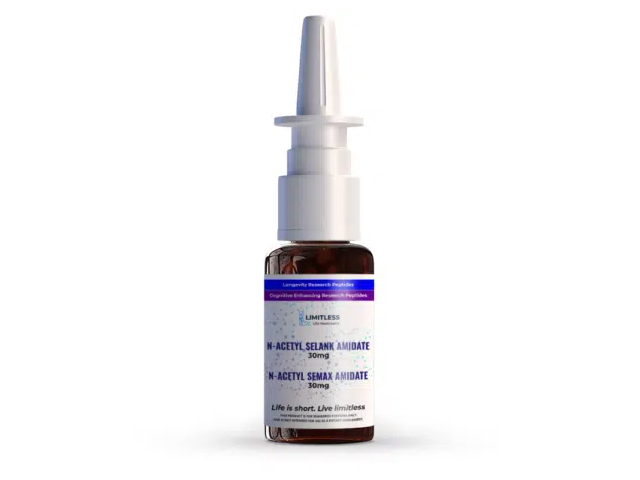
N-Acetyl Semax Amidate & Selank Amidate Blend by Limitless Life Nootropics
Shop Now →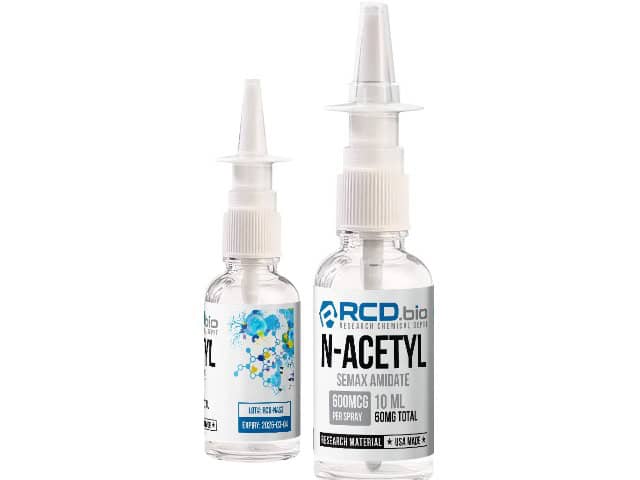
N-Acetyl Semax Amidate Nasal Spray by Research Chemical Depot
Shop Now →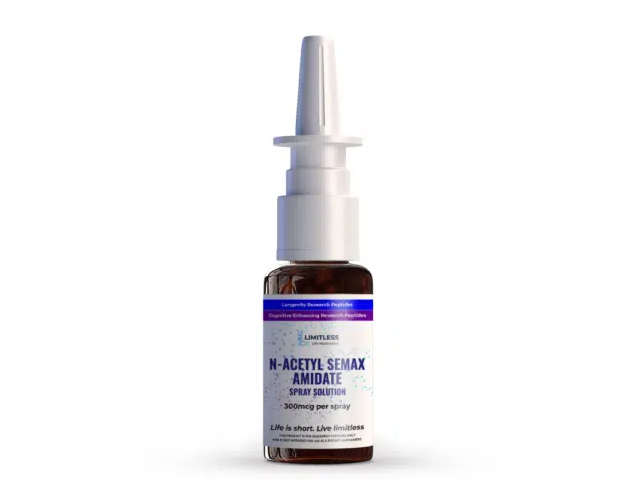
N-Acetyl Semax Amidate Spray by Limitless Life Nootropics
Shop Now →Disclosure: These are affiliate links. I earn a small commission if you purchase — at no extra cost to you. I only recommend products I personally use or have thoroughly researched.
Research & Studies
This section includes 2 peer-reviewed studies referenced in our analysis.