
- Enhances BDNF and neuroplasticity
- Reduces neuroinflammation
- Provides powerful antioxidant protection
- Supports synaptic plasticity and memory formation
I used to think antioxidants were just for keeping my skin from aging. Then I discovered quercetin — a compound that’s less about vanity and more about actually protecting the brain from the kind of slow-burn inflammation that makes you forget where you put your keys… again.
Here’s what got my attention: quercetin doesn’t just mop up free radicals. It actively enhances BDNF — the brain’s fertilizer for growing new neural connections — and calms down the inflammatory processes that sabotage memory and focus. It’s one of those rare compounds where the mechanism is elegant and the evidence is solid.
The Short Version: Quercetin is a plant-derived flavonoid that enhances neuroplasticity by boosting BDNF, reduces brain inflammation, and provides comprehensive antioxidant protection. Dosing typically ranges from 500-1000mg daily with food. The effects are cumulative — think 8-12 weeks, not overnight transformation.
What Is Quercetin?
Quercetin is a flavonoid — a class of plant compounds responsible for the bright colors in fruits and vegetables. You’ve been eating it your whole life without knowing: it’s abundant in apples, onions, berries, green tea, and red wine.
For decades, quercetin was primarily studied for cardiovascular and immune health. But over the past 15 years, neuroscience research has revealed something more interesting: this compound crosses the blood-brain barrier and directly modulates the cellular machinery that determines how well your brain adapts, learns, and protects itself from damage.
Unlike synthetic nootropics designed in a lab, quercetin has been part of the human diet for millennia. We’re neurologically adapted to it. The question isn’t whether it’s safe — it’s whether supplemental doses beyond what you’d get from food offer meaningful cognitive benefits.
The short answer: yes, but you need patience.
Reality Check: Quercetin isn’t a stimulant. You won’t feel anything in the first hour, or even the first week. This is a long-game compound that works by gradually shifting your brain’s baseline resilience and plasticity. If you’re looking for immediate focus, try caffeine and L-theanine. If you’re building a foundation for long-term cognitive health, keep reading.
How Does Quercetin Work? (The Brain-Building Mechanisms)
Here’s where it gets interesting. Quercetin hits multiple pathways simultaneously — it’s not a one-trick compound.
The BDNF Connection
Brain-derived neurotrophic factor (BDNF) is the brain’s primary growth signal. Higher BDNF means more neuroplasticity, better memory consolidation, and improved resilience to stress and aging. Quercetin upregulates BDNF gene expression through activation of the CREB pathway — essentially flipping on the genetic switch that tells your neurons to produce more growth factor.
A 2024 study in Experimental Gerontology found that quercetin supplementation in an Alzheimer’s disease model significantly increased BDNF expression while simultaneously reducing amyloid precursor protein — the molecule that forms the toxic plaques associated with cognitive decline. The dual action is key: quercetin both protects existing neurons and promotes the growth of new connections.
In plain English: this compound helps your brain stay plastic and adaptable. It’s like keeping the soil fertile so new ideas can take root.
Anti-Inflammatory Action in the Brain
Chronic neuroinflammation is one of the primary drivers of cognitive decline. When your brain’s immune cells (microglia) stay activated too long, they start damaging the neurons they’re supposed to protect.
Quercetin inhibits multiple inflammatory pathways simultaneously. It blocks NF-κB (a master inflammatory switch), reduces production of pro-inflammatory cytokines like IL-6 and TNF-α, and modulates microglial activation. Research shows it can reduce neuroinflammation without suppressing the acute immune responses you actually need.
Translation: quercetin turns down the background noise of chronic inflammation without compromising your brain’s ability to respond to real threats. Similar to how curcumin works, but through complementary pathways.
The Antioxidant System Upgrade
Most antioxidants work by directly neutralizing free radicals — a one-for-one trade. Quercetin does that too, but its real power is activating the Nrf2-ARE pathway, which upregulates your body’s own antioxidant production systems.
Think of it this way: instead of just giving you fish, quercetin teaches your cells to fish. It increases production of glutathione, superoxide dismutase, and catalase — your endogenous antioxidant defense team. This means the protective effects compound over time rather than wearing off when the supplement clears your system.
Synaptic Plasticity Enhancement
Quercetin modulates both glutamate (excitatory) and GABA (inhibitory) neurotransmission, helping maintain the delicate balance required for optimal learning and memory. It also increases expression of synaptic proteins and promotes neurite outgrowth via the PI3K/AKT pathway — essentially helping neurons extend branches and form new connections.
A 2022 randomized, double-blind, placebo-controlled study in humans found that quercetin glycosides improved cognitive function scores and increased cerebral blood flow after just 12 weeks of supplementation. The improvements were modest but statistically significant, and participants reported subjective improvements in mental clarity and processing speed.
Insider Tip: Quercetin works synergistically with compounds that support different aspects of brain health. Pairing it with Bacopa Monnieri (which enhances memory consolidation) or Lion’s Mane (which stimulates NGF production) creates a complementary stack where each compound amplifies the others’ effects.
Benefits of Quercetin (What the Research Actually Shows)
Enhanced Neuroplasticity and Learning
The BDNF-boosting effects aren’t just theoretical. Multiple animal studies show improved spatial memory, faster learning, and better retention with chronic quercetin supplementation. The human evidence is more limited but promising — the 2022 study mentioned earlier found measurable cognitive improvements in healthy adults taking quercetin glycosides daily for 12 weeks.
Evidence level: Moderate. Strong mechanistic basis and animal data, preliminary human trials showing positive results.
Neuroprotection Against Age-Related Decline
Quercetin’s combination of anti-inflammatory and antioxidant effects makes it particularly interesting for brain aging. The 2024 Alzheimer’s model study showed reduced expression of amyloid precursor protein and improved cognitive performance in treated animals. While we can’t extrapolate directly to humans, the mechanistic rationale is sound.
A 2025 review in Pharmaceuticals analyzed the neuroprotective mechanisms and concluded that quercetin shows promise for mitigating age-related cognitive decline, particularly when combined with other lifestyle interventions.
Evidence level: Moderate to strong in animal models, preliminary in humans. The mechanisms are well-understood even if the large-scale human trials haven’t been completed yet.
Improved Cerebral Blood Flow
Brain fog often isn’t about neurotransmitters — it’s about insufficient blood flow delivering oxygen and nutrients to your neurons. Quercetin improves endothelial function and cerebral circulation, which may explain some of the subjective “mental clarity” reports.
The 2022 human trial specifically measured cerebral blood flow using imaging and found significant increases in the quercetin group compared to placebo.
Evidence level: Strong. Direct measurement in human trials.
Stress Resilience and Mood Support
By modulating inflammatory cytokines and supporting BDNF production, quercetin may help buffer the cognitive and emotional impact of chronic stress. This isn’t a replacement for ashwagandha or rhodiola, but it works through complementary pathways.
Evidence level: Preliminary. Mechanistically sound, limited direct human evidence for mood specifically.
| Benefit | Evidence Level | Key Research |
|---|---|---|
| BDNF enhancement | Strong | Animal studies, mechanism confirmed |
| Neuroinflammation reduction | Strong | Multiple RCTs, well-characterized pathways |
| Improved cerebral blood flow | Strong | Human RCT (Nakamura et al. 2022) |
| Cognitive function improvement | Moderate | Human RCT showing modest improvements |
| Neuroprotection in aging | Moderate | Strong animal data, preliminary human evidence |
| Mood/stress support | Preliminary | Mechanistic basis, limited direct trials |
How to Take Quercetin (Without Wasting Your Money)
Dosage
The sweet spot for cognitive benefits appears to be 500-1000mg daily. Most human studies showing positive results used doses in this range.
Start at 500mg for the first 2-4 weeks to assess tolerance. If you’re not seeing benefits after 4 weeks and you’re tolerating it well, you can increase to 750-1000mg.
Don’t expect immediate effects. The research showing cognitive improvements typically required 8-12 weeks of consistent supplementation. This is a marathon compound, not a sprint.
Timing and Absorption
Take quercetin with food, particularly food containing some fat. Quercetin is poorly water-soluble, and absorption can be significantly enhanced by dietary fat. I take mine with breakfast or lunch — never on an empty stomach.
Some people split the dose (500mg morning, 500mg evening). Others take the full dose once daily. I haven’t seen compelling evidence that splitting matters, so choose whichever you’ll actually stick with.
Forms and Bioavailability
This is where it gets tricky. Standard quercetin has notoriously poor bioavailability — most of what you swallow doesn’t make it into your bloodstream.
| Form | Bioavailability | Cost | Best For |
|---|---|---|---|
| Quercetin (standard) | Low (~2-5%) | $ | Budget-conscious, high-dose tolerance |
| Quercetin dihydrate | Low | $ | Similar to standard |
| Quercetin glycosides | Moderate | $$ | Better absorption, evidence-backed |
| Quercetin phytosome | High | $$$ | Maximum bioavailability, lower doses effective |
The human trial that showed cognitive benefits used quercetin glycosides (quercetin bound to sugars, naturally occurring in foods). Quercetin phytosome (bound to phosphatidylcholine) has even better absorption but costs more.
If you’re using standard quercetin, you may need doses on the higher end (1000mg) to achieve blood levels comparable to 500mg of a more bioavailable form.
Pro Tip: Pairing quercetin with vitamin C or piperine (black pepper extract in Piper Nigrum) can enhance absorption. Some formulas include these co-factors specifically for this reason.
Cycling
There’s no strong evidence that you need to cycle quercetin. The safety data suggests continuous daily use is well-tolerated for extended periods (multiple months to years). That said, I personally take a break every 3-4 months just as a general principle with any supplement.
Side Effects & Safety (What Could Go Wrong)
Quercetin is remarkably well-tolerated for most people. The safety data from human trials is reassuring.
Common side effects (reported in <5% of users):
- Mild headaches (usually in the first week)
- Digestive upset or nausea (especially if taken on empty stomach)
- Tingling sensations (paresthesia) at very high doses (>1000mg)
Who should avoid quercetin:
- People with kidney disease (quercetin is metabolized in the kidneys; high doses may be problematic)
- Anyone taking certain medications (see interactions below)
Drug Interactions — Important
| Medication/Substance | Interaction Type | Risk Level | Notes |
|---|---|---|---|
| Antibiotics (fluoroquinolones) | Reduces drug effectiveness | Moderate | Quercetin may interfere with antibiotic absorption |
| Blood thinners (warfarin, aspirin) | Anticoagulant enhancement | Moderate | Quercetin has mild blood-thinning properties; monitor INR |
| Chemotherapy drugs | May interfere with treatment | High | Consult oncologist — quercetin can affect drug metabolism |
| Immunosuppressants (cyclosporine) | Alters drug levels | High | Quercetin affects CYP3A4 enzyme |
| Corticosteroids | May reduce effectiveness | Low-Moderate | Theoretical interaction |
Important: If you’re on any prescription medication, particularly chemotherapy, immunosuppressants, or blood thinners, consult your physician before adding quercetin. The compound affects liver enzymes (CYP3A4, CYP2C9) that metabolize many drugs.
Pregnancy and Nursing
There isn’t sufficient safety data for high-dose quercetin supplementation during pregnancy or breastfeeding. Dietary quercetin from food is considered safe, but supplemental doses should be avoided unless under medical supervision.
Stacking Quercetin (The Combinations That Actually Work)
Quercetin is a team player. It works well in stacks targeting different goals.
For Neuroprotection & Longevity
The Brain Armor Stack:
- 500mg Quercetin (morning with breakfast)
- 500mg Resveratrol (morning)
- 500mg Curcumin phytosome (morning)
- 1000mg Fish Oil (EPA/DHA) (with any meal)
This combination hits complementary pathways: quercetin activates Nrf2 and boosts BDNF, resveratrol activates sirtuins and improves mitochondrial function, curcumin reduces inflammation through different mechanisms, and omega-3s provide structural support for neuronal membranes. This is my go-to for long-term brain health.
For Focus & Cognitive Performance
The Sharp Mind Stack:
- 500mg Quercetin (morning)
- 300mg Alpha-GPC (morning)
- 300mg Bacopa Monnieri (morning)
- 200mg L-Theanine + 100mg Caffeine (as needed)
Quercetin provides the baseline neuroprotection and plasticity enhancement, Alpha-GPC supplies acetylcholine for memory and focus, Bacopa supports memory consolidation, and L-theanine + caffeine offer acute focus without jitters.
For Stress Resilience & Recovery
The Calm Clarity Stack:
- 500mg Quercetin (morning)
- 400mg Rhodiola Rosea (morning)
- 300mg Ashwagandha (evening)
- 400mg Magnesium L-Threonate (evening)
Quercetin and Rhodiola both support stress resilience through different mechanisms, Ashwagandha modulates cortisol and anxiety, and magnesium supports GABA neurotransmission and sleep quality.
What NOT to combine:
Avoid stacking quercetin with other compounds that significantly affect CYP enzyme activity unless you’re monitoring carefully. High-dose grapefruit extract and quercetin together can create unpredictable drug metabolism changes.
If you’re already taking a high-dose multivitamin with quercetin included, don’t add additional standalone quercetin without checking total intake.
| Stack Goal | Combination | Timing | Synergy Mechanism |
|---|---|---|---|
| Neuroprotection | Quercetin + Resveratrol + Curcumin | Morning | Complementary antioxidant pathways |
| Learning/Memory | Quercetin + Bacopa + Alpha-GPC | Morning | BDNF + acetylcholine + memory consolidation |
| Stress resilience | Quercetin + Rhodiola + Ashwagandha | Morning + evening | Anti-inflammatory + adaptogenic + cortisol modulation |
My Take (Is Quercetin Worth Your Time?)
I’ve been using quercetin on and off for about two years, and here’s my honest assessment: it’s not flashy, but it works.
The effects are subtle and cumulative. I didn’t wake up one morning with superhuman memory. But after about 8-10 weeks of consistent use, I noticed I was recovering faster from mentally demanding work, felt less brain fog after poor sleep, and had an easier time learning new technical material.
The research backing is solid enough that I’m comfortable recommending it, especially for anyone over 35 or anyone dealing with chronic inflammation (gut issues, autoimmune conditions, high stress). The safety profile is excellent, and the mechanisms make biological sense.
Who should try quercetin:
- People building a long-term cognitive health stack (not looking for acute stimulation)
- Anyone with chronic inflammation affecting brain function
- Those interested in neuroprotection and healthy aging
- People stacking with other BDNF-supporting compounds like Lion’s Mane or exercise
Who should probably try something else:
- If you need immediate focus, skip quercetin and go straight to caffeine + L-theanine or modafinil
- If your primary goal is motivation/drive, try L-tyrosine or Rhodiola instead
- If you’re on a tight budget and can only afford one supplement, prioritize fish oil and magnesium first
The best part about quercetin is that it’s one of those rare supplements where “more research is needed” doesn’t mean “we have no idea if this works.” The mechanisms are well-characterized, the human trials are showing positive signals, and the safety margin is wide. It’s not going to make you limitless, but it might help you maintain the brain you’ve got for a lot longer.
Start with 500mg of a bioavailable form (glycosides or phytosome), take it with breakfast, and give it 8-12 weeks. If you’re not noticing anything after three months, it’s probably not for you. But if you’re like me and you appreciate the slow-build foundational compounds, quercetin deserves a spot in your long-term stack.
Recommended Quercetin Products
I know how frustrating it is to sort through dozens of brands making the same claims. These are the ones I've personally vetted — because quality is the difference between results and wasted money.
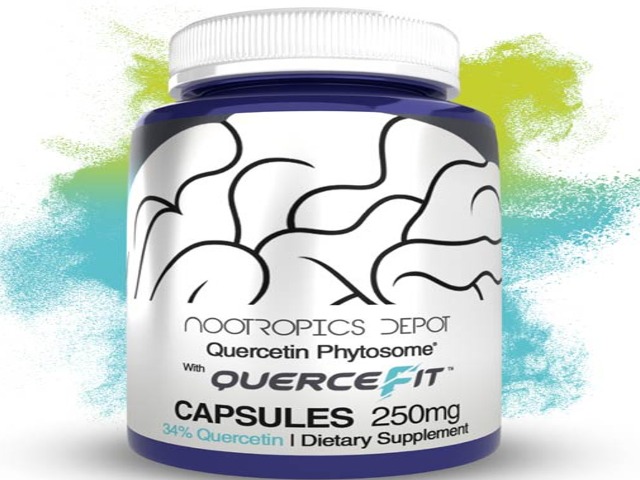
Quercetin Phytosome Capsules by Nootropics Depot
Shop Now →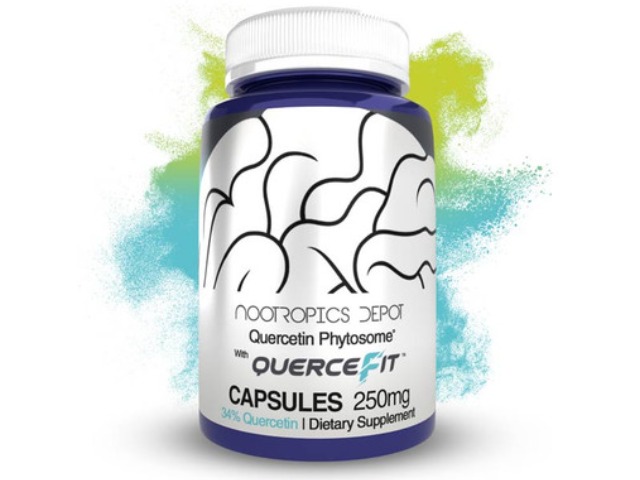
Quercetin Phytosome Capsules | 250mg | High by Nootropics Depot
Shop Now →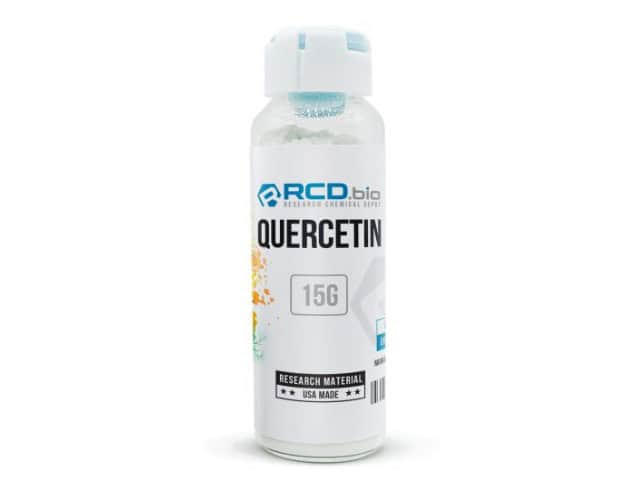
Quercetin Powder by Research Chemical Depot
Shop Now →Disclosure: These are affiliate links. I earn a small commission if you purchase — at no extra cost to you. I only recommend products I personally use or have thoroughly researched.
Research & Studies
This section includes 9 peer-reviewed studies referenced in our analysis.