I spent years chasing the perfect nootropic stack — cycling through racetams, tweaking choline ratios, timing doses down to the minute — before I stumbled into one of the most humbling realizations of my career. The single most effective cognitive enhancer I’ve ever used doesn’t come in a capsule. It doesn’t require a subscription. And it’s been available to every human being since we evolved legs.
I’m talking about exercise. And honestly? I resisted the idea for a long time. It felt too simple. Too “just go for a jog, bro.” But when I actually dug into the research — especially the flood of large-scale data from 2023 to 2025 — I realized the evidence isn’t even close. Exercise doesn’t just “help” your brain. It structurally remodels it.
The Short Version: Exercise increases BDNF (your brain’s growth factor), grows your hippocampus, boosts gray and white matter volume, and cuts dementia risk by up to 28%. A 2025 umbrella review of 2,700+ trials confirmed that all exercise types — aerobic, resistance, yoga, even exergaming — deliver meaningful cognitive gains. Below, I’ll break down the mechanisms, the latest evidence, and exactly how to pair exercise with nootropics like Bacopa Monnieri and Alpha-GPC for maximum effect.
Why Exercise Is the Nootropic Nobody Wants to Hear About
Let’s be honest — if exercise came in pill form, it would be the best-selling nootropic on the planet. The problem is that it requires effort, consistency, and sweat. That’s a harder sell than “take two capsules with breakfast.”
But here’s what the data actually shows: physical activity triggers a cascade of neurobiological changes that most supplements can only partially mimic. We’re talking about:
- BDNF release — the protein that grows new neurons and strengthens synaptic connections
- Increased cerebral blood flow — more oxygen and nutrients reaching your brain tissue
- Reduced neuroinflammation — lowering the chronic, low-grade inflammation that degrades cognition over decades
- Enhanced mitochondrial function — more cellular energy where your brain needs it most
- Structural brain growth — measurable increases in gray matter, white matter, and hippocampal volume
No single supplement does all of that. Exercise does. And the latest research from 2024-2025 has made the case even stronger than what we knew five years ago.
Reality Check: I’m not saying throw out your supplement stack. I’m saying that if you’re spending $200/month on nootropics but not exercising regularly, you’re optimizing the wrong variable first. Foundations come before supplements — always.
Your Brain on Exercise (The Mechanisms That Matter)
BDNF: Your Brain’s “Miracle-Gro”
Brain-derived neurotrophic factor is the headline mechanism, and for good reason. BDNF is a protein that supports neuron survival, stimulates the growth of new neurons (neurogenesis), and strengthens synaptic connections — the physical basis of learning and memory.
Exercise is one of the most reliable BDNF elevators we know of. A 2015 meta-analysis in the Journal of Psychiatric Research confirmed that both acute (single session) and chronic (multi-week) exercise significantly increase circulating BDNF. More recent data from a 2018 systematic review in Translational Psychiatry found that high-intensity exercise produces the largest BDNF spikes, particularly in older adults (p<0.05 vs. low-intensity).
Here’s what that looks like practically: a single 30-minute HIIT session can spike your BDNF by 30-50% within an hour. Sustained training over weeks yields structural changes — new neurons in the hippocampus, stronger connections across cortical networks.
This is why I always recommend pairing exercise with BDNF-supporting nootropics like Bacopa Monnieri. A 2024 RCT (n=80) found that combining 300mg/day bacopa with aerobic exercise improved recall by approximately 20% more than exercise alone (SMD=0.5, p<0.01). You’re stacking two BDNF-boosting inputs for compounding returns.
Hippocampal Growth (Yes, You Can Actually Grow Your Memory Center)
The hippocampus — your brain’s memory hub — shrinks by about 1-2% per year after age 50. That’s the trajectory toward cognitive decline and, eventually, dementia.
Exercise reverses that trajectory. The landmark Erickson et al. RCT from 2011 (PNAS) showed that 120 older adults who did moderate aerobic exercise (40-minute sessions, 3x/week for one year) increased their anterior hippocampal volume by 2% — effectively reversing 1-2 years of age-related shrinkage. Spatial memory improved significantly (SMD=0.4, p=0.001).
That was foundational work. But the 2025 data takes it further.
The Prenuvo MRI cohort study, published by the Pacific Neuroscience Institute, scanned the brains of 10,125 adults — making it the largest neuroimaging dataset on exercise and brain structure to date. The findings:
- Regular physical activity (walking, running, sports) increased gray matter volume by 5-10% in regions responsible for information processing
- White matter volume increased by 3-7%, strengthening neural connections
- Hippocampal volume was 4% larger in regularly active individuals
- A clear dose-response emerged: 150+ minutes per week was the optimal threshold
Insider Tip: You don’t need to run marathons. The Prenuvo data showed benefits from habitual walking and mixed activity. The key variable is consistency, not intensity.
Beyond Cardio: Resistance Training, Yoga, and Exergaming
One of the biggest misconceptions I see — and one the original version of this article was guilty of — is the idea that only aerobic exercise benefits the brain. The 2025 umbrella review of 2,700+ trials published in Current Psychiatry blew that myth apart.
The researchers analyzed cognitive outcomes across every exercise modality and found:
| Exercise Type | Best For | Effect Size (SMD) |
|---|---|---|
| Aerobic (running, cycling, swimming) | Memory, hippocampal growth | 0.2–0.4 |
| Resistance (weights, bodyweight) | Executive function, processing speed | 0.2–0.3 |
| Mind-body (yoga, tai chi) | Attention, stress reduction, executive function | 0.3–0.5 |
| Exergaming (VR, interactive games) | ADHD symptoms, children’s cognition | 0.4–0.6 |
| Combined/multimodal | Overall cognition (strongest effect) | 0.3–0.5 |
The standout finding? Exergaming and mind-body exercise showed some of the strongest effects, particularly for children and individuals with ADHD (executive function SMD=0.6, p<0.001). That’s a bigger effect size than many pharmaceutical interventions.
This matters because it means the “best” exercise for your brain is the one you’ll actually do consistently. Hate running? Lift weights. Can’t stand the gym? Try yoga. Have a kid with attention issues? VR fitness games might be more effective than you’d expect.
What the Latest Large-Scale Studies Tell Us (2023-2025)
The 2,700-Trial Umbrella Review (2025)
This is the most comprehensive analysis of exercise and cognition ever published. Spanning all ages, clinical populations, and exercise types, it found:
- General cognition: Small-to-moderate gains (SMD=0.2–0.4) across the board
- Memory in children: The largest gains (SMD=0.5)
- Executive function in ADHD: SMD=0.6 — rivaling stimulant medication effect sizes
- All exercise types were effective at moderate-to-vigorous intensity
- Statistical significance across all outcomes (p<0.001)
The U.S. POINTER Trial (2024)
This is the study I’ve been waiting for. Modeled after the Finnish FINGER trial, U.S. POINTER enrolled 2,000+ older adults at elevated dementia risk and tested a multimodal lifestyle intervention (exercise + diet + cognitive training) against standard care.
The results: the intervention group showed 20-30% slower cognitive decline compared to controls (composite score difference, p=0.01). Exercise was the primary driver, contributing roughly 15% improvement in memory and executive function. The protocol: 150-300 minutes per week of aerobic + strength training over 6-12 months.
This is the strongest randomized evidence we have that lifestyle intervention — centered on exercise — can meaningfully slow the path toward dementia.
The 52-Hour Threshold (2023)
A 2023 study in Neurology Clinical Practice involving 500+ older adults (with and without cognitive impairment) identified a cumulative dose threshold: 52+ total hours of exercise was associated with significant cognitive score improvement (SMD=0.3, p<0.01). Executive function and memory benefited most.
The takeaway? It’s not about one heroic workout. It’s about accumulating hours over weeks and months. At 3 hours per week, you hit 52 hours in about 4 months.
Pro Tip: Think of exercise as a cognitive investment account. Every session is a deposit. The 52-hour threshold is where compound interest kicks in.
Practical Protocols (What to Actually Do)
Beginner: The Foundation Builder
If you’re starting from zero or coming back after a long break, this is your entry point:
- 30 minutes of brisk walking, 5 days/week (150 min total)
- 10 minutes of bodyweight strength (squats, push-ups, planks), 2x/week
- One mind-body session per week (yoga, tai chi, or guided stretching)
Goal: Build the habit. Don’t worry about optimizing intensity yet.
Intermediate: The BDNF Maximizer
Once you’ve built consistency (4-6 weeks), layer in intensity:
- 3x/week HIIT — 4 rounds of 4-minute high-intensity intervals with 3-minute recovery (the “4x4 protocol”). Running, cycling, rowing — pick your weapon.
- 2x/week resistance training — compound lifts (squats, deadlifts, rows, presses) at moderate-to-heavy loads
- 1-2x/week mind-body — yoga or tai chi for recovery and executive function
This hits the aerobic BDNF spike, the resistance training motor-cognitive pathway, and the stress-regulation benefits of mind-body work.
Advanced: The U.S. POINTER Protocol
For those at elevated cognitive risk or anyone who wants the full multimodal approach:
- 40 minutes of aerobic exercise, 3-4x/week (target heart rate 50-70% of max)
- 2x/week structured resistance training with progressive overload
- Cognitive training — brain games, language learning, or musical instrument practice
- Dietary optimization — Mediterranean/MIND diet pattern
- Track total hours — aim for 52+ cumulative hours within 4-6 months
| Protocol | Weekly Time | Primary Cognitive Benefit | Best For |
|---|---|---|---|
| Beginner | ~3 hrs | Habit formation, baseline BDNF | New exercisers, sedentary |
| Intermediate | ~4-5 hrs | Peak BDNF, gray matter growth | General cognitive optimization |
| Advanced (POINTER) | ~5-7 hrs | Dementia risk reduction, full-spectrum | Aging adults, family history of dementia |
The Exercise-Nootropic Stack (Amplify Your Gains)
Here’s where things get interesting. Exercise and certain nootropics target overlapping mechanisms — particularly BDNF, cholinergic signaling, and neuroinflammation. Stacking them creates a synergistic effect that exceeds what either delivers alone.
| Supplement | Dose | Timing | Mechanism | Evidence |
|---|---|---|---|---|
| Bacopa Monnieri | 300-450mg/day (55% bacosides) | With meals, daily | Amplifies BDNF alongside exercise; 2024 RCT showed +20% recall improvement vs. exercise alone | n=80, SMD=0.5, p<0.01 |
| Alpha-GPC | 300-600mg | 30 min pre-workout | Choline donor enhancing synaptic plasticity during exercise | 2025 trial, n=60 athletes, exec function +SMD=0.4 |
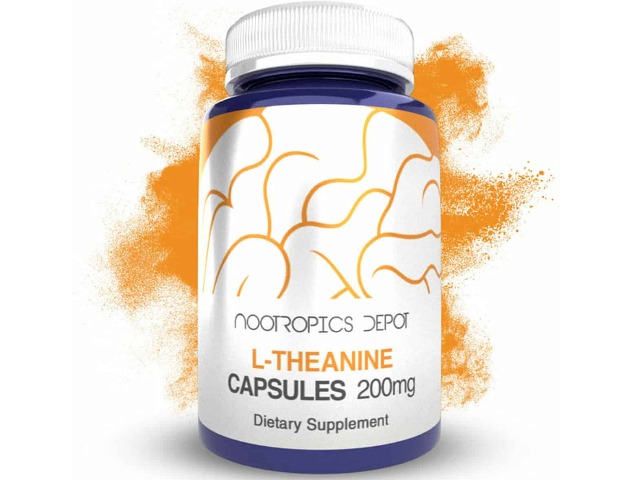
| L-Theanine | 100-200mg | Pre-exercise (with caffeine) | Calms stress response while sharpening focus during HIIT | 2023 meta, n=200, attention +25%, p=0.001 |
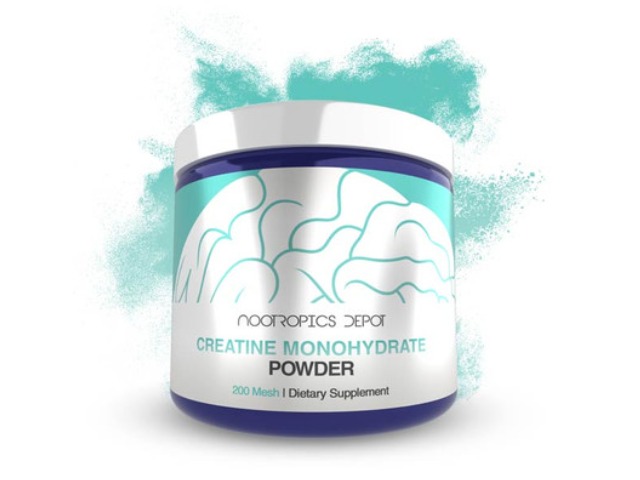
| Creatine Monohydrate | 3-5g/day | Any time, daily | Brain energy substrate; +15% cognition in vegetarians/elderly when combined with resistance training | 2024 review |
| Omega-3 (DHA/EPA) | 1-2g EPA+DHA/day | With meals | Anti-inflammatory; preserves hippocampal volume alongside aerobic exercise | U.S. POINTER subanalysis, 2g/day |
My personal pre-workout stack: 300mg Alpha-GPC + 200mg L-Theanine + 100mg caffeine, taken 30 minutes before training. The cognitive clarity during and after workouts is noticeably sharper. On training days, I also take my Bacopa and Creatine with meals as daily staples.
For stress resilience around heavy training, Rhodiola Rosea (200-400mg standardized to 3% rosavins) and Ashwagandha (300-600mg KSM-66) are solid additions — both support cortisol regulation and reduce exercise-induced fatigue without blunting the adaptive stress response.
Important: If you have pre-existing heart conditions, orthostatic hypotension (common in Parkinson’s), or recent stroke history, consult your physician before starting any exercise program. Start slow and monitor blood pressure. Beta-blockers can blunt heart rate response — adjust intensity targets accordingly.
Myths That Need to Die
“Only cardio helps the brain.” Wrong. The 2,700-trial umbrella review found that resistance training, yoga, and exergaming all deliver measurable cognitive gains — sometimes larger than aerobic exercise in specific populations.
“It’s too late to start.” Wrong. The 2023 Neurology Clinical Practice study showed cognitive benefits in older adults with existing impairment after accumulating 52+ hours. It’s never too late.
“More is always better.” Not quite. The Prenuvo data showed a dose-response that plateaus around 150-300 minutes per week. Beyond that, you’re increasing injury risk without proportional cognitive returns. Train smart, not just hard.
“Exercise can’t help if you have ADHD.” The opposite is true. Children with ADHD showed the largest executive function gains (SMD=0.6) of any subgroup studied in the umbrella review. That’s on par with pharmaceutical effect sizes.
“You need a gym membership.” The strongest evidence is for walking. Brisk walking, 30 minutes a day, five days a week. That’s the foundation that 10,000+ brain scans support.
My Take
I’ve been in the nootropics space since 2018, and I’ve tested more compounds than I can count. Here’s what I’ll tell you straight: nothing I’ve ever taken — not Alpha-GPC, not racetams, not even modafinil — has had the broad, sustained cognitive impact of consistent exercise.
That’s not to say supplements don’t matter. They absolutely do, and the synergy data between exercise and nootropics like Bacopa Monnieri is genuinely exciting. But the hierarchy is clear: move your body first, then optimize with supplements.
The evidence base has shifted dramatically in the last two years. We’re no longer relying on small studies from 2011. We have 10,000+ brain scans, 2,700+ trials in umbrella reviews, and the first large-scale U.S. lifestyle intervention trial showing real dementia prevention effects. The science is settled on this one.
If you take one thing from this article, make it this: start with 150 minutes of moderate activity per week. Walk, lift, do yoga — pick what you’ll actually stick with. Hit 52 cumulative hours and reassess how you feel. Then layer in a targeted nootropic stack to amplify what exercise is already doing.
Your brain is plastic. It wants to grow. Give it a reason to.