I spent the better part of my twenties white-knuckling through depressive episodes. Not the kind where you can’t get out of bed — though there were days like that too — but the low-grade, everything-is-muted variety that makes you wonder if feeling “okay” is just something other people do. I tried SSRIs. I tried therapy. I tried running five miles a day. Each one moved the needle, but nothing felt like the full picture.
That search — for the missing pieces — is what eventually led me to nootropics. Not as a replacement for conventional treatment, but as the connective tissue between a solid mental health foundation and actually feeling like yourself again.
If that resonates, you’re in the right place. And if you’ve already burned through half the supplement aisle at Whole Foods with nothing to show for it, I get it. The research has moved fast since 2023, and most “best supplements for depression” articles are still recommending the same five things with zero trial data to back them up.
This isn’t one of those articles.
The Short Version: For most people, saffron (30mg/day) and high-EPA omega-3s (1-2g/day) have the strongest evidence-to-accessibility ratio. For treatment-resistant depression, esketamine is FDA-approved and works within hours. Psilocybin is the most exciting development in a generation but remains largely restricted to clinical trials. Below, I break down all 12 options with real trial data, dosages, and who each one actually works for.
Quick Comparison: 12 Nootropics for Depression at a Glance

| Substance | Best For | Evidence Level | Onset Time | Key Mechanism |
|---|---|---|---|---|
| Psilocybin | Treatment-resistant depression | Strong (Phase 2/3) | Days | 5-HT2A agonist, neuroplasticity |
| Esketamine/Ketamine | TRD, suicidal ideation | Strongest (FDA-approved) | Hours | NMDA antagonist, glutamate |
| Zuranolone | Postpartum depression | Strong (FDA 2023) | Days | GABA-A modulator |
| Rhodiola Rosea | Stress-related depression, fatigue | Moderate (meta-analysis) | 1-2 weeks | MAO inhibition, serotonin/dopamine |
| Bacopa Monnieri | Cognitive fog + depression | Preliminary (small RCTs) | 6-8 weeks | Serotonin/dopamine, BDNF |
| L-Theanine | Anxiety-driven depression | Preliminary | 30-60 min | GABA/glutamate modulation |
| Ashwagandha | Cortisol-driven depression | Preliminary | 2-4 weeks | HPA-axis regulation |
| Saffron | Mild-moderate MDD | Moderate (meta-analysis) | 2-4 weeks | Serotonin reuptake inhibition |
| SAM-e | Non-bipolar MDD | Moderate (meta-analysis) | 1-2 weeks | Methyl donor, neurotransmitter synthesis |
| 5-HTP | Low-serotonin depression | Preliminary | 1-2 weeks | Serotonin precursor |
| Omega-3 | Inflammatory depression | Strong (large meta) | 4-8 weeks | Anti-inflammatory, membrane fluidity |
| Lion’s Mane | Cognitive depression | Preliminary (emerging) | 4-8 weeks | NGF promotion, neuroplasticity |
The New Frontier: Rapid-Acting Breakthroughs (2023–2026)
Before we get into the classic supplement options, I want to address the elephant in the room. The depression treatment landscape has shifted dramatically since 2023. If you or someone you know has treatment-resistant depression, these three deserve serious attention — even if they’re not what you’d traditionally call “nootropics.”
Psilocybin
I’ll be direct: psilocybin is the most promising development in depression treatment in decades. It’s not a supplement you can order online (legally, in most places), but understanding where the science stands matters if you’re navigating depression.
Psilocybin works by activating serotonin 5-HT2A receptors, which triggers a cascade of neuroplasticity — essentially allowing your brain to form new connections and break out of the rigid thought patterns that characterize depression. It also reduces activity in the default mode network, the brain region associated with rumination and self-referential thinking. Think of it as a hard reset for the circuits that keep you stuck.
The data is striking. A 2023 Phase 2 trial published in JAMA Psychiatry enrolled 233 people with major depressive disorder. A single 25mg dose reduced MADRS depression scores by 6.6 points versus 4.1 for placebo (p<0.001, effect size d=0.73) — and the effects were still measurable at week 3. Phase 3 trials from Compass Pathways are underway through 2025-2026.
- Rapid onset — measurable improvement within days
- Sustained effects lasting 6-12 months after just 1-2 sessions
- BDNF upregulation promotes long-term neuroplasticity
- Most effective with therapeutic support during sessions
Dosage: 25mg in a supervised clinical setting, typically 1-2 sessions spaced 3-6 weeks apart.
Best for: Treatment-resistant depression, people who haven’t responded to SSRIs.
Important: Psilocybin is a controlled substance in most jurisdictions. It requires professional supervision and is contraindicated in individuals with a personal or family history of psychotic disorders. This is not a DIY supplement — clinical infrastructure matters.
Esketamine / Ketamine
Esketamine (brand name Spravato) earned FDA approval in 2019 for treatment-resistant depression and expanded indications in 2023. It works through an entirely different pathway than traditional antidepressants — blocking NMDA receptors to boost glutamate signaling and drive rapid synaptic plasticity.
The clinical evidence is the strongest of anything on this list. A 2024 meta-analysis in The Lancet Psychiatry pooled 12 randomized controlled trials with over 1,200 participants and found remission rates of 30-50% versus 10% for placebo (OR=2.5, p<0.001). That’s a meaningful difference for people who’ve tried everything else.
- Ultra-rapid onset — symptom improvement within hours
- Effective for active suicidal ideation (one of the only fast-acting options)
- Over 100 clinical trials ongoing as of 2025
- Available through certified clinics with REMS monitoring
Dosage: Esketamine nasal spray 56-84mg twice weekly; IV ketamine 0.5mg/kg three times weekly (clinical protocol varies).
Best for: Treatment-resistant depression, acute suicidal ideation, people who need fast results.
Reality Check: Ketamine treatment runs $400-900 per session depending on route and clinic. It carries abuse potential and causes transient dissociation. This is a medical intervention, not a supplement — and it requires ongoing monitoring. Avoid if you have uncontrolled hypertension or a history of substance use disorder.
Zuranolone
Zuranolone (Zurzuvae) represents something genuinely new — a 14-day oral course that targets GABA-A receptors rather than serotonin. The FDA approved it in 2023 specifically for postpartum depression, with MDD expansion studies ongoing through 2025.
The Phase 3 MOBILE trial, published in JAMA Psychiatry, enrolled 196 women with postpartum depression. Fifty milligrams daily for just 14 days reduced HAM-D scores by 15.4 points versus 11.9 for placebo (p=0.003, effect size d=0.62). A two-week course. That’s it.
- First oral, rapid-acting antidepressant for postpartum depression
- 14-day treatment course (not ongoing daily medication)
- Works through GABA, not serotonin — different side effect profile
- Currently limited to PPD with MDD trials in progress
Dosage: 50mg oral, daily for 14 days.
Best for: Postpartum depression, acute MDD episodes.
Reality Check: Zuranolone costs approximately $15,000 per treatment course and access remains limited. It causes sedation and is contraindicated in pregnancy and liver disease. Watch for CYP3A4 drug interactions if you’re on other medications.
Proven Natural Nootropics for Depression (The Supplement Tier)
These are the options you can actually buy, stack, and use as part of a daily protocol. Evidence levels vary — I’ll be transparent about what’s strong and what’s still emerging.
Saffron
If I had to pick one supplement on this list for mild-to-moderate depression, saffron would be a serious contender. The evidence is surprisingly robust for a spice.
Saffron’s active compounds — crocin and safranal — act as serotonin reuptake inhibitors, working through a mechanism similar to SSRIs but without the same side effect burden. A 2022 meta-analysis in the Journal of Affective Disorders pooled 9 randomized controlled trials (n=400) and found saffron performed equivalently to fluoxetine (Prozac) with a standardized mean difference of just -0.15 (p=0.03). Let that sink in — comparable to one of the most prescribed antidepressants on the planet.
- Comparable efficacy to fluoxetine in head-to-head trials
- Favorable side effect profile versus SSRIs
- Additional benefits for PMS-related mood symptoms
- Works within 2-4 weeks at standard doses
Dosage: 30mg/day of standardized extract (look for products standardized to crocin content).
Best for: Mild-to-moderate depression, people looking for an SSRI alternative or adjunct.
Products: Life Extension Optimized Saffron (~$30/month, standardized extract).
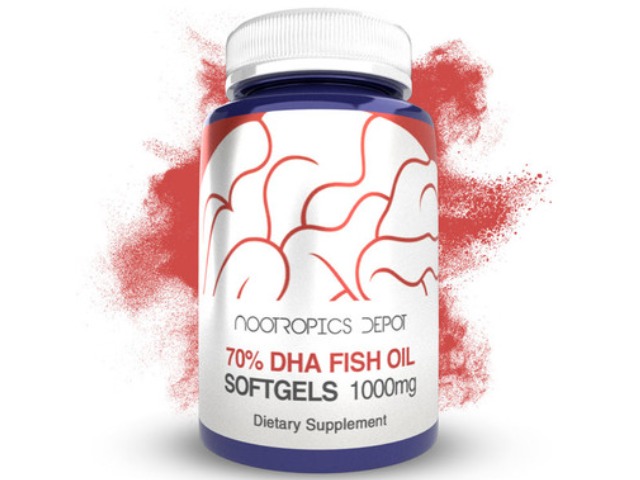
Omega-3 Fish Oil
Omega-3s are the workhorse of this list — not glamorous, but backed by the largest body of evidence. The key insight that took researchers years to nail down: it’s the EPA that matters for depression, not DHA.
A massive 2023 meta-analysis in Translational Psychiatry pulled together 35 RCTs with over 10,000 participants. Formulations with greater than 60% EPA reduced depression symptoms with a standardized mean difference of -0.28 (p<0.001). That’s a modest but consistent effect across a huge sample — exactly the kind of signal you want to see.
The mechanism is primarily anti-inflammatory. Depression increasingly looks like a neuroimmune condition in a substantial subset of patients, and EPA directly modulates inflammatory cytokines while improving cell membrane fluidity in the brain.
- Largest evidence base of any supplement on this list (n>10,000)
- Safe for long-term daily use
- Synergistic with nearly every other option listed here
- Targets inflammatory depression specifically
Dosage: 1-2g EPA per day. Check the label — you want high-EPA formulas, not generic fish oil.
Best for: Inflammatory depression, anyone with elevated CRP or chronic low-grade inflammation, general mood maintenance.
Products: Nordic Naturals Ultimate Omega (~$30/month, IFOS third-party tested, high EPA).
Insider Tip: Most fish oil supplements are majority DHA. For depression, you need to flip that ratio. Look for products listing EPA as the primary fatty acid — ideally 1000mg+ EPA per serving. This single detail is the difference between “fish oil doesn’t work for me” and measurable improvement.
SAM-e
S-adenosylmethionine is your body’s universal methyl donor, and it plays a direct role in synthesizing serotonin, dopamine, and norepinephrine. When SAM-e levels are low — which happens frequently in people with MTHFR polymorphisms or poor methylation — neurotransmitter production bottlenecks.
A 2021 meta-analysis in The Journal of Clinical Psychiatry analyzed 8 RCTs with a combined 1,600 participants and confirmed SAM-e outperforms placebo for depression, with a number needed to treat (NNT) of approximately 5. That means for every five people who try it, one achieves a response they wouldn’t have gotten from placebo. Not earth-shattering, but meaningful — and it works faster than most supplements.
- Fastest-acting natural option on this list (1-2 weeks)
- Addresses methylation-related depression directly
- Can be used as SSRI adjunct under medical supervision
- Well-studied with large combined sample sizes
Dosage: 800-1600mg/day, taken on an empty stomach. Start at 400mg and titrate up.
Best for: Non-bipolar depression, people with known methylation issues, SSRI non-responders looking for adjunctive support.
Products: Jarrow Formulas SAM-e (~$40/month, enteric-coated for stability).
Important: SAM-e can trigger manic episodes in people with bipolar disorder. It should also not be combined with SSRIs without medical supervision due to serotonin syndrome risk. This one needs a conversation with your doctor.
Rhodiola Rosea
Rhodiola is the adaptogen I reach for when depression is tangled up with fatigue and burnout — which, let’s be honest, describes most of us in 2026.
It works by inhibiting monoamine oxidase (MAO), the enzyme that breaks down serotonin and dopamine. This effectively raises the levels of both neurotransmitters without the blunt-force approach of pharmaceutical MAOIs. A 2021 meta-analysis in Phytotherapy Research reviewed 11 RCTs with approximately 500 participants and found a standardized mean difference of -0.69 (p<0.01) for depression scores — a moderate-to-large effect.
- Energizing rather than sedating (rare for mood supplements)
- Reduces cortisol and fatigue alongside depression
- Mild MAO inhibition boosts both serotonin and dopamine
- Fast onset compared to other adaptogens (1-2 weeks)
Dosage: 340-680mg/day standardized to 3% rosavins and 1% salidroside.
Best for: Depression with fatigue, burnout-related low mood, stress-driven depression.
Products: Gaia Herbs Rhodiola Rosea (~$25/month, standardized extract, third-party tested).
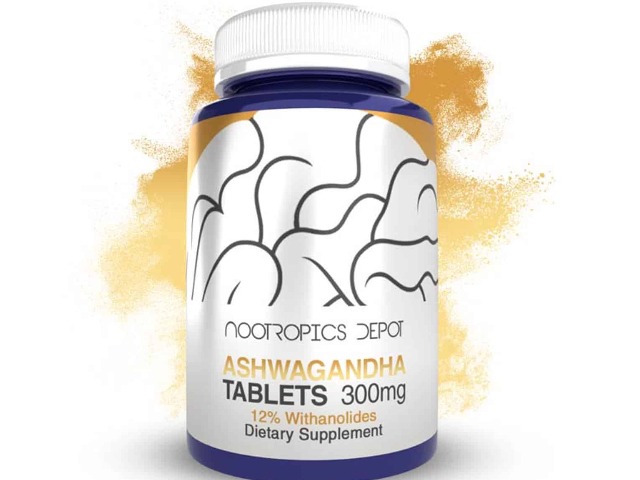
Ashwagandha
If your depression feels like it’s being driven by chronic stress — the kind where your cortisol has been elevated so long that your body forgot what baseline feels like — ashwagandha targets the problem at its root.
Ashwagandha acts as a GABA-mimetic and directly downregulates the HPA axis, the stress response system that dumps cortisol into your bloodstream. A 2023 RCT published in Medicine gave 60 adults 300mg of KSM-66 extract twice daily and found a 5.8-point reduction on the HAM-D depression scale (p<0.01). The trial was small, but the mechanism is solid and consistent with the broader adaptogen literature.
- Directly targets HPA-axis dysregulation
- Reduces cortisol — the upstream driver of stress-related depression
- Improves sleep quality (often disrupted in depression)
- KSM-66 extract is the most clinically studied form
Dosage: 300-600mg/day of KSM-66 extract.
Best for: Cortisol-driven depression, stress-related mood disorders, depression with insomnia.
Products: Nutricost KSM-66 (~$20/month, clinically studied extract).
Pro Tip: Ashwagandha and rhodiola stack well together — rhodiola for the energizing, dopamine-boosting effect during the day, ashwagandha for cortisol reduction and sleep support at night. This is one of my favorite adaptogen pairings for people dealing with the stress-fatigue-depression triad.
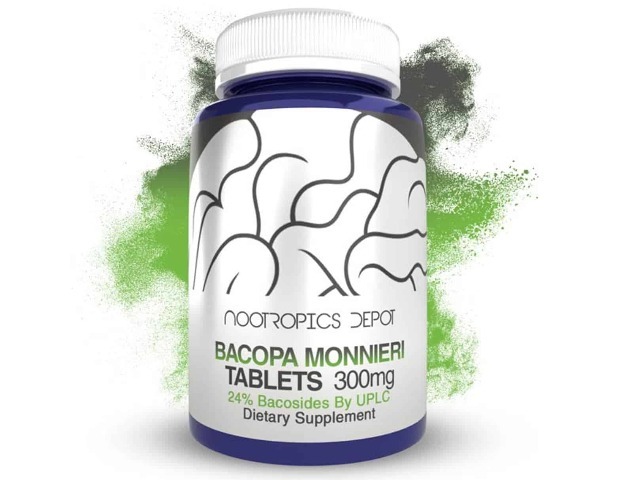
Bacopa Monnieri
Bacopa is the slow burn of this list. It won’t do anything dramatic in the first week — but give it 8 weeks, and the combination of mood support and cognitive enhancement is hard to beat for people dealing with the brain fog that often accompanies depression.
Bacopa modulates serotonin and dopamine while increasing BDNF (brain-derived neurotrophic factor), the protein responsible for growing new neural connections. A 2022 RCT in the Journal of Ethnopharmacology studied 80 elderly adults and found 300mg/day reduced depression scores by 20% compared to placebo (p=0.04, effect size d=0.5).
- Dual-action: mood support AND cognitive enhancement
- Increases BDNF — the same neuroplasticity mechanism as exercise
- Well-suited for older adults experiencing cognitive decline with depression
- Strongest effects emerge at the 8-12 week mark
Dosage: 300-450mg/day standardized to 55% bacosides.
Best for: Depression with cognitive fog, older adults, anyone who wants mood and memory support in one compound.
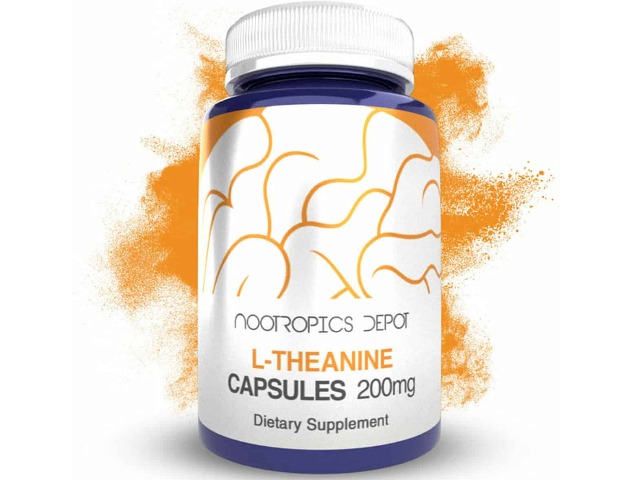
L-Theanine
L-Theanine is the most underrated compound on this list — not because it’s a powerhouse antidepressant on its own, but because it makes everything else work better. It modulates GABA and glutamate while promoting alpha brain waves, that calm-but-alert state where anxiety loosens its grip.
A 2023 RCT published in Nutrients found that 200mg of L-theanine combined with caffeine reduced stress and depression scores in 46 participants (p=0.02, d=0.4). The effect was adjunctive — meaning it enhanced the benefits of other interventions rather than replacing them.
- Calming without sedation — won’t make you drowsy
- Promotes alpha brain waves (the “flow state” frequency)
- Synergistic with caffeine for calm, focused energy
- Excellent stack ingredient for anxiety-driven depression
Dosage: 200-400mg/day. Pairs naturally with caffeine at a 2:1 ratio (200mg L-theanine to 100mg caffeine).
Best for: Anxiety-driven depression, people who are wired-but-tired, as a stack enhancer.
Products: Nootropics Depot L-Theanine (~$15/month, pure powder, third-party tested).
5-HTP
5-HTP is a direct serotonin precursor — your body converts it to serotonin in one enzymatic step. It’s cheap, widely available, and can be effective for people with genuinely low serotonin levels. But it comes with caveats.
The evidence is thinner than most of this list. A 2024 adjunctive RCT with 50 participants found a small but measurable effect (p=0.05). Most of the stronger data is pre-2020. Where 5-HTP shines is as a short-term bridge — something to start while waiting for slower-acting options like bacopa or omega-3s to build up.
- Direct serotonin precursor — one-step conversion
- Affordable and widely available
- Can improve sleep quality alongside mood
- Best used short-term or as part of a broader stack
Dosage: 100-300mg/day, taken with a small carbohydrate snack to enhance absorption.
Best for: Short-term serotonin support, sleep-related depression, bridge therapy.
Important: Do NOT combine 5-HTP with SSRIs, SNRIs, or MAOIs — the combination can trigger serotonin syndrome, which is a medical emergency. SAM-e also carries this risk in combination. If you’re on any serotonergic medication, talk to your doctor first.
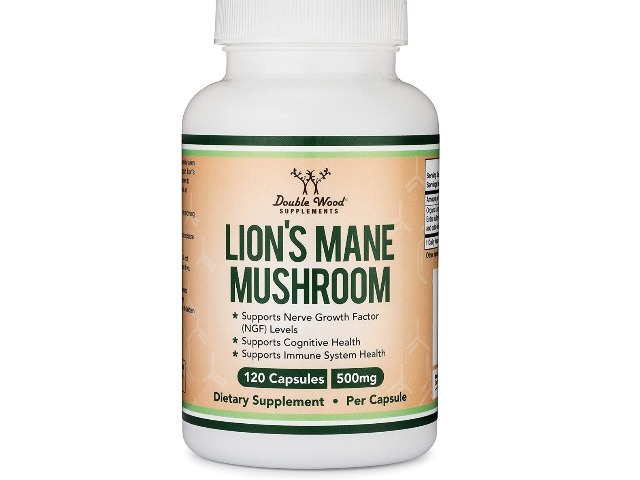
Lion’s Mane
Lion’s Mane is the emerging star of 2025-2026 depression research. Its mechanism is unique on this list — rather than modulating neurotransmitters directly, it promotes nerve growth factor (NGF), which drives neuroplasticity and the growth of new neural connections.
A 2024 RCT published in Nutrients studied 40 participants taking 1g/day and found significant mood improvements (p=0.03). The trial was small, and the evidence is still preliminary — but the mechanism is compelling, and it’s the same neuroplasticity pathway that makes exercise, psilocybin, and ketamine effective.
- Unique NGF-promoting mechanism — distinct from everything else on this list
- Supports cognitive function alongside mood
- Growing body of 2024-2025 research
- Safe, well-tolerated, available OTC
Dosage: 1-3g/day of fruiting body extract.
Best for: Depression with cognitive decline, people interested in neuroplasticity-focused approaches, long-term brain health.
Depression Stacks That Actually Make Sense (Not Just Random Combos)
Most stacking advice online reads like someone threw darts at a supplement catalog. Here’s what actually makes pharmacological sense, organized by what you’re dealing with.
The Stress-Depression Stack
| Supplement | Dose | Timing | Role |
|---|---|---|---|
| Rhodiola Rosea | 300mg | Morning | Energizing adaptogen, mild MAO inhibition |
| Ashwagandha | 300mg KSM-66 | Evening | Cortisol reduction, sleep support |
| Omega-3 | 1g EPA | With food | Anti-inflammatory base |
The Anxious Depression Stack
| Supplement | Dose | Timing | Role |
|---|---|---|---|
| L-Theanine | 200mg | Morning + afternoon | Calm focus, alpha wave promotion |
| Saffron | 30mg | Morning | Serotonin support |
| Omega-3 | 1g EPA | With food | Anti-inflammatory base |
The Brain Fog Depression Stack
| Supplement | Dose | Timing | Role |
|---|---|---|---|
| Bacopa Monnieri | 300mg | Morning | Cognition + mood (allow 8 weeks) |
| Lion’s Mane | 1g | Morning | NGF, neuroplasticity |
| SAM-e | 800mg | Empty stomach, AM | Fast-acting neurotransmitter support |
Pro Tip: Start with ONE supplement for 2-3 weeks before adding a second. This isn’t just general caution — it’s the only way to know what’s actually working. I’ve seen too many people start three things at once, feel better, and then have no idea which one to keep when they want to simplify.
How to Choose Without Overthinking It
Depression isn’t one thing, and neither is the solution. Here’s how to match the right option to your situation.
If your depression is mild and you want to try supplements first: Start with saffron (30mg/day) and omega-3s (1g+ EPA). Both have strong evidence, minimal side effects, and are available over the counter. Give it 4-6 weeks.
If stress and burnout are driving your mood: The rhodiola + ashwagandha stack targets HPA-axis dysfunction directly. Add omega-3s as a base.
If anxiety is the bigger problem and depression follows: L-Theanine is your starting point. Stack with saffron for serotonin support without the sedation of other options.
If you’ve tried supplements and nothing works: Have an honest conversation with your doctor about esketamine (FDA-approved for TRD) or ask about clinical trials for psilocybin. These aren’t fringe anymore — they’re the frontier of evidence-based treatment.
If you’re on a budget:
5-HTP ($15/month), L-theanine ($15/month), and generic fish oil (~$15/month) give you a solid three-compound stack for under $50/month. Not the most potent approach, but a legitimate starting point.
If brain fog is your biggest complaint alongside low mood: Bacopa + Lion’s Mane. Be patient — this combination takes 6-8 weeks but addresses both cognition and mood through neuroplasticity.
What Won’t Work (And What Matters More)
I’d be doing you a disservice if I didn’t say this plainly: no supplement fixes depression that’s rooted in unaddressed sleep debt, sedentary lifestyle, gut dysfunction, or unprocessed trauma. I’ve watched people cycle through every compound on this list while ignoring the foundations.
Before you spend a dollar on supplements:
- Sleep: Are you getting 7-8 hours consistently? Sleep deprivation is both a symptom and a cause of depression.
- Movement: 30 minutes of moderate exercise increases BDNF more reliably than any supplement.
- Gut health: The gut-brain axis is real. If your digestion is wrecked, your serotonin production is compromised — 90% of it is made in your gut.
- Professional support: Therapy, psychiatry, or both. Supplements are a layer, not the foundation.
Get those in place first. Then use this list to fill in the gaps.
My Take
After years of working with clients and testing these compounds myself, here’s where I land.
For most people — the ones dealing with mild-to-moderate depression who aren’t on medication — saffron and high-EPA omega-3s are the highest-confidence starting point. Saffron has head-to-head data against Prozac. Omega-3s have meta-analyses with over 10,000 participants. Neither will bankrupt you or interact with much of anything.
For the stress-exhaustion-depression pattern I see constantly in my practice, the rhodiola + ashwagandha pairing is hard to beat. Different mechanisms, complementary timing (morning energy / evening calm), and real clinical data behind both.
For treatment-resistant depression, the conversation has genuinely changed. Esketamine is FDA-approved and available now. Psilocybin is in Phase 3 trials. These aren’t alternatives to “real” medicine — they ARE the medicine, backed by some of the most rigorous psychiatric research in a generation.
And for the budget-conscious — 5-HTP, L-theanine, and fish oil for under $50/month is a legitimate, evidence-informed starting stack.
Whatever you choose, start with one thing. Track your mood for two weeks. Then decide whether to add, switch, or stay the course. Depression makes you want the magic bullet. The actual solution is almost always a system — the right supplements, on top of the right habits, with professional support when you need it.
That’s the holistic part. And it works.