
- Supports healthy mood and emotional resilience
- Promotes sleep quality and onset
- May reduce migraine frequency and severity
- Supports appetite regulation and satiety
- May help manage fibromyalgia symptoms
I remember the week my mood just… flattened. Not depressed exactly — more like someone had turned the color saturation down on everything. Food was boring. Conversations felt like effort. Sleep was shallow and unsatisfying. I’d been taking 5-HTP daily for about three months straight, convinced I’d found my silver bullet for stress and sleep. Turns out, I’d been quietly draining my dopamine tank the whole time.
That experience taught me something critical about 5-HTP: it’s one of the most effective natural serotonin boosters you can take — but only if you understand the rules. Break them, and it can make things worse.
The Short Version: 5-HTP is the direct precursor to serotonin and one of the most efficient ways to naturally support mood, sleep, and appetite. It works fast, crosses the blood-brain barrier easily, and has decent clinical evidence behind it. But it’s not a “take it forever and forget about it” supplement — long-term use without cycling or dopamine support can backfire. Best for short-to-medium-term mood and sleep support, ideally cycled and paired with a dopamine precursor like L-Tyrosine.
What Is 5-Hydroxytryptophan?
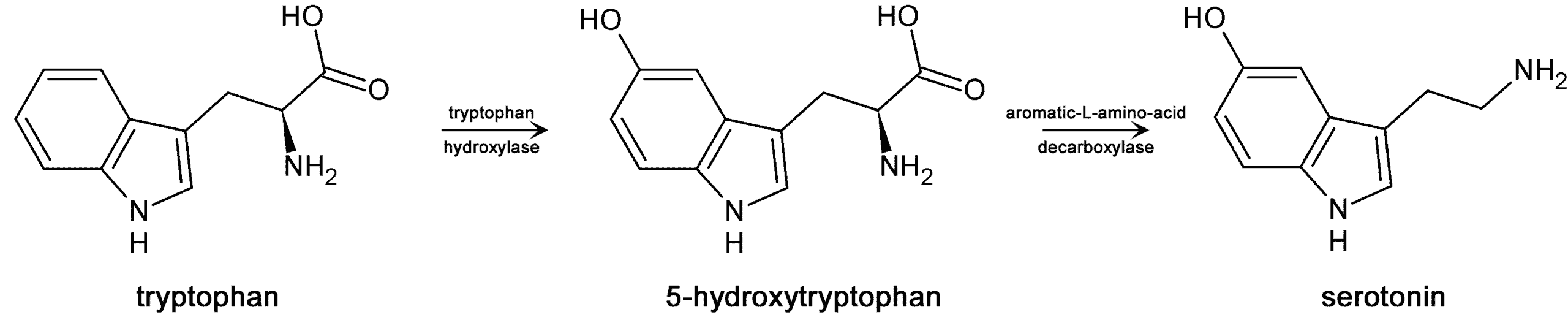
5-HTP is a naturally occurring amino acid that your body produces as an intermediate step between L-Tryptophan (the amino acid you get from food) and serotonin (the neurotransmitter that regulates mood, sleep, appetite, and a whole lot more). Think of it as the halfway house between turkey dinner and feeling content.
Your body makes 5-HTP on its own, but supplemental 5-HTP comes from the seeds of Griffonia simplicifolia, a climbing shrub native to West Africa. These seeds contain up to 20% 5-HTP by weight, making them by far the most concentrated natural source. There’s no meaningful amount of 5-HTP in any food you’d eat — supplementation is the only practical way to get it directly.
The story of how 5-HTP became a mainstream supplement is actually pretty wild. Back in 1989, L-tryptophan supplements were pulled from the US market after an outbreak of a serious condition called eosinophilia-myalgia syndrome. The culprit turned out to be contamination from a single Japanese manufacturer’s bacterial fermentation process — not tryptophan itself. But the damage was done. 5-HTP, extracted from a plant rather than synthesized by bacteria, stepped in as an alternative and never looked back.
Here’s the thing most supplement companies won’t tell you upfront: 5-HTP is a powerful tool, but it’s not a foundational one. If your sleep is wrecked, your gut is inflamed, and your stress is unmanaged, adding 5-HTP is like putting premium gas in a car with a busted transmission. Fix the basics first — then 5-HTP can genuinely shine.
How Does 5-Hydroxytryptophan Work?
The simplest way to understand 5-HTP is to picture an assembly line:
L-Tryptophan → 5-HTP → Serotonin → Melatonin
The first step — converting tryptophan to 5-HTP — is the bottleneck. Your body can only run that conversion so fast because it depends on a specific enzyme (tryptophan hydroxylase) that has limited capacity. When you supplement with 5-HTP directly, you skip the traffic jam entirely and jump straight to the fast lane.
From there, a second enzyme called aromatic amino acid decarboxylase (AAAD) converts 5-HTP into serotonin. This step requires vitamin B6 as a cofactor — which is why you’ll see B6 included in many quality 5-HTP formulations.
Here’s what makes 5-HTP special compared to other serotonin-boosting strategies: it crosses the blood-brain barrier roughly ten times faster than tryptophan. This matters because serotonin itself cannot cross into the brain — so if you want more serotonin where it counts (between your ears), you need to get the raw materials through the gate first. About 70% of an oral dose of 5-HTP makes it into your bloodstream, it peaks in about 90 minutes, and it has a half-life of roughly two hours.
Reality Check: That short half-life is both a feature and a limitation. You’ll feel 5-HTP working relatively quickly, but for all-day mood support, you’ll need divided doses rather than one big morning capsule. And for sleep specifically, timing your dose 30–45 minutes before bed is key.
Now for the part that most 5-HTP articles conveniently skip over. That AAAD enzyme that converts 5-HTP to serotonin? It’s the same enzyme that converts L-DOPA to dopamine. When you flood the system with 5-HTP, that enzyme gets busy making serotonin and has less capacity for dopamine production. Over weeks and months, this can quietly deplete your dopamine, norepinephrine, and epinephrine levels. The result? The exact flat, unmotivated, foggy feeling I described in my opening. This isn’t a reason to avoid 5-HTP — it’s a reason to use it intelligently.
Benefits of 5-Hydroxytryptophan
Mood and Depression Support
The evidence for 5-HTP’s mood benefits is genuinely promising, though I want to be honest about its limitations. A meta-analysis by Javelle and colleagues found positive effects of 5-HTP on distinct types of depression, and a 2025 RCT in older adults (100 mg/day for 12 weeks) found significant improvements in depression scores by week 8 alongside measurable increases in serum serotonin.
The caveat? Most positive studies are small — often under 100 participants — and many date back to the 1980s and ’90s. A Cochrane-style review concluded that while 5-HTP appeared to outperform placebo, the evidence was “insufficient to be conclusive.” That’s not a dismissal. It means the effect is real but needs larger modern trials to quantify it precisely.
Sleep Quality
This is where 5-HTP makes intuitive sense and the research actually backs it up. Serotonin is the precursor to melatonin, so boosting serotonin naturally supports the downstream production of your sleep hormone. A 2024 RCT found that 5-HTP improved sleep quality in older adults — particularly those who were already poor sleepers — and as a bonus, it improved gut microbiota composition.
In my experience, the sleep benefits are the most immediately noticeable effect. Many users report better sleep onset within the first few nights.
Migraine and Headache Prevention
Here’s where 5-HTP quietly punches above its weight. An RCT of 124 participants comparing 5-HTP to methysergide (a standard migraine drug at the time) found comparable efficacy: 71% improvement with 5-HTP versus 75% with the drug, and fewer side effects in the 5-HTP group. Doses in migraine studies tend to be higher — 400 to 600 mg daily — and the effect seems to reduce intensity and duration more than frequency.
A separate double-blind study also found significant reduction in chronic tension-type headache frequency. For anyone dealing with recurring headaches who’d rather not jump straight to pharmaceuticals, this is worth a serious look.
Appetite and Weight Management
Multiple studies using 600–900 mg per day showed reduced appetite and caloric intake, with one reporting average weight loss of about 11 pounds over 12 weeks. The mechanism is straightforward — serotonin is a satiety signal. But notice those doses: they’re substantially higher than what you’d use for mood or sleep, and GI side effects become much more common in that range.
Insider Tip: If appetite control is your primary goal, start with a mood-level dose (100–200 mg) and see if the satiety effect kicks in before pushing to the higher ranges. Some people get meaningful appetite reduction without needing the 600+ mg doses used in studies.
Where the Evidence Falls Short
I want to flag one well-designed study that didn’t go 5-HTP’s way. A multicenter RCT of 166 IBD patients found that despite significantly increasing serum serotonin, 5-HTP (200 mg/day) did not improve fatigue compared to placebo. This is an important reminder that more serotonin doesn’t automatically fix everything. Context matters.
How to Take 5-Hydroxytryptophan
Starting dose: 50 mg once daily. Seriously — don’t jump to 200 mg on day one. Give your body a week to adjust, then increase by 50 mg increments.
For mood support: 200–300 mg per day in 2–3 divided doses (e.g., 100 mg morning, 100 mg afternoon, 100 mg evening). Divided dosing is important given the short two-hour half-life.
For sleep: 100–300 mg taken 30–45 minutes before bed. This is the one use case where a single dose makes sense.
For migraine prevention: 400–600 mg per day in divided doses. These higher doses should be supervised by a healthcare provider.
Forms: Most supplements are capsules standardized to 95–98% 5-HTP from Griffonia simplicifolia extract. Time-release formulations exist and may help with the short half-life, but they’re less studied. Absorption isn’t affected by other amino acids the way tryptophan is, so taking it with food is fine — and it may actually reduce the nausea that some people experience.
Pro Tip: Cycling is not optional — it’s essential. I recommend either 5 days on / 2 days off, or 4 weeks on followed by 1–2 weeks off. This prevents the dopamine depletion issue that catches so many long-term users off guard. If you’re going to use 5-HTP for more than a few weeks, pair it with a dopamine precursor like L-Tyrosine or Mucuna Pruriens. Your future self will thank you.
Side Effects and Safety
Common side effects: Nausea is the big one — especially when starting out or at higher doses. GI discomfort (loose stools, stomach cramping), drowsiness, reduced appetite, and vivid dreams are also frequently reported.
Less common: Headache, heart palpitations, insomnia (paradoxically, in some individuals), and what I’d describe as “emotional flatness” with prolonged continuous use.
Important: 5-HTP must NOT be combined with SSRIs (like fluoxetine or sertraline), SNRIs, MAOIs, tricyclic antidepressants, triptans (like sumatriptan), tramadol, or St. John’s Wort. The risk is serotonin syndrome — a potentially life-threatening condition involving dangerous spikes in body temperature, heart rate, blood pressure, and mental status changes. This is not theoretical. There are documented cases. If you’re on any prescription antidepressant or serotonergic medication, do not take 5-HTP without direct medical supervision.
Other cautions:
- Discontinue at least two weeks before surgery (serotonin affects clotting)
- Avoid during pregnancy and breastfeeding (insufficient safety data)
- Not appropriate for people with carcinoid tumors or conditions involving excess serotonin
- High peripheral serotonin may negatively affect bone density — a consideration for those with osteoporosis risk
The dopamine question: I keep coming back to this because it’s the most under-discussed risk. Chronic, uncycled 5-HTP use can deplete dopamine and other catecholamines. Symptoms include flat mood, brain fog, low motivation, and fatigue — which is cruelly ironic since those are often the symptoms people take 5-HTP to fix. Cycling and dopamine precursor support are your insurance policy.
Stacking 5-Hydroxytryptophan
Synergistic Combinations
5-HTP + L-Tyrosine + Vitamin B6 — This is the foundational stack and arguably non-negotiable for anyone using 5-HTP regularly. L-Tyrosine provides dopamine precursor support to counterbalance 5-HTP’s catecholamine-depleting tendency, and B6 is a required cofactor for the conversion to serotonin. A common ratio is 100 mg 5-HTP to 500 mg L-Tyrosine.
5-HTP + EGCG (Green Tea Extract) — EGCG inhibits the peripheral AAAD enzyme, which theoretically means more of your 5-HTP gets converted to serotonin in the brain rather than in the gut. This is a popular stack in the nootropics community, and the logic is sound even if the clinical evidence is limited.
5-HTP + Magnesium Glycinate — For sleep specifically, this combination is hard to beat. Magnesium supports serotonin receptor function and promotes relaxation through its own GABA-related mechanisms. Add a low dose of melatonin (0.3–0.5 mg) and you’ve got a potent, well-rounded sleep stack.
5-HTP + L-Theanine — For daytime anxiety support. L-Theanine works through GABA and glutamate modulation — a completely different pathway from serotonin — so the two complement each other without redundancy or added serotonin risk.
Combinations to Avoid
Do not stack 5-HTP with St. John’s Wort, SAMe, or any prescription serotonergic medication. The additive serotonergic effects create genuine danger. When in doubt, choose one serotonin-supporting compound, not multiple.
My Take
5-HTP is one of those supplements that genuinely works — and that’s exactly why you need to respect it. It’s not a daily multivitamin you can mindlessly pop forever. It’s a targeted tool with real neurochemical consequences.
For short-term mood support during stressful periods, it’s excellent. For sleep, it’s one of my go-to recommendations — particularly for people who don’t respond well to melatonin alone. For migraine sufferers who want to explore natural prevention before or alongside conventional treatment, the evidence is surprisingly solid.
But here’s who I’d steer away from 5-HTP: anyone on serotonergic medication (non-negotiable), anyone looking for a permanent daily supplement they never have to think about, and anyone who isn’t willing to cycle and monitor how they feel over time.
If I could go back and give myself one piece of advice about 5-HTP, it would be this: always pair it with L-Tyrosine, always cycle it, and pay attention to the subtle signs of dopamine depletion — flatness, loss of motivation, brain fog that creeps in gradually. The first time I used 5-HTP with those guardrails in place, the difference was night and day. All the mood and sleep benefits, none of the creeping flatness.
Start low, cycle on and off, support your dopamine, and give it an honest 2–4 weeks before judging its effects. Do that, and 5-HTP can be a genuinely valuable addition to your cognitive wellness toolkit.
Recommended 5-HTP Products
I know how frustrating it is to sort through dozens of brands making the same claims. These are the ones I've personally vetted — because quality is the difference between results and wasted money.
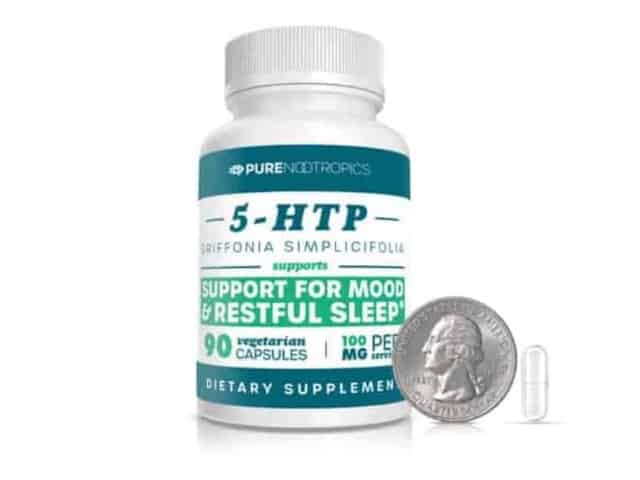
5-HTP
Shop Now →5-HTP by Pure Nootropics
Shop Now →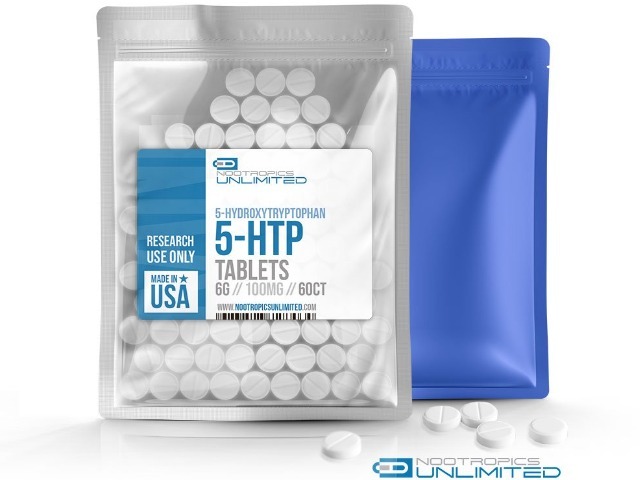
5-HTP Tablets by Nootropics Unlimited
Shop Now →Disclosure: These are affiliate links. I earn a small commission if you purchase — at no extra cost to you. I only recommend products I personally use or have thoroughly researched.