
- Supports healthy mood and emotional balance
- May enhance cognitive function and memory
- Promotes neuroprotection and brain health
- Supports eye health and retinal function
- Provides potent antioxidant and anti-inflammatory activity
I’ll be honest — when someone first told me that the world’s most expensive spice could rival Prozac for depression, I thought they were out of their mind. Saffron? The stuff you put in paella? No way.
Then I started reading the clinical trials. Not blog posts. Not Reddit anecdotes. Actual randomized, double-blind, placebo-controlled trials published in peer-reviewed journals. And the data genuinely surprised me. Saffron didn’t just beat placebo — it went head-to-head with fluoxetine and came out equal. Multiple times.
That got my attention.
The Short Version: Saffron (Crocus sativus) is a spice-derived nootropic with strong clinical evidence for mild-to-moderate depression, promising data for ADHD and cognitive function, and emerging benefits for eye health. The standard dose is 30 mg/day of a standardized extract. It works by modulating multiple neurotransmitter systems simultaneously — serotonin, dopamine, norepinephrine, GABA, and BDNF — which gives it a remarkably broad mood and cognitive profile with minimal side effects.
What Is Crocus sativus?
Saffron comes from the dried stigmas of Crocus sativus L., a small purple flowering plant in the iris family. Each flower produces exactly three tiny red stigmas. That’s it. Three threads per flower. It takes roughly 150,000 to 200,000 flowers — hand-harvested, one by one — to produce a single kilogram of saffron. That’s why it costs more per gram than gold, and why adulteration is rampant in the market.
The plant has been cultivated for over 3,500 years, with roots in Bronze Age Greece and ancient Persia. Iran still produces about 90% of the world’s supply. Historically, saffron wasn’t just a cooking spice — it was medicine. Persian physicians used it for melancholy and low spirits. Ayurvedic practitioners prescribed it for memory and mood. Greek healers recommended it for pain and inflammation. Even Cleopatra reportedly bathed in saffron-infused milk.
What’s remarkable is that modern science is catching up to what these traditional systems knew intuitively. Saffron contains four key bioactive compounds: crocins (responsible for the color and most of the antidepressant activity), crocetin (a potent antioxidant), safranal (the compound behind saffron’s aroma and its serotonin effects), and picrocrocin (which gives saffron its bitter taste). These compounds work together in ways that single-molecule pharmaceuticals simply can’t replicate.
Reality Check: Saffron is not a replacement for psychiatric medication if you have severe or clinical depression. It shines brightest for mild-to-moderate mood issues, stress-related low mood, and as a complement to foundational health practices — sleep, gut health, nutrition, and stress management. Fix the foundations first. Then add saffron as a targeted tool.
How Does Crocus sativus Work?
Here’s the simplest way I can explain it: saffron is like a gentle volume knob for your brain’s feel-good chemicals. It doesn’t slam one system the way an SSRI hammers serotonin — it nudges multiple systems simultaneously, which is probably why it works so well with so few side effects.
At the molecular level, saffron’s mechanism is genuinely impressive in its breadth. Crocins inhibit the reuptake of dopamine and norepinephrine, keeping more of these motivation and alertness chemicals available in your synapses. Safranal does something similar for serotonin — functioning like a mild, natural SSRI. Both compounds also inhibit monoamine oxidase enzymes (MAO-A and MAO-B), which are the enzymes that break down these neurotransmitters. So you’re getting more production and less degradation. Double benefit.
But it doesn’t stop at monoamines. Saffron also acts as a mild NMDA receptor antagonist and GABA-α receptor agonist, which likely explains the calming, anxiolytic effects many users report. And perhaps most exciting for long-term brain health, saffron upregulates BDNF (Brain-Derived Neurotrophic Factor) through the MAPK-CREB1-BDNF signaling pathway. BDNF is essentially your brain’s fertilizer — it supports neuroplasticity, the growth of new connections, and the maintenance of existing ones.
In plain English: saffron doesn’t just make you feel better temporarily. It’s helping your brain build the infrastructure to stay better. That’s a fundamentally different approach than most mood supplements, and it’s why the effects tend to build and compound over weeks of consistent use.
Benefits of Crocus sativus
Depression — The Headline Act
This is where saffron’s evidence is strongest, and it’s not even close. A meta-analysis of randomized controlled trials found saffron significantly more effective than placebo for depressive symptoms. More impressively, multiple head-to-head trials comparing 30 mg/day of saffron extract to fluoxetine (Prozac) and imipramine over 6–8 weeks found equivalent efficacy — with saffron producing notably fewer side effects, particularly the sexual dysfunction that plagues SSRI users.
Let me repeat that, because it’s easy to gloss over: a flower extract matched one of the most commonly prescribed antidepressants on the planet. In rigorous clinical trials. Multiple times.
That said, honest assessment matters here. Most of these trials were conducted in Iran, with relatively small sample sizes (30–60 participants), and focused on mild-to-moderate depression. We need more large-scale, multi-center trials in diverse populations before we can make blanket claims. The evidence is strong — but it’s not “case closed” strong.
ADHD — Surprisingly Promising
A double-blind pilot study compared saffron (20–30 mg/day) to methylphenidate (Ritalin) in 54 children aged 6–17 over six weeks. The result? Equivalent efficacy on both parent and teacher ADHD rating scales, with similar side-effect profiles. This is a small pilot study — it needs replication in larger trials — but it’s a genuinely exciting signal for parents looking for alternatives to stimulant medication.
Cognitive Function
A systematic review of RCTs found saffron improves various cognitive domains, including memory and processing speed. The effects are moderate and tend to emerge over weeks of consistent use, but they’re measurable. This tracks with saffron’s BDNF-boosting mechanism — you’re not just masking cognitive issues, you’re supporting the underlying neural architecture.
Eye Health
Here’s one most people don’t know about. Multiple clinical trials show saffron supplementation at 20–50 mg/day preserves retinal function in early age-related macular degeneration. Patients taking 30 mg/day for three or more months showed improved retinal flicker sensitivity and visual acuity — an improvement of roughly two lines on a standard eye chart. Some users even report that colors seem slightly more vivid after consistent saffron use.
Insider Tip: If you have a family history of macular degeneration, saffron is one of the few supplements with actual clinical trial data supporting retinal protection. Most “eye health” supplements are marketing fluff. This one isn’t.
Anxiety
The evidence here is earlier-stage — mostly preclinical and mechanistic — but both crocins and safranal show anxiolytic properties through GABAergic and serotonergic pathways. Many users report reduced anxiety as a secondary benefit when taking saffron for mood support.
How to Take Crocus sativus
Dosage: 30 mg/day of a standardized extract. This is the dose used in virtually every positive clinical trial. Split it into 15 mg twice daily for more consistent blood levels. The studied range is 20–200 mg/day, but 30 mg is the sweet spot where you get the benefits without diminishing returns.
Forms matter — a lot. Not all saffron supplements are created equal. Here’s what to look for:
- affron® (by Pharmactive) — standardized to 3.5% Lepticrosalides® (a composite marker of crocins, safranal, and picrocrocin). This is the extract used in most clinical trials. Dose: 28–30 mg/day.
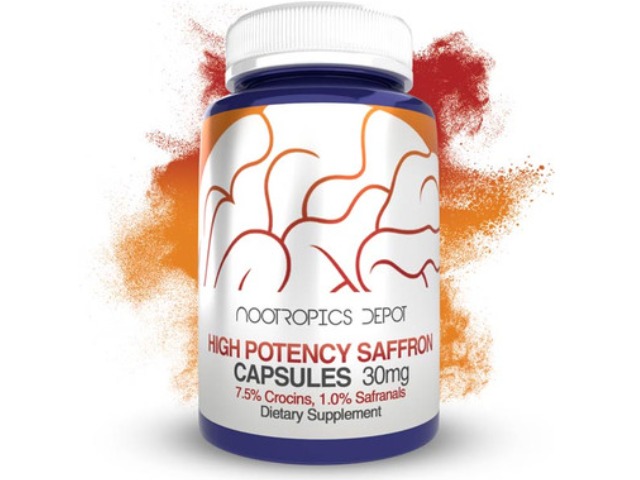
- High-potency extracts standardized to ≥7.5% crocins and ≥1% safranal — roughly double the active compound concentration of affron. Dose: 30 mg/day.
- Generic “saffron extract” without standardization percentages — avoid these. Quality varies wildly, and ConsumerLab testing found up to 50-fold differences in key compounds between brands.
Timing: Take with food to improve absorption and minimize any GI discomfort. No strong evidence favoring morning versus evening — I’ve seen users prefer morning for subtle alertness benefits and others prefer evening for relaxation. Experiment and see what works for your body.
How long to give it: Don’t judge saffron after three days. Most clinical trials run 6–8 weeks, and most users report meaningful mood improvements starting at weeks 1–2, with full effects developing by weeks 4–6. Commit to at least 6 weeks of consistent daily use before deciding whether it works for you.
Pro Tip: Start with a standardized extract at 30 mg/day for your first trial. If you’re sensitive to supplements, start at 15 mg/day for the first week and titrate up. Saffron is gentle, but there’s no reason not to ease in.
Cycling: Not strictly required at 30 mg/day based on current evidence. Clinical trials have run up to 12 weeks continuously without issues. Some users prefer 8 weeks on, 2 weeks off as a precaution, but this is conservative preference rather than a clinical necessity.
Side Effects & Safety
At 30 mg/day, saffron has an excellent safety profile. Common side effects — when they occur at all — are mild: dry mouth, slight drowsiness, occasional dizziness, or mild nausea. Most users report zero side effects at standard doses.
The serious concerns arise at higher doses (above 200 mg/day) or with specific populations:
Important: Saffron has documented uterine stimulant properties. Pregnant women should NOT take therapeutic doses of saffron extract (>30 mg/day). Small culinary amounts in food are generally considered safe, but supplemental doses are contraindicated during pregnancy. Nursing mothers should also avoid supplemental saffron due to insufficient safety data.
Drug interactions to know about:
- SSRIs, SNRIs, and MAOIs — saffron’s serotonergic activity creates a real risk of serotonin syndrome when combined. Symptoms include confusion, rapid heart rate, and fever. Do NOT stack saffron with prescription antidepressants without your doctor’s explicit supervision.
- Blood thinners (warfarin, heparin, aspirin, clopidogrel) — saffron has anticoagulant properties that can increase bleeding risk.
- Blood pressure medications — saffron may potentiate their effects, leading to excessive blood pressure drops.
Who should avoid saffron: People with bleeding disorders, bipolar disorder (serotonergic activity may trigger manic episodes), severely low blood pressure, or known allergy to plants in the Iridaceae family.
Safety ceiling: Doses up to 1.5 g/day are considered safe in studies. Toxic effects have been reported at 5 g. There’s an enormous margin between the therapeutic dose (30 mg) and any danger zone.
Stacking Crocus sativus
Saffron’s multi-target mechanism makes it play well with compounds that work through different pathways. Here are the combinations with the best rationale:
Saffron + Curcumin — This is the stack with actual RCT data behind it. A clinical trial showed combined curcumin/saffron treatment reduced both depressive and anxiety symptoms more effectively than either alone. They share anti-inflammatory mechanisms but hit different molecular targets. A strong mood-support foundation stack.
Saffron + Ashwagandha — Different but complementary pathways. Saffron modulates serotonin and dopamine; ashwagandha modulates the HPA axis and cortisol. Together they address mood from the neurotransmitter side and the stress-hormone side. One of my favorite general-purpose mood and resilience stacks.
Saffron + Omega-3 fatty acids — Omega-3s improve neuronal membrane fluidity, which may enhance saffron’s neurotransmitter effects. Both support BDNF. Foundational and synergistic.
Saffron + Bacopa Monnieri — If your goal is mood plus memory and learning. Bacopa is the stronger pure cognitive enhancer; saffron brings the mood support. Both require weeks of consistent use, so they’re natural partners for a long-term protocol.
Saffron + L-Theanine — For anxious low mood. L-theanine’s calming GABAergic and glutamate-modulating effects complement saffron’s serotonergic and dopaminergic activity without sedation.
What NOT to combine with saffron:
- St. John’s Wort — both powerfully affect serotonin. High risk of serotonin syndrome. Pick one, not both.
- 5-HTP or L-Tryptophan — additive serotonin effects could push levels too high. Unnecessary and risky.
- SAMe — same serotonergic concern. Don’t stack.
- Prescription antidepressants — unless your prescribing physician explicitly approves the combination.
My Take
Saffron is one of those rare nootropics where the clinical evidence actually matches the hype — and in this industry, that’s saying something. I’ve recommended it to friends and family members who were hesitant about prescription antidepressants for mild mood issues, and the feedback has been consistently positive. The phrase I hear most often is “it takes the edge off” — not dramatic, not euphoric, just a noticeable smoothing-out of the emotional lows.
What I like most about saffron is the mechanism. It’s not brute-forcing one pathway. It’s gently adjusting multiple systems — serotonin, dopamine, norepinephrine, GABA, BDNF, inflammation — in a way that feels balanced rather than artificial. That multi-target approach probably explains why it works as well as fluoxetine in trials but without the sexual dysfunction, emotional blunting, and withdrawal issues that SSRIs are notorious for.
Who is saffron BEST for? People dealing with mild-to-moderate low mood, seasonal mood dips, stress-related emotional flatness, or anyone who wants natural mood support without the side-effect burden of pharmaceuticals. It’s also worth considering if you have early macular degeneration in your family — the eye health data is uniquely strong for a mood-focused compound.
Who should try something else? If you need sharp, immediate cognitive enhancement, Bacopa or Lion’s Mane are better pure nootropics. If your main issue is fatigue and energy, Rhodiola is more stimulating. And if you’re dealing with severe, clinical depression, this isn’t a substitute for proper medical care — it’s a complement to it.
The one real downside is quality control. Saffron is the most adulterated spice on Earth, and the supplement market isn’t much better. Don’t cheap out. Get a standardized extract from a reputable source with third-party testing. The difference between a quality saffron supplement and a garbage one isn’t subtle — it’s the difference between something that works and expensive colored capsules.
At 30 mg/day of a properly standardized extract, saffron earns a spot in my top-tier mood support recommendations. It’s gentle, it’s effective, and the science is real. Give it six weeks and see how you feel.
Recommended Saffron Products
I know how frustrating it is to sort through dozens of brands making the same claims. These are the ones I've personally vetted — because quality is the difference between results and wasted money.
Disclosure: These are affiliate links. I earn a small commission if you purchase — at no extra cost to you. I only recommend products I personally use or have thoroughly researched.