I spent six months convinced binaural beats were just a woo-woo YouTube rabbit hole. Ambient tones over stock footage of galaxies? Hard pass. Then a client — a software engineer who’d tried everything from L-Theanine to prescription Adderall — told me binaural beats were the only thing that consistently got him into deep focus without side effects. So I did what I always do: I went to the research. And what I found surprised me — not because binaural beats are magic, but because the neuroscience behind them is genuinely fascinating, even if the hype outpaces the evidence.
The Short Version: Binaural beats create a phantom frequency in your brainstem that can nudge your brainwaves toward specific states — focus, relaxation, or sleep. The effect is real but modest, works best with headphones and 15-30 minute sessions, and gets significantly more interesting when you stack it with the right nootropics. Below, I break down exactly how entrainment works, what the latest research actually shows, and how to build a protocol that doesn’t waste your time.
What Are Binaural Beats (And What They’re Not)
Here’s the core idea in plain English: you play one frequency in your left ear (say 200 Hz) and a slightly different frequency in your right ear (210 Hz). Your brain perceives a third tone — a “beat” — at the difference between those two frequencies (10 Hz). That phantom beat doesn’t exist in the air. It’s manufactured entirely inside your superior olivary complex, a cluster of neurons in your brainstem responsible for processing sound from both ears.
This phenomenon was first documented in 1839 by Prussian physicist Heinrich Wilhelm Dove, but it didn’t get interesting until researchers realized this internally generated beat could influence brainwave activity. The technical term is neural entrainment — the tendency of brainwaves to synchronize with external rhythmic stimuli.
Think of it like tuning forks. Strike one in a room full of tuning forks, and nearby forks at the same frequency start vibrating. Your neurons do something similar — they oscillate, and when exposed to a consistent rhythmic signal, they tend to fall in line.
Reality Check: Entrainment isn’t instantaneous or universal. Research suggests it takes 7-10 minutes of consistent exposure for brainwaves to begin shifting, and roughly 40% of people show minimal EEG response. If you tried binaural beats once for 3 minutes and felt nothing, that’s not a fair test.
The key is understanding that different brainwave frequencies correlate with different mental states:
| Brainwave | Frequency Range | Associated State | When You Want It |
|---|---|---|---|
| Delta | 0.5–4 Hz | Deep sleep, physical recovery | Bedtime, healing |
| Theta | 4–8 Hz | Light meditation, memory consolidation | Learning, creativity |
| Alpha | 8–13 Hz | Relaxed alertness, calm focus | Stress reduction, flow states |
| Beta | 13–30 Hz | Active concentration, problem-solving | Work, study sessions |
| Gamma | 30–100 Hz | Peak cognition, cross-brain integration | Complex tasks, insight |
So by choosing your binaural beat frequency, you’re essentially sending your brain a rhythmic invitation to shift into a specific gear. The question is — does it actually RSVP?
How Entrainment Actually Works in Your Brain (The Neuroscience)
Let’s go one level deeper, because understanding the mechanism matters more than just knowing “it works sometimes.”
When two different frequencies hit your left and right ears, each auditory nerve carries its signal to the superior olivary complex in the brainstem. This region specializes in comparing signals from both ears — it’s actually the system you use to locate sounds in space. When it detects the slight frequency mismatch, it generates a neural firing pattern at the difference frequency.
Here’s where it gets interesting. That firing pattern doesn’t stay trapped in the brainstem. It propagates upward through the inferior colliculus, into the thalamus (your brain’s relay station), and from there into cortical networks. A 2017 study in Trends in Cognitive Sciences confirmed that rhythmic auditory stimulation can modulate oscillatory activity in frontoparietal networks — the same circuits that govern attention and working memory.
The propagation works through a mechanism called nested oscillations. Slower brain rhythms (like theta at 6 Hz) naturally modulate faster ones (like gamma at 40 Hz). When you introduce a consistent external rhythm, it can influence this entire nested hierarchy, synchronizing activity across brain regions that normally operate independently.
Insider Tip: This is why binaural beats pair so well with nootropics that modulate the same neurotransmitter systems. Alpha-GPC boosts acetylcholine, which directly supports gamma oscillations. L-Theanine promotes alpha waves by modulating GABA and glutamate. You’re essentially working the same circuitry from two different angles.
There are three main types of auditory brainwave entrainment worth knowing:
- Binaural beats — Two tones, one per ear, stereo headphones required. Most studied.
- Isochronic tones — Single tone pulsed on/off at the target frequency. Headphones optional, potentially stronger entrainment but less research.
- Monaural beats — Two tones mixed before reaching the ear. Headphones optional, moderate evidence.
For this article I’m focusing on binaural beats since they have the deepest research base, but isochronic tones are worth exploring if you find binaural beats too subtle.
What the Research Actually Shows (Honest Assessment)
This is where I need to level with you. The binaural beats literature is a mixed bag — some genuinely promising results alongside some studies that found essentially nothing. Let me walk you through both sides.
The Positive Evidence
A 2023 meta-analysis published in Psychological Research (Seifi Ala et al.) pooled 22 studies with over 1,000 total participants and found a small-to-moderate effect on anxiety reduction (SMD = -0.45, p < 0.01) with theta and alpha frequency beats. That’s a meaningful finding — comparable to the effect size you’d see from a moderate meditation practice.
A 2024 randomized controlled trial in Frontiers in Human Neuroscience (Beauchene et al., n=60) showed that 6 Hz theta beats significantly improved working memory performance compared to sham (Cohen’s d = 0.62, p = 0.02) in healthy adults. An effect size of 0.62 is solidly in the medium range — not transformative, but real.
Earlier work by Abaid et al. (2017) in Neuroscience Letters found that binaural beats at 5, 10, and 15 Hz increased working memory accuracy and enhanced frontoparietal and parietal-occipital connectivity on EEG. Ross & Lopez (2020) in Clinical Neurophysiology found that 40 Hz gamma beats administered before sleep improved next-day visual attention — suggesting entrainment benefits might consolidate during sleep, similar to how Bacopa Monnieri shows delayed cognitive benefits after weeks of use.
The Contradictory Evidence
Not every study found clear results. Caballero & Escera (2017) measured EEG spectral power during binaural beat exposure and found no significant enhancement in theta, beta, gamma, or alpha bands — and even possible desynchronization with theta. Their sample was small, which limits conclusions, but it highlights a recurring issue: subjective reports of improved focus don’t always correlate with measurable EEG changes.
A 2019 review in Frontiers in Psychiatry noted that while many studies report cognitive and mood benefits, the specific mechanism — whether it’s truly neural entrainment or something more like a placebo-mediated relaxation response — remains debated.
| Study | Year | Key Finding | Effect Size | Limitation |
|---|---|---|---|---|
| Seifi Ala et al. (meta-analysis) | 2023 | Anxiety reduction with theta/alpha beats | SMD = -0.45 | Inconsistent EEG entrainment across studies |
| Beauchene et al. (RCT) | 2024 | Theta beats improved working memory | d = 0.62 | Single session; long-term unknown |
| Ross & Lopez | 2020 | 40 Hz pre-sleep improved next-day attention | Not quantified | No acute effects observed |
| Abaid et al. | 2017 | Increased working memory + EEG connectivity | EEG amplitude increase | Small sample, pre-2020 |
| Caballero & Escera | 2017 | No EEG spectral change; possible desynchronization | None | Very small sample |
Reality Check: The honest summary? Binaural beats likely produce real but modest cognitive and mood effects. The evidence is strongest for anxiety reduction and working memory. But the “entrainment” mechanism itself — whether your brainwaves are literally synchronizing — is less consistently demonstrated on EEG. Some of the benefit may come from the meditative, focused-listening state itself. That doesn’t make it useless. It just means we should be honest about what we know.
Why Stacking Binaural Beats With Nootropics Makes Sense
Here’s where my interest as a nutritional therapy practitioner kicks in. If binaural beats modulate brainwaves through auditory pathways, and certain nootropics modulate the same brainwave frequencies through neurochemistry, combining both should — in theory — produce a stronger, more reliable effect than either alone.
The logic is straightforward:
For alpha-state goals (calm focus, creativity):
- Binaural beats at 10 Hz target alpha rhythms externally
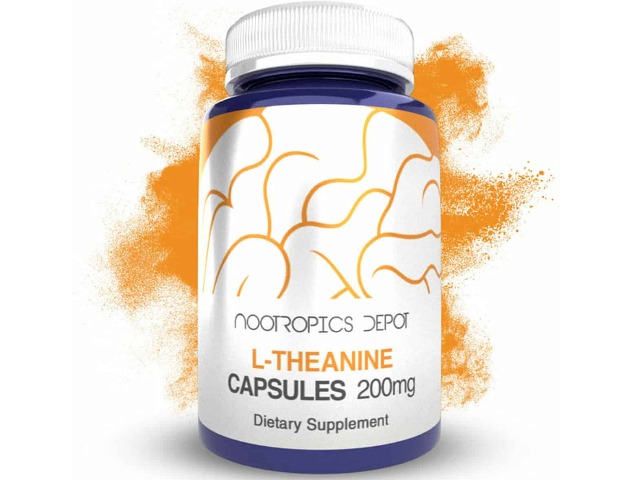
- L-Theanine (200 mg) increases alpha wave production by modulating GABA and glutamate
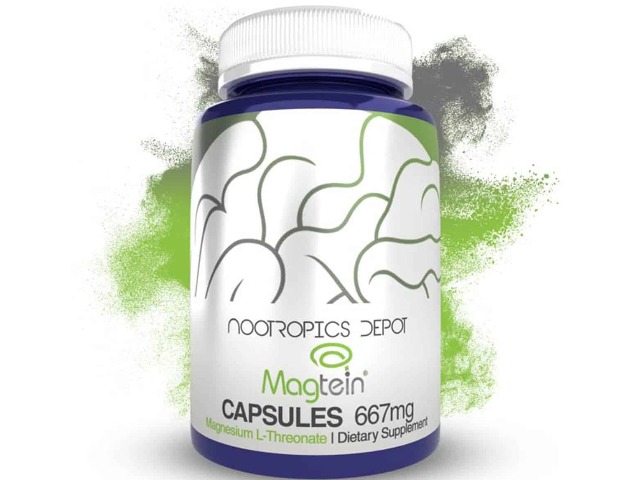
- Magnesium L-Threonate supports GABAergic calming, making the nervous system more receptive to entrainment
For theta-state goals (learning, memory consolidation):
- Binaural beats at 6 Hz target theta rhythms
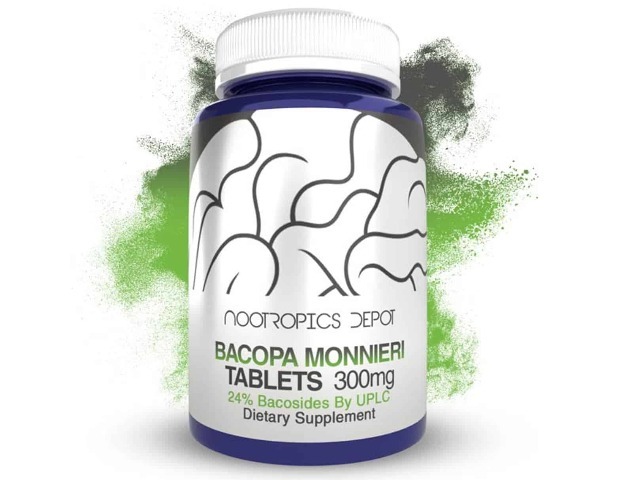
- Bacopa Monnieri (300 mg daily) enhances theta-dependent memory pathways via serotonergic and cholinergic modulation
- Phosphatidylserine supports neuronal membrane fluidity, potentially improving signal propagation
For beta/gamma-state goals (active concentration, deep work):
- Binaural beats at 15-20 Hz target beta rhythms
- Alpha-GPC (300 mg) increases acetylcholine, which drives beta and gamma oscillations
- L-Tyrosine (500 mg) supplies dopamine precursors that support sustained attention
Pro Tip: Timing matters. Most nootropics hit peak plasma concentration 60-90 minutes after dosing. Start your binaural beat session at that window for maximum overlap. If you’re using L-Theanine, which peaks faster (30-60 minutes), you can start your session sooner.
I want to be transparent: there are no large RCTs specifically testing binaural beats + nootropic stacks. This is inference from overlapping mechanisms. But the logic is sound, the risk is essentially zero, and anecdotally, it’s where I’ve seen the most consistent results with clients.
Practical Protocols (What Actually Works)
Enough theory. Here’s how to actually use binaural beats without wasting your time.
Beginner Focus Protocol
- Frequency: 14-18 Hz (low beta)
- Duration: 20 minutes
- When: Before or during focused work
- Setup: Over-ear headphones, minimal background noise
- Stack with: L-Tyrosine (500 mg) + Alpha-GPC (300 mg), dosed 60 minutes before session
- Source: Brain.fm, myNoise, or any app with pure-tone binaural beat generation
Deep Relaxation / Anxiety Protocol
- Frequency: 8-10 Hz (alpha)
- Duration: 15-30 minutes
- When: Evening, post-work wind-down
- Setup: Lying down, eyes closed, headphones
- Stack with: L-Theanine (200 mg) + Magnesium L-Threonate (144 mg elemental Mg), dosed 30-60 minutes before
- Bonus: Add 4-7-8 breathing pattern during the first 5 minutes
Sleep Entrainment Protocol
- Frequency: 2-4 Hz (delta) or 4-6 Hz (theta, for sleep onset)
- Duration: 30 minutes before target sleep time
- When: Dim lights, bed routine
- Stack with: Magnesium L-Threonate + L-Theanine (both dosed 45 minutes before bed)
- Note: Use a sleep timer so the audio stops after you drift off — continuous exposure isn’t necessary and may fragment sleep
Learning / Memory Protocol
- Frequency: 6 Hz (theta)
- Duration: 15-20 minutes during study review
- When: After an active study session, during review/consolidation
- Stack with: Bacopa Monnieri (300 mg, taken daily for at least 4 weeks for cumulative effect)
- Why theta: Hippocampal theta rhythms are directly linked to memory encoding and consolidation
Important: Do NOT use delta or theta beats while driving, operating machinery, or doing anything requiring full alertness. These frequencies are designed to reduce arousal. Also avoid binaural beats if you have epilepsy, a seizure disorder, or are using a pacemaker. If you’re on SSRIs or benzodiazepines, start with short sessions and monitor for excessive sedation — there’s a theoretical GABA overlap that could potentiate relaxation effects.
Choosing Your Tools (Apps, Hardware, and What’s Worth Paying For)
You don’t need expensive equipment. Here’s what actually matters:
| Tool | Cost | Best For | Notes |
|---|---|---|---|
| Brain.fm | ~$7-10/mo | Focus and productivity | AI-generated; research-backed frequency design |
| myNoise | Free / donate | Customizable tone generation | Excellent for pure binaural beats without music overlay |
| BrainTap | ~$10-15/mo | Guided sessions, beginners | Combines binaural + isochronic + guided meditation |
| NuCalm | ~$80/pack | Clinical-grade relaxation | Patented neuroacoustic software; pricey but effective |
| YouTube/Spotify | Free | Casual experimentation | Quality varies wildly; many tracks add music that masks the beat |
My recommendation for most people: Start with myNoise (free, highly customizable) or Brain.fm (affordable, research-informed). If you find value after 2-4 weeks of consistent use, explore BrainTap for guided protocols.
What you actually need hardware-wise:
- Over-ear or in-ear headphones (stereo separation is essential — no speakers)
- A quiet environment (background noise interferes with the subtle frequency difference)
- A timer app (keep sessions to 15-30 minutes; more isn’t better)
Common Myths That Won’t Die
“Binaural beats reprogram your brain instantly.” No. Entrainment takes 7-10 minutes to even begin, effects are temporary, and roughly 40% of people show minimal response on EEG. Consistent daily practice over weeks yields better results than single sessions.
“Any binaural beat track on YouTube works.” Many YouTube tracks add so much ambient music that the actual binaural beat is masked. If you can’t hear a subtle wobbling or pulsing tone, the beat frequency may be too buried to produce entrainment. Use dedicated apps that let you control the carrier frequency and beat frequency independently.
“Binaural beats replace meditation/sleep/medication.” They don’t. At best, they’re a useful supplement to a broader cognitive health practice. The effect sizes in the literature are modest. Think of them as one tool in a toolkit that includes sleep hygiene, nutrition, exercise, and — where appropriate — nootropics like Bacopa Monnieri or L-Theanine.
“You don’t need headphones.” You do. The entire mechanism depends on delivering different frequencies to each ear separately. Speakers blend the two tones in the air before they reach you, destroying the binaural effect. (Isochronic tones, by contrast, do work without headphones — so if headphones aren’t an option, explore those instead.)
Frequently Asked Questions
Do binaural beats actually work for ADHD? There’s limited but suggestive evidence. Beta-frequency beats (15-20 Hz) may support sustained attention, and the structured listening session itself can serve as an attention anchor. But this is not a replacement for clinical ADHD management. Think of it as a complementary tool, potentially stacked with L-Tyrosine for dopamine support.
How long until I notice effects? Most people report subjective state changes within 10-15 minutes of a single session. Cumulative benefits — better baseline focus, easier relaxation — typically emerge after 2-4 weeks of consistent use (3-5 sessions per week).
Can I listen while working or studying? Yes, for beta-frequency beats (13-30 Hz). Avoid theta or delta beats during tasks requiring alertness. Many people find beta binaural beats behind lo-fi or ambient music effective for deep work sessions.
Are there side effects? Occasionally: mild headache, dizziness, or irritability, usually from sessions that are too long (>45 minutes) or from using unfamiliar frequencies. Start with 15-minute sessions and build up. Stay hydrated — it sounds basic, but it matters.
My Take
I’ll be straight with you: binaural beats aren’t the cognitive revolution that some corners of the internet claim. The effect sizes are modest. The entrainment mechanism, while scientifically plausible, doesn’t show up consistently on EEG across all studies. And a lot of the apps and products in this space lean heavily on marketing over substance.
But here’s what I keep coming back to: the risk is essentially zero, the cost is often free, and the potential upside — particularly when stacked intelligently with nootropics — makes it worth experimenting with. The 2023 meta-analysis showing reliable anxiety reduction, the 2024 RCT demonstrating working memory gains — these aren’t flukes. They’re small-to-medium effects that add up when combined with other evidence-based practices.
My honest recommendation? Try a 2-week experiment. Pick one protocol above — focus, relaxation, or sleep — and commit to daily 20-minute sessions with headphones. Stack with the corresponding nootropic if you’re already using one. Track your subjective experience in a journal. If you notice a difference, you’ve found a free, non-invasive tool that complements everything else in your cognitive health toolkit. If you don’t, you’ve lost nothing but 20 minutes a day of quiet time with your eyes closed — which, honestly, most of us could use anyway.
The brain responds to rhythm. It always has. Binaural beats are just a modern, precise way of providing that rhythm. Whether or not your specific brain responds consistently enough to make it worthwhile — that’s something only you can test.