
Alpha-GPC is one of those compounds I wish I’d discovered earlier. I spent my first couple of years in the nootropics world cycling through various choline sources — choline bitartrate, lecithin, even egg yolks by the half-dozen — and never quite getting the sharp, reliable cognitive lift I was chasing. Then I tried Alpha-GPC, and within about 45 minutes of my first dose I understood why so many people in this space consider it non-negotiable. The clarity wasn’t dramatic or stimulating, but it was unmistakable: my working memory felt faster, verbal recall came more easily, and my focus during long writing sessions held together in a way it hadn’t before.
That was years ago. Since then, Alpha-GPC has remained a permanent fixture in my daily stack. I’ve experimented with doses ranging from 150mg to 1200mg, paired it with racetams, combined it with citicoline, and tracked its effects across different contexts — deep work, exercise, sleep quality, mood. Along the way, I’ve dug into the clinical literature far more than I initially expected to, and what I’ve found is a compound with genuinely solid research behind it, a few legitimate safety considerations worth knowing about, and a much more nuanced profile than the “just take it for acetylcholine” narrative suggests.
The Short Version: Alpha-GPC (L-alpha-glycerylphosphorylcholine) is the most bioavailable choline precursor available as a supplement. It crosses the blood-brain barrier efficiently, raises brain acetylcholine levels within an hour, and has clinical evidence supporting benefits for cognitive function in age-related decline, memory and learning, and physical performance. Typical nootropic doses range from 300-600mg per day. It’s well-tolerated for most people, though a 2021 observational study flagged a potential stroke risk signal at very high doses that warrants honest discussion. Below, I break down the full body of evidence and how to use Alpha-GPC effectively.
What Is Alpha-GPC?
Alpha-GPC — formally known as L-alpha-glycerylphosphorylcholine, and sometimes called choline alfoscerate in clinical literature — is a naturally occurring choline compound found in the brain. It’s a phospholipid intermediate, meaning your body already produces it as part of normal cell membrane metabolism. When you take it as a supplement, it serves as a highly efficient donor of choline to the central nervous system.
Here’s why that matters. Choline is the direct precursor to acetylcholine, the neurotransmitter responsible for memory formation, learning, attention, and muscle contraction. Your brain needs a reliable supply of choline to maintain healthy acetylcholine levels, and most people don’t get enough from diet alone — the adequate intake is 550mg/day for men and 425mg/day for women, and national surveys consistently show that the majority of adults fall short.
What makes Alpha-GPC special compared to other choline sources is its pharmacokinetics. After oral administration, Alpha-GPC is rapidly absorbed in the gut and cleaved into choline and glycerophosphate. The choline crosses the blood-brain barrier with relative ease and feeds directly into acetylcholine synthesis via the enzyme choline acetyltransferase (ChAT). The glycerophosphate component contributes to phospholipid synthesis, supporting the structural integrity of neuronal cell membranes.
As Che et al. detailed in a comprehensive 2025 review in Nutrition Reviews (PMID 40036805), Alpha-GPC participates in multiple metabolic pathways beyond simple acetylcholine production. It influences phosphatidylcholine turnover, supports membrane fluidity, and may modulate growth hormone release through cholinergic stimulation of the hypothalamus. This multifunctionality is why you’ll see Alpha-GPC referenced not just in cognitive enhancement circles, but in sports nutrition and clinical neurology as well.
By weight, Alpha-GPC is approximately 40% choline — the highest choline yield of any supplemental form. That efficiency is a major reason it became the go-to choline source in clinical trials for cognitive decline and in nootropic stacks worldwide.
Alpha-GPC vs. Other Choline Sources
Not all choline is created equal, and understanding the differences saves you money and frustration.
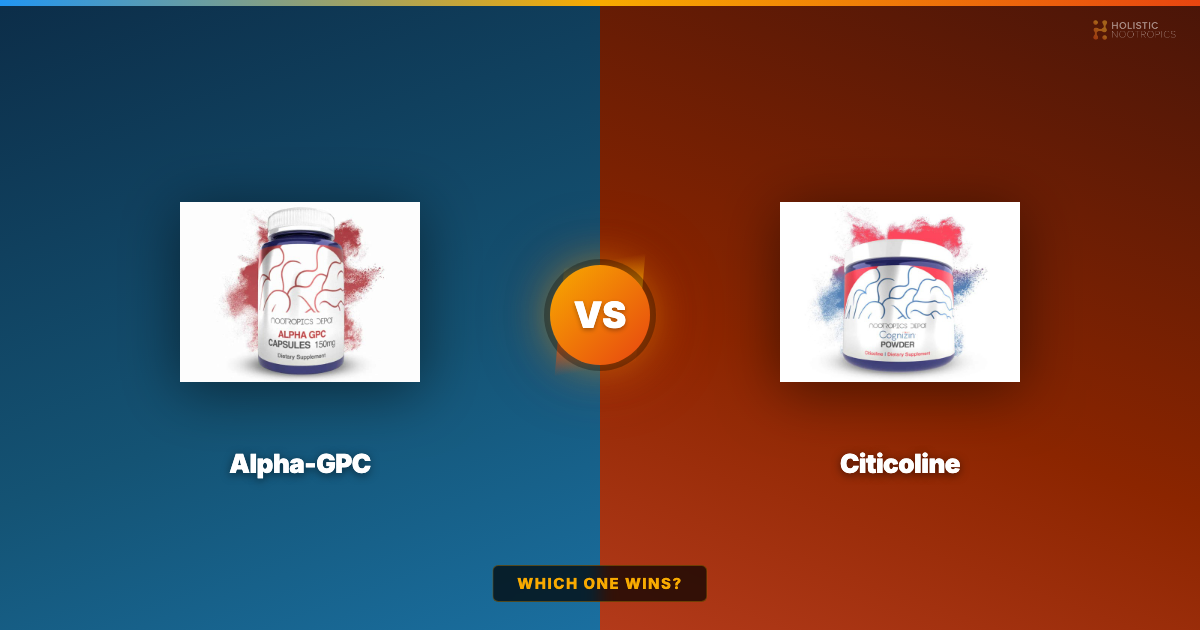
Alpha-GPC vs. Citicoline
Citicoline (CDP-choline) is Alpha-GPC’s main competitor. Both cross the blood-brain barrier. Both raise brain acetylcholine. But they do it differently and bring different secondary benefits.
A head-to-head study by Gatti et al. (1992, International Journal of Clinical Pharmacology, Therapy, and Toxicology, PMID 1428296) compared free plasma choline levels after intramuscular administration of Alpha-GPC and citicoline in healthy volunteers. Alpha-GPC produced significantly higher peak plasma choline concentrations, confirming its superior efficiency as a direct choline donor.
However, citicoline’s value lies elsewhere. When citicoline is metabolized, it releases cytidine, which converts to uridine — a nucleoside that supports phospholipid synthesis and synaptic plasticity. Citicoline also modulates dopamine and norepinephrine, giving it a broader neurochemical profile. This is why citicoline tends to appear more often in stroke recovery and neuroprotection research.
The practical upshot: Alpha-GPC wins for fast-acting, high-potency choline delivery. Citicoline wins for long-term neuroprotection and mood support. Many experienced users, myself included, stack both.
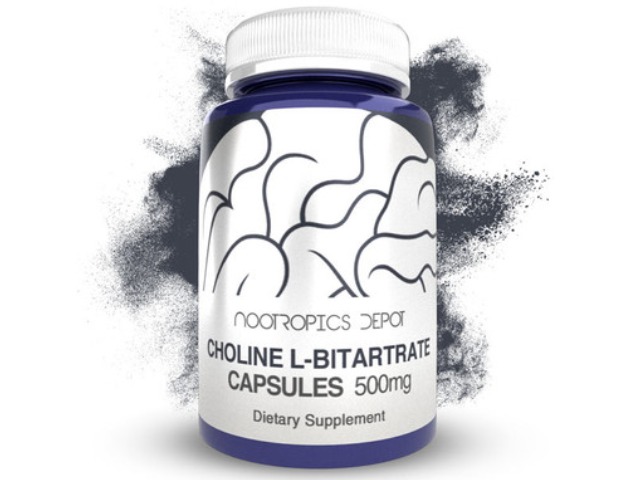
Alpha-GPC vs. Choline Bitartrate
Choline bitartrate is cheaper, widely available, and basically the economy option. The problem is that it crosses the blood-brain barrier poorly. Most of the choline from bitartrate gets used peripherally — in the liver for methylation reactions and lipid metabolism — rather than making it to the brain where you want it for cognitive effects.
As noted in a 2023 review in Frontiers in Endocrinology (PMID 36950691), choline bitartrate can address systemic choline deficiency and support liver function, but the evidence for meaningful cognitive enhancement at typical supplemental doses is weak compared to Alpha-GPC or citicoline. If your goal is brain performance, choline bitartrate is not the right tool. If your goal is meeting baseline choline intake cheaply, it works fine.
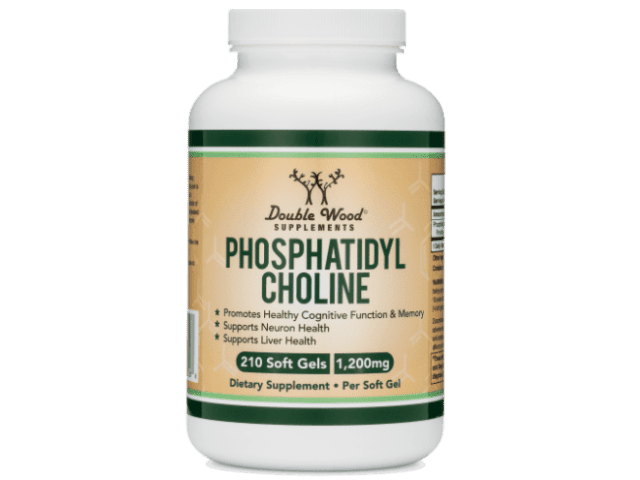
Alpha-GPC vs. Phosphatidylcholine
Phosphatidylcholine is the form of choline most abundant in food (eggs, liver, soybeans). It’s a phospholipid that contributes to cell membrane structure and provides choline through metabolic breakdown. However, its choline yield by weight is only around 13%, and the conversion to free choline available for acetylcholine synthesis is slower and less efficient than Alpha-GPC. Phosphatidylcholine is a good dietary source of choline but a mediocre nootropic.
The Evidence: What Does the Research Show?
This is where Alpha-GPC separates itself from many nootropic compounds. It has genuine clinical trial data — not just rodent studies and biohacker anecdotes.
Cognitive Enhancement
The strongest evidence for Alpha-GPC comes from research on cognitive decline, particularly in Alzheimer’s disease and vascular dementia.
De Jesus Moreno (2003, Clinical Therapeutics, PMID 12637119) conducted a multicenter, double-blind, randomized, placebo-controlled trial in 261 patients with mild-to-moderate Alzheimer’s dementia. Patients received either 400mg Alpha-GPC three times daily (1200mg total) or placebo for 180 days. The Alpha-GPC group showed statistically significant improvement on the ADAS-Cog (Alzheimer’s Disease Assessment Scale-Cognitive Subscale) and the MMSE (Mini-Mental State Examination) compared to the placebo group, which continued to decline. The effect sizes were clinically meaningful — this wasn’t just a statistical artifact.
More recently, Sagaro, Traini, and Amenta (2023, Journal of Alzheimer’s Disease, PMID 36683513) published a systematic review and meta-analysis examining Alpha-GPC’s activity on adult-onset cognitive dysfunctions. Pooling data across multiple trials, they confirmed a consistent pattern of cognitive improvement, particularly in attention, memory, and global cognitive function scores. The authors concluded that choline alfoscerate represents a promising intervention for cognitive dysfunction, though they noted the need for larger, more rigorous trials in younger populations.
Perhaps the most compelling clinical program is the ASCOMALVA trial (Amenta et al., 2014, Journal of Alzheimer’s Disease, PMID 24898643), which tested whether adding Alpha-GPC to standard donepezil therapy in Alzheimer’s patients would produce better outcomes than donepezil alone. After two years, patients receiving the combination showed significantly less decline on multiple cognitive and functional measures compared to the donepezil-only group. This is important because it suggests Alpha-GPC doesn’t just work in isolation — it potentiates existing cholinergic therapies, which has direct implications for anyone stacking it with acetylcholinesterase inhibitors like huperzine A.
Memory and Learning
Two foundational animal studies established Alpha-GPC’s mechanism for memory enhancement through cholinergic pathways.
Lopez et al. (1991, Pharmacology, Biochemistry and Behavior, PMID 1662399) demonstrated that Alpha-GPC could reverse scopolamine-induced amnesia in rats — scopolamine being a muscarinic antagonist that blocks acetylcholine receptors and reliably impairs memory formation. Alpha-GPC administration restored memory performance in passive avoidance tests and simultaneously increased brain acetylcholine levels, confirming the cholinergic mechanism.
Sigala et al. (1992, European Journal of Pharmacology, PMID 1319912) extended this finding by showing that Alpha-GPC not only antagonized scopolamine-induced amnesia but specifically enhanced hippocampal cholinergic transmission in rats. The hippocampus is the brain region most critical for memory consolidation, so this localization of effect is significant. The study demonstrated increased acetylcholine release in the hippocampus following Alpha-GPC administration using in vivo microdialysis — a technique that directly measures neurotransmitter output in real time.
These scopolamine-reversal studies are the gold standard for establishing cholinergic cognitive enhancers. They demonstrate that Alpha-GPC doesn’t just raise acetylcholine in a general sense — it does so in the brain regions that matter most for memory and learning, and it does so potently enough to overcome pharmacological blockade of the cholinergic system.
While these are animal studies, the scopolamine model has strong translational validity. Many compounds that reverse scopolamine-induced amnesia in rodents have gone on to show cognitive benefits in human clinical trials, and Alpha-GPC is one of the clearest examples of this translational path succeeding.
Physical Performance
Alpha-GPC has attracted attention in sports nutrition for two distinct effects: growth hormone secretion and strength output.
Kawamura et al. (2012, Nutrition, PMID 22673596) conducted a study in young adults showing that a single 1000mg dose of Alpha-GPC significantly increased growth hormone secretion compared to placebo. The study also observed enhanced fat oxidation during exercise. Growth hormone release is mediated through cholinergic stimulation of the hypothalamic-pituitary axis, which makes pharmacological sense given Alpha-GPC’s mechanism. However, it’s worth noting that transient GH spikes from supplements don’t necessarily translate to the kind of sustained anabolic signaling that would meaningfully change body composition. The effect is real, but its practical significance for muscle growth or fat loss is still debatable.
Bellar, LeBlanc, and Campbell (2015, Journal of the International Society of Sports Nutrition, PMID 26582972) tested whether 600mg/day of Alpha-GPC for six days could improve isometric strength in college-aged men. The Alpha-GPC group showed a statistically significant increase in isometric mid-thigh pull force compared to placebo. The effect size was moderate, but it’s one of the cleaner demonstrations that Alpha-GPC has ergogenic potential beyond just subjective “mind-muscle connection” reports.
These athletic performance findings are interesting but still limited by small sample sizes. If you train seriously, Alpha-GPC is worth trying as a pre-workout addition — the cognitive sharpening and potential strength benefits make it a reasonable inclusion. But don’t expect it to replace creatine or caffeine as an ergogenic aid. It’s a complement, not a cornerstone.
Dosage
Alpha-GPC dosing depends heavily on what you’re trying to achieve.
Clinical doses for cognitive decline: The landmark Alzheimer’s trials used 1200mg per day, split into three doses of 400mg. This is the dose with the most robust evidence for meaningful cognitive improvement in impaired populations. I would not recommend this level for healthy individuals without medical supervision, particularly given the safety signals discussed below.
Cognitive enhancement in healthy adults: Most nootropic users find their sweet spot between 300-600mg per day. A single morning dose of 300mg is a reasonable starting point. I personally take 300mg in the morning with breakfast, and add a second 300mg dose on days when I have especially demanding cognitive work.
Daily nootropic maintenance: For general brain health and acetylcholine support as part of a broader stack, 150-300mg per day is sufficient for most people. This is particularly relevant if you’re also getting choline from dietary sources or stacking with citicoline.
Physical performance: The strength study used 600mg per day. The growth hormone study used a single 1000mg dose. For pre-workout use, 300-600mg taken 30-60 minutes before training is a common protocol.
Timing matters. Alpha-GPC acts relatively quickly — peak plasma choline levels occur within 1-2 hours of oral administration. Take it when you need it: morning for cognitive work, pre-workout for training. Taking it too late in the evening can disrupt sleep in some individuals due to heightened acetylcholine activity.
Start low. I always recommend beginning with 150-300mg and increasing gradually. Some people are surprisingly sensitive to cholinergic compounds and experience headaches, jaw tension, or GI discomfort at doses that others tolerate easily. If you get a persistent dull headache from Alpha-GPC, that’s almost always a sign of choline excess — reduce the dose or skip a day.
Safety and Side Effects
Alpha-GPC has a strong overall safety profile, but there are two issues worth discussing honestly.
General Tolerability
A 2025 safety evaluation published in Food and Chemical Toxicology (Yamada et al., PMID 39577616) provided a comprehensive assessment of Alpha-GPC’s safety as a food ingredient. The evaluation examined genotoxicity, subchronic toxicity, and reproductive toxicity data and concluded that Alpha-GPC is safe for consumption at supplemental doses. No genotoxic potential was identified, and no adverse effects were observed at doses relevant to typical human supplementation.
Common side effects reported in clinical trials and user surveys include headache (typically from choline excess, dose-dependent), gastrointestinal discomfort (nausea, diarrhea — usually mild and transient), heartburn, insomnia when taken late in the day, and occasionally dizziness or low blood pressure. These affect a minority of users — roughly 5-15% depending on dose — and are almost always resolved by reducing the dose.
Alpha-GPC can lower blood pressure through cholinergic vasodilation. If you’re on antihypertensive medications, monitor your blood pressure when starting Alpha-GPC and discuss with your prescriber.
The Stroke Risk Signal
This one gets a lot of attention online, and it deserves a nuanced discussion rather than panic.
Lee, Choi, and Park (2021, JAMA Network Open, PMID 34817582) published an observational study using Korean national health insurance data that found an association between Alpha-GPC use and increased stroke risk over a 10-year follow-up period. The study received significant media coverage and understandably concerned many Alpha-GPC users.
However, context matters enormously here. This was an observational study, not a randomized controlled trial. The Alpha-GPC users in the cohort were patients prescribed choline alfoscerate for existing cognitive impairment or cerebrovascular conditions — meaning they were already a higher-risk population for stroke. The study controlled for some confounders but could not fully account for the underlying vascular pathology that led to the Alpha-GPC prescription in the first place. In other words, the causal direction is unclear: does Alpha-GPC increase stroke risk, or do people at higher stroke risk get prescribed Alpha-GPC?
Additionally, the doses used in the Korean clinical context (typically 1200mg/day) are substantially higher than what most nootropic users take (300-600mg/day), and the treatment duration was prolonged.
I take this signal seriously, but I don’t think it should dissuade healthy individuals from using Alpha-GPC at moderate doses. What it should do is discourage megadosing (above 1200mg/day) without medical supervision, and prompt anyone with pre-existing cardiovascular or cerebrovascular risk factors to discuss Alpha-GPC with their doctor before starting. It should also motivate the field to conduct proper randomized trials examining this question directly — observational data raises hypotheses, it doesn’t confirm them.
Interactions to Watch
Alpha-GPC can interact with anticholinergic medications (reducing their efficacy), acetylcholinesterase inhibitors like donepezil (potentiating their effects — sometimes desirably, as in the ASCOMALVA trial, but dose adjustment may be needed), and blood pressure medications. If you’re on any prescription medication that affects the cholinergic or cardiovascular system, talk to your prescriber before adding Alpha-GPC.
What to Look For in Alpha-GPC Supplements
Since this guide focuses on the substance itself rather than specific products, I’ll cover the quality variables that matter regardless of which brand you choose.
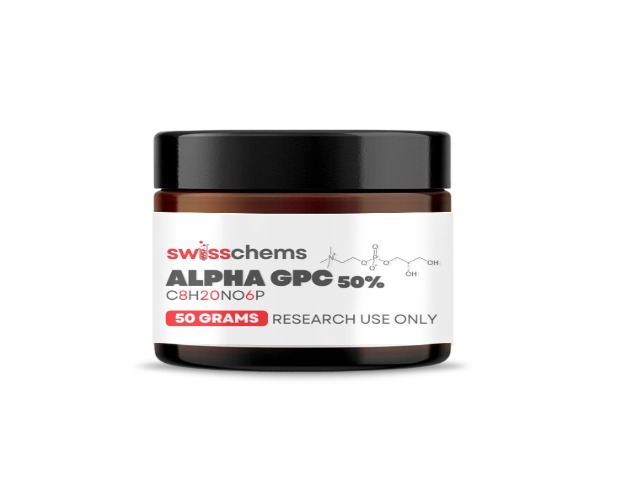
Purity: 50% vs. 99%. Pure Alpha-GPC is hygroscopic — it absorbs moisture from the air and becomes sticky and difficult to encapsulate. Many manufacturers sell Alpha-GPC at 50% concentration, meaning half the capsule is Alpha-GPC and half is a carrier (usually silicon dioxide or calcium phosphate). This is not a scam — it’s a practical manufacturing solution. But it means a “600mg Alpha-GPC” capsule at 50% purity contains only 300mg of actual Alpha-GPC. Always check the label and do the math. Some brands offer 99% purity, but these products are harder to find and more expensive. Powder forms tend to offer higher concentrations but come with the hygroscopic challenge — store them with a desiccant in a cool, dry place.
Source: Soy vs. Sunflower. Alpha-GPC is typically derived from soy lecithin or sunflower lecithin. For people with soy allergies or sensitivities, sunflower-derived Alpha-GPC is the obvious choice. Beyond allergy concerns, there’s no meaningful difference in the final compound — Alpha-GPC is Alpha-GPC regardless of the lecithin source. But if soy is an issue for you, confirm the source before purchasing.
Form: Capsules vs. Powder. Capsules are convenient and dosing is precise. Powder is cheaper per gram and allows flexible dosing, but Alpha-GPC powder absorbs moisture aggressively and can clump or degrade if not stored properly. If you go with powder, buy in smaller quantities, use a desiccant packet in the container, and keep it sealed tightly.
Third-party testing. Look for a Certificate of Analysis (COA) that verifies identity, potency, heavy metals (lead, mercury, arsenic, cadmium), and microbial contamination. Brands that publish COAs on their websites or provide them on request are signaling transparency. Brands that don’t are not necessarily selling bad products, but you’re operating on trust rather than verification.
Frequently Asked Questions
How quickly does Alpha-GPC work?
Most users notice effects within 30-60 minutes of an oral dose, with peak plasma choline levels occurring at 1-2 hours. The onset is faster than citicoline but slower than something like caffeine. For cognitive effects, the first dose can be noticeable, but the full benefits — particularly for memory and sustained attention — tend to build over days to weeks of consistent use.
Can I take Alpha-GPC every day?
Yes. Alpha-GPC has been used daily in clinical trials lasting 6 months or longer at doses up to 1200mg/day with a good safety profile. For daily nootropic use at 300-600mg, long-term daily administration appears well-tolerated. Some users prefer cycling (5 days on, 2 off) to prevent receptor downregulation, though there’s limited evidence that cholinergic tolerance develops at supplemental doses. I take it daily without cycling and haven’t noticed diminishing effects.
Does Alpha-GPC cause headaches?
It can, and this is almost always a sign of excess acetylcholine. The fix is simple: reduce the dose. If you’re taking 600mg, try 300mg. If you’re stacking with huperzine A or other acetylcholinesterase inhibitors, the combined cholinergic load may be too high. Headaches from choline excess are distinct — typically a dull, pressing sensation rather than sharp or throbbing. Adding acetyl-L-carnitine (ALCAR) can sometimes help by modulating acetylcholine metabolism.
Should I take Alpha-GPC or citicoline?
This depends on your goals. Alpha-GPC is superior for fast-acting focus, raw acetylcholine output, and physical performance. Citicoline is superior for long-term neuroprotection, mood support (via dopamine/norepinephrine modulation), and brain cell membrane repair. For a detailed comparison, see my full Alpha-GPC vs. Citicoline breakdown. Many experienced nootropic users — myself included — take both, using citicoline as a baseline and Alpha-GPC for acute cognitive demands.
Is Alpha-GPC safe for younger adults?
The clinical trial data is primarily in older adults with cognitive impairment, and the safety evaluation data (PMID 39577616) supports general safety across populations. Healthy younger adults using Alpha-GPC at 300-600mg/day are well within the established safety margins. That said, the long-term safety data in healthy young populations specifically is limited, so the standard advice applies: start low, monitor how you feel, and don’t exceed reasonable doses without a specific reason.
My Take
After years of daily use, Alpha-GPC remains one of the highest-confidence compounds in my stack. The evidence base is real — not overwhelming, but solid and consistent across multiple study designs. The mechanism is well-understood. The subjective effects match what the pharmacology predicts.
My current protocol is 300mg Alpha-GPC in the morning with breakfast, stacked with 250mg citicoline for the complementary neuroprotective and dopaminergic benefits. On heavy cognitive workdays or before training, I add a second 300mg dose in the early afternoon. I’ve found this dual-choline approach gives me better sustained focus than either compound alone, without the headaches that higher single-source doses can produce.
The stroke risk data from the 2021 Korean observational study is worth keeping on your radar, but it hasn’t changed my personal use because the population studied was already at elevated cardiovascular risk and the doses were higher than what I take. I do, however, avoid going above 600mg/day for extended periods, and I get my blood pressure checked regularly.
If you’re new to nootropics, Alpha-GPC is one of the best places to start. It’s well-tolerated, the effects are noticeable without being overwhelming, and it plays well with almost everything else. If you’re already running a stack and you’re not including a high-quality choline source, you’re likely leaving cognitive performance on the table. Alpha-GPC fills that gap better than anything else available.