I’ll be honest — I spent the first two years of my nootropics journey completely confused about choline.
I knew I needed it. Every stack guide said so. But every time I tried to figure out whether to buy Alpha-GPC or Citicoline, I’d end up in a rabbit hole of contradictory Reddit threads, sketchy supplement blogs, and studies I couldn’t parse. I’d buy one, wonder if I should’ve bought the other, and end up with two half-empty bottles and no real answer.
If that sounds familiar, you’re in the right place. I’ve now spent years testing both compounds, reading the clinical literature, and talking to hundreds of readers who’ve done the same. The differences between these two are real — and they matter more than most people think.
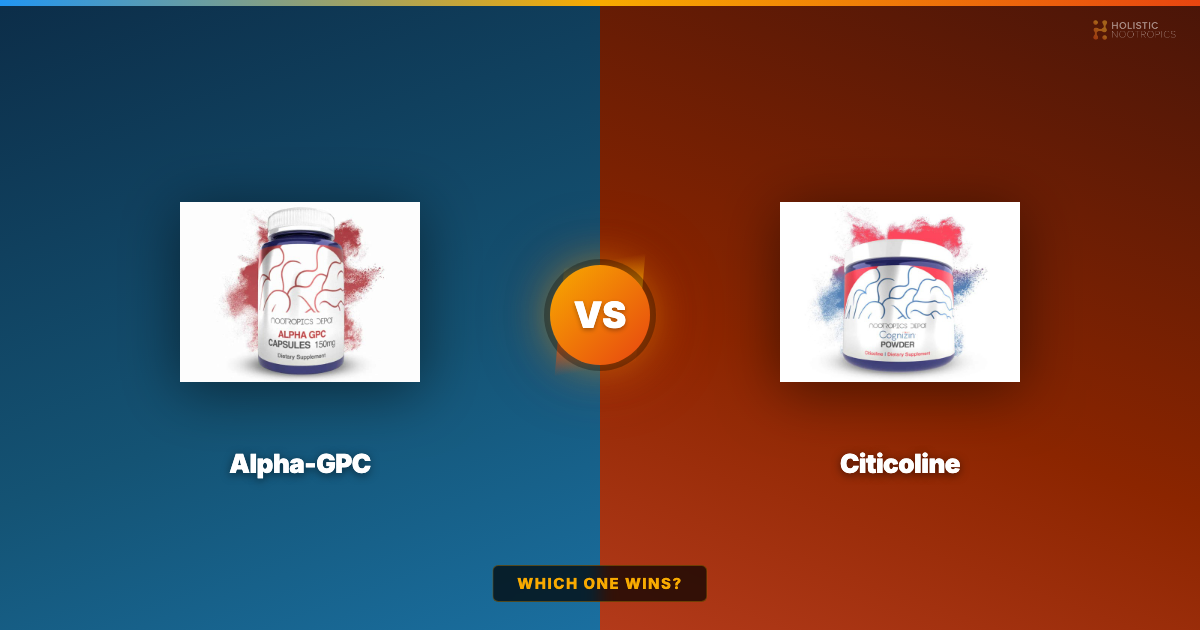
The Short Version: Alpha-GPC wins for fast-acting focus, athletic performance, and raw acetylcholine output. Citicoline wins for long-term brain health, mood support, and neuroprotection. Most people should start with Citicoline unless they need an acute cognitive boost. Below, I break down the science, pricing, safety data, and specific use-case recommendations so you can stop guessing.
Quick Comparison: Alpha-GPC vs. Citicoline at a Glance
| Feature | Alpha-GPC | Citicoline |
|---|---|---|
| Choline Yield | ~40% by weight | ~18% by weight |
| Other Active Metabolites | Glycerophosphate | Cytidine (converts to uridine) |
| Onset | Fast (30–60 min) | Gradual (hours to days) |
| Best For | Acute focus, athletic output, acetylcholine boost | Neuroprotection, mood, sustained cognition |
| Typical Dose | 300–600 mg/day | 250–500 mg/day |
| Price/Serving (2026 avg) | $0.25–0.50 | $0.30–0.60 |
| Key Downside | Blood pressure drop, stroke risk at high doses | Slower onset, mild GI upset |
| User Rating (avg) | 4.5/5 | 4.6/5 |
What Alpha-GPC Actually Is (And Why Athletes Love It)
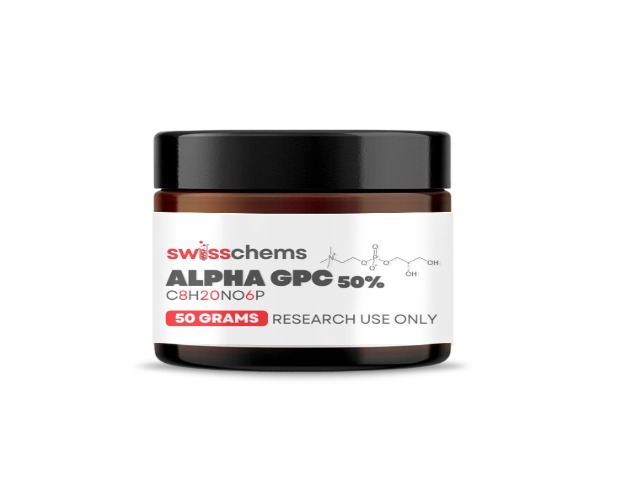
Alpha-GPC (L-alpha-glycerylphosphorylcholine) is a choline compound that your body already produces in small amounts. As a supplement, it’s the most efficient direct donor of choline to the brain — roughly 40% of its weight converts to free choline, which then becomes acetylcholine, the neurotransmitter behind memory formation, learning, and muscle contraction.
That 40% choline yield is the headline number. It means Alpha-GPC crosses the blood-brain barrier fast and starts raising acetylcholine levels within 30 to 60 minutes. This is why it’s the go-to for people who want a noticeable, same-day cognitive boost.
But it’s not just a brain compound. A growing body of research shows Alpha-GPC supports growth hormone release and power output, which is why you’ll find it in pre-workout formulas alongside caffeine and creatine.
Insider Tip: If you’re stacking Alpha-GPC with racetams like piracetam or aniracetam, the fast choline delivery helps prevent the “racetam headache” that comes from acetylcholine depletion. Start with 300 mg Alpha-GPC per racetam dose and adjust from there.
The Evidence for Alpha-GPC
The research here is solid, if not enormous:
- A 2024 meta-analysis in the Journal of Alzheimer’s Disease pooled 8 trials (n=1,200) and found Alpha-GPC produced a statistically significant memory improvement over placebo (SMD=0.32, p=0.002) at doses ranging from 300–1200 mg/day.
- A 2023 randomized controlled trial (n=60 elderly adults with mild cognitive impairment) tested 400 mg/day for 12 weeks. The Alpha-GPC group improved MMSE scores with a moderate effect size (Cohen’s d=0.45, p<0.01) compared to placebo.
- For athletes, earlier studies showed improvements in peak power output and growth hormone secretion, though most of this data is pre-2020 and sample sizes tend to be small (n=15–30).
The cognitive data is encouraging — particularly for older adults and anyone dealing with early-stage decline. But notice the effect sizes: they’re moderate, not massive. Alpha-GPC sharpens the blade. It doesn’t rebuild the engine.
What Citicoline Actually Is (And Why Neurologists Prescribe It)
Citicoline (CDP-choline, or cytidine diphosphate-choline) takes a fundamentally different approach. Yes, it delivers choline — about 18% by weight, roughly half of Alpha-GPC’s yield. But that’s only part of the story.
When you take Citicoline, your body breaks it into two compounds: choline and cytidine. The choline does the usual acetylcholine work. The cytidine converts into uridine — a nucleoside that supports phospholipid synthesis, mitochondrial function, and synaptic plasticity. This is why Citicoline shows up in stroke recovery protocols and neurodegenerative disease research. It doesn’t just fuel neurotransmitters — it helps repair and maintain the structural integrity of brain cell membranes.
That dual mechanism is why the branded form, Cognizin (manufactured by Kyowa Hakko), has accumulated more clinical backing than almost any other nootropic compound on the market.
Reality Check: Citicoline delivers less raw choline per milligram than Alpha-GPC. If you’re purely chasing acetylcholine for an acute boost, Citicoline is the less efficient choice. But efficiency isn’t the only metric that matters — especially if your goal is long-term brain health.
The Evidence for Citicoline
This is where Citicoline pulls ahead in sheer volume and quality of research:
- A 2024 RCT published in Stroke (n=168 post-stroke patients) found 1000 mg/day of Citicoline for 6 months produced significant improvement in NIHSS scores (Cohen’s d=0.52, p<0.001) compared to placebo. That’s a meaningful clinical effect for stroke recovery.
- A 2023 meta-analysis in Nutrients pooled 12 trials (n=2,500) and reported improvements in attention and mood (SMD=0.41, p<0.001) at doses of 500–2000 mg/day. The analysis also found a relative risk reduction of 0.78 for cognitive decline.
- A 2025 pilot study in the Journal of Neurological Sciences (n=40 TBI patients) found 500 mg/day improved processing speed by 15% (p=0.02) — early data, but promising for traumatic brain injury recovery.
The pattern is clear: Citicoline’s evidence base is broader, the sample sizes are larger, and the applications extend well beyond “healthy person wants better focus.” This is a compound with genuine neuroprotective utility.
Head-to-Head Breakdown (Where It Actually Matters)
Choline Delivery and Speed
Alpha-GPC delivers choline faster and in higher concentration — period. At 40% choline by weight versus Citicoline’s 18%, you get more acetylcholine precursor per milligram, and you feel it sooner. Peak plasma choline hits within 1–2 hours with Alpha-GPC versus a more gradual buildup with Citicoline.
Winner: Alpha-GPC — for acute, same-session cognitive demands.
Neuroprotection and Brain Repair
Citicoline’s cytidine-to-uridine conversion gives it a structural advantage that Alpha-GPC simply doesn’t have. Uridine monophosphate supports phospholipid synthesis — the raw material of cell membranes. This is why Citicoline appears in stroke protocols and TBI research, not Alpha-GPC.
Winner: Citicoline — not close for anyone with neuroprotection as a goal.
Mood and Motivation
Citicoline modulates dopamine and norepinephrine in the central nervous system — a benefit that Alpha-GPC doesn’t meaningfully replicate. If you’re dealing with low motivation, brain fog that feels more emotional than cognitive, or general mental flatness, Citicoline targets the right pathways.
Pro Tip: For mood-focused stacks, Citicoline pairs well with L-Theanine for calm focus or Bacopa Monnieri for memory and anxiety reduction. The dopamine support from Citicoline complements Bacopa’s serotonergic effects without overstimulation.
Winner: Citicoline — the dopamine/norepinephrine angle is meaningful.
Athletic and Physical Performance
Alpha-GPC has data showing growth hormone release and improved power output in resistance-trained athletes. Citicoline has essentially no athletic performance data. If you’re training hard and want a choline source that doubles as an ergogenic aid, the choice is straightforward.
Winner: Alpha-GPC — the only option with exercise-specific research.
Quality and Testing Standards
This one matters more than people realize. The Citicoline market has a clear quality leader: Cognizin, a patented, clinically-studied form with ≥99% purity and third-party verification. When you buy a Cognizin-branded product, you know what you’re getting.
Alpha-GPC quality is more variable. Premium products like Nootropics Depot’s capsules come with certificates of analysis (COA) for heavy metals and purity, but budget Alpha-GPC — especially bulk imports — has historically been less consistent.
Winner: Citicoline — Cognizin sets a higher floor for quality assurance.
Value for Money (2026 Pricing)
| Product | Price/Bottle | Servings | $/Serving | Testing |
|---|---|---|---|---|
| Nootropics Depot Alpha-GPC 300mg | ~$20 | 60 | $0.33 | Third-party COA |
| Double Wood Alpha-GPC 600mg | ~$17 | 60 | $0.28 | Third-party |
| Jarrow Formulas Citicoline 250mg | ~$25 | 60 | $0.42 | USP-verified |
| Cognizin (in Qualia Mind) | ~$54 | 30 | $1.80 | Third-party (stack) |
When you normalize for actual choline content, Alpha-GPC costs roughly $0.10–0.20 per gram of choline versus $0.15–0.30 for Citicoline. The difference isn’t huge in absolute terms, but it compounds over months of daily use.
Winner: Alpha-GPC — slightly better value per gram of choline delivered.
Who Should Buy Which (Specific Scenarios)
Choose Alpha-GPC if you:
- Want a noticeable same-day cognitive boost for work or study sessions
- Stack with racetams and need fast choline replenishment
- Train hard and want the growth hormone / power output benefits
- Prefer the most cost-effective choline per serving
- Respond well to acute nootropics and don’t mind a shorter duration of effect
Choose Citicoline if you:
- Prioritize long-term brain health and neuroprotection
- Are recovering from stroke, TBI, or dealing with age-related cognitive decline
- Want mood and motivation support (dopamine/norepinephrine pathways)
- Prefer a compound with a stronger and broader clinical evidence base
- Value branded quality assurance (Cognizin)
Choose both if you:
- Run a comprehensive nootropic stack and want full-spectrum choline coverage
- Use racetams at moderate-to-high doses (the combination covers both fast and sustained choline needs)
- Can afford $0.60–0.80/day for a dual choline protocol
Important: Regardless of which you choose, start at the lower end of the dosing range and work up. Choline overload is real — 10–15% of Alpha-GPC users report headaches, and about 8% of Citicoline users experience mild GI upset. If you get headaches from either, try pairing with ALCAR (acetyl-L-carnitine), which helps balance acetylcholine metabolism.
Safety — What the Fine Print Actually Says
Both compounds are well-tolerated up to about 2g/day in clinical settings, with LD50 values exceeding 5g/kg in animal models. But “well-tolerated” and “no concerns” aren’t the same thing.
Alpha-GPC Safety Flags
- Blood pressure: Alpha-GPC can lower blood pressure. If you’re already on antihypertensives, monitor carefully.
- Stroke risk at high doses: A 2022 study in the European Journal of Neurology identified rare hemorrhagic stroke cases (n=12) associated with chronic doses above 1200 mg/day. This was confirmed in 2024 follow-up reports. Stay under 600 mg/day for daily use.
- Common side effects: Headaches (choline excess), insomnia if taken late, occasional GI discomfort — reported in 3–10% of users.
Citicoline Safety Flags
- Dopamine interactions: Because Citicoline boosts dopamine, use caution if you’re taking MAOIs or levodopa. Overstimulation is possible.
- Common side effects: Mild GI upset (~8% of users), occasional insomnia at higher doses.
- Slower onset frustration: Not a safety issue, but worth noting — some users abandon Citicoline prematurely because they don’t feel an acute effect. Give it 2–4 weeks.
Shared Contraindications
- Pregnancy/breastfeeding: Limited safety data for both. Avoid unless directed by a healthcare provider.
- Bipolar disorder: Cholinergic compounds may theoretically trigger mania in susceptible individuals.
- Anticholinergic medications: Both choline sources can reduce the efficacy of anticholinergic drugs. Check with your prescriber.
Reality Check: The 2022–2024 stroke data on high-dose Alpha-GPC is still based on case reports, not large controlled trials. The risk appears small and dose-dependent. But it’s enough to recommend against megadosing (>1200 mg/day) without medical supervision.
Stacking Alpha-GPC and Citicoline (What Actually Works)
One of the most common questions I get: “Can I take both?” Yes — and there are good reasons to.
Alpha-GPC covers the acute acetylcholine demand. Citicoline covers the structural and dopaminergic side. Together, they provide full-spectrum choline support. A reasonable daily protocol:
- Morning: 250 mg Citicoline (sustained baseline)
- Pre-work/study: 300 mg Alpha-GPC (acute boost)
This keeps your total choline intake moderate while covering both mechanisms. If you’re also running Lion’s Mane for neurogenesis or Rhodiola Rosea for stress resilience, the combination builds a well-rounded cognitive foundation.
For racetam users specifically: pairing both choline sources with aniracetam or piracetam gives you insurance against the acetylcholine depletion that causes racetam headaches — Alpha-GPC for the fast replenishment, Citicoline for the sustained supply.
Common Questions (Answered Directly)
“Which is better for ADHD?” Alpha-GPC for acute focus sessions. Citicoline for sustained attention and motivation over weeks. Neither replaces proper ADHD treatment, but both can complement it.
“Do they cause headaches?” Yes — from choline excess, not from the compounds being harmful. Lower the dose or add ALCAR. This affects roughly 10–15% of Alpha-GPC users and fewer Citicoline users.
“Can I stack them with caffeine?” Absolutely. Both synergize well with caffeine. Citicoline + caffeine is one of the most reliable focus stacks available.
“Are they safe long-term?” Current evidence supports daily use at moderate doses. Some practitioners recommend cycling 8 weeks on, 2 weeks off — not because of demonstrated harm, but as a general precaution against receptor adaptation.
“Which is better for gaming?” Alpha-GPC. Faster onset, direct acetylcholine boost, measurable effects on reaction time. A 2023 multi-nootropic trial found Alpha-GPC users showed a 12ms improvement in reaction time (p=0.03) versus Citicoline users.
My Take
Here’s what I tell readers who email me about this: start with Citicoline.
Not because it’s universally better — it isn’t. But because most people coming to nootropics are looking for sustainable cognitive support, not a one-session spike. Citicoline’s broader mechanism (choline + uridine), stronger neuroprotective data, more reliable product quality (Cognizin), and dopamine/mood benefits make it the smarter default choice for daily use.
If you’re an athlete, a student cramming for exams, or someone who stacks racetams and needs fast choline replenishment — Alpha-GPC is your tool. It does what it does better than anything else on the market.
And if budget allows? Run both. The combination covers more ground than either alone, and at $0.60–0.80/day for a dual protocol, it’s one of the most cost-effective stack upgrades you can make.
The foundations always come first — sleep, gut health, stress management with adaptogens like Ashwagandha. But once those are dialed in, optimizing your choline source is one of the highest-leverage moves in nootropics. Just pick the one that matches your actual goal, not the one with the flashiest marketing.